
For many global travelers, the vast expanse of the Pacific Ocean represents the ultimate frontier of exploration. When planning a journey that spans the great blue divide, one of the most common questions arises: how far is New Zealand from Hawaii? While both destinations are iconic island chains known for their breathtaking natural beauty and deep indigenous roots, they sit on opposite sides of the Equator, separated by thousands of miles of open sea. Understanding the distance, flight logistics, and the sheer scale of this transpacific journey is essential for anyone looking to bridge the gap between the Northern Hemisphere and the Southern Hemisphere.
Understanding the Vastness of the Pacific: Geographical Distance
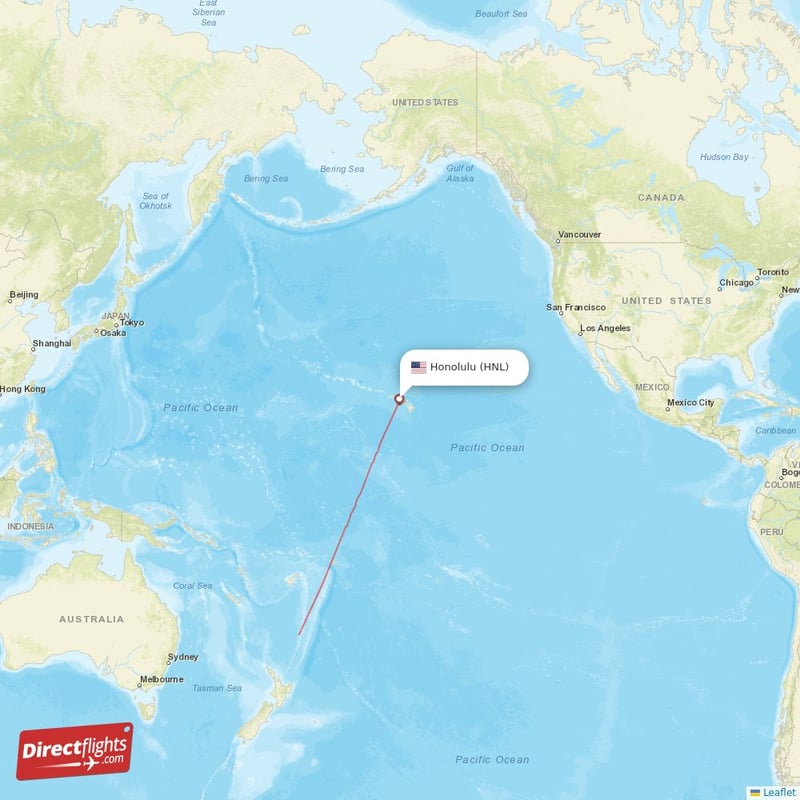
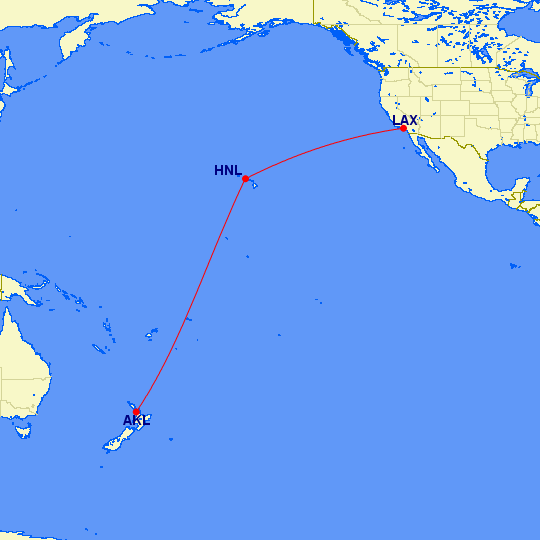
The geographical distance between Hawaii and New Zealand is approximately 4,400 miles (7,081 kilometers). To put this into perspective, this is a greater distance than a flight from New York City to London. When you depart from Honolulu, the capital of Hawaii, you are embarking on a journey that traverses a significant portion of the Earth’s circumference. This route takes travelers across the International Date Line, meaning that a flight from Hawaii to New Zealand usually results in “losing” a day, while the return trip can feel like a journey back in time.
Flight Times and Transpacific Routes
For modern travelers, the distance is best measured in hours spent in the air. A direct flight from Honolulu to Auckland, the largest city in New Zealand, typically takes between 8.5 and 9.5 hours. Several major carriers facilitate this route, most notably Hawaiian Airlines and Air New Zealand. These airlines have perfected the long-haul experience, offering amenities that make the nine-hour flight feel manageable, such as the famous “Skycouch” which allows passengers to turn a row of seats into a bed.
While Auckland is the primary gateway, some travelers may opt for connecting flights through other major hubs in Australia or Fiji, though this significantly increases the total travel time. Most non-stop flights depart in the late afternoon or evening, allowing passengers to sleep through the bulk of the journey and arrive in New Zealand early in the morning, ready to begin their adventure.
Bridging the Polynesian Triangle
Geographically and culturally, Hawaii and New Zealand represent the northern and southwestern corners of the Polynesian Triangle. The third point of this massive triangle is Easter Island (Rapa Nui). This region of the Pacific Ocean is home to thousands of islands, including Tahiti, Samoa, Tonga, and the Cook Islands. Despite the thousands of miles between them, the shared ancestry of the Polynesia people means that Hawaii and New Zealand are cousins in culture and spirit. Ancient voyagers navigated these immense distances using only the stars, ocean swells, and bird flight patterns—a feat of maritime skill that remains one of the most impressive in human history.
Navigating the Journey: From the Aloha State to the Land of the Long White Cloud
Planning a trip between these two destinations requires more than just a ticket; it requires an understanding of the seasonal shift. Because Hawaii is in the Northern Hemisphere and New Zealand is in the Southern Hemisphere, their seasons are perfectly inverted. When travelers leave the hot summer sun of Oahu in July, they will arrive in the crisp, cool winter of Auckland.
Major Hubs: Honolulu and Auckland
The journey almost always begins at Daniel K Inouye International Airport in Honolulu. This airport serves as the primary jumping-off point for those leaving the United States for the South Pacific. On the other end, Auckland Airport greets travelers with a traditional Maori welcome, often featuring carved wooden gates known as tomokanga. Auckland, often called the “City of Sails,” provides an immediate contrast to the palm-fringed skyline of Honolulu, with its volcanic cones and bustling harbor.
Seasonal Considerations for Travel
The best time to travel between these two points depends heavily on your desired activities. If you are a fan of winter sports, traveling from Hawaii to New Zealand between June and August allows you to swap surfing at Waikiki Beach for skiing in Queenstown. Conversely, those looking for endless summer will find that New Zealand is at its most vibrant from December to February, when the pohutukawa trees bloom and the beaches of the North Island are at their warmest.
Contrasting Landscapes: From Volcanic Peaks to Glacial Fjords

While both Hawaii and New Zealand are volcanic in origin, their geological maturity and climates have created vastly different landscapes. Hawaii is characterized by its tropical lushness, active lava flows on the Big Island, and dramatic coastal cliffs. New Zealand, however, offers a much wider variety of terrain due to its larger landmass and southern latitude.
The Tropical Allure of the Hawaiian Islands
In Hawaii, the experience is often centered around the ocean and the sun. Destinations like Maui offer the world-renowned Road to Hana, a winding journey through rainforests and past cascading waterfalls. On Kauai, the Napali Coast showcases some of the most dramatic sea cliffs on the planet. The Hawaii Volcanoes National Park allows visitors to witness the literal creation of new land. The islands are relatively small, making it easy to experience a variety of microclimates within a single day.
The Rugged Majesty of New Zealand
Crossing the 4,400 miles to New Zealand brings travelers to a land of much more diverse topography. The North Island is famous for its geothermal activity in Rotorua, the rolling green hills of Matamata (where you can visit Hobbiton), and the glow-worm caves of Waitomo Caves.
The South Island, however, is the jewel in the crown for nature lovers. It is dominated by the Southern Alps, a mountain range that rivals the European Alps in scale and beauty. Milford Sound, located within Fiordland National Park, is often described as the “eighth wonder of the world.” Here, glaciers have carved deep fjords where waterfalls tumble hundreds of feet into dark, still waters. The contrast between the tropical heat of Hawaii and the glacial ice of Franz Josef Glacier is a testament to the incredible distance covered in the journey south.
Cultural Connectivity: Shared Roots Across the Ocean
Despite the physical distance, the cultural connection between Hawaii and New Zealand is profound. Both cultures are rooted in the seafaring traditions of the Polynesia explorers. Travelers will notice striking similarities in the languages, mythologies, and traditional arts of the Native Hawaiian and Maori people.
Exploring Maori Heritage in New Zealand
In New Zealand, Maori culture is an integral part of the national identity. Visitors can experience a “Hangi,” a traditional feast cooked in an underground oven, or witness the power of a “Haka,” the ceremonial dance made famous globally by the All Blacks rugby team. Places like the Waitangi Treaty Grounds offer deep insights into the complex history between the indigenous people and the British Crown. The concept of “Manaakitanga”—extending hospitality and respect to guests—is a cornerstone of New Zealand tourism.
The Spirit of Hula and Hawaiian Tradition
Similarly, Hawaii thrives on the “Aloha Spirit.” While Waikiki offers a modern, tourist-centric experience, the true heart of the islands can be found in the Hula schools and the preservation of the Hawaiian language. The Polynesian Cultural Center on Oahu provides a bridge between these cultures, showcasing the distinct yet related traditions of Hawaii, Aotearoa (the Maori name for New Zealand), Fiji, and Samoa. Understanding the connection between the Hula and the Haka helps travelers appreciate that the 4,400-mile gap is bridged by a shared human story.
Essential Travel Tips for the Long-Haul Trek
Embarking on a journey from Hawaii to New Zealand requires careful preparation to ensure a smooth transition between these two distinct worlds.
- Visa Requirements: Travelers from the United States and many other countries must apply for an NZeTA (New Zealand Electronic Travel Authority) before arrival. It is a simple online process but is mandatory for entry.
- Biosecurity Laws: New Zealand has some of the world’s strictest biosecurity laws to protect its unique flora and fauna. Be prepared to declare all food, hiking gear, and outdoor equipment. Even a small amount of soil on your hiking boots could result in a fine.
- Currency and Costs: While Hawaii uses the US Dollar, you will need the New Zealand Dollar once you land. Generally, visitors find that while New Zealand is not a “budget” destination, the exchange rate often favors the US Dollar, making dining and activities slightly more affordable than in high-end Honolulu resorts.
- Driving: Remember that in New Zealand, they drive on the left side of the road. This can be a major adjustment for those coming from Hawaii or the mainland United States.
- Connectivity: While major cities like Auckland, Wellington, and Christchurch have excellent internet, if you are heading into the wilder parts of the South Island, be prepared for long stretches without cellular service.
The journey from Hawaii to New Zealand is a remarkable odyssey across the world’s largest ocean. It is a trip that takes you from the bustling, tropical energy of the Central Pacific to the serene, rugged wilderness of the South Pacific. Whether you are drawn by the shared Polynesia heritage or the chance to see some of the most spectacular landscapes on Earth, the 4,400 miles between these two iconic destinations are well worth the flight. From the peak of Diamond Head to the depths of Milford Sound, the connection between Hawaii and New Zealand remains one of the most compelling travel narratives in the world today.
LifeOutOfTheBox is a participant in the Amazon Services LLC Associates Program, an affiliate advertising program designed to provide a means for sites to earn advertising fees by advertising and linking to Amazon.com. Amazon, the Amazon logo, AmazonSupply, and the AmazonSupply logo are trademarks of Amazon.com, Inc. or its affiliates. As an Amazon Associate we earn affiliate commissions from qualifying purchases.