
The connection between Las Vegas and Hawaii is one of the most storied and frequent travel corridors in the United States. Often referred to as the “Ninth Island” due to the large population of former islanders living in Nevada, the journey from the desert to the tropics is a staple for vacationers and families alike. For travelers planning this transpacific hop, the primary question is always logistical: how long will it take to swap the neon lights of the Las Vegas Strip for the volcanic shores of the Pacific Ocean?
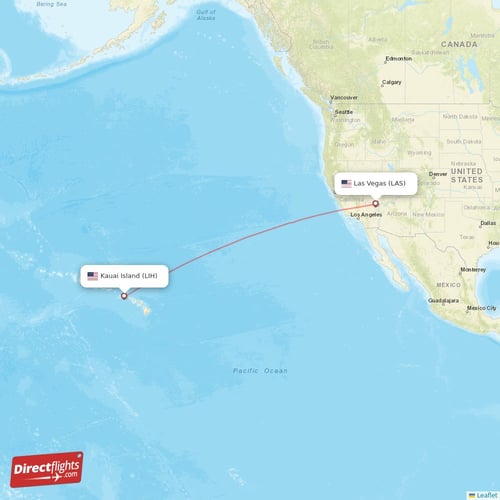
The flight duration from Las Vegas to the Hawaiian Islands typically ranges between six and seven hours, depending on your specific destination island, the aircraft type, and the prevailing wind patterns. While the distance is significant—approximately 2,700 miles—the journey is made seamless by a variety of non-stop options and high-frequency service.
Calculating the Journey: Air Time and Distance
When measuring the time spent in the air, it is important to distinguish between “gate-to-gate” time and actual flight time. Most airlines schedule their flights to include buffer time for taxiing at Harry Reid International Airport and potential congestion upon arrival in the islands.
Direct Flight Durations
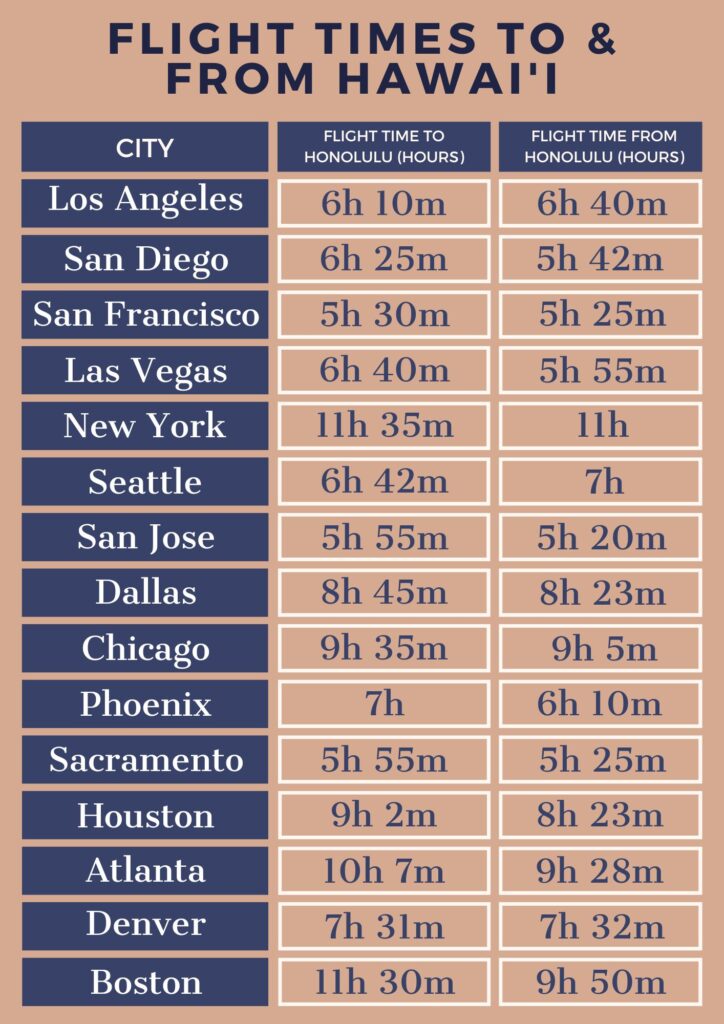
For a non-stop flight from Las Vegas to Honolulu on the island of Oahu, travelers can expect to be in the air for roughly 6 hours and 15 minutes. Westbound flights (heading to the islands) generally take longer than eastbound flights (returning to the mainland). This is due to the jet stream—high-altitude winds that move from west to east across North America.
If you are flying to Kahului on Maui, the flight time is remarkably similar, usually clocking in at around 6 hours and 10 minutes. Destinations further west, such as Lihue on Kauai, may add another 15 to 20 minutes to the journey, while a direct flight to Kona on the Big Island sits right at the 6-hour mark.
The Impact of Jet Streams and Weather
Weather is a significant variable in transpacific travel. During the winter months, the jet stream can be particularly strong. While this might shave an hour off your return flight to Nevada, it can add significant time to your departure from Las Vegas. It is not uncommon for a westbound flight in January to take nearly 7 hours, whereas the return leg might only take 5 hours and 15 minutes. Airlines account for these seasonal shifts in their published schedules, but daily variations in wind speed can still lead to early or slightly delayed arrivals.
Departing from the Desert: The Harry Reid International Airport Experience
The journey begins at Harry Reid International Airport, one of the busiest aviation hubs in the United States. Because the route to Hawaii is so popular, the airport has optimized the check-in and boarding process for these long-haul domestic flights.
Terminal Logistics for Hawaii-Bound Travelers
Most flights departing for Hawaii operate out of Terminal 1 or Terminal 3, depending on the carrier. Hawaiian Airlines and Southwest Airlines, the two primary carriers for this route, have a significant presence here. Travelers are advised to arrive at least two and a half hours before departure. This allows ample time to navigate security and, importantly, to complete any necessary agricultural declarations. Hawaii has strict environmental protections managed by the Hawaii Department of Agriculture, and while most paperwork is now handled digitally or in-flight, being aware of these requirements at the gate is essential.
Major Carriers Operating the Route
Several major airlines provide consistent service between Las Vegas and the islands:
- Hawaiian Airlines: Known for its “Island Hospitality,” this carrier offers the most authentic transition from the desert to the tropics. They provide daily non-stop service to Honolulu and frequently offer seasonal routes to Kahului.
- Southwest Airlines: Since expanding its footprint into the Pacific, Southwest Airlines has become a favorite for budget-conscious travelers. Their “two bags fly free” policy is particularly appealing for those planning extended stays or moving between the islands.
- Alaska Airlines: Often offering competitive rates, Alaska Airlines connects Las Vegas to various islands, sometimes with a brief stop in Seattle or Los Angeles, though direct flights are also available.
- United Airlines and Delta Air Lines: While these legacy carriers frequently route through hubs like San Francisco or Los Angeles, they remain reliable options for those utilizing frequent flyer miles.
Island Destinations: Where You Land Matters
Your flight duration is also dictated by which of the major Hawaiian Islands serves as your primary destination. Each airport offers a different entry experience into the Aloha State.
Flying into Honolulu, Oahu
The most common landing spot is Daniel K. Inouye International Airport in Honolulu. As the principal gateway to the islands, it handles the bulk of traffic from Las Vegas. Upon landing, the flight time of six hours is quickly forgotten as you catch glimpses of Diamond Head and the Pacific Ocean from the window. From here, it is a short drive to the iconic beaches of Waikiki or the historic sites of Pearl Harbor.
Reaching the Neighbor Islands: Maui, Kauai, and the Big Island
For those bypassing Oahu, direct flights to the “Neighbor Islands” are a major convenience.
- Maui: Landing at Kahului Airport puts you in the heart of the valley isle. The flight duration is nearly identical to Honolulu, making it an easy choice for those looking to explore Haleakala National Park or the Road to Hana.
- Kauai: Flights to Lihue Airport are slightly longer due to the island’s more westerly position. However, the extra 20 minutes in the air is rewarded with views of the lush, rugged terrain that defines the “Garden Isle” and the famous Na Pali Coast.
- The Big Island: Most flights from Las Vegas land at Ellison Onizuka Kona International Airport. This airport is unique for its open-air terminals, allowing travelers to feel the tropical breeze the moment they step off the plane. The flight time is very consistent with other island routes, usually hovering around 6 hours and 5 minutes.
Enhancing the In-Flight Experience
A six-hour flight is a significant commitment, and preparation is key to ensuring that the journey feels like part of the vacation rather than a hurdle to overcome.
Preparation and Packing Essentials
Because you are crossing a vast stretch of the Pacific Ocean, there are no stops or diversion points once the plane leaves the California coast. This makes in-flight comfort paramount. Travelers should pack a light jacket or sweater; despite the heat in Las Vegas or the humidity in Hawaii, airplane cabins are notoriously chilly. Noise-canceling headphones are also highly recommended for the long duration, especially if you plan to sleep.
Additionally, while carriers like Hawaiian Airlines often provide complimentary meals on these routes, others may only offer snacks for purchase. It is always wise to bring your own sustenance from Harry Reid International Airport to ensure you have what you need during the six-hour window.
Managing Time Zone Transitions
One aspect of the flight duration that often surprises travelers is the time change. Hawaii operates on Hawaii-Aleutian Standard Time, which does not observe Daylight Saving Time. Depending on the time of year, Las Vegas (which is in the Pacific Time Zone) will be either two or three hours ahead of Hawaii.
This means that a flight departing Las Vegas at 10:00 AM will land in Honolulu at approximately 1:15 PM local time. This “gained” time is one of the perks of traveling west, as it allows visitors to enjoy a full afternoon of sunshine and a sunset dinner on their very first day.

Arrival and the “Ninth Island” Connection
The flight from Las Vegas to Hawaii is more than just a logistical necessity; it is a cultural bridge. The high volume of traffic between these two locations means that the planes are often filled with a mix of tourists and locals returning home. This creates a unique atmosphere on board that you might not find on a flight from New York or Chicago.
Upon arrival, whether you are touching down in Oahu to see the USS Arizona Memorial or landing on the Big Island to visit Volcanoes National Park, the transition is profound. The six-hour journey serves as a necessary buffer, a period of decompression where the arid landscape of the Mojave Desert is gradually replaced by the infinite blue of the Pacific.
Understanding the flight duration—roughly six hours—allows for better planning, ensuring that once you touch down at Daniel K. Inouye International Airport or any of the other island hubs, you are ready to immerse yourself in the beauty and culture of Hawaii. Whether you are traveling for a quick weekend getaway or a long-term exploration, the flight from Las Vegas remains the most vital link to the treasures of the Pacific.
LifeOutOfTheBox is a participant in the Amazon Services LLC Associates Program, an affiliate advertising program designed to provide a means for sites to earn advertising fees by advertising and linking to Amazon.com. Amazon, the Amazon logo, AmazonSupply, and the AmazonSupply logo are trademarks of Amazon.com, Inc. or its affiliates. As an Amazon Associate we earn affiliate commissions from qualifying purchases.