
Choosing what to visit in Hawaii is a task of narrowing down an embarrassment of riches. As an archipelago located in the central Pacific Ocean, this chain of islands represents one of the most geographically diverse and culturally rich destinations in the United States. From the molten lava flows of the Big Island to the emerald spires of the Na Pali Coast on Kauai, each island offers a distinct personality and a curated list of must-see attractions. Whether you are seeking a high-energy urban adventure, a deep dive into Polynesian history, or a secluded retreat into nature, the Hawaiian Islands provide a comprehensive travel experience that caters to every type of explorer.
Oahu: The Vibrant Heart of the Islands
Oahu is often the primary entry point for international travelers and for good reason. It is the most populous island and serves as the seat of the state government in Honolulu. The island is a masterclass in contrasts, where bustling metropolitan skylines sit just minutes away from pristine white-sand beaches and rugged mountain trails.
Iconic Landmarks and Urban Exploration
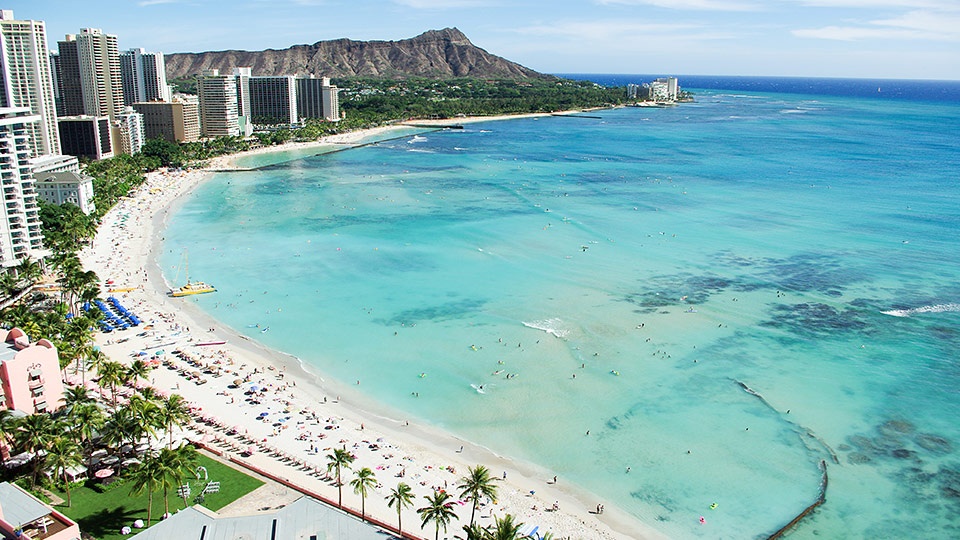
No trip to Oahu is complete without visiting Waikiki Beach. This world-famous shoreline is the epicenter of Hawaiian tourism, known for its gentle surf and the looming presence of Diamond Head State Monument. Hiking to the summit of this dormant tuff cone offers a panoramic view of the coastline that is arguably the most photographed vista in the state.
For those interested in the royal heritage of the islands, Iolani Palace stands as the only royal palace on United States soil. This historic landmark provides a poignant look into the lives of the Kingdom of Hawaii monarchs, specifically King Kalakaua and Queen Liliuokalani.
Historical Reflection at Pearl Harbor
Perhaps the most significant historical site in the state is Pearl Harbor. As a National Historic Landmark, it serves as a solemn reminder of the events of December 7, 1941. Visitors can take a boat to the USS Arizona Memorial, which straddles the sunken hull of the battleship. The experience is deeply moving and provides essential context for the island’s role in global history. Nearby, the Battleship Missouri Memorial allows travelers to stand on the “Surrender Deck” where World War II officially ended.
The Legendary North Shore
In stark contrast to the city life of Honolulu, the North Shore of Oahu offers a laid-back, rural atmosphere. During the winter months, this area becomes the center of the surfing world as massive swells hit the coast. Waimea Bay, Ehukai Beach, and the Banzai Pipeline are legendary spots where professionals tackle waves that can reach heights of thirty feet or more. In the summer, these waters turn into calm turquoise pools, perfect for snorkeling and swimming.
Maui: The Valley Isle of Scenic Wonders
Maui strikes a balance between the developed infrastructure of Oahu and the raw nature of the more remote islands. It is famous for its world-class beaches, spectacular sunrises, and some of the best whale watching on the planet.
The Road to Hana: A Journey, Not a Destination
The Road to Hana is one of the most famous scenic drives in the world. Stretching along the island’s northeastern coast, this 64-mile highway features over 600 hairpin turns and 50 one-lane bridges. The attraction isn’t the town of Hana itself, but the journey to get there. Along the way, travelers can stop at Waianapanapa State Park to see its dramatic black sand beach, or hike to the Seven Sacred Pools (Oheo Gulch), where waterfalls cascade into tiered pools that lead directly to the sea.
Haleakala National Park: Above the Clouds
To see the literal heights of Maui, a visit to Haleakala National Park is mandatory. The summit of this massive shield volcano sits at 10,023 feet above sea level. Watching the sunrise from the “House of the Sun” is a transcendental experience as the light breaks over a literal sea of clouds. The landscape inside the crater is often described as Martian, featuring colorful cinder cones and rare flora like the Hawaiian Silversword.
Coastal Beauty and Marine Life
The western shores of Maui are home to the historic town of Lahaina and the resort areas of Kaanapali and Kapalua. While Lahaina has recently faced immense challenges, its spirit as a former whaling capital and royal retreat remains central to Maui’s identity. For snorkelers, a boat excursion to Molokini Crater, a partially submerged volcanic caldera, offers crystal-clear visibility and a chance to swim with hundreds of species of tropical fish and green sea turtles.
Kauai: The Garden Isle’s Natural Majesty
Kauai is the oldest and northernmost island in the chain, characterized by its lush greenery, jagged cliffs, and a sense of timelessness. It is the destination for travelers who want to immerse themselves in nature and escape the crowds.
The Untamed Na Pali Coast
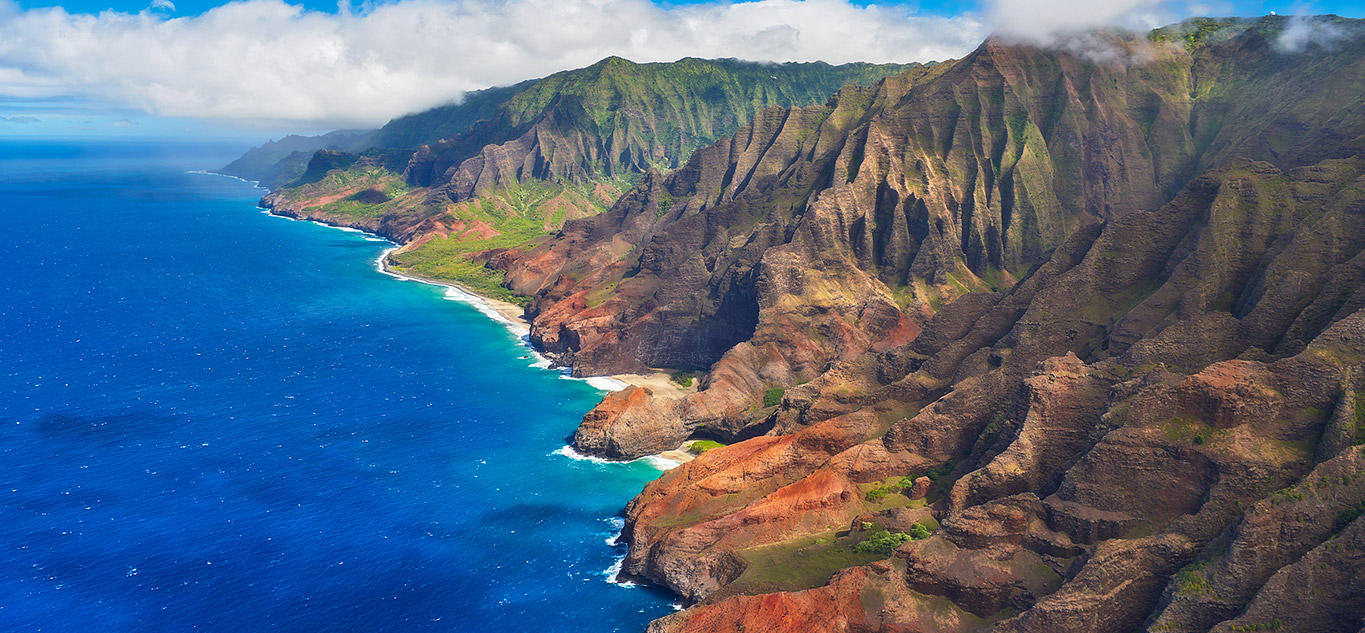
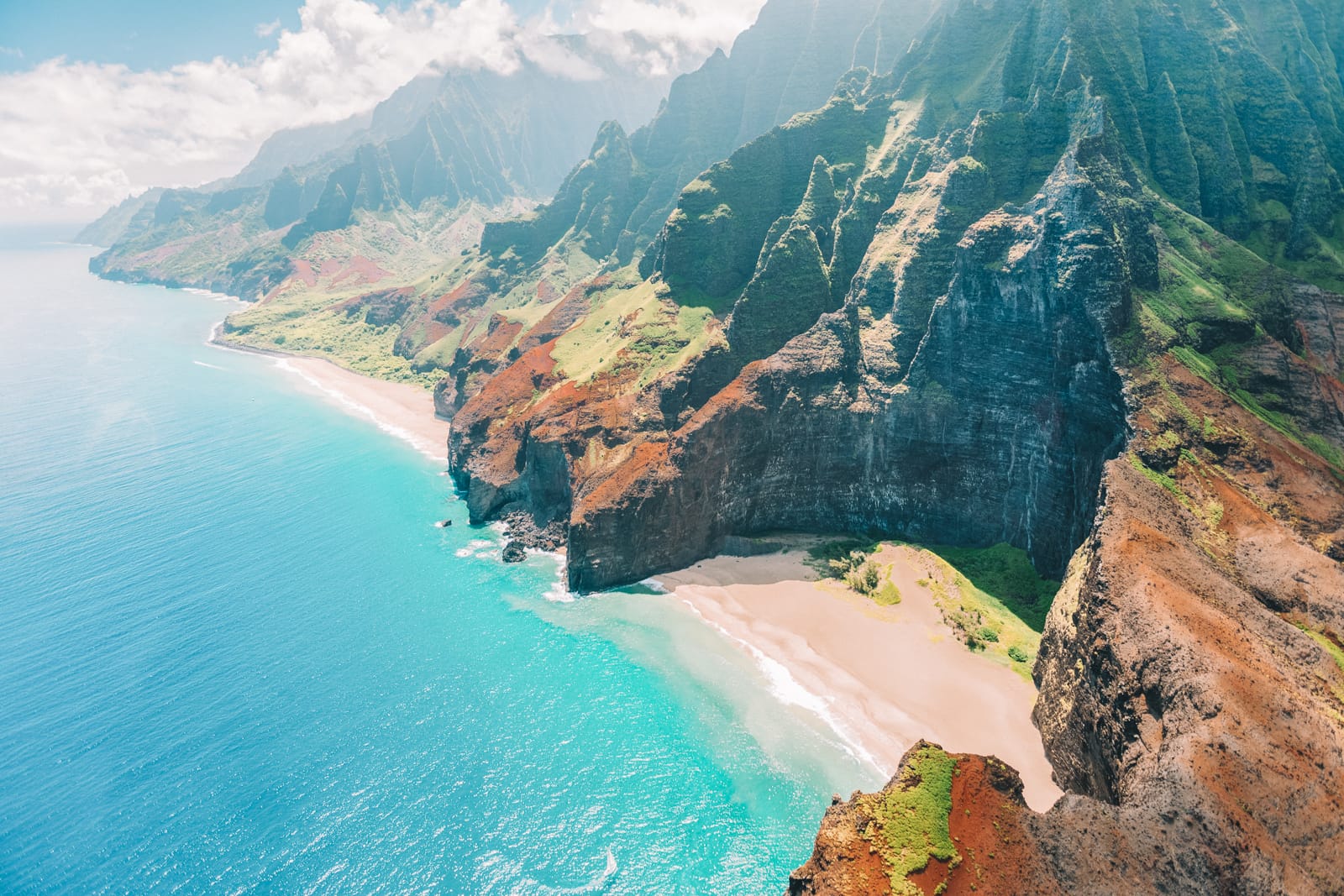
The Na Pali Coast is arguably the most spectacular natural feature in all of Hawaii. These 17 miles of dramatic emerald cliffs rise 4,000 feet from the ocean, intersected by narrow valleys and cascading waterfalls. Because there are no roads, the only ways to see this coast are by boat, helicopter, or by hiking the challenging Kalalau Trail. A helicopter tour is particularly recommended, as it allows you to see the “Jurassic Park” falls—officially known as Manawaiopuna Falls—which are otherwise inaccessible.
Waimea Canyon: The Grand Canyon of the Pacific
On the western side of the island lies Waimea Canyon State Park. Often called the “Grand Canyon of the Pacific,” this ten-mile-long and 3,000-foot-deep gorge offers a stunning palette of red soil, green vegetation, and black volcanic rock. The contrast with the lush Na Pali Coast is striking, showcasing the diverse geology that Kauai has to offer.
Tranquility in the North and South
The North Shore of Kauai is home to Hanalei Bay, a horseshoe-shaped beach backed by mist-covered mountains. It is a haven for paddleboarding and relaxation. Meanwhile, the southern coast offers Poipu Beach, where the weather is almost always sunny, and Hawaiian Monk Seals are frequently seen basking on the sand.
Hawaii Island: A Land of Fire and Ice
Often called the Big Island to avoid confusion with the state name, Hawaii Island is larger than all the other islands combined. It is a place of extremes, containing 10 of the world’s 14 climate zones, ranging from tropical rainforests to sub-arctic tundra.
Hawaii Volcanoes National Park
The crown jewel of the island is Hawaii Volcanoes National Park. Here, visitors can witness the raw power of creation and destruction at Kilauea, one of the most active volcanoes on Earth. Walking through the Thurston Lava Tube (Nahuku) or driving along the Chain of Craters Road provides a front-row seat to how these islands were formed. The park is also home to Mauna Loa, the world’s largest subaerial volcano.
Stargazing on Mauna Kea
Mauna Kea is a dormant volcano that stands as the highest point in Hawaii. From the seafloor to its summit, it is actually taller than Mount Everest. The summit is home to one of the world’s premier astronomical observatories. While the high altitude requires caution, visiting the visitor center or taking a guided tour to the summit for stargazing is an unparalleled experience. The clarity of the night sky from this mid-Pacific location is world-renowned.
The Contrasts of Kona and Hilo
The island is split between two main hubs. Kona on the west is known for its dry, sunny weather, world-famous coffee plantations, and excellent snorkeling at Kealakekua Bay. On the east side, Hilo is a lush, rain-filled town that serves as the gateway to numerous waterfalls, such as Rainbow Falls and Akaka Falls State Park. The Big Island is also where you will find the unique Punaluu Beach, a striking black sand beach where volcanic basalt has been ground into fine sand by the power of the ocean.
Planning Your Hawaiian Expedition
Deciding what to visit in Hawaii requires an understanding of inter-island travel. While flights between islands are short—usually under 45 minutes—each island requires its own dedicated time to truly appreciate. Most travelers find that focusing on two islands over a 10-day period offers a balanced pace.
For those seeking even more seclusion, the smaller islands of Lanai and Molokai offer a glimpse into a much slower way of life. Lanai is known for its luxury and the otherworldly Garden of the Gods, while Molokai remains the most traditional, with the towering sea cliffs of the Kalaupapa Peninsula.
No matter which destination you choose, the spirit of “Aloha” is the common thread that binds these islands together. From the volcanic peaks of the Big Island to the historic streets of Honolulu, a visit to Hawaii is more than just a vacation; it is an immersion into one of the most unique ecosystems and cultures on the planet. Proper planning ensures that you experience the best of what each island has to offer, leaving you with a profound appreciation for the natural beauty of the Pacific.
LifeOutOfTheBox is a participant in the Amazon Services LLC Associates Program, an affiliate advertising program designed to provide a means for sites to earn advertising fees by advertising and linking to Amazon.com. Amazon, the Amazon logo, AmazonSupply, and the AmazonSupply logo are trademarks of Amazon.com, Inc. or its affiliates. As an Amazon Associate we earn affiliate commissions from qualifying purchases.