
The transition of Hawaii from a sovereign kingdom to the 50th state of the United States is a complex narrative woven with threads of diplomacy, revolution, and strategic necessity. While the formal date of admission was August 21, 1959, the journey toward that moment spanned over a century of political maneuvering and cultural shifts. Understanding when and how Hawaii became a state requires a deep dive into the landmarks and historical sites that stand as silent witnesses to this transformation. From the corridors of royal palaces in Honolulu to the volcanic craters that define the archipelago’s landscape, every site tells a part of the story of the Aloha State.
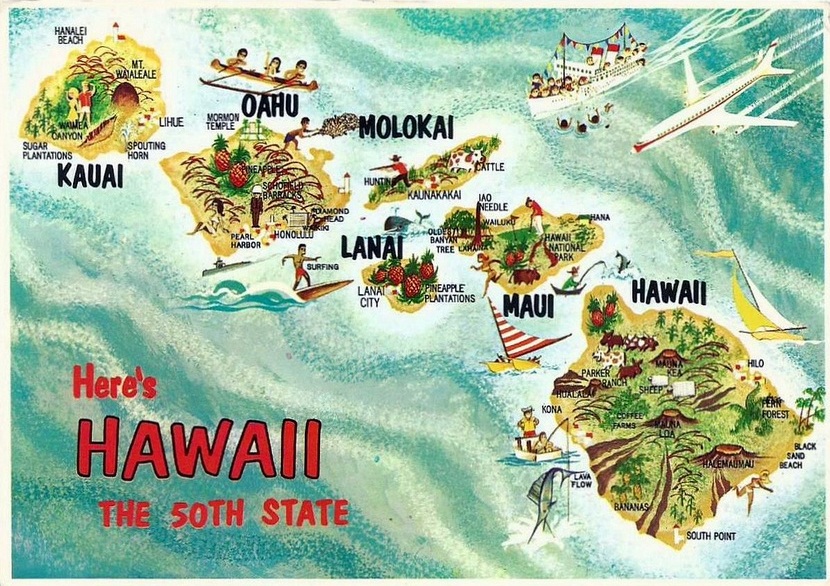
The Path to the 50th Star: A Timeline of Sovereignty and Statehood
The question of statehood is inextricably linked to the end of the Hawaiian Kingdom. For decades, Hawaii was a recognized independent nation with its own treaties and diplomatic relations with major world powers. However, the late 19th century brought significant pressure from American business interests, particularly those involved in the sugar industry.
The Overthrow of the Monarchy
In 1893, a group of businessmen and sugar planters, supported by United States Marines, orchestrated the overthrow of Queen Liliuokalani. This pivotal event took place at Iolani Palace, the primary residence of the Hawaiian monarchs. Following the coup, a provisional government was established, eventually leading to the formation of the Republic of Hawaii. Despite the Queen’s efforts to protest the illegality of the overthrow to the United States Congress, the islands were eventually annexed.
Territorial Status and the Road to Statehood
The United States officially annexed the islands in 1898 through the Newlands Resolution, signed by President William McKinley. For the next 59 years, Hawaii existed as a territory. During this period, the residents of the islands were U.S. citizens but lacked the full rights of statehood, such as the ability to vote for the President or have voting representation in Washington D.C.. The movement for statehood gained momentum after World War II, as the bravery of Hawaiian soldiers and the islands’ strategic importance in the Pacific Ocean became undeniable.
August 21, 1959: A New Era Begins
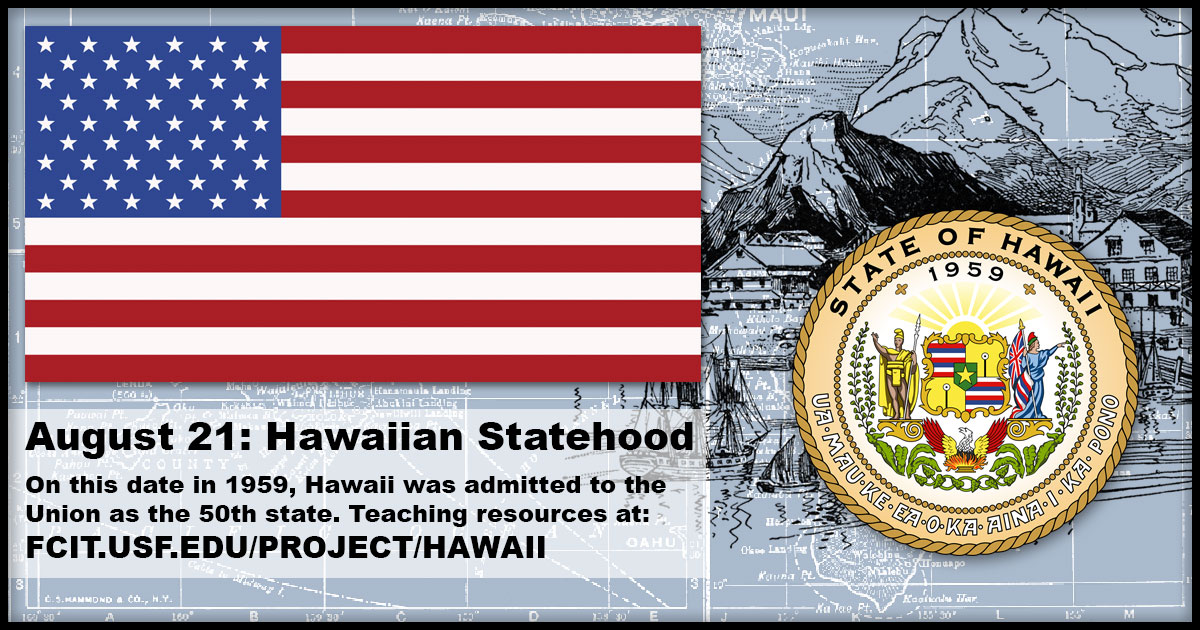
After decades of petitions and legislative hurdles, President Dwight D Eisenhower signed the Hawaii Admission Act into law. On August 21, 1959, Hawaii was officially admitted as the 50th state. This change was met with massive celebrations throughout Oahu, Maui, Kauai, and the Big Island, marking the conclusion of a long and often contentious political journey.
Architectural Witnesses: Landmarks of the Hawaiian Monarchy
To understand the weight of statehood, one must visit the landmarks that represent the era of the monarchy. These sites are not merely tourist attractions; they are the physical manifestations of a kingdom that once stood as an equal to European and American powers.
Iolani Palace: The Seat of a Fallen Kingdom
Located in the heart of Honolulu, Iolani Palace is the only royal palace on United States soil. Completed in 1882 by King Kalakaua, the palace featured modern amenities like electricity and telephones even before the White House. It was here that the overthrow took place, and it was in an upstairs bedroom that Queen Liliuokalani was later imprisoned for several months following a failed counter-revolution. Today, the palace serves as a museum and a poignant reminder of the transition from kingdom to state.
Washington Place: The Home of Queen Liliuokalani
A short walk from the palace stands Washington Place, a historic mansion that served as the private residence of Queen Liliuokalani until her death in 1917. The home later became the official residence of the Governor of Hawaii. It represents the personal side of the political transition, housing the archives and artifacts of a woman who witnessed her nation’s status change from independence to a territory.
Ali’iolani Hale: The Center of Judicial History
Across the street from Iolani Palace is Aliiolani Hale, which today houses the Hawaii State Supreme Court. Originally designed as a palace for King Kamehameha V, it was repurposed as a government building. The iconic gold-leafed statue of King Kamehameha I stands in front of the building, symbolizing the unification of the islands that occurred long before the American influence took hold.
The Impact of Military History on Hawaii’s Political Status

The drive for statehood was heavily influenced by the United States military presence in the islands. The events of the mid-20th century transformed Hawaii from a distant agricultural outpost into a vital national security asset.
Pearl Harbor and the USS Arizona Memorial
The attack on Pearl Harbor on December 7, 1941, changed the course of world history and solidified Hawaii’s role within the American identity. The USS Arizona Memorial stands as a landmark of sacrifice, attracting millions of visitors who come to pay their respects. The shared experience of World War II created a strong bond between the residents of Hawaii and the mainland United States, accelerating the push for the islands to be recognized as a full state.
Punchbowl Crater and the National Memorial Cemetery of the Pacific
Nestled inside the extinct Punchbowl Crater in Honolulu is the National Memorial Cemetery of the Pacific. This landmark honors the thousands of men and women who served in the U.S. Armed Forces. The site is a testament to the patriotic contributions of Hawaii’s diverse population, which was a key argument used by proponents of statehood to prove the islands’ loyalty to the United States.
Geological Landmarks and the Ancient Roots of the Islands
While statehood is a political construct, the physical landmarks of Hawaii remind us of the islands’ existence long before any human government. These natural wonders are integral to the state’s identity and were often used to market Hawaii as a unique and essential addition to the Union.
Diamond Head State Monument: A Sentinel Over Waikiki
Diamond Head, known in Hawaiian as Leahi, is perhaps the most recognizable natural landmark in the state. Visible from Waikiki, this volcanic tuff cone was used as a strategic lookout point by both the ancient Hawaiians and the U.S. Military. Its designation as a National Natural Landmark underscores the state’s commitment to preserving its unique geological history.
Hawaii Volcanoes National Park: The Birthplace of Land
Located on the Big Island, Hawaii Volcanoes National Park is home to two of the world’s most active volcanoes: Kilauea and Mauna Loa. These landmarks are not just tourist sites; they are sacred spaces in Hawaiian culture, believed to be the home of the goddess Pele. The park’s inclusion in the National Park System helped integrate Hawaii into the broader American conservation movement prior to statehood.
Mauna Kea: The Highest Peak
Mauna Kea is a dormant volcano that serves as a premier site for global astronomy. However, for Native Hawaiians, it is a deeply spiritual landmark. The tension between scientific progress and cultural preservation on Mauna Kea reflects the ongoing dialogue about Hawaii’s identity as a state within a larger nation while maintaining its indigenous roots.
Cultural Landmarks and the Modern Identity of the Aloha State
Since becoming a state in 1959, Hawaii has worked to balance its new political status with its rich Polynesian heritage. Several landmarks highlight this blend of cultures and the preservation of the past.
Kawaiahao Church: The Westminster Abbey of the Pacific
Kawaiahao Church, built from giant slabs of coral rock, was the first Christian church on Oahu. It was the site of royal weddings, funerals, and inaugurations. It remains a landmark of the early interactions between Western missionaries and the Hawaiian people, a relationship that ultimately paved the way for the islands’ integration into the United States.
Nu’uanu Pali Lookout: A Site of Decisive Battle
The Nuuanu Pali Lookout offers breathtaking views of the Windward Coast, but it is also a site of great historical significance. This was the location of the Battle of Nuuanu in 1795, where King Kamehameha I defeated the forces of Oahu to unify the islands. This unification was the foundation of the sovereign nation that would later navigate the path to becoming the 50th state.
Polynesian Cultural Center: Celebrating Heritage
While not a historical site in the traditional sense, the Polynesian Cultural Center on the north shore of Oahu serves as a landmark for the preservation of Pacific Island traditions. It represents the state’s effort to maintain its cultural distinctions within the framework of American statehood, ensuring that the history of Hawaii, Samoa, Tahiti, and other nations is never forgotten.
The answer to when Hawaii became a state is more than just a date on a calendar. It is a story told through the architecture of Honolulu, the memorials of Pearl Harbor, and the volcanic peaks that rise from the Pacific Ocean. As visitors and residents explore these landmarks, they encounter the legacy of a kingdom, the scars of a territory, and the pride of the 50th state. From the signing of the Admission Act by President Dwight D Eisenhower to the present day, these sites continue to define what it means to be part of Hawaii.
LifeOutOfTheBox is a participant in the Amazon Services LLC Associates Program, an affiliate advertising program designed to provide a means for sites to earn advertising fees by advertising and linking to Amazon.com. Amazon, the Amazon logo, AmazonSupply, and the AmazonSupply logo are trademarks of Amazon.com, Inc. or its affiliates. As an Amazon Associate we earn affiliate commissions from qualifying purchases.