
The story of ownership and sovereignty in Hawaii is a complex narrative that spans centuries, moving from the communal stewardship of indigenous voyagers to a highly organized sovereign monarchy before eventually being annexed by the United States of America. To understand who “owned” these islands, one must look beyond modern real estate definitions and explore the historical landmarks, sacred sites, and royal institutions that defined the archipelago’s identity long before the 50th star was added to the American flag. The islands were never a vacant wilderness; they were a thriving, internationally recognized nation with a rich architectural and political heritage.
The Era of Ancient Chieftains and the Rise of the Kingdom
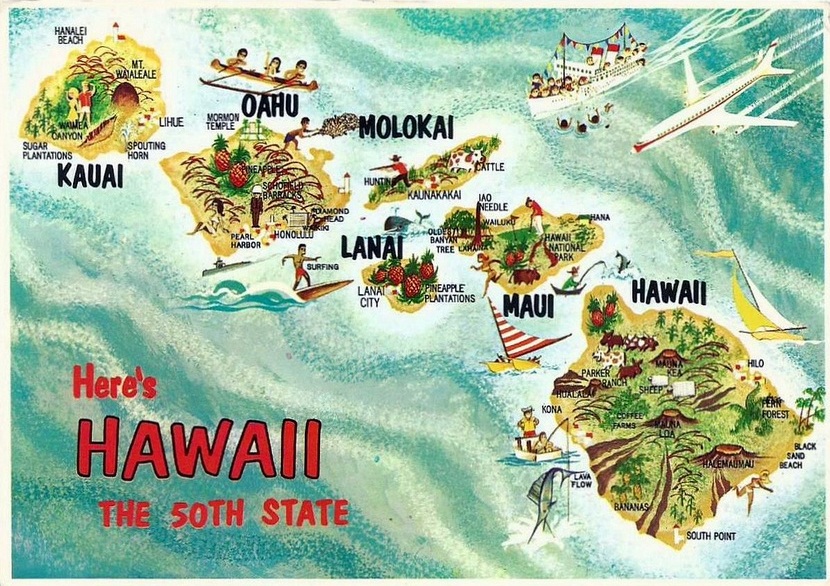
Long before the arrival of Western explorers, the islands were inhabited by people from Polynesia who traveled across the vast Pacific Ocean. These early settlers, likely arriving from the Marquesas Islands and later Tahiti, established a sophisticated societal structure based on the ahupuaʻa system. This was a method of land division that ran from the mountains to the sea, ensuring that every community had access to all the resources necessary for survival, from timber and upland crops to fresh water and coastal fish.
The Settlement and the Aliʻi System
In this early era, land was not “owned” in the private sense. Instead, it was held in trust by the Aliʻi (chiefs), who managed the resources for the benefit of the people. The spiritual connection to the land was evidenced by the construction of massive stone temples known as heiau. One of the most significant landmarks from this period is the Puukohola Heiau on the Big Island. This formidable structure was built under the direction of the man who would fundamentally change the ownership of the islands.
King Kamehameha I and the Unification
Before 1810, the islands were ruled by competing chiefs. King Kamehameha I, also known as Kamehameha the Great, changed the trajectory of the islands’ history forever. Born on the Big Island, he utilized both traditional Hawaiian warfare and newly acquired Western technology to conquer and unify the islands. By 1810, the Kingdom of Hawaii was established as a single political entity.
Kamehameha’s conquest saw significant battles at landmarks like the Nuuanu Pali Lookout on Oahu, where his forces drove the opposing army over the cliffs. Under his rule, the “ownership” of all the islands consolidated under one crown, creating a unified sovereign state that would soon demand the respect of global powers.
The Sovereignty of the Kingdom of Hawaii
Following unification, the Kingdom of Hawaii entered a period of rapid modernization. While the United States of America was still expanding its own borders across North America, the Hawaiian monarchy was busy establishing diplomatic ties with the rest of the world. By the mid-19th century, Hawaii was a recognized independent nation with treaties and consulates across Europe and Asia.
International Recognition and Diplomacy
The sovereignty of the Kingdom of Hawaii was officially recognized by Great Britain and France in 1843 through the Anglo-French Declaration. This was a landmark moment for the nation, as it confirmed that the islands were not a colonial possession but a peer in the international community. The kingdom sent envoys to London, Paris, and Washington D.C. to maintain these relationships.
During this time, the city of Honolulu grew into a cosmopolitan hub. The introduction of the Great Mahele in 1848 by King Kamehameha III transitioned the land from the traditional communal system to a Western-style private property system. This allowed for the legal ownership of land by individuals, including the “Crown Lands” reserved for the monarchy, and “Government Lands” for the nation.
The Constitutional Monarchy and Iolani Palace
As the kingdom matured, it adopted a constitution that mirrored many of the democratic ideals found in Europe. The physical manifestation of this sophisticated government can still be seen today at Iolani Palace. Completed in 1882 by King Kalakaua, the palace remains the only royal palace on American soil.
It was a marvel of its time, featuring electricity and telephones before even the White House in the United States of America. The architecture of the palace, often referred to as American Florentine, was intended to showcase the wealth and modernity of the Hawaiian nation to visiting dignitaries from Japan, Russia, and beyond.
The Influence of Foreign Powers and the Bayonet Constitution

Despite its independence, the Kingdom of Hawaii faced increasing pressure from foreign interests, particularly from the United States of America. The rise of the sugar industry led to a massive influx of foreign capital and the arrival of powerful businessmen, many of whom were the descendants of American missionaries.
The Rise of the Sugar Industry
Sugar became the backbone of the Hawaiian economy, with massive plantations spreading across Maui, Kauai, and the Big Island. This economic shift changed the demographics of the islands as laborers were brought in from China, Portugal, and Japan. However, it also shifted the political landscape. The wealthy “Sugar Kings” desired closer ties—and eventually annexation—to the United States of America to avoid tariffs on their exports.
The 1887 Constitution
In 1887, a group of these businessmen and politicians, supported by the Honolulu Rifles, forced King Kalakaua to sign a new constitution at gunpoint. Known as the “Bayonet Constitution,” it stripped the monarchy of much of its power and disenfranchised a large portion of the native population by requiring land ownership and income levels to vote. This document effectively shifted the “ownership” of the political process from the Hawaiian people to a small minority of foreign-descended elite.
The Overthrow of Queen Liliuokalani and the Republic Era
The struggle for sovereignty reached a breaking point in the 1890s. When King Kalakaua passed away, his sister, Queen Liliuokalani, ascended to the throne. She was a scholar, a musician, and a staunch defender of Hawaiian independence. She sought to introduce a new constitution that would restore power to the monarchy and the native people.
The Role of the Committee of Safety
In 1893, a group known as the Committee of Safety, comprised mostly of American and European residents, staged a coup. They were backed by U.S. Marines from the USS Boston, who landed at Honolulu to provide “protection.” Facing the threat of violence and bloodshed, Queen Liliuokalani yielded her authority under protest, famously stating that she did so to the superior military force of the United States of America and expected the American government to eventually restore her to power.
Following the overthrow, the Republic of Hawaii was declared in 1894, with Sanford B. Dole as its president. This government was never recognized by the native population, many of whom signed petitions (the Kūʻē Petitions) protesting the loss of their nation.
From Republic to Annexation
The Republic of Hawaii existed for five years. During this time, landmarks like Washington Place—the Queen’s private residence—became symbols of the transition. While the United States of America initially hesitated to annex the islands due to the findings of the Blount Report, which labeled the overthrow as an illegal act, the strategic importance of Pearl Harbor during the Spanish-American War changed the political tide. In 1898, Hawaii was officially annexed by the United States of America via a joint resolution of Congress, rather than a treaty of annexation.
Preserving the Historical Landmarks of the Hawaiian Monarchy
Today, the question of who “owned” Hawaii is still a deeply resonant topic for residents and visitors alike. The physical landmarks that remain from the era of the Kingdom of Hawaii serve as a testament to a sovereign nation that flourished long before modern globalization.
Exploring the Nuuanu Pali Lookout and Other Sacred Sites
For those interested in the history of Hawaiian ownership, the Nuuanu Pali Lookout offers more than just a view; it is the site where the islands’ unification was finalized. Similarly, the Mauna Kea summit on the Big Island represents the spiritual ownership of the land, a site considered sacred to the Hawaiian people and a central point in ongoing discussions about land use and sovereignty.
The Bishop Museum and the Royal Mausoleum
The Bishop Museum in Honolulu houses the largest collection of Hawaiian artifacts and royal heirlooms, providing deep insight into the culture that governed the islands. Not far from the museum is the Royal Mausoleum (Mauna ʻAla), the final resting place of the Kamehameha and Kalakaua dynasties. This site is unique as it is one of the few places in Hawaii that is technically not part of the United States of America, having been removed from the public lands of the territory to remain sovereign Hawaiian soil for the royal dead.
Understanding the ownership of Hawaii requires acknowledging that before the United States of America, there was a sophisticated, constitutional, and internationally recognized Kingdom. From the volcanic peaks of Mauna Kea to the halls of Iolani Palace, the legacy of the Kingdom of Hawaii remains an indelible part of the landscape and the identity of the islands.
LifeOutOfTheBox is a participant in the Amazon Services LLC Associates Program, an affiliate advertising program designed to provide a means for sites to earn advertising fees by advertising and linking to Amazon.com. Amazon, the Amazon logo, AmazonSupply, and the AmazonSupply logo are trademarks of Amazon.com, Inc. or its affiliates. As an Amazon Associate we earn affiliate commissions from qualifying purchases.