
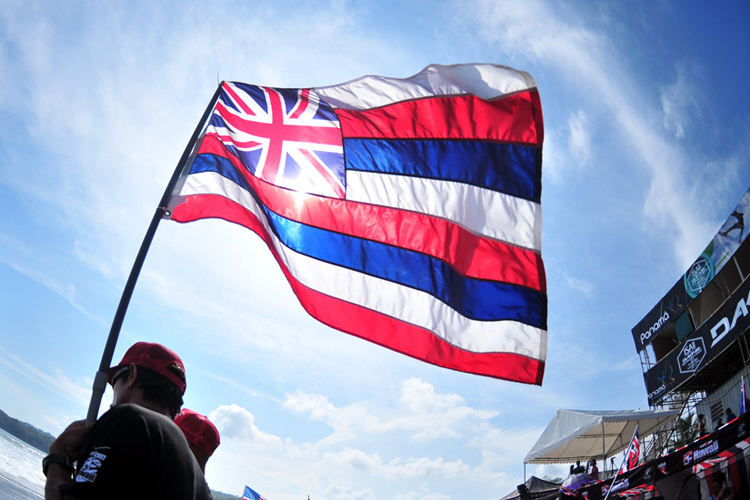
When visitors first arrive in Hawaii, they are often greeted by a sight that feels historically discordant. Amidst the swaying palm trees of Waikiki or the volcanic slopes of the Big Island, the state flag flutters in the Pacific Ocean breeze, proudly displaying the Union Jack in its upper left corner. For those familiar with the history of the United States, where the Stars and Stripes usually reign supreme, the presence of the British national symbol on an American state flag is a fascinating anomaly. This unique design is not a remnant of colonial rule in the traditional sense, but rather a sophisticated landmark of diplomacy, kingly foresight, and the complex geopolitical history of the Hawaiian Kingdom.

The Diplomatic Mastery of King Kamehameha I
To understand why a Pacific archipelago carries the iconography of Great Britain, one must look back to the era of King Kamehameha I, also known as Kamehameha the Great. During the late 18th century, as the monarch worked to unify the islands into a single kingdom, Hawaii became a vital stopover for maritime explorers and traders.
The Influence of Captain George Vancouver
The story traditionally begins with the arrival of Captain George Vancouver, a British explorer who visited the islands several times between 1792 and 1794. Vancouver developed a close rapport with King Kamehameha I, acting as an advisor and presenting the King with gifts that would influence the nation’s trajectory. Among these gifts was the Red Ensign, the flag flown by the British Navy at the time.
King Kamehameha I, a shrewd leader who understood the power of symbols, began flying the British flag over his residence. In the eyes of the King, the flag was more than just a piece of fabric; it was a sign of a burgeoning alliance with the United Kingdom. By flying the colors of the British Empire, Hawaii signaled to other passing ships—particularly those from France and the United States—that the kingdom was under the informal protection of a major global power.
Neutrality in a Changing World
As the 19th century progressed, the geopolitical landscape surrounding the North Pacific became increasingly crowded. During the War of 1812, the King found himself in a precarious position. Flying the British flag made Hawaii a target for American privateers, while failing to show loyalty to London could jeopardize his relationship with the British.
To resolve this, King Kamehameha I commissioned a new flag that would incorporate elements of both major powers. He sought a design that honored his British friends while acknowledging the growing influence of America. The result was the Ka Hae Hawaii, a masterpiece of diplomatic neutrality. It retained the Union Jack in the canton (the top corner) but added eight horizontal stripes of red, white, and blue, reminiscent of the flag of the United States.
The Evolution of Design: Symbols of Sovereignty
While the Union Jack is the most striking feature to outsiders, the rest of the flag is rich with meaning that pertains specifically to the geography and culture of the islands. Every element of the Ka Hae Hawaii serves as a visual landmark of the kingdom’s identity.
The Eight Stripes and the Major Islands
The eight horizontal stripes represent the eight major islands that make up the inhabited archipelago. These are Oahu, Maui, Kauai, Lanai, Molokai, Niihau, Kahoolawe, and the Big Island (also known as the island of Hawaii).
The color sequence of the stripes—white, red, and blue—repeats from the top down. While the choice of colors was undoubtedly influenced by the national palettes of the United Kingdom and the United States, the way they are arranged is unique to the islands. This configuration allowed Hawaiian vessels to trade in international ports with a recognized banner, ensuring that the Kingdom of Hawaii was treated as a sovereign entity on the high seas.
Designers and Historians
Historical records vary on who actually finalized the design. Some historians credit Alexander Adams, a Scottish sea captain who served as a commander in the Hawaiian Navy. Others suggest that George Beckley, another British captain in the King’s service, played a pivotal role. Regardless of the specific architect, the flag was officially adopted by the kingdom around 1816 and has remained virtually unchanged ever since, despite the massive political upheavals that followed.

Historical Landmarks: The Paulet Affair and the Flag’s Survival
The flag’s resilience was tested in 1843 during an event known as the Paulet Affair. This period serves as a critical historical landmark in the narrative of Hawaiian independence. Lord George Paulet, a captain in the British Royal Navy, arrived in Honolulu and unilaterally seized the islands in the name of the British crown, forcing King Kamehameha III to cede sovereignty.
The Restoration at Thomas Square
For five months, the Hawaiian flag was lowered, and the British Union Jack flew alone over the government buildings. However, the British government in London did not support Paulet’s rogue occupation. Rear Admiral Richard Darton Thomas was dispatched to Honolulu to restore the kingdom’s sovereignty.
On July 31, 1843, in a grand ceremony at a site now known as Thomas Square in Honolulu, the Ka Hae Hawaii was hoisted once again. It was during this event that King Kamehameha III uttered the famous words that would become the state motto: Ua Mau ke Ea o ka ʻĀina i ka Pono (“The life of the land is perpetuated in righteousness”). The flag thus became an even more potent symbol of resilience and national pride, having survived an actual British occupation while still retaining the Union Jack as a mark of friendship and historical connection.
Iolani Palace and the End of the Kingdom
As the 19th century drew to a close, the flag continued to fly over Iolani Palace, the official residence of the Hawaiian monarchs in Honolulu. This architectural landmark remains the only royal palace on American soil. When the Hawaiian Kingdom was overthrown in 1893 by a group of American businessmen and sugar planters, the flag’s status became a point of contention.
During the provisional government and the subsequent Republic of Hawaii, the flag was kept as the national banner. Even after the United States annexed the islands in 1898, the design was retained as the territorial flag. This continuity is rare; usually, an annexing power replaces the existing symbols with its own. However, the Ka Hae Hawaii was so deeply ingrained in the local identity that it was formally adopted as the state flag when Hawaii became the 50th state of the United States in 1959.
A Modern Landmark of Cultural Identity
Today, the flag serves as a living landmark of the islands’ storied past. It is flown across the state, from the Hawaii State Capitol to the remote shores of Hanalei Bay on Kauai. Its presence is a constant reminder of the era when Hawaii was a recognized world power, engaging in high-stakes diplomacy with England, France, and the United States.
Preservation of Heritage
For the Native Hawaiian community, the flag is often viewed through a different lens than that of a standard American state flag. It is a symbol of the Lahui (the nation) and the enduring spirit of the Hawaiian people. In many cultural centers and historical landmarks like Puukohola Heiau or Washington Place, the flag is treated with immense reverence.
The Union Jack within the flag has ceased to represent the British Empire in the minds of many locals. Instead, it has become a localized icon—a part of the Hawaiian visual vocabulary that speaks to a time of kings and queens, of navigators and explorers, and of a small nation that held its own on the global stage.
Visiting the Landmarks of the Flag
For travelers interested in this history, there are several key landmarks in Honolulu that tell the story of the Ka Hae Hawaii. A visit to the Hawaii State Archives provides access to the original documents regarding the flag’s design. Meanwhile, Iolani Palace offers a poignant look at where the flag flew during the kingdom’s final days.
Even the National Memorial Cemetery of the Pacific in Punchbowl Crater serves as a backdrop for the flag, illustrating the transition from a sovereign kingdom to a crucial component of the United States. Throughout the islands, the flag is more than just a piece of state branding; it is an architectural and historical landmark in its own right, woven into the very fabric of Hawaiian life.
In conclusion, the presence of the British flag in the Hawaiian state banner is not an accident of history or a sign of current colonial ties. It is a testament to the diplomatic genius of the House of Kamehameha. By blending the symbols of the world’s most powerful nations with the representation of the eight islands, the kingdom created a lasting emblem that has survived monarchies, revolutions, and statehood. It remains one of the most distinctive and historically rich flags in the world, standing as a proud landmark of Hawaii’s unique position in the story of the Pacific.
LifeOutOfTheBox is a participant in the Amazon Services LLC Associates Program, an affiliate advertising program designed to provide a means for sites to earn advertising fees by advertising and linking to Amazon.com. Amazon, the Amazon logo, AmazonSupply, and the AmazonSupply logo are trademarks of Amazon.com, Inc. or its affiliates. As an Amazon Associate we earn affiliate commissions from qualifying purchases.