
The hotel industry is a complex ecosystem of operations, where precision, efficiency, and meticulous attention to detail are paramount to guest satisfaction and financial health. Among the many crucial roles that ensure a hotel runs smoothly, the night auditor stands out. This individual is not merely a late-night desk clerk; they are a vital cog in the financial machinery of a hotel, responsible for the critical tasks that bridge the operational day with the financial reporting period. Understanding the role and responsibilities of a night auditor is essential for anyone involved in hotel management, operations, or even aspiring to work within this dynamic sector.
The Crucial Role of the Night Auditor
The night auditor’s shift typically spans the overnight hours, a period when most hotel operations are winding down, yet crucial financial reconciliation needs to take place. This role demands a unique blend of customer service skills, financial acumen, and an unwavering commitment to accuracy. While front desk duties may be part of their responsibilities, their primary focus lies in the accurate processing of financial transactions and the generation of daily reports that inform management decisions.
Bridging the Operational Day and Financial Reporting
Hotels operate 24/7, but their accounting cycles often follow a more conventional business day. The night auditor acts as the crucial link, ensuring that all financial activities that occurred during the operational day are accurately captured, balanced, and reported before the next business day begins. This includes everything from room charges and restaurant bills to mini-bar consumption and any other services rendered to guests. Without a competent night auditor, a hotel’s financial picture would be incomplete and potentially inaccurate, leading to significant operational and strategic challenges.
Core Responsibilities
The responsibilities of a night auditor are multifaceted and demand a high level of trust and responsibility. These typically include:
- Posting Room Charges: Ensuring that all guest room charges, including room rates, taxes, and any incidental fees, are accurately posted to the correct guest folios.
- Processing Guest Payments: Handling check-ins and check-outs, processing payments via cash, credit cards, or other authorized methods, and ensuring all transactions are correctly recorded.
- Reconciling Daily Transactions: This is perhaps the most critical function. The night auditor must balance all departmental accounts from the previous day, including rooms, food and beverage, and other revenue centers, against the hotel’s accounting system. This involves verifying that all charges have been posted and all payments have been received and recorded correctly.
- Generating Daily Reports: Producing essential financial reports, such as the daily revenue report, occupancy report, and a summary of all transactions. These reports provide management with a clear overview of the hotel’s performance for the day.
- Auditing Front Desk Operations: Reviewing the day’s transactions for accuracy and completeness, identifying any discrepancies, and initiating corrective actions.
- Handling Guest Inquiries: While the primary focus is financial, the night auditor often serves as the primary point of contact for guests during the night. This can include answering questions, addressing minor issues, and ensuring a safe and comfortable environment for overnight guests.
- Preparing for the Next Day: Ensuring that all necessary paperwork is organized and ready for the morning staff, and that the front desk is set up for a smooth transition.
The Night Audit Process: A Step-by-Step Breakdown
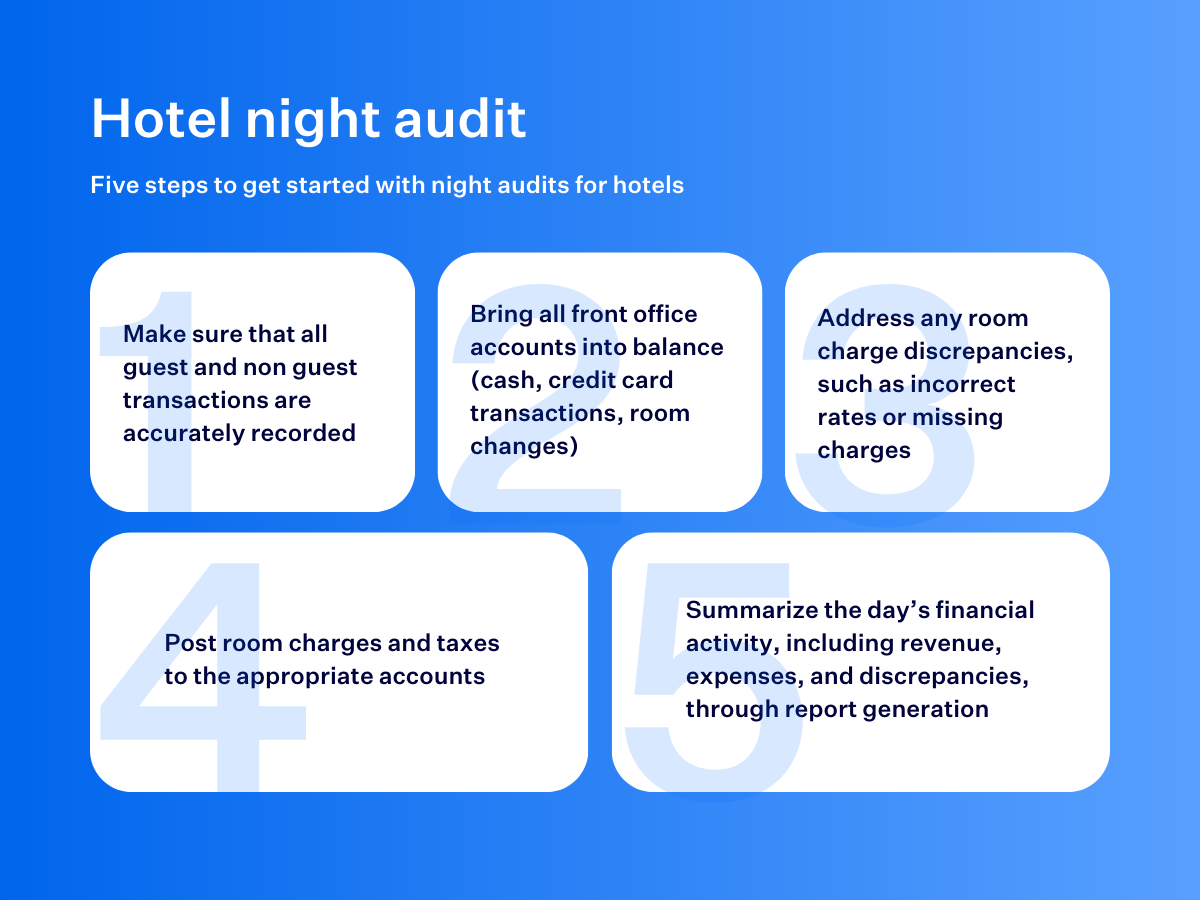
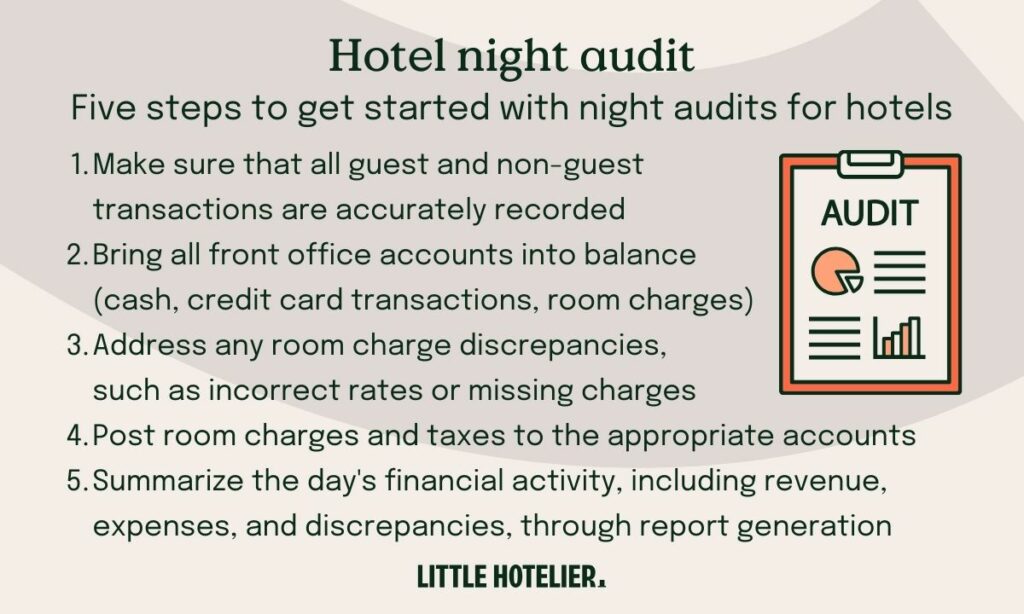
The night audit process is a systematic procedure designed to ensure that all financial data is accurate and accounted for. While the specific software and procedures may vary between hotels, the fundamental steps remain consistent.
Step 1: Gathering and Reviewing Transaction Data
The process begins with the night auditor collecting all relevant transaction data from various hotel departments. This includes reports from the front desk, restaurant point-of-sale (POS) systems, room service, the mini-bar, and any other revenue-generating outlets. The auditor meticulously reviews these reports for completeness and accuracy, cross-referencing them with initial bookings and service records.
Step 2: Posting and Verifying Charges
All charges incurred by guests throughout the day are posted to their respective folios. This involves ensuring that room rates, taxes, service charges, and any additional expenses (like laundry services or phone calls) are correctly entered. The night auditor then verifies these postings against supporting documentation, looking for any errors or omissions. This step is crucial for preventing revenue leakage and ensuring accurate billing for guests.
Step 3: Reconciling Departmental Accounts
Each revenue-generating department within the hotel must reconcile its daily takings. The night auditor is responsible for balancing the revenue reported by each department against the actual cash, credit card slips, or electronic transfers received. For instance, the restaurant’s POS system must match the total payments received for food and beverage sales. Any discrepancies are investigated and resolved at this stage.
Step 4: Balancing Guest Folios
Individual guest folios are then balanced. This involves ensuring that all charges posted to a guest’s account are accounted for and that the total balance reflects all services rendered. Payments received from guests, whether full or partial, are meticulously recorded and deducted from their folios.
Step 5: Generating and Analyzing Reports
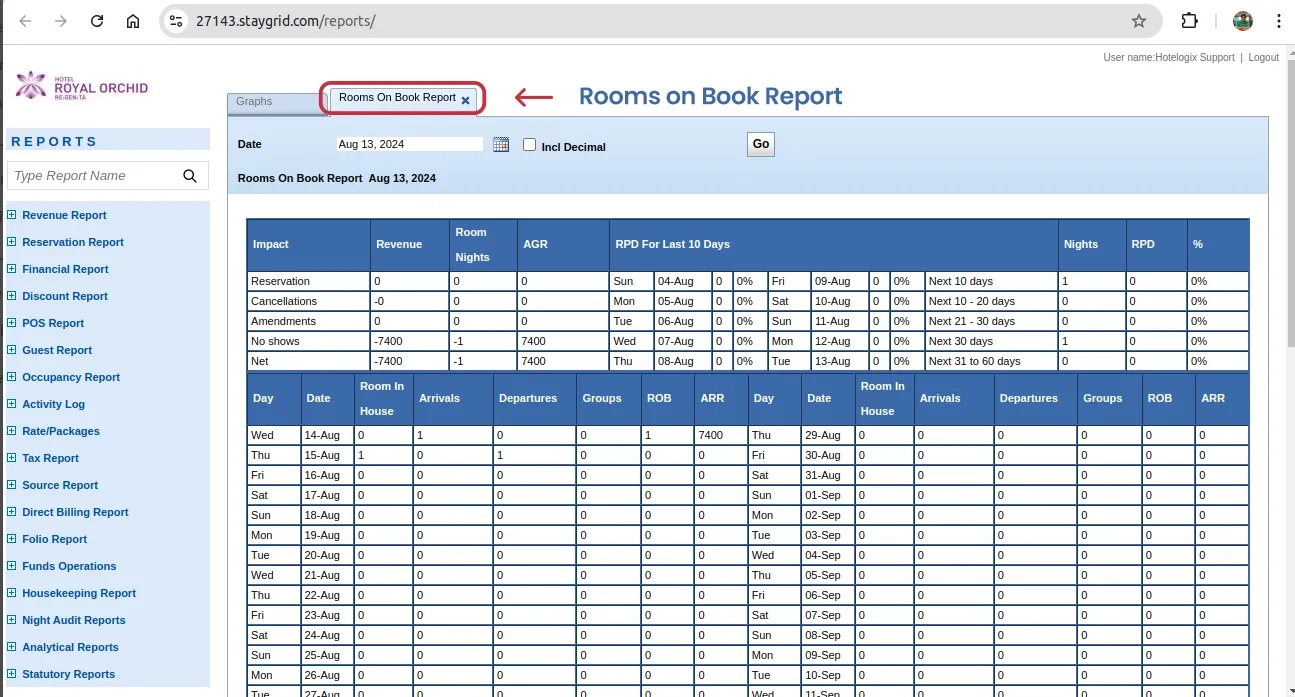
Once all transactions have been posted, verified, and balanced, the night auditor generates a series of key financial reports. The most critical of these is the Daily Operations Report (DOR), often referred to as the “night audit report.” This comprehensive document summarizes:
- Room Revenue: Total revenue generated from room sales, broken down by room type if applicable.
- Occupancy Statistics: Percentage of rooms occupied, average daily rate (ADR), and revenue per available room (RevPAR).
- Non-Room Revenue: Revenue from food and beverage, banquets, mini-bar, and other services.
- Cash and Credit Card Summaries: Totals for each payment method received.
- Accounts Receivable: Outstanding balances for corporate accounts or guests with credit arrangements.
- Exceptions and Discrepancies: A log of any issues encountered and the actions taken to resolve them.
Management uses these reports to assess the hotel’s financial performance, identify trends, and make informed operational and strategic decisions.
Step 6: Preparing for the Morning Shift
Finally, the night auditor ensures that the front desk is prepared for the arrival of the morning shift. This includes preparing cash drawers for the front desk agents, organizing any necessary paperwork, and briefing the incoming staff on any significant events or issues that occurred during the night.
Essential Skills and Qualities for a Night Auditor
The role of a night auditor requires more than just the ability to operate hotel software. A successful night auditor possesses a specific set of skills and personal attributes:
Financial Acumen and Attention to Detail
A strong understanding of basic accounting principles is essential. The ability to meticulously check figures, identify even small discrepancies, and ensure accuracy in all financial dealings is paramount. This precision prevents costly errors and safeguards the hotel’s revenue.
Technological Proficiency
Night auditors must be adept at using hotel property management systems (PMS), such as those offered by Oracle Hospitality or Cloudbeds. Familiarity with accounting software and standard office applications like Microsoft Excel is also crucial for data analysis and report generation.
Customer Service Excellence
Despite working overnight, the night auditor is often the first or last point of contact for guests. They must be polite, professional, and helpful, capable of handling guest inquiries, requests, and even minor complaints with grace and efficiency. This is particularly important for late arrivals or early departures.
Problem-Solving Abilities
Discrepancies and unexpected issues can arise during the night audit process. A good night auditor can think critically, analyze problems, and implement effective solutions independently. This might involve tracing transactions, communicating with other departments, or escalating issues appropriately.
Integrity and Trustworthiness
Given the financial responsibilities, night auditors must be individuals of impeccable integrity. They handle sensitive financial information and are entrusted with the hotel’s revenue. A background check and a demonstrated commitment to ethical conduct are standard expectations.
Adaptability and Independence
The overnight shift requires a certain degree of self-reliance and the ability to work effectively with minimal supervision. The night auditor must be comfortable with this independent work environment while remaining proactive and communicative.
The Impact of Night Auditing on Hotel Operations
The importance of effective night auditing cannot be overstated. It directly influences a hotel’s financial health, operational efficiency, and ultimately, its profitability.
Financial Accuracy and Control
Accurate financial reporting is the bedrock of sound business management. The night audit ensures that all revenue is accounted for, expenses are correctly categorized, and financial statements reflect the true financial position of the hotel. This level of control is vital for identifying areas of overspending or underperformance.
Operational Efficiency
By identifying and rectifying errors in real-time, the night audit process helps maintain smooth operational flow. For instance, correcting posting errors on a guest’s folio before they check out can prevent disputes and enhance the guest experience. Likewise, timely financial data allows management to make quicker decisions regarding staffing, inventory, and promotions.
Informed Decision-Making
The daily reports generated by the night auditor are indispensable tools for hotel management. They provide insights into occupancy rates, average daily rates, revenue streams, and guest spending patterns. Armed with this data, managers can assess the effectiveness of marketing campaigns, pricing strategies, and operational adjustments, leading to more strategic and profitable decisions. Whether it’s determining optimal pricing for rooms at the Grand Hyatt Hotel or evaluating the success of a new menu at a resort’s restaurant, the night audit data is crucial.
Guest Satisfaction
While not always directly interacting with guests extensively, the night auditor’s diligence contributes to guest satisfaction by ensuring that billing is accurate and that any issues are addressed promptly. A guest discovering an incorrect charge on their bill at checkout can lead to dissatisfaction and negative reviews. The night audit’s preventative role in this regard is significant.
Conclusion
The night auditor is an unsung hero of the hotel industry, working diligently behind the scenes to ensure financial integrity and operational continuity. Their role extends far beyond simple data entry; it involves a deep understanding of financial processes, a keen eye for detail, and a commitment to accuracy. In the fast-paced world of hospitality, where precision is key to success, the night auditor’s contribution is invaluable, forming the critical bridge that supports informed management, financial stability, and ultimately, a superior guest experience.
LifeOutOfTheBox is a participant in the Amazon Services LLC Associates Program, an affiliate advertising program designed to provide a means for sites to earn advertising fees by advertising and linking to Amazon.com. Amazon, the Amazon logo, AmazonSupply, and the AmazonSupply logo are trademarks of Amazon.com, Inc. or its affiliates. As an Amazon Associate we earn affiliate commissions from qualifying purchases.