
Establishing a Limited Liability Company (LLC) in Idaho is a strategic move for entrepreneurs and business owners seeking to protect their personal assets while enjoying the flexibility of pass-through taxation. The Gem State offers a business-friendly environment, and understanding the process for forming an LLC is crucial for a smooth and successful launch. This guide will walk you through the essential steps, from initial preparation to the final filing, ensuring you meet all the requirements set forth by the Idaho Secretary of State.
Understanding the Benefits of an Idaho LLC
Before diving into the procedural aspects, it’s beneficial to understand why an LLC is a preferred business structure and the specific advantages it offers within Idaho.
Asset Protection
The primary allure of an LLC is the protection it affords its owners, known as members, from personal liability for business debts and obligations. If your LLC were to incur debt or face a lawsuit, your personal assets – such as your home, vehicles, and savings – would generally be shielded. This separation of personal and business finances is a cornerstone of the LLC structure.
Pass-Through Taxation
Unlike traditional C-corporations, LLCs typically benefit from pass-through taxation. This means the LLC itself does not pay federal income taxes. Instead, the profits and losses are “passed through” to the members, who report them on their individual income tax returns. This avoids the “double taxation” that can occur with C-corporations, where profits are taxed at the corporate level and again when distributed to shareholders as dividends.
Flexibility and Simplicity
Idaho LLCs offer considerable operational flexibility. Management can be structured in various ways, either by the members themselves or by appointed managers. Furthermore, the administrative requirements for maintaining an LLC are generally less burdensome than those for corporations, making it an attractive option for small to medium-sized businesses.
Step-by-Step Guide to Filing an LLC in Idaho
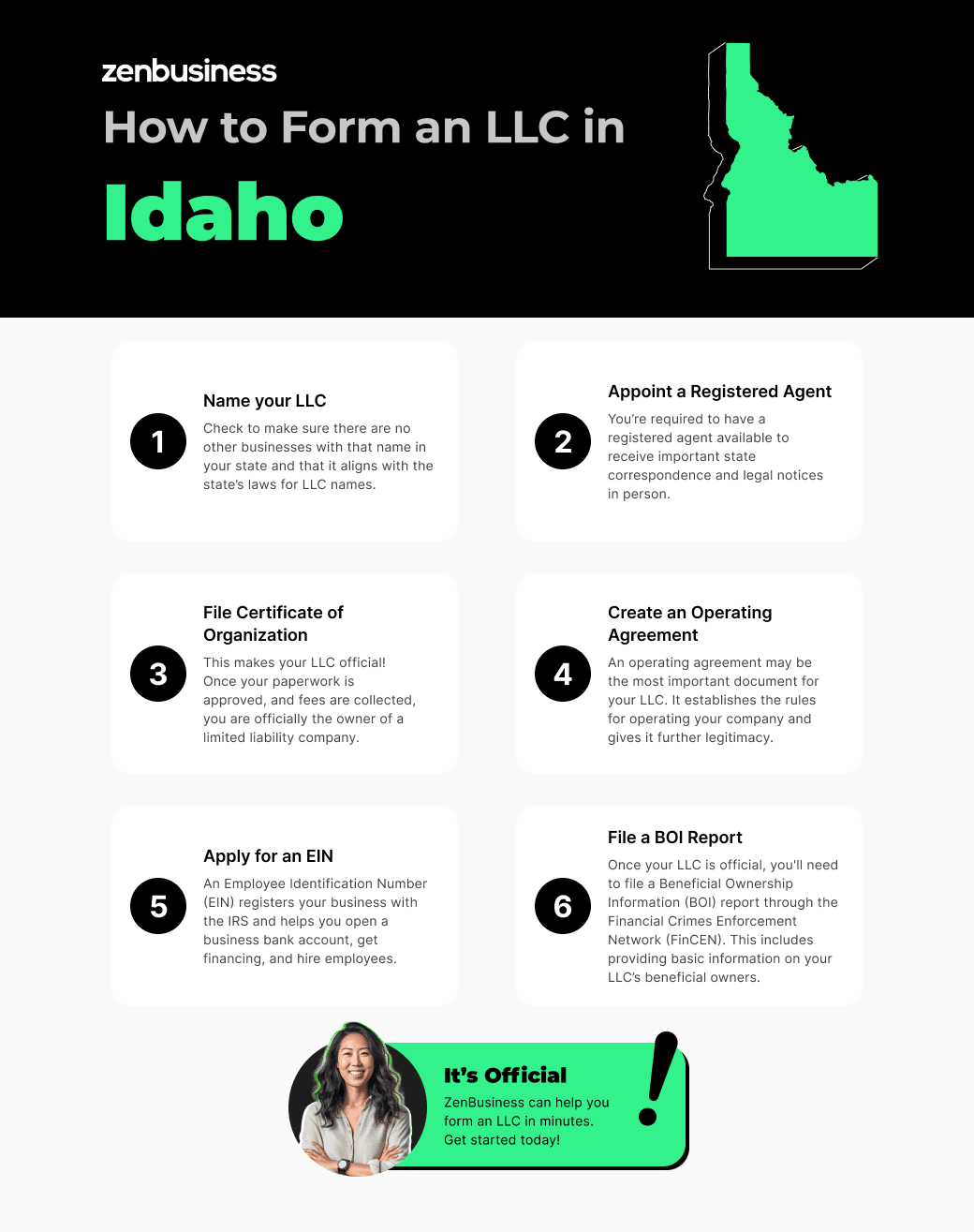
The process of filing an LLC in Idaho involves several key steps. Adhering to these guidelines will ensure your formation is compliant and efficient.
1. Choose a Unique Business Name
Your LLC’s name is its public identity. In Idaho, your chosen business name must be distinguishable from other existing business entities registered with the Secretary of State.
Name Availability Search
The first crucial step is to check if your desired name is available. You can do this by conducting a search on the Idaho Secretary of State’s website. This search will reveal if any other registered entity is using the exact or a confusingly similar name.
Naming Requirements
Idaho statutes require that an LLC name include one of the following designators: “Limited Liability Company,” “LLC,” or “L.L.C.” You may also be able to use abbreviations like “Co., Ltd.” or “Limited Co.” if they are accompanied by “LLC” or “L.L.C.” Avoid using words that could be misleading, such as “Bank,” “Trust,” or “Insurance,” unless you have obtained the necessary state approval.
Reserving Your Business Name (Optional)
If you have found an available name but are not yet ready to file your LLC formation documents, you can reserve the name for a limited period. This involves submitting a Name Reservation Application to the Idaho Secretary of State and paying a nominal fee. This ensures that no other business can claim your preferred name while you prepare your filing.
2. Appoint a Registered Agent
A registered agent is a person or entity designated to receive official legal and government correspondence on behalf of your LLC. This individual or business must have a physical street address in Idaho (not a P.O. Box) and be available during normal business hours to accept service of process.
Who Can Be a Registered Agent?
- An Individual Resident of Idaho: This can be a member of the LLC or another designated individual who resides in Idaho.
- A Domestic Business Entity: A business registered and authorized to do business in Idaho.
- A Foreign Business Entity: A business authorized to do business in Idaho that has appointed a registered agent within the state.
Importance of the Registered Agent
The registered agent’s role is vital for maintaining compliance. Failure to maintain a registered agent can lead to administrative dissolution of your LLC by the state. Many businesses opt for a professional registered agent service, which can provide a reliable address and ensure that important documents are never missed.
3. File the Articles of Organization
The Articles of Organization, often referred to as the Certificate of Organization in some states, is the official document that formally creates your LLC with the state.
Information Required for Idaho Articles of Organization
The Idaho Secretary of State requires specific information to be included in your Articles of Organization. While the exact form may vary slightly, generally you will need:
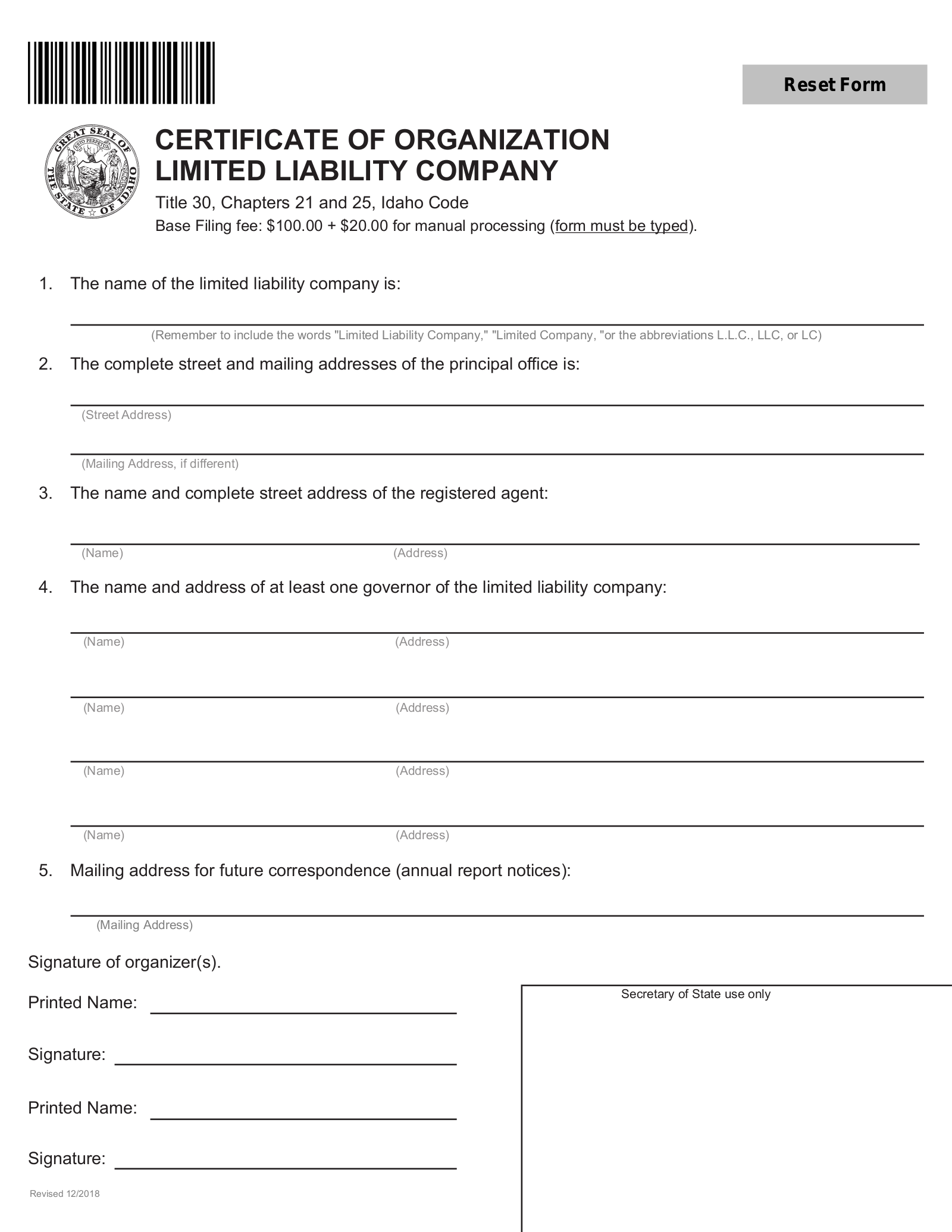
- Name of the LLC: The unique name you have chosen and verified.
- Name and Address of the Registered Agent: The name and physical street address of your designated registered agent in Idaho.
- Principal Office Address: The main business address of your LLC.
- Management Structure: Whether the LLC will be member-managed or manager-managed.
- Organizer’s Name and Address: The name and address of the person filing the Articles of Organization. This person does not need to be a member of the LLC.
Filing Method and Fee
You can typically file your Articles of Organization online through the Idaho Secretary of State’s website, by mail, or in person. There is a filing fee associated with this process, which can be found on the Secretary of State’s official fee schedule. Processing times can vary, but online filings are usually the quickest.
4. Create an Operating Agreement
While not legally required by the state of Idaho for LLCs, an Operating Agreement is a critical internal document that outlines the ownership and operating procedures of your LLC. It is highly recommended for all LLCs, regardless of size or number of members.
Key Provisions of an Operating Agreement
An Operating Agreement typically covers:
- Ownership Percentages: How the ownership interests (membership units) are divided among the members.
- Member Responsibilities: The roles, duties, and responsibilities of each member.
- Profit and Loss Distribution: How profits and losses will be allocated among members.
- Management Structure: Detailed procedures for decision-making, voting rights, and management responsibilities.
- Admission and Withdrawal of Members: Procedures for adding new members or handling the departure of existing members.
- Dissolution Procedures: How the LLC will be dissolved and its assets distributed if the business ceases operations.
Importance of an Operating Agreement
This document serves as a roadmap for your business, preventing potential disputes among members by clearly defining expectations and procedures. It also reinforces the separation between the LLC and its members, which is essential for maintaining liability protection.
5. Obtain an EIN (Employer Identification Number)
If your LLC plans to hire employees or operate as a corporation for tax purposes, you will need to obtain an Employer Identification Number (EIN) from the Internal Revenue Service (IRS). An EIN is like a Social Security number for your business.
When is an EIN Required?
- You plan to hire employees.
- Your LLC is taxed as a corporation or partnership.
- You operate multiple LLCs and file separate tax returns.
- You have certain types of business structures, such as a single-member LLC that elects to be taxed as a corporation.
How to Apply for an EIN
Applying for an EIN is a free and straightforward process that can be completed online on the IRS website. You will need to provide information about your business and its responsible parties.
6. Understand Idaho State and Local Requirements
Beyond the federal requirements and the initial LLC filing, your business may have other state and local obligations to fulfill.
Business Licenses and Permits
Depending on the nature of your business and its location within Idaho, you may need to obtain specific business licenses and permits from state, county, or city agencies. For example, a restaurant will require different permits than a consulting firm. Researching the specific requirements for your industry is essential.
State Tax Obligations
Idaho businesses are subject to various state taxes, including sales tax, use tax, and income tax. You will likely need to register with the Idaho State Tax Commission to obtain necessary tax permits and understand your filing obligations.
Maintaining Your Idaho LLC
Forming your LLC is just the beginning. Ongoing compliance is crucial for keeping your business in good standing with the state.
Annual Reports
Idaho requires all LLCs to file an annual report with the Secretary of State. This report provides updated information about your business, including its registered agent and principal office address. Failure to file the annual report can result in late fees and eventual administrative dissolution of your LLC.
Business Records
Maintain organized and accurate business records, including financial statements, meeting minutes, and any amendments to your Operating Agreement. This is good business practice and is vital for demonstrating the separation of your personal and business affairs, which is key to maintaining liability protection.
Conclusion
Forming an LLC in Idaho is an accessible process when approached systematically. By carefully selecting a name, appointing a registered agent, filing the necessary documentation, and establishing a solid Operating Agreement, you lay a strong foundation for your business. Remember to stay informed about ongoing compliance requirements to ensure your LLC continues to operate smoothly and effectively in the dynamic business landscape of the Gem State.
LifeOutOfTheBox is a participant in the Amazon Services LLC Associates Program, an affiliate advertising program designed to provide a means for sites to earn advertising fees by advertising and linking to Amazon.com. Amazon, the Amazon logo, AmazonSupply, and the AmazonSupply logo are trademarks of Amazon.com, Inc. or its affiliates. As an Amazon Associate we earn affiliate commissions from qualifying purchases.