
When planning a trip to Boise, Idaho, understanding its timezone is a seemingly small detail that can have significant implications for your travel itinerary. From booking flights and accommodations to scheduling meetings or coordinating with local contacts, knowing the precise timezone ensures seamless logistics and avoids potential confusion or missed connections. Boise operates within a well-defined timezone, adhering to the standard practices of the United States and its geographical divisions. This knowledge is not merely academic; it’s a practical necessity for any traveler aiming to maximize their time and minimize stress during their visit to this vibrant Idaho capital.

Understanding Timezones and Boise’s Position
The United States is divided into multiple timezones, each reflecting the Earth’s rotation and established for practical purposes of communication, commerce, and daily life. These timezones are generally based on meridians of longitude, with each zone typically spanning 15 degrees of longitude. The primary continental timezones, moving from east to west, include Eastern, Central, Mountain, and Pacific.
The Mountain Time Zone
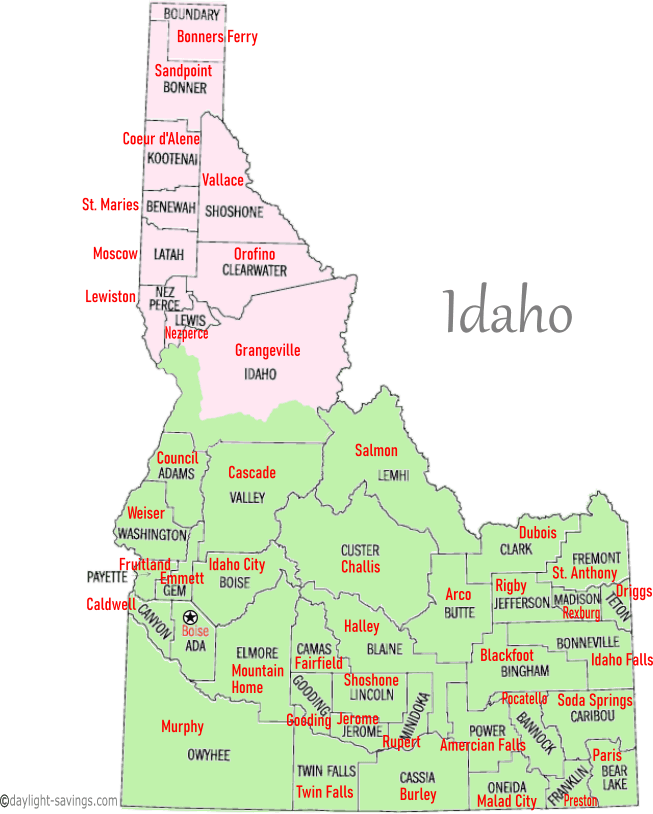
Boise, Idaho, is situated firmly within the Mountain Time Zone. This zone is characterized by being seven hours behind Coordinated Universal Time (UTC−7) during standard time and six hours behind UTC during daylight saving time (UTC−6). The Mountain Time Zone encompasses a significant portion of the western United States, stretching across states from Montana and Wyoming down through Colorado, New Mexico, and parts of Arizona, North Dakota, South Dakota, Nebraska, Kansas, and Texas.
The designation of Boise within the Mountain Time Zone aligns it with many other major western cities, such as Denver, Colorado, and Salt Lake City, Utah. This can simplify travel planning if you are moving between these areas, as the time difference will be predictable and consistent. For instance, if you are traveling from Chicago (Central Time) to Boise, you will adjust your watch back two hours. If you are coming from Seattle (Pacific Time), you will adjust your watch forward one hour.
Daylight Saving Time in Boise
Like most of the United States, Idaho observes Daylight Saving Time (DST). This practice involves advancing clocks by one hour during the warmer months, typically from the second Sunday in March to the first Sunday in November. During DST, Boise operates on Mountain Daylight Time (MDT), which is UTC−6. Outside of these periods, during standard time, Boise observes Mountain Standard Time (MST), which is UTC−7.
It is crucial for travelers to be aware of when DST begins and ends, as this can cause confusion if not accounted for. Most digital devices, such as smartphones and computers, automatically adjust for DST. However, if you are relying on older analog clocks or coordinating with individuals who may not have automatic updates, it is best to confirm the current time and whether DST is in effect. This is particularly important for international travelers or those connecting with international flights or business partners, where time differences can be compounded by DST variations.
Implications for Travelers
Understanding that Boise is in the Mountain Time Zone has several practical implications for visitors. These range from booking flights and accommodations to scheduling activities and communicating with people back home.
Flight Bookings and Travel Itineraries
When booking flights to Boise, Boise Airport (BOI), you will see departure and arrival times listed in the local Mountain Time Zone. It is essential to double-check this when making reservations to avoid any miscalculations. For example, if you book a flight departing from New York City (Eastern Time) at 9:00 AM EST, and the flight duration is approximately five hours, it will arrive in Boise at 2:00 PM MST (accounting for the three-hour difference and the flight time). A common mistake is simply adding flight duration to departure time without considering the timezone shift, which could lead to arriving much later than expected or missing subsequent connections. Always confirm the arrival airport’s local time upon booking.
Accommodation and Check-in/Check-out
Hotels in Boise, such as the Boise Grand Hotel or the Hampton Inn Boise Downtown/Idaho Center, will operate their check-in and check-out times according to Mountain Time. Standard check-in times are often in the afternoon (e.g., 3:00 PM MST/MDT), and check-out is usually in the morning (e.g., 11:00 AM MST/MDT). If you are arriving very early or departing very late, you may need to arrange for early check-in or late check-out, which will be governed by the local Boise time. This is also relevant if you are booking vacation rentals or private accommodations through platforms like Airbnb or Vrbo.
Scheduling Activities and Tours
Boise offers a wealth of activities, from exploring the Boise River Greenbelt and visiting the Idaho State Capitol Building to experiencing the local culinary scene. When booking tours or reserving tables at restaurants, all times will be in Mountain Time. For example, a guided walking tour of downtown might start at 10:00 AM MST/MDT, or a popular dinner reservation at Chandlers Steakhouse might be for 7:00 PM MST/MDT. Being aware of the timezone ensures you arrive punctually for your planned adventures and dining experiences.
Business and Communication
For business travelers, coordinating meetings with Boise-based clients or colleagues is straightforward once the timezone is established. However, it is always courteous to confirm meeting times and explicitly state the timezone when scheduling, especially when dealing with parties in different timezones. For instance, a meeting could be scheduled for “2:00 PM MST on Tuesday.” This avoids any ambiguity. Similarly, when communicating with friends or family back home, knowing the time difference allows for more considerate calls and correspondence.
Navigating Timezones for a Smoother Travel Experience
The Mountain Time Zone designation for Boise, Idaho, is a fundamental piece of information for any traveler. By understanding its place within the United States timezone system, including its adherence to Daylight Saving Time, you can significantly enhance the ease and efficiency of your trip.
Resources for Timezone Information
While knowing Boise is in the Mountain Time Zone is the primary takeaway, having access to reliable resources can be beneficial. Online time converters are readily available, allowing you to quickly ascertain the current time in Boise relative to your own location. Many travel booking websites and apps also display arrival and departure times with the local destination timezone clearly indicated. Additionally, local Idaho tourism websites often provide practical information for visitors, which may include timezone details or travel tips.

Staying Updated
The most common pitfall related to timezones is forgetting to adjust for Daylight Saving Time changes. While most modern devices handle this automatically, it is prudent to be aware of the dates when these changes occur. A quick search for “Daylight Saving Time start and end dates in the US” will provide this information. This proactive approach ensures that even with manual timekeeping, you remain synchronized.
In conclusion, the question “What timezone is Boise, Idaho in?” is a gateway to ensuring a well-organized and stress-free travel experience. By embedding this knowledge into your travel planning, you are setting yourself up for a more enjoyable and seamless journey through the capital city of the Gem State. Whether you are exploring the natural beauty surrounding Boise, immersing yourself in its burgeoning arts and culture scene, or attending a business engagement, a clear understanding of the local time is an indispensable tool for any discerning traveler.
LifeOutOfTheBox is a participant in the Amazon Services LLC Associates Program, an affiliate advertising program designed to provide a means for sites to earn advertising fees by advertising and linking to Amazon.com. Amazon, the Amazon logo, AmazonSupply, and the AmazonSupply logo are trademarks of Amazon.com, Inc. or its affiliates. As an Amazon Associate we earn affiliate commissions from qualifying purchases.