
Las Vegas, a city synonymous with dazzling lights, exhilarating entertainment, and unparalleled hospitality, also presents a unique climate that significantly influences the visitor experience. Understanding the weather patterns in this desert metropolis is crucial for planning an enjoyable and comfortable trip, whether you’re seeking thrilling outdoor adventures or indulging in world-class indoor attractions. This guide delves into the nuances of Las Vegas weather, offering insights into what to expect throughout the year and how to best prepare for your visit.
The Distinct Seasons of Las Vegas
While often perceived as perpetually hot, Las Vegas experiences four distinct seasons, each with its own charm and challenges. The desert climate dictates these variations, characterized by extreme temperature swings between day and night and relatively low humidity year-round.
Spring: A Breath of Fresh Air
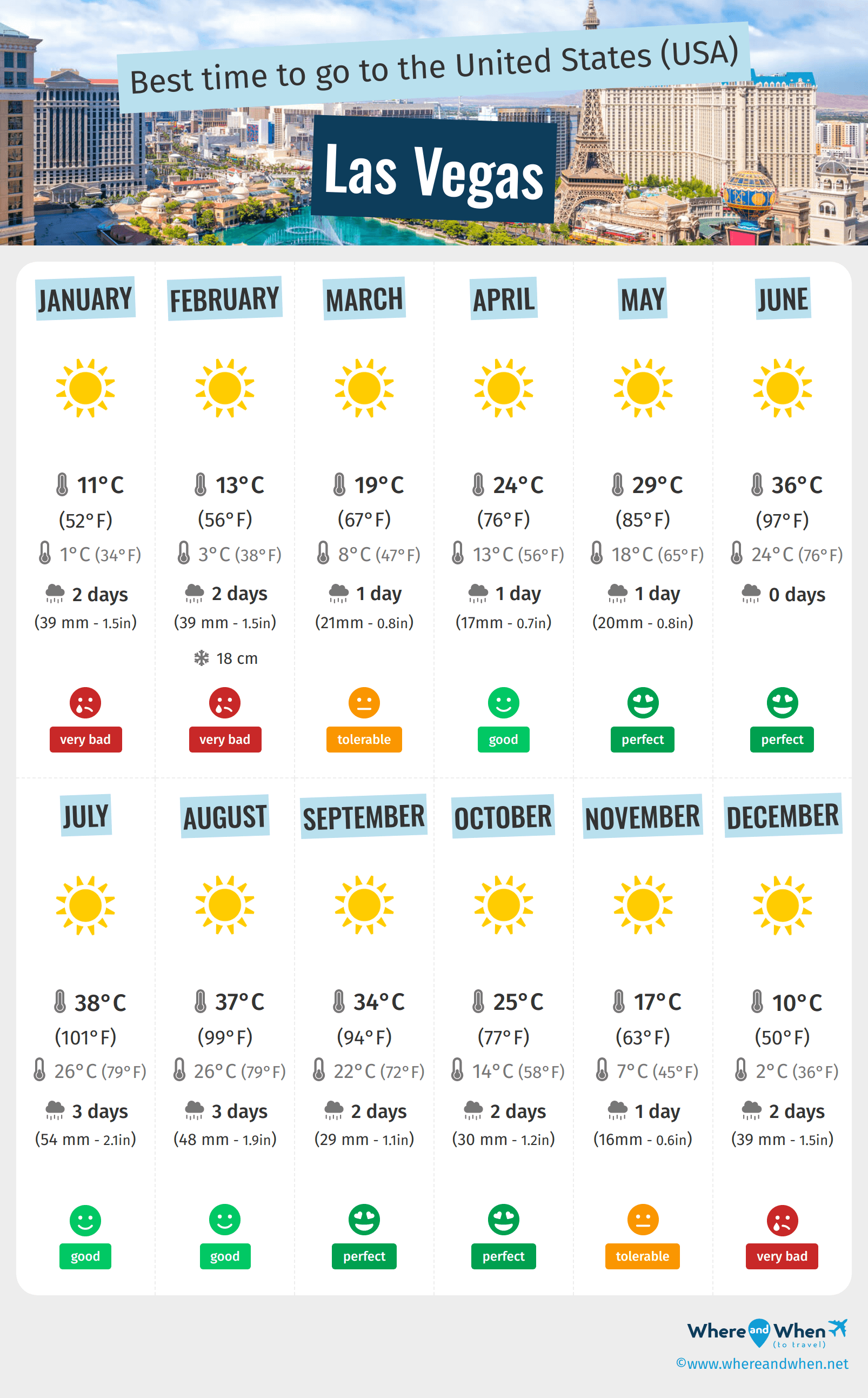
Spring in Las Vegas, typically from March to May, heralds a welcome shift from the cooler winter months to the intense heat of summer. Average temperatures during this period range from pleasant highs in the 60s and 70s Fahrenheit (15-26°C) in early spring to the 80s and 90s Fahrenheit (27-37°C) by late spring. The evenings remain cool, often requiring a light jacket, with temperatures dropping into the 40s and 50s Fahrenheit (4-15°C). Rainfall is minimal, with occasional brief showers that can temporarily clear the air. The spring months are ideal for exploring the abundant outdoor attractions surrounding Las Vegas, such as Red Rock Canyon National Conservation Area and Lake Mead National Recreation Area, as well as enjoying leisurely strolls along the Las Vegas Strip without the oppressive heat.
Summer: Embracing the Heat
The summer months, from June through August, are synonymous with extreme heat in Las Vegas. Daytime temperatures regularly soar into the triple digits Fahrenheit (38°C+), often reaching 105-115°F (40-46°C) and sometimes even higher. The sun is intense, and shade is a precious commodity. Despite the scorching temperatures, the city’s tourism industry thrives, with visitors seeking refuge in the air-conditioned casinos, resorts, and entertainment venues. Hydration is paramount, and outdoor activities are best scheduled for the early morning or late evening. Many visitors take advantage of the heated pools and water parks offered by the numerous resorts, such as the MGM Grand Hotel & Casino and The Venetian Resort Las Vegas, to cool down. Thunderstorms, known as the “monsoon season,” can occur in late summer, bringing sudden, intense downpours and dust storms, but these are typically short-lived.
Autumn: A Golden Transition
Autumn in Las Vegas, spanning September to November, offers a delightful respite from the summer’s intensity. The weather gradually cools, with September still experiencing warm days in the 90s Fahrenheit (32-37°C), while October and November bring more temperate conditions, with average highs in the 70s and 80s Fahrenheit (21-31°C). Evenings become crisp and cool, making them perfect for enjoying outdoor dining or exploring the vibrant nightlife. The fall months are excellent for a variety of activities, from attending outdoor festivals and concerts to hiking in the nearby mountains. The clear skies and comfortable temperatures make it an ideal time for sightseers and adventure seekers alike.
Winter: Mild and Pleasant
Winter in Las Vegas, from December to February, is characterized by mild temperatures, making it an attractive destination for those seeking to escape colder climates. Daytime highs typically range from the 50s to the low 70s Fahrenheit (10-22°C), while nighttime temperatures can drop into the 30s and 40s Fahrenheit (0-10°C), sometimes dipping below freezing. While snow is rare, it does occasionally fall, transforming the desert landscape into a temporary wonderland. The winter season offers a comfortable environment for exploring the city’s attractions, from the Bellagio Conservatory & Botanical Gardens to the shows on the Las Vegas Strip. It’s also a popular time for visiting nearby natural wonders like Valley of Fire State Park before the summer heat returns.
Packing Essentials for Las Vegas Weather
Regardless of the season, a few key items are essential for a comfortable visit to Las Vegas.
Year-Round Considerations
- Sun Protection: Even during cooler months, the desert sun is strong. Sunscreen with a high SPF, sunglasses, and a wide-brimmed hat are indispensable.
- Hydration: Dehydration is a significant concern in the desert climate. Carry a reusable water bottle and drink plenty of water throughout the day.
- Comfortable Footwear: You’ll likely be doing a lot of walking, whether exploring casinos, attending shows, or visiting attractions. Comfortable shoes are a must.
- Layering: Given the temperature fluctuations between day and night, and the often-variable indoor temperatures (air conditioning can be quite cool), packing layers is always a wise strategy.
Seasonal Specifics
- Spring & Autumn: Pack light layers, including t-shirts, long-sleeved shirts, and a light jacket or sweater for cooler evenings. Comfortable walking shoes are essential.
- Summer: Lightweight, breathable clothing is crucial. Think cotton or linen fabrics. Include swimwear for pool time, a wide-brimmed hat, sunglasses, and plenty of sun protection. Don’t forget a light cover-up for air-conditioned interiors.
- Winter: While mild, winter still requires some warmth. Pack sweaters, a medium-weight jacket, long pants, and possibly a scarf and gloves for colder nights. Comfortable closed-toe shoes are recommended.
Beyond the Strip: Weather’s Impact on Outdoor Activities
While many visitors focus on the indoor allure of Las Vegas, the surrounding natural beauty offers incredible opportunities for exploration. The weather plays a pivotal role in the accessibility and enjoyment of these outdoor pursuits.
Exploring the Desert Landscape
- Hiking and Biking: Trails in areas like Red Rock Canyon National Conservation Area and Mount Charleston are best enjoyed during the cooler spring and autumn months. Summer hikes require very early starts and extreme caution due to heat. Winter offers a unique, crisp hiking experience, though higher elevations on Mount Charleston can receive snow.
- Water Activities: Lake Mead National Recreation Area and the Colorado River offer opportunities for boating, swimming, and kayaking. The summer months are ideal for water sports due to the warm water temperatures, while spring and fall provide more comfortable conditions for land-based activities around the lake.
- Scenic Drives: The stunning vistas of Valley of Fire State Park are accessible year-round, but the visual experience is enhanced by pleasant weather. Spring wildflowers can add an extra layer of beauty to the desert blooms.
Planning for the Elements
Checking the daily weather forecast is a vital part of any Las Vegas itinerary, especially for those planning excursions outside the city. Local weather services and travel websites provide up-to-date information that can help you tailor your activities and packing accordingly. Be prepared for sudden changes, particularly during the monsoon season in late summer, which can impact visibility and road conditions. Understanding the weather in Las Vegas empowers you to make informed decisions, ensuring your trip is as comfortable, safe, and memorable as possible, allowing you to fully embrace the diverse experiences this dynamic city and its surroundings have to offer.
LifeOutOfTheBox is a participant in the Amazon Services LLC Associates Program, an affiliate advertising program designed to provide a means for sites to earn advertising fees by advertising and linking to Amazon.com. Amazon, the Amazon logo, AmazonSupply, and the AmazonSupply logo are trademarks of Amazon.com, Inc. or its affiliates. As an Amazon Associate we earn affiliate commissions from qualifying purchases.