
The Las Vegas skyline is a dazzling testament to human ambition, a vertical landscape punctuated by architectural marvels that pierce the desert sky. While the city is famed for its vibrant entertainment, world-class dining, and iconic casinos, its impressive collection of skyscrapers also stands as a significant attraction. For visitors and architecture enthusiasts alike, understanding the tallest structures offers a unique perspective on the city’s evolution and its relentless pursuit of grandeur. This exploration delves into the current reigning champion of height in Las Vegas, examining its design, significance, and its place within the broader context of the city’s architectural narrative.

The Reigning Sovereign: The STRAT
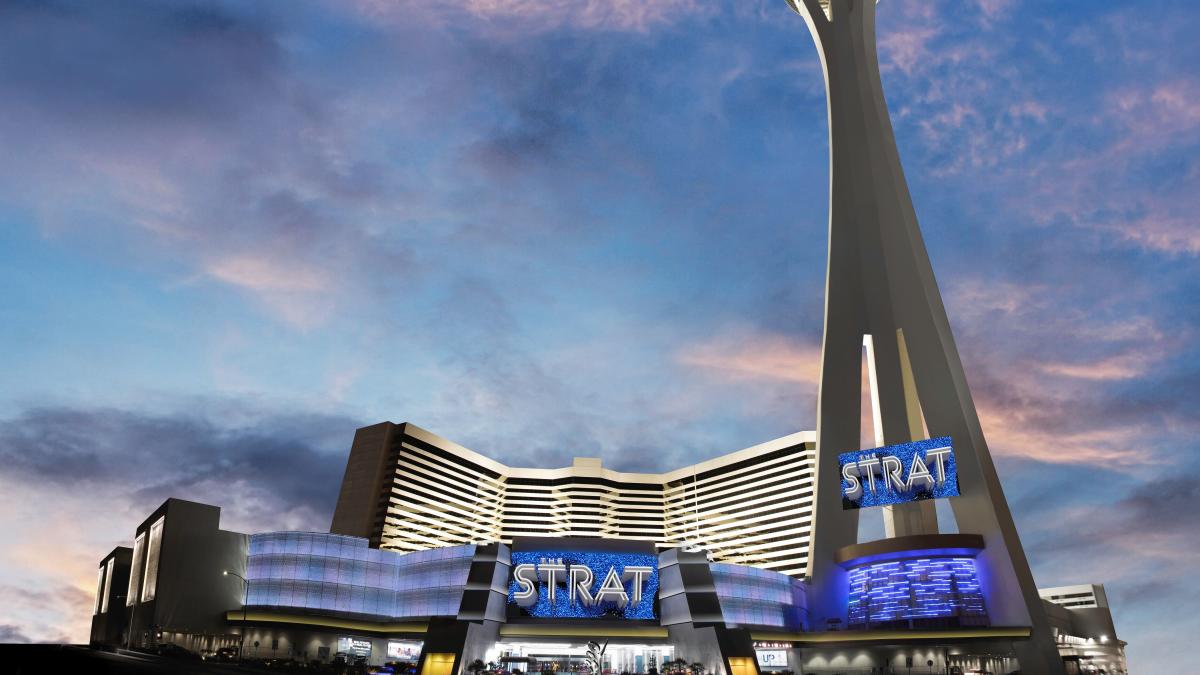
The undisputed titan of the Las Vegas skyline, holding the title of the tallest building, is The STRAT (formerly Stratosphere Hotel, Casino & Tower). More than just a hotel and casino, The STRAT is a multifaceted entertainment complex crowned by its iconic observation tower, which elevates it to an unparalleled stature.
A Colossus of Steel and Concrete
Standing at a formidable 1,149 feet (350 meters), The STRAT is not only the tallest building in Las Vegas but also one of the tallest freestanding observation towers in the world. Its construction, which began in 1992 and was completed in 1996, was a monumental undertaking that reshaped the city’s visual identity. The tower’s design is sleek and modern, characterized by its slender profile that tapers upwards, culminating in a distinctive spire.
The sheer scale of The STRAT is staggering. Its main tower consists of a central core, an observation deck, and several thrill rides at its apex, all supported by a robust foundation. The engineering prowess required to construct such a structure in the challenging desert environment is a testament to modern architectural and construction capabilities. The main hotel, a more traditional resort structure, lies at the base of the tower, offering a comprehensive hospitality experience that complements the towering landmark.
More Than Just Height: A Vertical Experience
What truly sets The STRAT apart is not just its height, but the experiences it offers at various elevations. The observation decks provide panoramic vistas that are simply breathtaking. From these vantage points, visitors can survey the entirety of the Las Vegas Valley, a sprawling urban tapestry set against the stark beauty of the surrounding desert mountains. The effect is particularly mesmerizing at night, when the city ignites with a sea of lights, a dazzling spectacle that defines the essence of Las Vegas.
Beyond passive observation, The STRAT offers a suite of adrenaline-pumping attractions that leverage its extreme height. These include:
- SkyJump Las Vegas: An exhilarating controlled freefall from the 108th floor, allowing brave individuals to descend 855 feet.
- Thrill Rides: The tower is home to several unique rides, such as Big Shot, X-Scream, and Insanity, which suspend riders over the edge of the building, offering unparalleled views and heart-stopping thrills.
- Dining with a View: Top of the World restaurant, a revolving fine-dining establishment, provides an exquisite culinary experience while offering 360-degree views of the city.
These attractions transform The STRAT from a mere building into a destination in itself, drawing visitors who seek both spectacular scenery and unforgettable adventures.
The Architectural Landscape: Notable Tall Structures in Las Vegas
While The STRAT reigns supreme, the Las Vegas skyline is adorned with numerous other impressive tall buildings, many of which are integrated into the city’s famous megaresorts. These structures contribute to the city’s unique character and offer diverse experiences for visitors.
Resorts and Residences Reaching for the Sky
The majority of Las Vegas‘s tallest buildings are not standalone structures but are part of expansive integrated resorts. These behemoths combine hotels, casinos, entertainment venues, dining, and retail, creating self-contained cities within the city.
- Fontainebleau Las Vegas: This relatively new entrant to the Las Vegas Strip stands at approximately 677 feet (206 meters). It is a striking architectural addition, notable for its modern design and extensive amenities. Its height makes it one of the prominent features on the northern end of the Strip.
- The Venetian Las Vegas and The Palazzo at The Venetian Resort: These sister properties are iconic for their themed architecture, evoking the romance of Venice, Italy. The hotel towers reach significant heights, with The Palazzo being slightly taller, approximately 642 feet (196 meters). They are among the largest resorts in the world by number of rooms and are recognized for their intricate design and luxurious offerings.
- Wynn Las Vegas and Encore at Wynn Las Vegas: These sister resorts exude elegance and sophistication. The hotel towers are substantial structures, with Encore reaching about 633 feet (193 meters). They are renowned for their high-end accommodations, fine dining, and lush landscaping, contributing to a more refined atmosphere on the Strip.
- Resorts World Las Vegas: This expansive integrated resort complex features multiple hotel towers, including the Conrad Las Vegas at Resorts World and the Crockfords Las Vegas, LXR Hotels & Resorts. The tallest of these structures reaches approximately 667 feet (203 meters), making it a significant presence on the skyline and a testament to the ongoing development of the northern end of the Strip.
- Aria Resort & Casino: Part of the CityCenter complex, Aria boasts two impressive towers that stand at approximately 627 feet (191 meters) each. The resort is known for its contemporary design, integrated technology, and commitment to sustainability.
These buildings, though not surpassing The STRAT in sheer height, are crucial components of the Las Vegas experience, offering a vast array of accommodations and attractions that draw millions of visitors annually. Their designs often reflect thematic elements or a modern aesthetic, contributing to the diverse architectural tapestry of the city.
The Evolution of Height: A Quest for Dominance
The pursuit of height in Las Vegas is intrinsically linked to the city’s competitive spirit and its drive to offer increasingly spectacular experiences. From the early days of modest casinos, the trend has been towards larger, more immersive, and visually dominant structures. The construction of The STRAT in the mid-1990s marked a significant milestone, establishing a clear benchmark for vertical ambition.
While the primary focus for many of the tallest buildings is hospitality and entertainment, their imposing stature also serves as powerful landmarks. They are visible from miles away, acting as beacons that guide visitors and symbolize the city’s boundless energy and aspiration. The continuous development and construction of new high-rise properties suggest that the Las Vegas skyline will continue to evolve, with future structures potentially challenging the current reign of The STRAT.
Beyond the Zenith: Understanding Las Vegas’s Vertical Appeal
The question of the tallest building in Las Vegas is more than just an exercise in comparative statistics; it offers a gateway into understanding the city’s unique appeal and its architectural philosophy. The towering structures are not merely places to stay or gamble; they are integral parts of the visitor experience, designed to awe, entertain, and immerse.
The Sky as a Canvas
In Las Vegas, the sky is not just an upper limit but a canvas upon which architects and developers paint their visions of excess and excitement. The race for height is a reflection of the city’s “bigger is better” ethos, where pushing boundaries is not just encouraged but is a fundamental aspect of its identity.
The presence of such imposing buildings influences the entire urban experience. They create a sense of scale and spectacle that is hard to find elsewhere. Even for those not staying in the highest rooms or venturing to the observation decks, the sheer presence of these skyscrapers on the horizon contributes to the iconic Las Vegas panorama. They are the modern-day pyramids and temples of a desert metropolis, built not for ancient deities or pharaohs, but for the pursuit of pleasure and fortune.
The Practicalities of Tall Buildings in Las Vegas
While the aesthetic and entertainment aspects of Las Vegas‘s tallest buildings are undeniable, it is also important to acknowledge the practical considerations involved in their construction and operation.
- Engineering Challenges: Building at such heights, especially in the seismic zone and arid climate of Nevada, requires sophisticated engineering solutions. Foundations must be robust, wind resistance is a critical factor, and materials must withstand extreme temperatures.
- Operational Efficiency: The vertical nature of these resorts necessitates efficient transportation systems within the buildings. High-speed elevators are crucial for moving large numbers of guests and staff between floors, and the logistics of maintaining these vast complexes are complex.
- Economic Impact: The construction and ongoing operation of these tall buildings represent significant economic drivers for Las Vegas, creating jobs, attracting tourism, and contributing to the local economy. They are the physical manifestation of the city’s economic engine.

The Future of Verticality in Las Vegas
As Las Vegas continues to grow and reinvent itself, the skyline will undoubtedly continue to reach new heights. The ongoing development of new megaresorts and the potential for innovative architectural designs suggest a future where even taller and more spectacular structures may emerge. Whether these future buildings will focus on sheer height, unique design elements, or a blend of both remains to be seen. However, one thing is certain: the vertical ambition that defines Las Vegas is unlikely to wane anytime soon, ensuring that its skyline will remain a dynamic and awe-inspiring feature for years to come. The current tallest building, The STRAT, stands as a monumental achievement, but it may one day be surpassed, continuing the city’s legacy of pushing the limits of what is possible.
LifeOutOfTheBox is a participant in the Amazon Services LLC Associates Program, an affiliate advertising program designed to provide a means for sites to earn advertising fees by advertising and linking to Amazon.com. Amazon, the Amazon logo, AmazonSupply, and the AmazonSupply logo are trademarks of Amazon.com, Inc. or its affiliates. As an Amazon Associate we earn affiliate commissions from qualifying purchases.