
Understanding the climate of Las Vegas is paramount for any visitor planning a trip to this vibrant desert metropolis. The iconic city, nestled in the Mojave Desert of Nevada, experiences a unique climate characterized by extreme temperature fluctuations between seasons, with scorching summers and mild winters. This distinct weather pattern significantly influences the types of activities one can enjoy, the clothing one should pack, and even the overall experience of visiting. From the shimmering heat of July to the crisp air of January, knowing what to expect temperature-wise is key to a comfortable and memorable stay.
Understanding the Desert Climate of Las Vegas
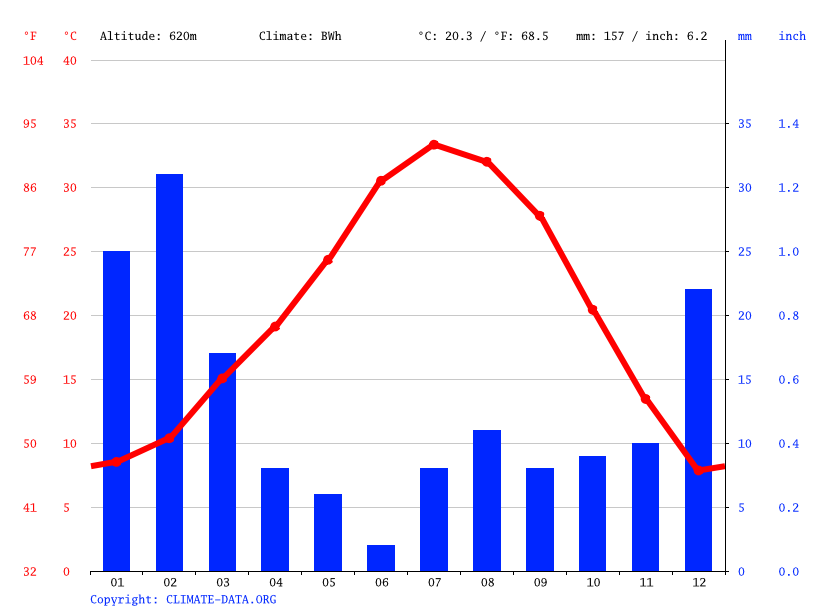
Las Vegas’s weather is a classic example of a hot desert climate (Köppen classification: BWh). This classification signifies extremely hot summers and mild to cool winters, with very little precipitation throughout the year. The city receives an average of only about 4.2 inches of rain annually, making it one of the driest major cities in North America. The surrounding desert landscape, devoid of significant bodies of water or dense vegetation to moderate temperatures, plays a crucial role in these extremes. The elevation of Las Vegas, at approximately 2,030 feet (619 meters) above sea level, does offer some slight moderation compared to lower desert basins, but the dominant influence remains the arid environment.
The sun is a constant companion in Las Vegas, with over 300 sunny days per year. This high amount of sunshine contributes to the intense solar radiation, particularly during the summer months, and underscores the importance of sun protection for visitors. Humidity levels are consistently low, which can make even high temperatures feel more bearable to some, while others might find the dry air and intense sun challenging.
Seasonal Temperature Overview
The transition between seasons in Las Vegas is quite pronounced, offering distinct experiences throughout the year.
Spring (March – May)
Spring in Las Vegas is arguably one of the most pleasant times to visit. Temperatures begin to warm up significantly after the cooler winter months.
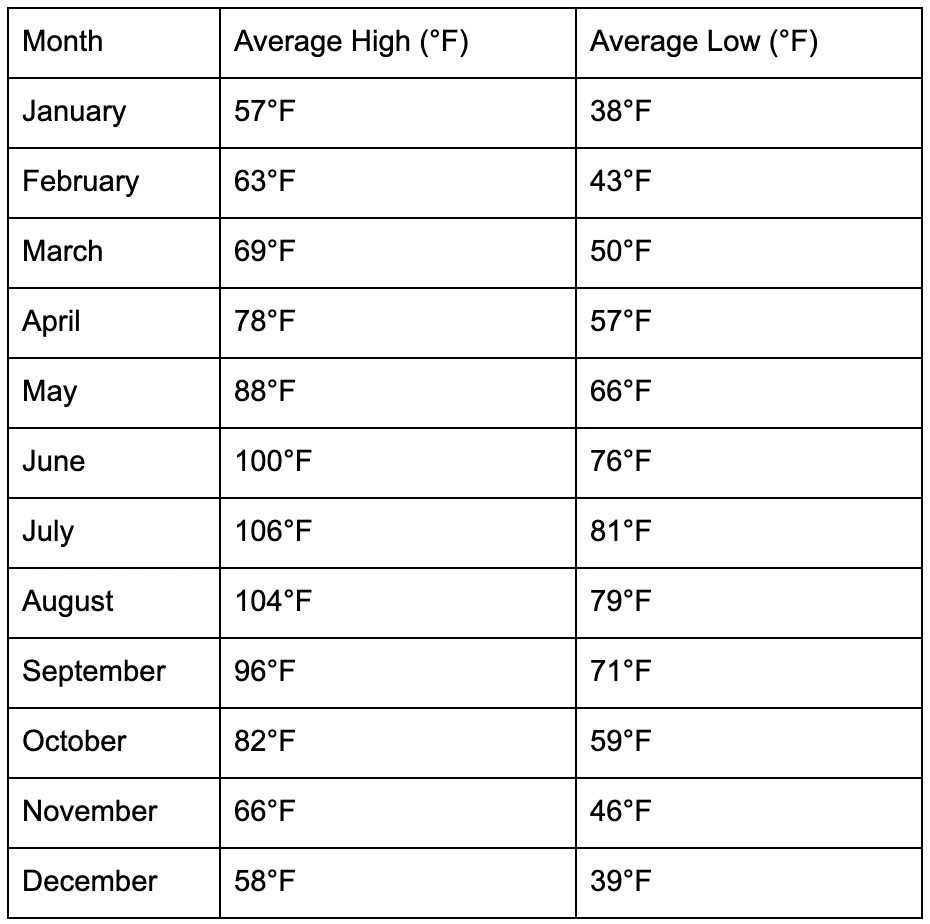
- March: Average highs range from the mid-60s to low 70s Fahrenheit (18-22°C), with lows in the 40s and 50s (4-15°C). It’s still advisable to pack layers.
- April: Temperatures continue to climb, with average highs in the 70s and low 80s Fahrenheit (22-28°C) and lows in the 50s and 60s (10-16°C). This is prime outdoor activity weather.
- May: The month often sees temperatures entering the upper 80s and low 90s Fahrenheit (30-35°C) for highs, with evenings remaining pleasant in the 60s (16-21°C). By the end of May, the heat of summer is starting to make its presence felt.
Spring offers a fantastic opportunity to explore the city’s outdoor attractions, from the Grand Canyon West Rim tours to hiking in nearby Red Rock Canyon. The milder temperatures make walking the Las Vegas Strip and exploring Fremont Street a far more comfortable experience than during the summer months.
Summer (June – August)
The summer in Las Vegas is synonymous with extreme heat. This is when the desert truly shows its formidable nature.
- June: Average highs are already in the high 90s to low 100s Fahrenheit (35-38°C), with overnight lows in the 70s (21-26°C). The sun is intense.
- July: This is typically the hottest month. Daily highs frequently exceed 100°F (38°C), often reaching 105-110°F (41-43°C), and sometimes even higher. Overnight lows remain in the high 70s and low 80s (26-28°C).
- August: Similar to July, August continues the pattern of intense heat, with highs consistently above 100°F (38°C) and lows in the mid-70s to low 80s (24-28°C).
During the summer, outdoor activities require careful planning and hydration. Mornings and late evenings are the best times to venture outside. Many visitors opt to spend their days enjoying the air-conditioned resorts, casinos, and shopping centers, or relaxing by the pool. Many hotels offer elaborate pool complexes that become the focal point of daytime entertainment during these months.
Autumn (September – November)
As the summer heat begins to wane, autumn in Las Vegas offers another period of delightful weather.
- September: While still warm, temperatures start to moderate. Average highs are in the high 90s Fahrenheit (35-37°C) in early September, gradually dropping into the low 90s (32-34°C) by the end of the month. Lows are in the 70s (21-26°C).
- October: This is a very pleasant month. Average highs are in the 80s Fahrenheit (27-32°C), with lows in the 50s and 60s (10-21°C). It’s ideal for exploring the city and surrounding natural wonders.
- November: Temperatures cool considerably. Highs are typically in the 60s and low 70s Fahrenheit (16-22°C), and evenings can become quite chilly, with lows in the 40s (4-9°C). Layers are essential.
Autumn is excellent for outdoor excursions, enjoying the vibrant nightlife, and attending events without the oppressive heat of summer. The changing colors of the desert landscape, though subtle, can also be appreciated during this time.
Winter (December – February)
Las Vegas winters are generally mild and pleasant, a stark contrast to the summer. However, occasional cold snaps can occur.
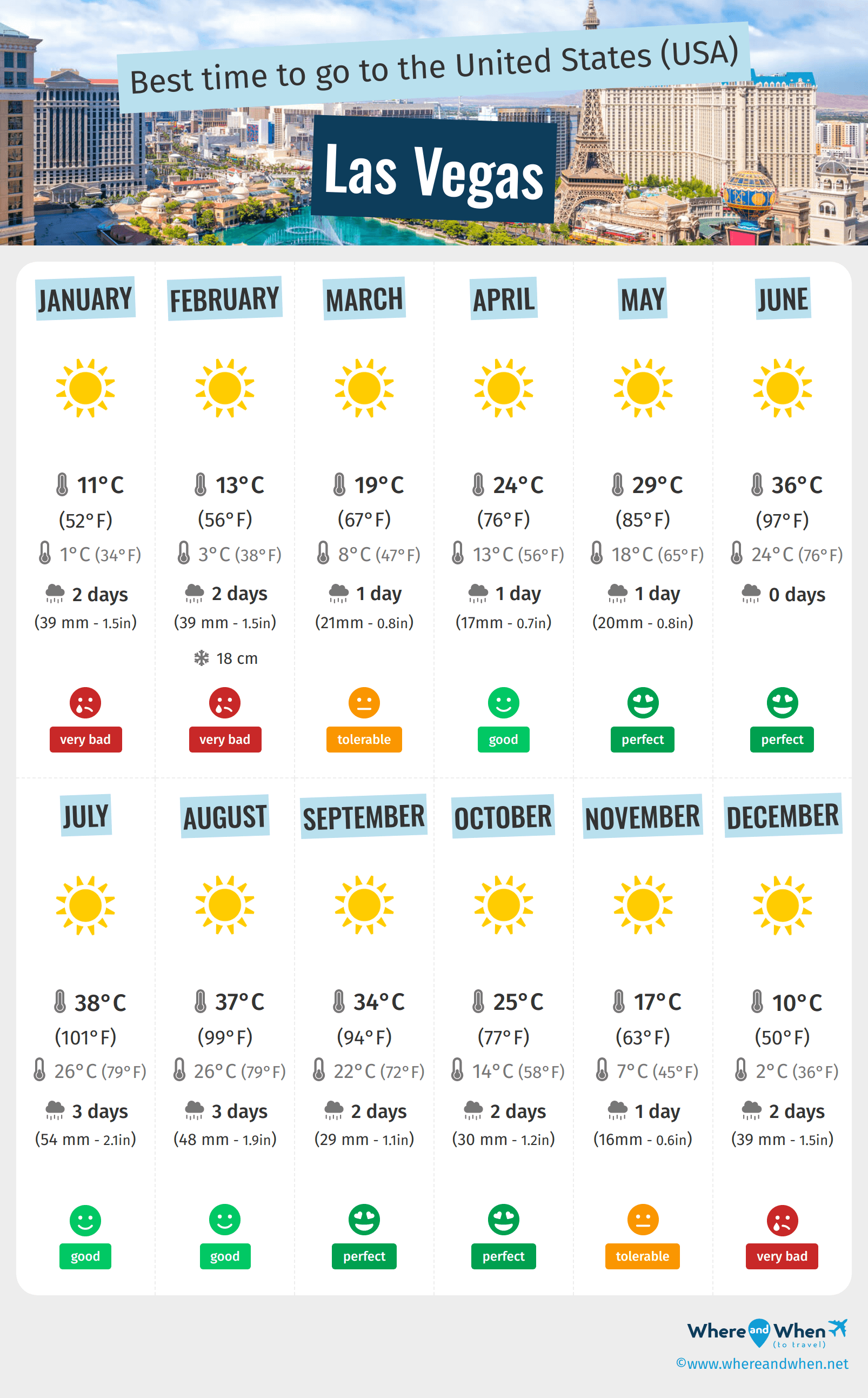
- December: Average highs are in the 50s Fahrenheit (10-15°C), with lows dipping into the 30s and 40s (0-9°C). It can feel quite cool, especially in the evenings and mornings.
- January: This is typically the coldest month. Highs average in the low 50s Fahrenheit (10-12°C), and lows can drop to the freezing point or below, around 30-35°F (-1 to 2°C). Frost is common.
- February: Temperatures begin to warm up slightly. Average highs are in the mid-50s to low 60s Fahrenheit (13-17°C), with lows in the high 30s and 40s (3-9°C).
Winter visitors should be prepared for cooler weather, especially if venturing out to areas like Mount Charleston for potential snow. While the city itself rarely sees snow, the surrounding higher elevations do. The mild winter climate makes Las Vegas a popular destination for those escaping colder climates, and it’s a great time for indoor entertainment and exploring the city’s culinary scene.
Planning Your Visit Based on Temperature
The temperature in Las Vegas is a critical factor in planning your visit. Considering the season will dictate not only what to pack but also what activities are feasible and enjoyable.
Packing Essentials for Every Season
- Summer: Lightweight, breathable clothing is a must. Think cotton, linen, and moisture-wicking fabrics. Sun hats, sunglasses, and high-SPF sunscreen are non-negotiable. Swimwear is essential for enjoying the numerous hotel pools. Comfortable walking shoes are still important, even if much time is spent indoors.
- Spring & Autumn: Layers are key. Pack a mix of short-sleeved shirts, long-sleeved shirts, light sweaters or fleeces, and a light jacket. Comfortable walking shoes are paramount.
- Winter: Bring warmer layers. Include long pants, long-sleeved shirts, sweaters, a warm jacket or coat, and possibly a scarf and gloves, especially for evenings or if planning excursions outside the immediate city. Comfortable walking shoes remain a staple.
Activities Tailored to the Climate
- Hot Months (Summer): Focus on indoor entertainment, elaborate casino experiences, world-class dining, shopping malls, and of course, the resort pools. Day trips to cooler destinations like the Grand Canyon should ideally be done in the early morning or as guided tours with air-conditioned transportation. Evening entertainment, like shows and concerts, becomes particularly appealing.
- Mild Months (Spring & Autumn): These seasons are ideal for exploring the Las Vegas Strip on foot, visiting attractions like the Bellagio Conservatory, or taking day trips to natural wonders such as Red Rock Canyon, Valley of Fire State Park, or even a day trip to the Hoover Dam. Outdoor dining and patio bars are also more enjoyable.
- Cool Months (Winter): While outdoor activities are possible, they might require more preparation for the cold. This is an excellent time for cultural attractions, visiting museums, enjoying the vibrant nightlife, and experiencing the numerous indoor dining and entertainment options that Las Vegas is famous for. Visiting nearby areas with potential snow, like Mount Charleston, becomes a unique winter activity.
Temperature and Special Events in Las Vegas
Las Vegas hosts a multitude of events and festivals throughout the year, and the temperature plays a significant role in their success and enjoyment.
Impact of Weather on Outdoor Events
Major outdoor events, such as marathons, music festivals, or even sporting events held in open-air stadiums, are heavily influenced by the temperature. The Las Vegas Marathon, for instance, traditionally takes place in November to leverage the cooler autumn weather, making it more comfortable for runners. Conversely, large outdoor gatherings in July would be practically unfeasible due to the extreme heat. Many of Las Vegas‘s signature events are designed to thrive within its climate. The annual National Finals Rodeo, for example, is held in early December, offering a respite from extreme temperatures for both participants and spectators.
Seasonal Attractions and Temperature Correlations
Certain attractions are intrinsically linked to the season. The elaborate floral displays at the Bellagio Conservatory are changed seasonally, offering a visual feast regardless of the outdoor temperature. However, activities like helicopter tours over the Grand Canyon or ATV adventures in the desert are best enjoyed during the milder spring and fall months. Evenings in Las Vegas offer a unique experience. The famous Bellagio Fountains show, while always a spectacle, is perhaps more enjoyable to watch on a warm evening than a chilly winter night. The vibrant neon lights of Fremont Street are a year-round attraction, but the comfort of viewing them is temperature-dependent.
Beyond the Temperature: Other Climatic Factors
While temperature is the most dominant factor, other climatic elements contribute to the overall weather experience in Las Vegas.
Precipitation and Humidity
As mentioned, Las Vegas is a desert city, and precipitation is rare. When it does occur, it typically arrives in the form of brief, intense thunderstorms, particularly during the late summer monsoon season (July-September). These storms can cause flash flooding in low-lying areas but are usually short-lived. The humidity levels are consistently low, often in the single digits or low teens percentage-wise, especially during the hot summer months. This dryness is a defining characteristic of the desert environment and can contribute to dry skin and lips, making hydration and moisturizing important for visitors.
Wind and Dust Storms
Wind can be a factor in Las Vegas, particularly during transitional seasons. While not as prevalent as in some other desert regions, dust storms can occasionally occur, especially when dry conditions prevail and winds pick up loose desert soil. These can reduce visibility and impact air quality temporarily. However, major dust storms that significantly disrupt travel are infrequent. The consistent sunshine and low humidity are far more defining characteristics of the city’s climate.
Preparing for Your Las Vegas Adventure
A little foresight regarding the temperature and climate of Las Vegas can significantly enhance your visit. Whether you’re planning a summer escape to enjoy the pools and nightlife or a spring getaway for outdoor adventures, understanding the mercury’s behavior is the first step to a perfectly tailored vacation. Always check the local forecast closer to your travel dates for the most accurate and up-to-date weather information, but this general guide should provide a solid foundation for your planning. From the scorching heat of the desert summer to the crisp, cool air of winter, Las Vegas offers a climatic spectrum that contributes to its unique allure.
LifeOutOfTheBox is a participant in the Amazon Services LLC Associates Program, an affiliate advertising program designed to provide a means for sites to earn advertising fees by advertising and linking to Amazon.com. Amazon, the Amazon logo, AmazonSupply, and the AmazonSupply logo are trademarks of Amazon.com, Inc. or its affiliates. As an Amazon Associate we earn affiliate commissions from qualifying purchases.