
Navigating the legalities of automotive window tint can be a perplexing maze for any driver, particularly when it comes to understanding the specific regulations set forth by individual states. Louisiana, a state renowned for its vibrant culture and unique landscapes, has its own set of rules governing the permissible darkness of vehicle window tint. Adhering to these laws is not merely a matter of avoiding traffic citations; it’s about ensuring driver safety, maintaining vehicle aesthetics, and complying with state statutes. This guide delves into the intricacies of Louisiana’s window tint laws, offering clarity for residents and visitors alike.
Understanding VLT: The Key to Tint Regulations
The cornerstone of all state tint laws is a measurement known as Visible Light Transmission, or VLT. VLT refers to the percentage of visible light that can pass through a tinted window. A lower VLT percentage means the tint is darker, allowing less light to penetrate the vehicle’s interior. Conversely, a higher VLT percentage indicates a lighter tint that permits more light to enter.
How VLT is Measured
Window tint is applied to the interior surface of a vehicle’s glass. A specialized meter is used to measure the VLT. This meter works by emitting a beam of light and then measuring the amount of light that passes through the tinted glass. The reading is typically displayed as a percentage. It is crucial to understand that these measurements are usually taken from the exterior of the window.
The Importance of VLT in Louisiana
In Louisiana, specific VLT percentages are mandated for different windows of a vehicle. These regulations are designed to strike a balance between the benefits of tinting, such as reduced heat, glare, and privacy, and the paramount need for clear visibility for drivers and law enforcement officers. Tinted windows, if too dark, can impair a driver’s ability to see the road and other vehicles, especially in low-light conditions, and can also make it difficult for law enforcement to observe the vehicle’s occupants.
Louisiana’s Specific Window Tint Laws
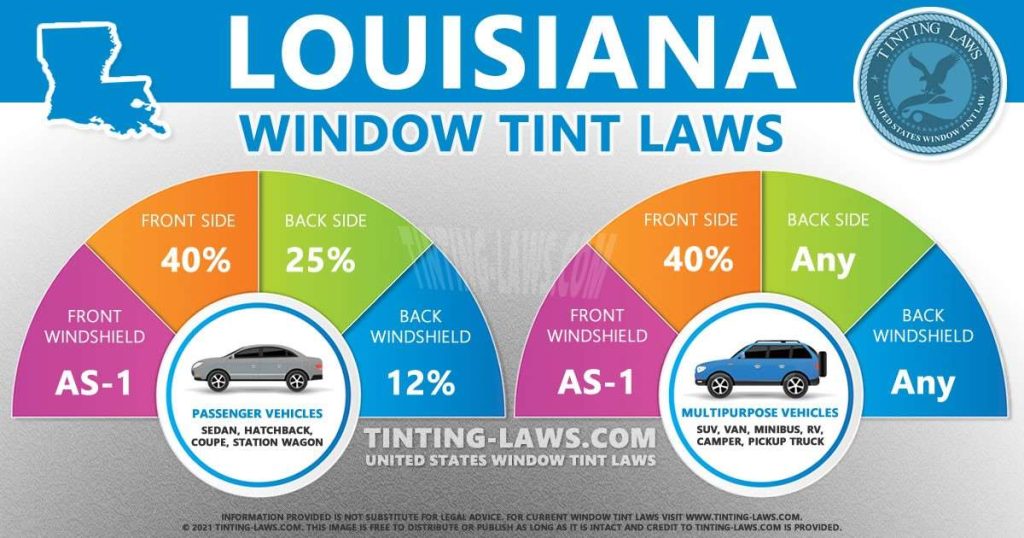
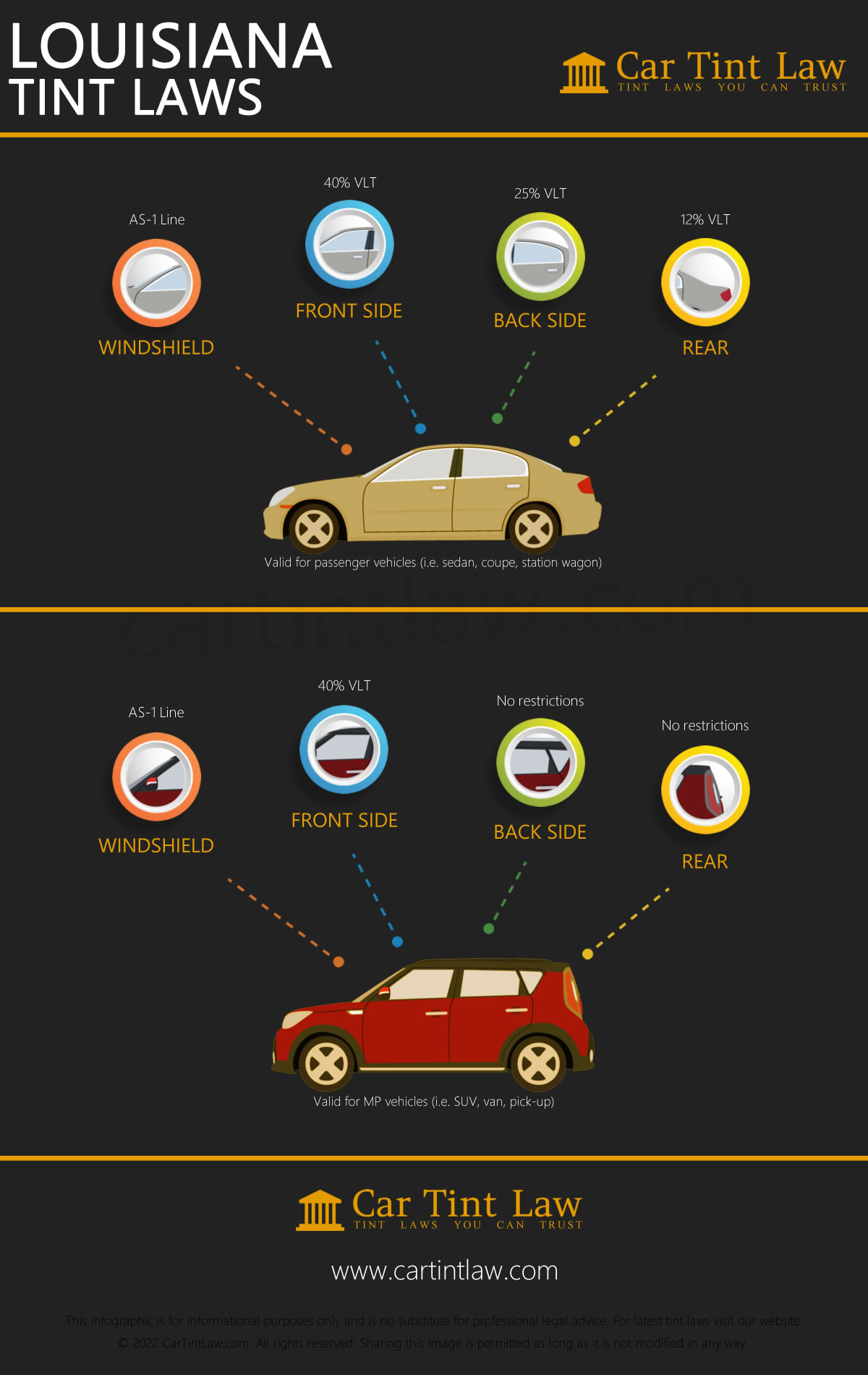
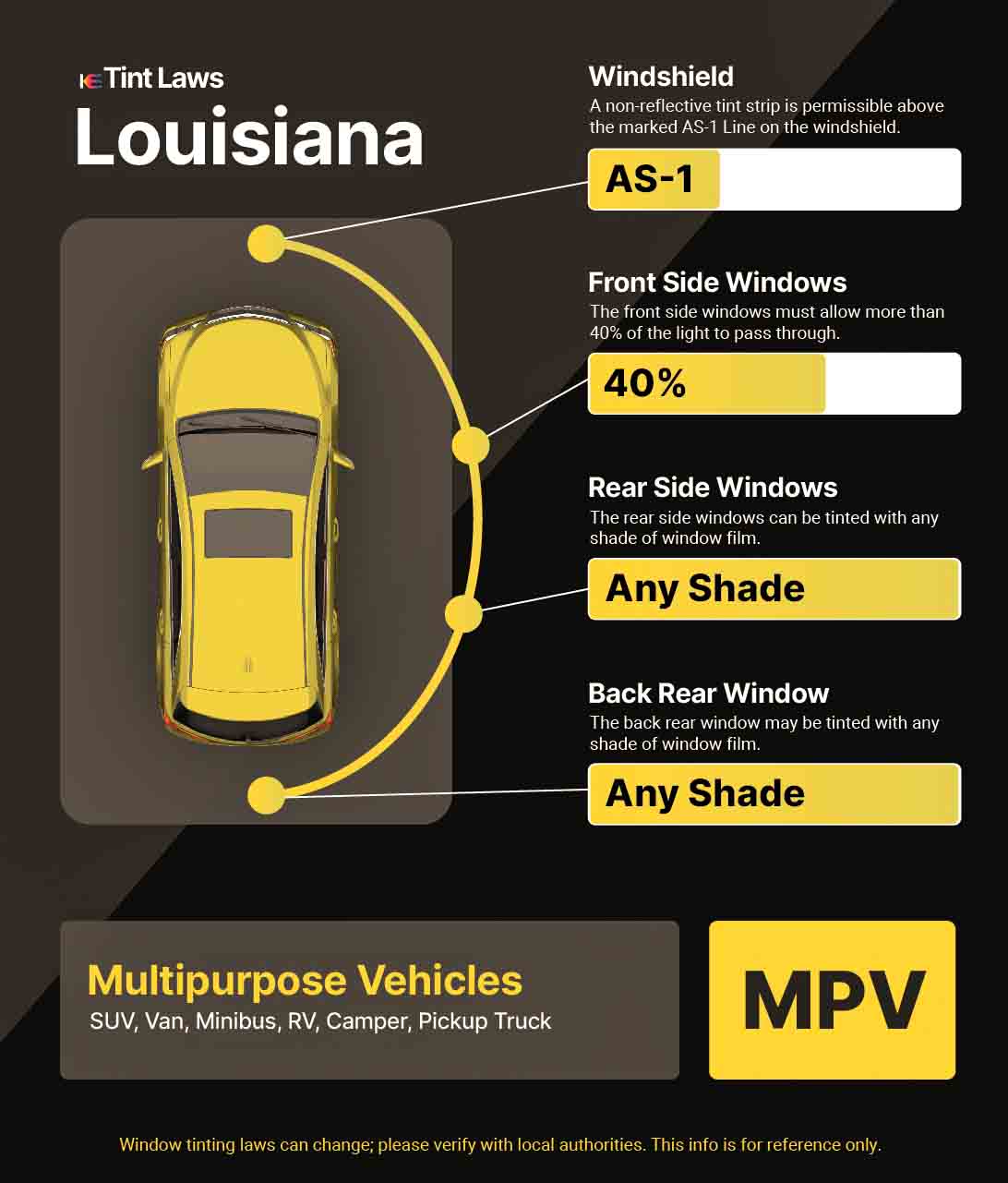
Louisiana categorizes its tint laws based on the type of vehicle and the specific window being tinted. It’s essential to distinguish between passenger vehicles (cars, SUVs, trucks) and multi-purpose vehicles, although for the most part, the regulations are consistent across these types for the areas relevant to most drivers.
Front Windshield Regulations
The front windshield is critical for a driver’s forward visibility. For this reason, Louisiana law dictates that the front windshield cannot be tinted below a certain VLT level. Specifically, non-reflective tint is permitted above the manufacturer’s AS-1 line. The AS-1 line is a designation typically found on the windshield itself, marking the area where factory tinting or manufacturer-applied shading usually ends. This line is usually located about 5 inches from the top of the windshield. Any tint applied above this line must not be reflective. It is generally understood that the AS-1 line itself, even without tint, signifies a boundary for further tinting.
Front Side Window Laws
The front side windows, meaning the driver’s side and the passenger’s side windows forward of the rear doors, are subject to strict limitations to ensure unobstructed outward visibility. In Louisiana, these windows cannot have a tint darker than 40% VLT. This means that at least 40% of the visible light must be able to pass through these windows. This level of tint is generally considered light to medium, providing some privacy and heat reduction without significantly impeding the driver’s view of oncoming traffic or pedestrians.
Rear Side Window and Rear Window Laws
The regulations for the rear side windows and the rear windshield are generally more lenient in Louisiana. These windows may have any tint darkness, provided that the vehicle is equipped with dual side mirrors. This allowance acknowledges that the driver’s primary visibility is not compromised by darker tint on these surfaces, as they can rely on their side mirrors and rearview mirror for observation. This offers greater flexibility for those seeking enhanced privacy and solar control for the rear of their vehicle.
Medical Exemptions
Louisiana law does provide for medical exemptions regarding window tint. Individuals with specific medical conditions, such as light sensitivity or certain skin conditions, may be eligible for a medical exemption that allows for darker tint than is otherwise legally permissible. To obtain a medical exemption, a physician must certify the medical necessity for the darker tint. This certification typically needs to be carried in the vehicle at all times, along with proof of the exemption. The specifics of obtaining and maintaining such an exemption should be verified with the Louisiana Office of Motor Vehicles or a legal professional.
Legal Implications and Enforcement
Understanding Louisiana’s tint laws is crucial for avoiding penalties. Enforcement of these regulations is typically carried out by law enforcement officers during routine traffic stops or safety checks.
Penalties for Non-Compliance
Driving a vehicle with window tint that does not comply with Louisiana’s statutes can result in a traffic citation. The penalties for such violations typically include fines. In some cases, repeated offenses might lead to more significant consequences. It is the responsibility of the vehicle owner or driver to ensure their tint adheres to the legal standards. Failure to do so can lead to unexpected expenses and the inconvenience of having to remove the non-compliant tint.
Importance of Professional Installation
To ensure compliance with Louisiana’s window tint laws, it is highly recommended to use professional tinting services. Reputable tint shops are knowledgeable about the state’s regulations and will only install tinting that meets the legal VLT percentages. They often use high-quality films that offer excellent UV protection and heat rejection while remaining within the legal limits. When choosing a tint shop, inquire about their familiarity with Louisiana’s tint laws and their commitment to ensuring your vehicle is compliant.
Benefits of Legal Window Tinting in Louisiana
While adhering to legal tint percentages is a requirement, it’s important to remember that even legally compliant tint offers substantial benefits, enhancing the driving experience in the Pelican State.
Heat and Glare Reduction
Louisiana experiences significant heat and intense sunlight throughout much of the year. Window tint, even at legal VLT levels, can significantly reduce the amount of solar heat entering the vehicle’s cabin. This makes the interior more comfortable, reduces the strain on your vehicle’s air conditioning system, and conserves fuel. Furthermore, tinting helps to reduce distracting glare from the sun, improving driver comfort and safety, especially during long drives along routes like the Great River Road.
UV Protection
The sun’s ultraviolet (UV) rays can cause damage to vehicle interiors over time, leading to fading of upholstery and dashboards. More importantly, prolonged exposure to UV radiation can be harmful to human skin. High-quality window tints, even those that meet legal VLT requirements, block a significant percentage of harmful UV rays, protecting both your vehicle’s interior and the occupants’ skin. This is particularly beneficial for residents and frequent travelers in sunny regions like New Orleans or Baton Rouge.
Enhanced Privacy and Security
Even a 40% VLT on front side windows and darker tints on rear windows offer a degree of privacy that can be appreciated by drivers. This can deter opportunistic theft by making it more difficult for individuals to see valuables inside the vehicle. While not a substitute for proper security measures, it adds an extra layer of deterrence. This can be particularly relevant when parking your vehicle in busy areas or at popular attractions like the French Quarter.
Staying Informed and Compliant
The automotive landscape is always evolving, and so are state regulations. It is always advisable for Louisiana drivers to stay informed about the most current window tint laws.
Official Resources
For definitive information, consult the official statutes of Louisiana or seek guidance from the Louisiana Department of Public Safety and Corrections. Local law enforcement agencies can also be a source of information regarding enforcement practices.
Consulting Professionals
As mentioned earlier, professional automotive tinting businesses are an invaluable resource. They are typically up-to-date with all state and local regulations and can ensure that any tinting performed on your vehicle is fully compliant, allowing you to enjoy the benefits of tinted windows without the worry of legal repercussions. Whether you’re a long-time resident or a visitor exploring the rich heritage of Acadiana, understanding Louisiana’s window tint laws contributes to a smoother and more enjoyable journey.
LifeOutOfTheBox is a participant in the Amazon Services LLC Associates Program, an affiliate advertising program designed to provide a means for sites to earn advertising fees by advertising and linking to Amazon.com. Amazon, the Amazon logo, AmazonSupply, and the AmazonSupply logo are trademarks of Amazon.com, Inc. or its affiliates. As an Amazon Associate we earn affiliate commissions from qualifying purchases.