
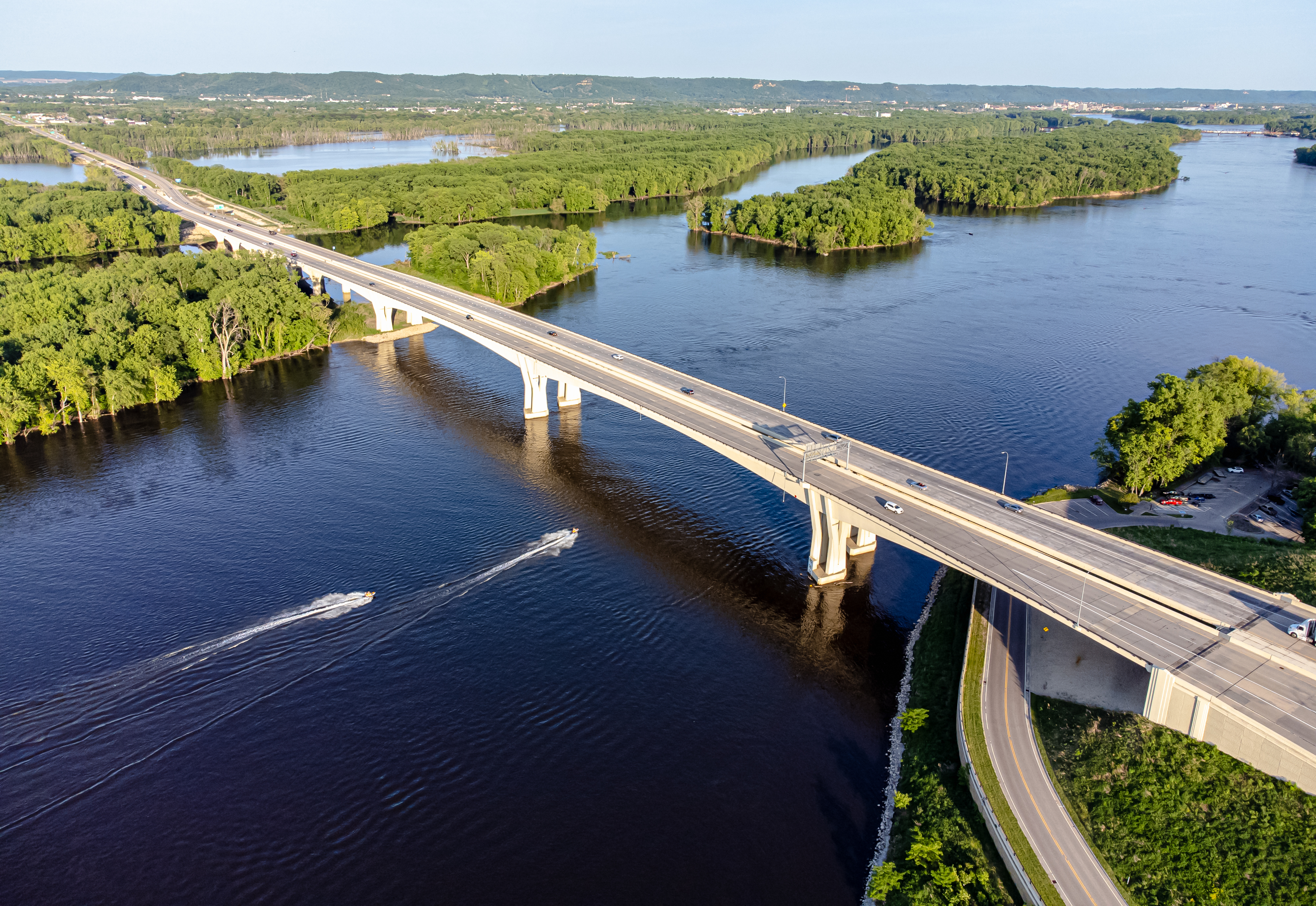
The mighty Mississippi River, a ribbon of water that defines the heart of the United States, is spanned by a complex network of bridges. These structures are not merely functional crossings; they are feats of engineering, historical markers, and vital arteries that connect communities and facilitate commerce. Determining an exact, static number of bridges is a challenge, as the count can fluctuate with new construction, demolitions, and the inclusion of different types of crossings. However, understanding the sheer scale and significance of these crossings offers a profound insight into the river’s enduring role.

The Arteries of the Mississippi: A Statistical Overview
The Mississippi River stretches for approximately 2,320 miles from its source at Lake Itasca in Minnesota to its delta in the Gulf of Mexico. Along this vast expanse, numerous bridges serve thousands of daily crossings for vehicles, trains, and pedestrians. While comprehensive, real-time data is proprietary and managed by various transportation authorities, estimates place the number of bridges crossing the Mississippi River well into the hundreds.
Understanding the Count: What Constitutes a “Bridge”?
The ambiguity in counting arises from the definition of what constitutes a “bridge” in this context. Are we including only major vehicular crossings? Do ferry services count? What about pedestrian-only walkways or seasonal structures? For the purpose of this exploration, we will focus on permanent, fixed crossings that accommodate vehicular and/or rail traffic, as these represent the most significant infrastructure investments and navigational markers along the river. It is also important to distinguish between bridges that cross the main channel of the Mississippi River and those that span its tributaries or backwaters, though the former are our primary focus.
Key Jurisdictions and Data Sources
The responsibility for bridge construction and maintenance is distributed among federal, state, and local entities. The U.S. Army Corps of Engineers plays a crucial role in managing navigation on the river, and their oversight influences bridge clearance requirements. State Departments of Transportation, particularly those in the thirteen states the river touches (including Minnesota, Wisconsin, Iowa, Illinois, Missouri, Kentucky, Tennessee, Arkansas, Mississippi, and Louisiana), are the primary builders and maintainers of most highway bridges. Rail companies manage their own crossings. The Federal Highway Administration maintains databases, but a single, consolidated public count for all Mississippi River crossings is not readily available.
Iconic Crossings and Engineering Marvels
The bridges that span the Mississippi River are diverse, reflecting different eras of construction, engineering advancements, and regional needs. From historic cantilever trusses to modern suspension and cable-stayed designs, each bridge tells a story.
Historic Guardians of the River
Many of the oldest bridges are architectural treasures. The Eads Bridge in St. Louis, completed in 1874, was a pioneering achievement in steel arch bridge construction and was one of the first to carry both road and rail traffic. Its construction was a testament to the vision of its namesake, James B. Eads, and its iconic arches continue to grace the St. Louis skyline. Further north, the Hastings Bridge in Hastings, Minnesota, originally built in 1907, was a significant early crossing, later replaced by a modern structure in 2013. These older bridges often featured intricate truss designs, built to withstand the heavy loads of their time and to provide adequate clearance for steamboats and early steamships.
Modern Giants of Transportation
In contrast, more contemporary bridges showcase the latest in engineering. The Crescent City Connection twin suspension bridges in New Orleans, completed in 1988, are significant landmarks on the lower Mississippi River, facilitating immense traffic volumes. The John James Audubon Bridge in Louisiana, a cable-stayed bridge completed in 2011, is one of the longest of its type in the United States and offers breathtaking views of the river. These modern structures are designed for high-speed traffic, increased load capacities, and longer spans, often employing materials like high-strength steel and advanced concrete composites.
The Railroad Backbone

Beyond vehicular bridges, the Mississippi River is crossed by numerous vital railroad bridges, critical for freight and passenger transport across the continent. The St. Paul Union Pacific Bridge in St. Paul, Minnesota, is an example of a significant rail crossing that has served the region for decades. These bridges are engineered to withstand immense dynamic loads and are often a focus of intricate signaling and operational management.
Bridges as Economic and Cultural Connectors
The presence of bridges has profoundly shaped the development and connectivity of towns and cities along the Mississippi River. They have enabled westward expansion, facilitated the growth of port cities, and allowed for the seamless movement of goods and people.
Facilitating Commerce and Trade
The Mississippi River has historically been, and remains, a vital commercial waterway. Bridges must be designed with sufficient vertical clearance to allow barge traffic to pass unimpeded. This requirement often dictates the type and height of bridge construction. The flow of goods from agricultural heartlands to international markets relies heavily on the efficient movement of trucks and trains over these crossings, connecting production centers to transportation hubs. Major bridges near cities like Memphis, St. Louis, and New Orleans are critical nodes in the nation’s logistics network.
Linking Communities and Cultures
Beyond their economic function, bridges are powerful symbols of connection. They link diverse communities, fostering a sense of shared identity and interdependence. The daily commute across the river for thousands of people highlights this social and cultural integration. In many cases, the construction or presence of a bridge has spurred the growth of new towns and neighborhoods on the opposite bank, transforming the landscape and the lives of its inhabitants. For instance, the development of Dubuque, Iowa, was significantly influenced by its river crossings, connecting it to Illinois and Wisconsin.
Tourism and Iconic Views
Many of these bridges have become attractions in their own right, drawing visitors and offering unparalleled views of the Mississippi River and the surrounding urban or natural landscapes. The pedestrian walkways on some bridges provide unique vantage points for photography and sightseeing. The I-35W Mississippi River Bridge (before its collapse and subsequent replacement by the I-35W Saint Anthony Falls Bridge in Minneapolis), though tragically known for its failure, also served as a daily symbol of the city’s connection to the river. Today, bridges like the Mackinac Bridge (though not on the Mississippi, it serves as an analogy for iconic bridge tourism) illustrate how such structures can become destinations.
The Future of Mississippi River Crossings
The dynamic nature of infrastructure means that the number and types of bridges crossing the Mississippi River will continue to evolve. Aging infrastructure requires constant maintenance, repair, and eventual replacement, while the demands of increased traffic and commerce necessitate new construction.
Modernization and Replacement Projects
Many older bridges are undergoing significant rehabilitation or are being replaced with modern, more robust structures. These projects are complex undertakings, often requiring extensive planning, considerable funding, and careful management to minimize disruption to river traffic and local communities. The Ike Skelton Bridge near Jefferson City, Missouri, is an example of a vital crossing that has seen upgrades and consideration for future enhancements.
Innovations in Bridge Design and Technology
The future of bridge building will likely incorporate new materials, advanced construction techniques, and smart technologies. Innovations in seismic design, wind resistance, and corrosion prevention will ensure the longevity and safety of future crossings. Furthermore, the integration of sensors and monitoring systems could allow for real-time assessment of bridge health, enabling proactive maintenance and preventing potential failures. As technology advances, the Mississippi River will continue to be spanned by structures that are not only functional but also more sustainable and resilient.
In conclusion, while a definitive, up-to-the-minute count of bridges crossing the Mississippi River remains elusive, it is clear that their number is substantial and their importance immeasurable. They are the silent sentinels of commerce, the connectors of communities, and the enduring symbols of human ingenuity against the backdrop of one of the world’s greatest natural waterways.
LifeOutOfTheBox is a participant in the Amazon Services LLC Associates Program, an affiliate advertising program designed to provide a means for sites to earn advertising fees by advertising and linking to Amazon.com. Amazon, the Amazon logo, AmazonSupply, and the AmazonSupply logo are trademarks of Amazon.com, Inc. or its affiliates. As an Amazon Associate we earn affiliate commissions from qualifying purchases.