
The sprawling landscapes of Montana, often called “Big Sky Country,” evoke images of rugged wilderness, majestic mountains, and an untamed frontier spirit. Its very name, “Montana,” whispers of distant lands and grand vistas. But how did this captivating American state come to bear such an evocative appellation? The answer lies not in indigenous tongues or pioneering settlers, but in the romanticized vision of a distant European mountain range, a testament to the power of aspiration and the enduring allure of the mountainous West.
The Spanish Connection: Mountains and Aspirations
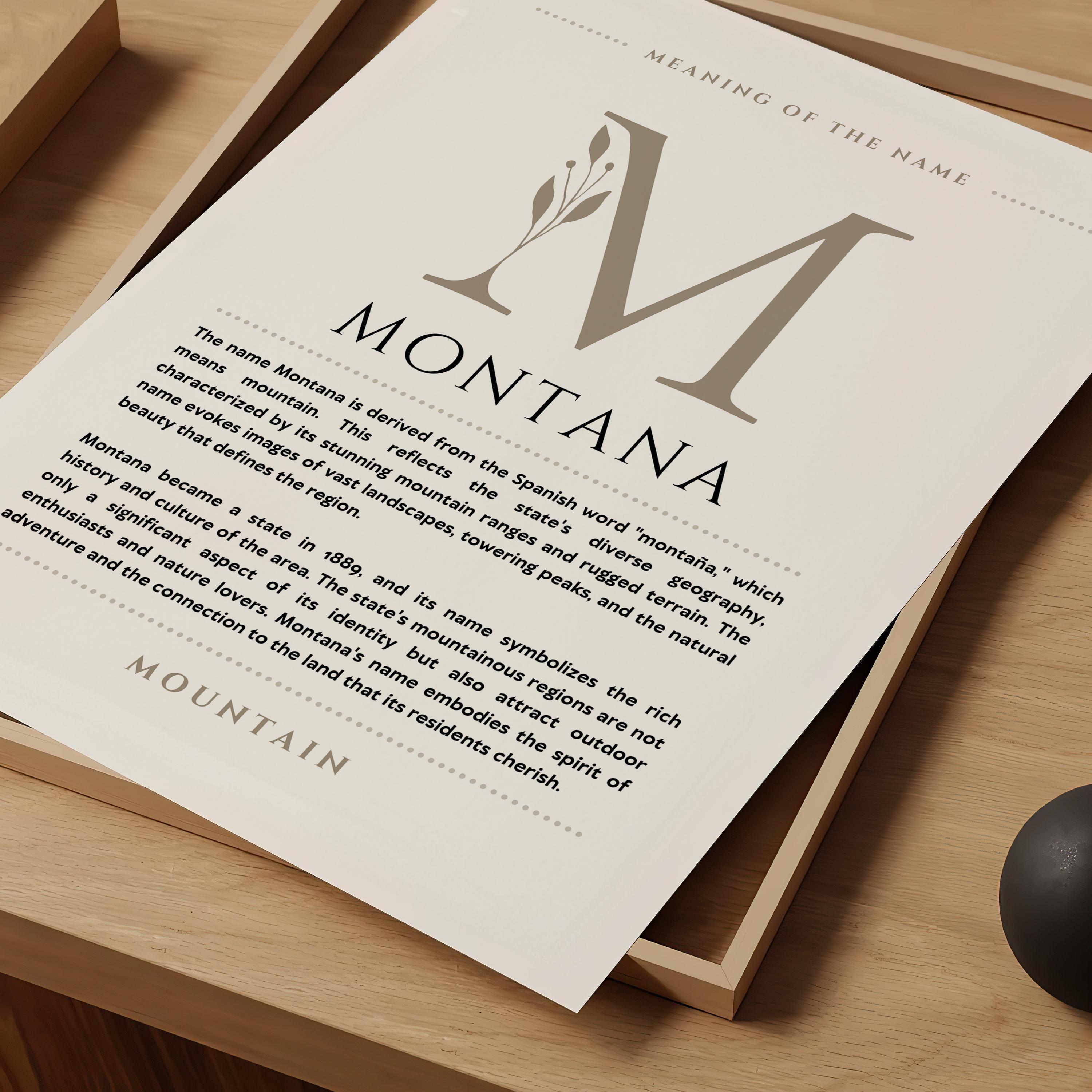
The genesis of Montana’s name can be traced back to the Spanish language. The word “montana” (or its plural, “montañas”) is Spanish for “mountain” or “mountainous country.” This linguistic root immediately connects the state’s identity to its most prominent geographical feature: the formidable peaks of the Rocky Mountains that dominate its western expanse. However, the direct application of this Spanish term to the specific territory that would become Montana is a more nuanced story, steeped in the era of westward expansion and the romantic perceptions of the American West by those who had never set foot there.

Early Explorers and Cartographers
While Indigenous tribes had lived on and named the lands that constitute modern-day Montana for millennia, their names for these regions did not translate into the official designation of the state. The naming of Montana is largely attributed to European-American explorers and cartographers who were mapping the vast, largely unknown territories of the American West in the 19th century. As these explorers ventured into areas characterized by dramatic elevation changes and towering peaks, the Spanish term “montana” began to appear on maps, reflecting a common descriptive vocabulary for mountainous terrain across the Americas, given the historical Spanish influence in parts of the continent.
It’s important to note that the initial use of “montana” was often more general, referring to any mountainous region encountered. However, as distinct territories began to be organized and defined, the evocative and descriptive nature of the word made it a compelling candidate for official naming. The romantic allure of a land defined by its mountains, echoing the famed Pyrenees or the Alps in European consciousness, captured the imagination.
The Official Designation: From Territory to State
The journey to Montana’s official name was a deliberate process, involving legislative action and the formalization of territorial boundaries. The Territory of Montana was established by the U.S. Congress on May 26, 1864. Prior to this, the lands had been part of larger, less defined territories, such as Washington Territory and later Idaho Territory.
The Naming Debate and Adoption

The question of what to name this new territory was not without discussion. While many names were proposed, often reflecting prominent figures, geographical features, or indigenous words, the Spanish-derived “Montana” gained significant traction. The senators and representatives involved in the territorial organization were likely influenced by the descriptive power of the name, its perceived romance, and its clear association with the state’s defining geography. It is believed that the specific suggestion and adoption of the name “Montana” is credited to Representative James M. Ashley of Ohio, who was a member of the House Committee on Territories. He proposed the name, and it was subsequently approved by Congress.
The adoption of “Montana” was not merely a practical choice; it was a symbolic one. It projected an image of a grand, untamed, and mountainous frontier, a vision that aligned with the romanticized narratives of the American West that were becoming popular. The name evoked a sense of natural grandeur and rugged beauty that perfectly captured the essence of the land being settled and developed.
From Territory to Statehood
The Territory of Montana eventually achieved statehood on November 8, 1889, becoming the 41st state admitted to the Union. Throughout this transition, the name “Montana” remained, firmly cemented in its identity. The original choice, driven by its descriptive power and romantic connotations, proved to be enduring and perfectly suited to the character of the state. The name served as a constant reminder of the magnificent natural heritage that defines Montana, from the jagged peaks of the Beartooth Mountains to the vast expanses of its prairies.
The Enduring Legacy of the Name
Today, the name “Montana” continues to resonate with its original intent. It conjures images of breathtaking scenery, outdoor adventure, and a spirit of independence that is deeply intertwined with its mountainous terrain. Travelers and residents alike are drawn to Montana for its unparalleled natural beauty, its abundant wildlife, and its opportunities for exploration.
A Reflection of the Landscape
The state’s name serves as a constant, albeit subtle, reminder of its defining physical characteristics. The towering peaks that give the state its name are not just geographical features; they are integral to the state’s identity, influencing its climate, its ecosystems, and the lifestyles of its people. From the glacial-carved valleys of Glacier National Park to the rolling foothills of the Absaroka Range, mountains are an omnipresent aspect of the Montana experience.
Beyond the Mountains: A Broader Appeal
While the name “Montana” is rooted in its mountainous geography, its appeal extends far beyond. The state offers a diverse range of landscapes, including vast prairies, sparkling rivers, and pristine forests. Yet, the foundational element of its name, “mountain,” encapsulates a core aspect of its wild and awe-inspiring character. It speaks to a land of elevation, grandeur, and a connection to the natural world that is both profound and unforgettable. The name, therefore, is not just a historical artifact; it is a living descriptor of a place that continues to captivate and inspire all who visit its shores.
LifeOutOfTheBox is a participant in the Amazon Services LLC Associates Program, an affiliate advertising program designed to provide a means for sites to earn advertising fees by advertising and linking to Amazon.com. Amazon, the Amazon logo, AmazonSupply, and the AmazonSupply logo are trademarks of Amazon.com, Inc. or its affiliates. As an Amazon Associate we earn affiliate commissions from qualifying purchases.