
The founding of the American colonies is a tapestry woven with threads of ambition, exploration, and the relentless pursuit of new beginnings. Among these foundational narratives, the story of the New Hampshire Colony stands out for its intricate beginnings, marked by competing claims and evolving leadership. While no single individual can be definitively credited as the sole founder, a confluence of individuals and influential figures laid the groundwork and shaped its early trajectory. Understanding this complex genesis requires delving into the overlapping visions and territorial disputes that characterized the 17th century in New England.
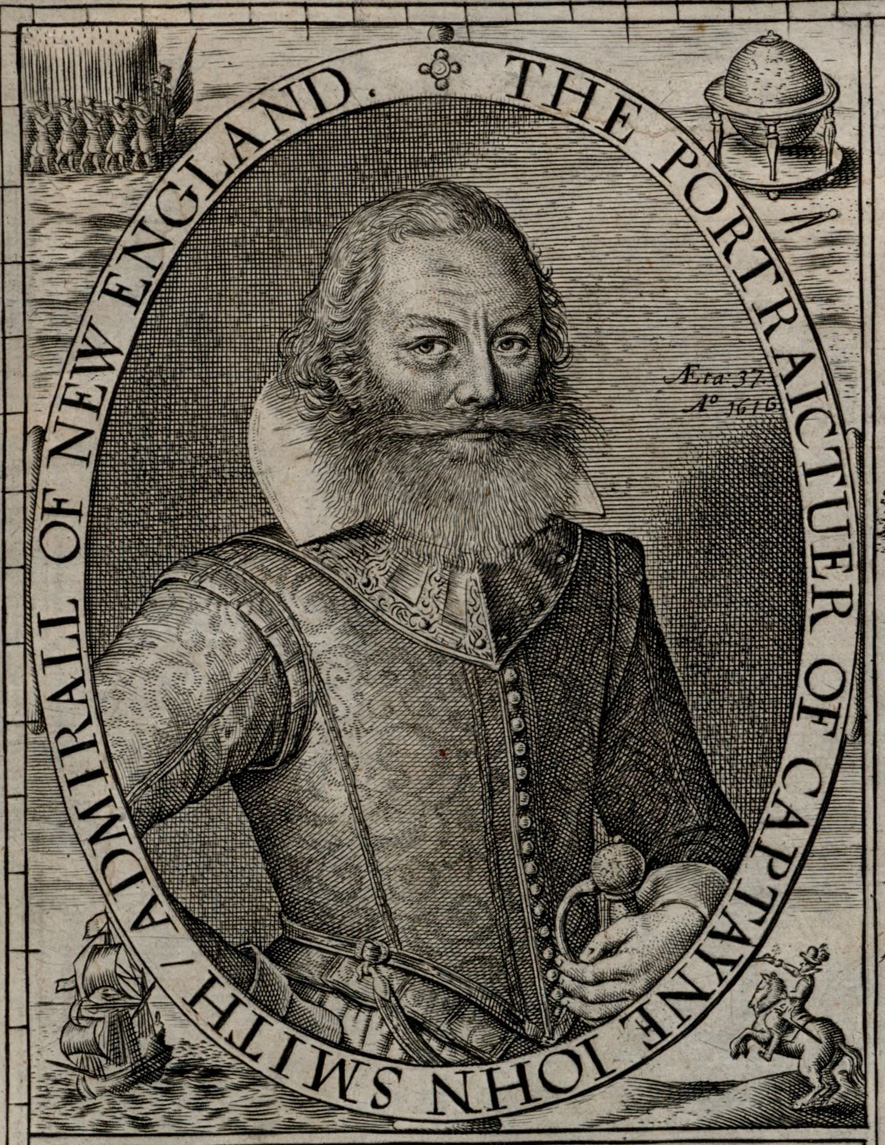
Competing Visions and Early Land Claims
The earliest European presence in the region that would become New Hampshire dates back to the early 17th century. The area was initially part of the vast territory claimed by the Plymouth Colony and, more broadly, by the Council for New England, which was granted broad authority over the region by the English Crown.
Sir Ferdinando Gorges and Captain John Mason
The most prominent figures associated with the initial attempts to establish a distinct colony in this area were Sir Ferdinando Gorges and Captain John Mason. These two English proprietors, each with their own ambitions and royal grants, envisioned distinct developments for the lands north of the Massachusetts Bay Colony.
Captain John Mason, a former governor of Newfoundland, was particularly instrumental. He obtained a land grant from the Council for New England in 1629 for a vast tract of land situated between the Merrimack River and the Piscataqua River. He named this territory “New Hampshire” in honor of his home county of Hampshire in England. Mason’s vision was to establish a profitable fishing and trading enterprise, and he dispatched settlers and agents to begin developing the area. One of his earliest settlements was at the mouth of the Piscataqua River, which would eventually grow into the town of Portsmouth.
Concurrently, Sir Ferdinando Gorges also held significant land claims in the region, focusing primarily on the area further north, which he intended to develop as the “Province of Maine.” While Gorges’ direct involvement in founding a distinct “New Hampshire” was less pronounced than Mason’s, the overlapping and sometimes conflicting nature of their grants contributed to the region’s complex political landscape. The initial settlement efforts were often collaborative or at least co-dependent, with individuals like Edward Hilton establishing the first permanent English settlement at Dover in 1623, even before Mason’s formal grant. Hilton’s settlement, initially focused on trade and fishing, predated the official naming of New Hampshire, but it represents a crucial early step in European habitation.
The Influence of the Massachusetts Bay Colony
The early years of New Hampshire were deeply intertwined with its more powerful and populous neighbor, the Massachusetts Bay Colony. As the Massachusetts Bay Colony grew, its residents began to expand into the adjacent territories, including those claimed by Mason and Gorges. This expansion led to a period of considerable jurisdictional uncertainty.
Early Settlements and Governance
The settlements that would form the nucleus of New Hampshire – Dover, Portsmouth, Exeter, and Hampton – developed as distinct entities, each with its own form of governance and allegiances. The proprietors, like Mason, attempted to exert control, but the sheer force of numbers and the established governmental structures of Massachusetts often overshadowed their efforts.
In 1641, in an effort to gain stability and protection from Native American incursions and other colonial rivalries, the towns of Dover, Portsmouth, and Hampton voted to come under the jurisdiction of the Massachusetts Bay Colony. This period of annexation lasted for nearly forty years. During this time, the settlements essentially functioned as extensions of Massachusetts, sharing its laws, religious principles, and administrative oversight. This era of Massachusetts governance, while not the “founding” of New Hampshire as an independent entity, was crucial in shaping its early society, economy, and cultural identity. Many early settlers who contributed to the growth and development of these towns during this period can be considered de facto founders of the communities that would later coalesce into a distinct colony.
The Re-establishment of a Separate Colony
The complex relationship between the New Hampshire Colony and the Massachusetts Bay Colony eventually shifted. As England consolidated its colonial administration and sought to impose greater order, the distinct proprietary claims and the ongoing governance of Massachusetts created a situation that required resolution.
Royal Intervention and Provincial Charters
In 1679, the Crown intervened, establishing New Hampshire as a separate royal province. This decision was influenced by several factors, including the desire to strengthen royal authority in the region and to resolve land disputes that had plagued the area for decades. The creation of the royal province marked a significant turning point, bestowing upon New Hampshire its own governor and a distinct governmental structure, independent of Massachusetts.
John Cutt was appointed as the first president of New Hampshire in 1680, serving as the chief executive under the new royal charter. While Cutt’s presidency was short-lived, his appointment signifies the formal re-establishment of New Hampshire as a separate political entity. The proprietors’ initial ambitions, particularly those of Captain John Mason, had finally culminated in a recognized colonial structure, albeit one that had been significantly shaped by the intervening decades of Massachusetts governance and the strategic interests of the English Crown.

Legacy of the Founders
The question of “who founded” the New Hampshire Colony thus yields a nuanced answer. It wasn’t a single act of discovery or a lone visionary, but rather a series of developments driven by multiple individuals and evolving political circumstances.
From the initial land grants and ambitious visions of Sir Ferdinando Gorges and Captain John Mason, to the foundational settlements established by figures like Edward Hilton, and the subsequent governance by the Massachusetts Bay Colony, each played a role. The ultimate establishment of New Hampshire as a royal province under figures like John Cutt represented the consolidation of these disparate efforts into a distinct political entity. The founders, therefore, are a collective, representing the entrepreneurial spirit, the quest for governance, and the evolving geopolitical landscape that shaped this significant corner of colonial America. Their contributions laid the bedrock for the future state, its enduring towns, and its rich historical tapestry.
LifeOutOfTheBox is a participant in the Amazon Services LLC Associates Program, an affiliate advertising program designed to provide a means for sites to earn advertising fees by advertising and linking to Amazon.com. Amazon, the Amazon logo, AmazonSupply, and the AmazonSupply logo are trademarks of Amazon.com, Inc. or its affiliates. As an Amazon Associate we earn affiliate commissions from qualifying purchases.