
Understanding the intricacies of property taxation in California is paramount for anyone considering long-term accommodation, whether through homeownership, investment properties, or even understanding the underlying costs affecting rental markets. Unlike many states, California’s property tax system is famously unique, largely shaped by a landmark piece of legislation from the late 1970s. This framework significantly influences the financial landscape for residents and investors alike, making a clear grasp of its components essential for informed accommodation decisions.
Understanding California’s Property Tax System
The foundation of California’s property tax structure is distinct, primarily designed to offer a degree of predictability and stability in an often volatile real estate market. This system diverges from the more fluid market-value-based assessments seen in other regions, creating a unique environment for property owners.
Proposition 13: The Foundation
At the heart of California’s property tax system is Proposition 13, passed by voters in 1978. This constitutional amendment fundamentally altered how real estate is assessed and taxed. Prior to Proposition 13, property taxes were often subject to dramatic increases based on rapidly appreciating market values, leading to significant financial burdens for homeowners, particularly those on fixed incomes.
Proposition 13 established two core tenets:
- Base Year Value: It rolled back property assessments to their 1975–76 market values and stipulated that new assessments would only occur when a property is sold or new construction is completed. This “base year value” then becomes the new benchmark for future taxation.
- Tax Rate Cap: It capped the ad valorem property tax rate at 1% of the property’s assessed value. This 1% is a statewide standard, though it can be slightly higher due to local bonded indebtedness.
The profound impact of Proposition 13 means that property taxes in California are not directly tied to current market values for long-term owners. Instead, they are largely determined by the property’s acquisition price, offering a significant advantage to those who have owned their homes for many years.
Base Year Value and Annual Adjustments
Under Proposition 13, once a property’s base year value is established (typically at the time of purchase or new construction), its assessed value can only increase by a maximum of 2% per year, or the rate of inflation, whichever is lower. This annual adjustment, often referred to as the “CPI adjustment,” is set by the California State Board of Equalization. This ensures that even in periods of rapid market appreciation, the taxable value for long-term owners remains relatively stable and predictable, significantly shielding them from sudden, substantial tax increases.
However, certain events can trigger a “reassessment” and establish a new base year value. These include:
- Change in Ownership: Most transfers of property ownership, with some specific exceptions (e.g., transfers between parents and children under certain conditions), trigger a reassessment to the current market value.
- New Construction: The completion of new construction or substantial additions to a property will also result in a reassessment of the newly constructed portion to its fair market value.
Understanding these triggers is crucial for anyone planning long-term accommodation or investment, as they directly impact future property tax liabilities.
Local Taxing Entities and Special Assessments
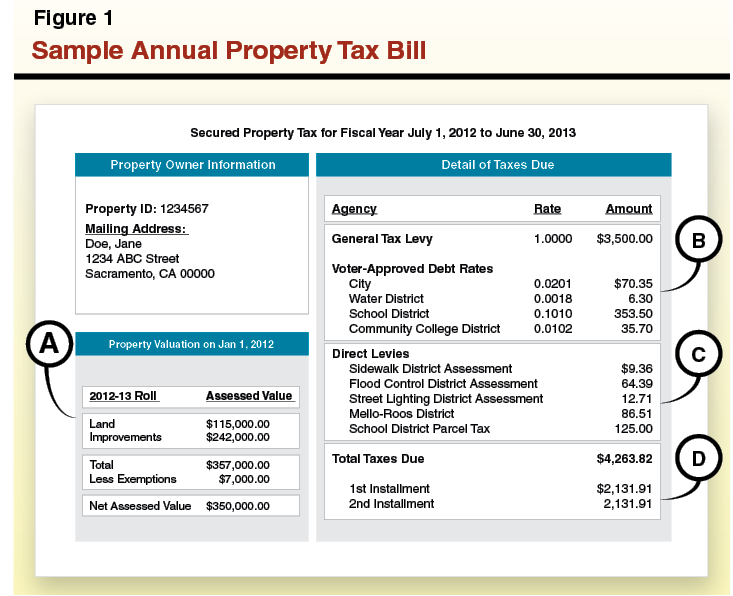
While Proposition 13 caps the general ad valorem tax rate at 1%, your actual property tax bill in California will often be higher than just 1% of the assessed value. This is due to “voter-approved debt” and “special assessments.” These additional levies are not subject to the Proposition 13 cap and are imposed by various local governmental entities—cities, counties, school districts, water districts, and other special districts—to fund specific public services and infrastructure projects.
These additional charges can include:
- Bond Indebtedness: Levies to repay general obligation bonds approved by local voters, often funding schools, parks, libraries, or public safety facilities.
- Mello-Roos Community Facilities Districts (CFDs): Taxes imposed on properties within specific districts to finance public infrastructure and services, particularly common in newer developments. These can be substantial.
- Assessment Districts: Charges for localized improvements benefiting specific properties, such as street lighting, drainage, or landscaping.
The sum of these additional charges, when added to the 1% base rate, forms the total effective property tax rate. These additions can vary significantly from one location to another within California, making it imperative to investigate the specific charges applicable to any given property.
Calculating Your California Property Tax Bill
Determining the exact property tax liability involves more than just a quick calculation. It’s a multi-faceted process influenced by the assessed value, the base rate, and a mosaic of local levies.
The 1% Base Rate
The starting point for every California property tax calculation is the 1% ad valorem base rate. This is applied to the property’s assessed value. For example, if a property’s assessed value is $500,000, the base tax would be $5,000 per year. This value remains relatively stable, only increasing by a maximum of 2% annually, unless a change in ownership or new construction triggers a reassessment to current market value. This predictability is a cornerstone for long-term accommodation planning.
Levies Beyond the Base Rate
As discussed, your final property tax bill will include additional charges beyond the 1% base rate. These are typically listed separately on your tax statement and represent direct costs for local services and infrastructure. They can range from minor charges for specific district services to significant assessments for large-scale development financing, such as those found in Mello-Roos districts. The aggregate of these charges can push the effective tax rate well above the 1% statutory minimum, sometimes reaching 1.25%, 1.5%, or even higher in certain areas with extensive local bonds or special assessments.
Factors Influencing Your Total Bill
Several key factors will influence the final amount of your annual property tax bill:
- Purchase Price/Assessed Value: The most significant factor. The higher the price you pay for a property, the higher its initial base year value and, consequently, its tax bill.
- Location: Different cities and counties have varying levels of voter-approved debt and special assessments. A property in a newly developed area might have higher additional levies than an older property in an established neighborhood with fully paid-off infrastructure bonds.
- Age of Ownership: Long-term owners benefit significantly from Proposition 13’s 2% annual cap, resulting in a much lower tax bill relative to current market value compared to recent buyers.
- Improvements/New Construction: Any substantial additions or renovations that require permitting will be reassessed and added to your property’s taxable value, increasing your annual bill.

Regional Variations: Tax Rates Across California
While the 1% base rate is uniform statewide, the total effective property tax rate, influenced by local levies, can vary considerably across California’s diverse regions. This variation is a critical consideration for anyone evaluating accommodation options or investment opportunities.
High-Value vs. Low-Value Areas
It’s a common misconception that high-value areas like Beverly Hills or Palo Alto automatically have higher rates than lower-value regions. While the dollar amount of taxes will naturally be higher due to the elevated assessed value, the effective tax rate (total tax divided by assessed value) might not be dramatically different. The key differentiator is the accumulation of local bonds and special assessments. Areas with newer developments, particularly those built under Mello-Roos Community Facilities Districts, often carry a heavier burden of these additional charges, regardless of the initial property value.
Impact of Local Services and Infrastructure
The variability in local levies directly reflects the services and infrastructure needs of different communities. Areas with rapidly growing populations or those that have recently funded significant public works (new schools, parks, transportation improvements) through bond measures will typically have higher effective tax rates. Conversely, older, established communities where infrastructure is already paid for might have fewer additional levies, leading to a total rate closer to the 1% base. This directly impacts the cost of long-term accommodation in various locales.
Notable Counties and Their Property Tax Profiles
To illustrate, consider some of California’s prominent counties:
- Los Angeles County: Being the most populous county, it has a vast array of cities and special districts. Effective rates often range from 1.1% to 1.3%, but can go higher in specific Mello-Roos districts or areas with numerous bond measures.
- San Francisco County: Despite its incredibly high property values, the effective tax rate in San Francisco typically hovers around 1.15% to 1.25%. While the dollar amount is substantial, the rate itself is not exceptionally high compared to some developing suburban areas.
- Orange County: Known for its master-planned communities, Orange County has many areas with significant Mello-Roos Community Facilities Districts and other bond assessments. This can push effective rates in some parts of cities like Irvine or Rancho Santa Margarita to 1.5% or even 2% of the assessed value, particularly for newer properties.
- Riverside County and San Bernardino County: These Inland Empire counties have seen significant growth and development. While property values might be lower than coastal areas, the presence of new infrastructure and associated bond measures can lead to effective tax rates that are comparable to, or even higher than, some older, wealthier areas.
It is always advisable to obtain a specific property’s tax history and current assessment details from the county assessor’s office for a precise understanding of its annual tax burden.
Exemptions and Relief Programs for Homeowners
California offers several programs designed to provide property tax relief, making long-term accommodation more accessible for certain groups of homeowners. Leveraging these can significantly reduce the annual tax burden.
Homeowners’ Exemption
The most common relief program is the Homeowners’ Exemption. If you own and occupy a property as your principal place of residence on January 1st, you may qualify for a reduction of $7,000 from your property’s assessed value. While $7,000 may seem modest in California’s high-value market, it translates to an annual saving of approximately $70–$100 on your property tax bill, depending on the local effective rate. This exemption must be applied for and is applicable only to your primary residence.
Senior Citizens and Disabled Persons Programs
California provides several programs aimed at assisting senior citizens and disabled persons:
- Property Tax Postponement Program: This program allows eligible homeowners who are seniors (62 or older), blind, or disabled to postpone payment of property taxes on their primary residence. The state pays the taxes on their behalf, and a lien is placed on the property, which becomes due when the property is sold, changes ownership, or the homeowner moves out.
- Proposition 19 (2020): This proposition expanded property tax benefits for homeowners who are seniors (55 or older), severely disabled, or victims of natural disasters. It allows them to transfer their existing Proposition 13 base year value to a replacement primary residence anywhere in the state, up to three times. This significantly eases the burden for those looking to downsize or relocate within California without incurring a massive property tax increase on a new purchase, enhancing flexibility for long-term accommodation strategies.
Disaster Relief and Other Specific Exemptions
California also offers relief for properties damaged or destroyed by a declared natural disaster. Homeowners in these situations can apply for a temporary reduction in their assessed value, reflecting the damage sustained. Additionally, there are specific exemptions for veterans, religious organizations, and certain non-profit entities. Understanding and utilizing these exemptions is crucial for optimizing the cost of property ownership in the state.
Implications for Accommodation and Long-Term Stays
The unique property tax structure in California has profound implications for anyone planning for accommodation, whether it’s buying a primary residence, investing in rental properties, or considering the broader housing market.
Budgeting for Homeownership in California
For prospective homeowners, understanding California’s property tax system is critical for accurate budgeting. While the purchase price often dominates discussions, the ongoing cost of property taxes represents a significant annual expense. New buyers will face taxes based on their acquisition price, which in California’s competitive market, is often substantial. This makes it vital to factor in not just the 1% base rate, but also the myriad of potential local assessments that can significantly inflate the total bill. A thorough understanding of these costs helps prevent unexpected financial burdens and ensures the long-term viability of a housing budget.
Investment Properties and Rental Income
For real estate investors looking to purchase properties for long-term rental accommodation, the tax implications are equally important. Proposition 13’s reassessment upon sale means that new acquisitions will come with a property tax bill reflecting current market values. This impacts cash flow projections and overall return on investment. While long-term ownership can lead to a stable and relatively low tax burden over time (due to the 2% cap), initial years will reflect the higher tax base. Investors must meticulously research the specific tax rates, including all local assessments, for any potential investment property to accurately forecast expenses and profitability.

The Broader Impact on Housing Affordability
The California property tax system, particularly Proposition 13, plays a complex role in the state’s housing affordability crisis. On one hand, it provides stability for long-term homeowners, allowing them to remain in their homes without being taxed out by rising market values. On the other hand, it can create disincentives for existing homeowners to sell, as doing so would trigger a reassessment for the new buyer, potentially leading to a higher tax bill than the seller was paying. This can contribute to a scarcity of housing inventory, particularly in desirable areas, indirectly impacting affordability and the availability of diverse accommodation options for newcomers. Understanding these dynamics is crucial for grasping the full picture of housing and long-term stays in the Golden State.
LifeOutOfTheBox is a participant in the Amazon Services LLC Associates Program, an affiliate advertising program designed to provide a means for sites to earn advertising fees by advertising and linking to Amazon.com. Amazon, the Amazon logo, AmazonSupply, and the AmazonSupply logo are trademarks of Amazon.com, Inc. or its affiliates. As an Amazon Associate we earn affiliate commissions from qualifying purchases.