
Setting up a Limited Liability Company (LLC) in New Mexico is a strategic move for entrepreneurs and business owners looking to protect their personal assets while establishing a formal business structure. The Land of Enchantment offers a business-friendly environment, and understanding the process is key to a smooth and successful launch. This guide will walk you through the essential steps, from choosing a name to maintaining compliance, ensuring you have a solid foundation for your venture.
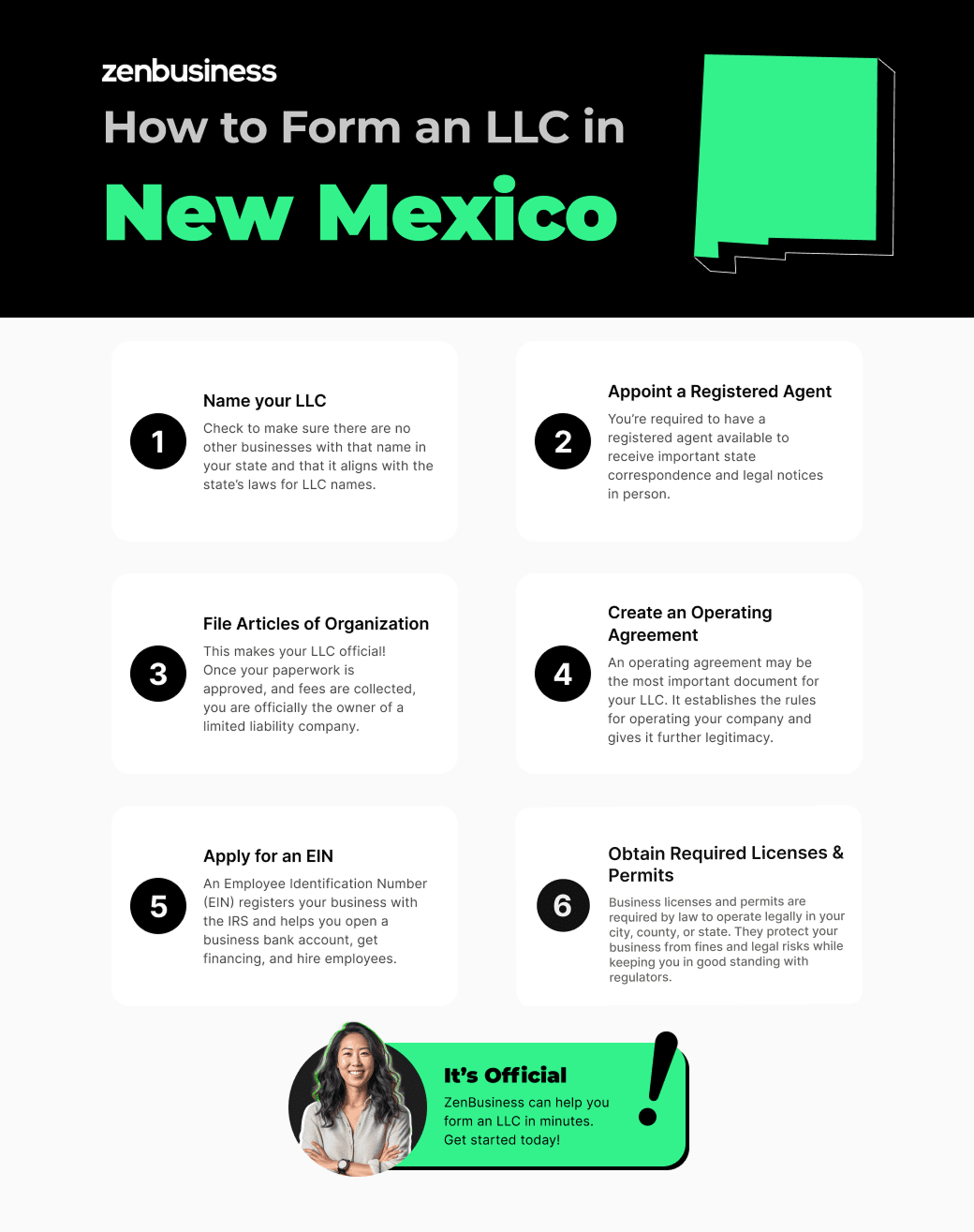
Step 1: Choosing a Unique and Compliant LLC Name
The first crucial step in establishing your LLC is selecting a name that is both memorable and adheres to New Mexico state regulations. This name will be the public face of your business, so it’s important to get it right.
Name Availability Search
Before you get too attached to a particular name, you must verify its availability with the New Mexico Secretary of State. The state requires that all LLC names be distinguishable from existing business entities registered in New Mexico. You can typically perform a name search through the Secretary of State’s website. This search will reveal if your desired name, or a very similar one, has already been claimed.
Naming Requirements
In addition to being unique, your LLC name must include specific designators to indicate its legal structure. According to New Mexico law, the name must contain one of the following:
- “Limited Liability Company”
- “LLC”
- “L.L.C.”
Furthermore, certain words are restricted or prohibited. You cannot use words that imply affiliation with government agencies (e.g., “Federal,” “State,” “National”) unless you have specific authorization. Words like “Bank,” “Trust,” “Insurance,” or “Realtor” may also be subject to special licensing requirements and are often restricted. It is advisable to review the New Mexico Secretary of State business naming guidelines for a comprehensive list of restrictions.
Reserving Your LLC Name (Optional)
If you have a name in mind but are not yet ready to file your formation documents, you can reserve the name for a limited period. This typically involves submitting a “Name Reservation” form to the New Mexico Secretary of State and paying a fee. Name reservations are generally valid for a specific duration, after which you will need to file your Articles of Organization to secure the name permanently.
Step 2: Appointing a Registered Agent
A registered agent is a crucial point of contact for your LLC. This individual or entity is responsible for receiving official legal documents, such as service of process (lawsuits), tax notices, and other government correspondence on behalf of your business.
Who Can Be a Registered Agent?
In New Mexico, a registered agent must meet the following criteria:
- Be an individual resident of New Mexico with a physical street address within the state (P.O. boxes are generally not acceptable).
- Be a business entity authorized to do business in New Mexico, with a physical street address within the state.
You have several options for your registered agent:
- Yourself: If you are a resident of New Mexico and have a reliable physical address where you can consistently receive mail during business hours, you can serve as your own registered agent. However, consider the privacy implications, as your name and address will become a public record.
- Another individual: A trusted friend, family member, or business associate who meets the New Mexico requirements can serve.
- A Commercial Registered Agent Service: This is often the most convenient and professional option. For a fee, these services provide a registered agent with a physical address in New Mexico and ensure that all official documents are received promptly and forwarded to you. This is particularly useful if you live out of state or travel frequently.
Importance of a Reliable Registered Agent
A reliable registered agent is vital for maintaining your LLC’s good standing. Failure to receive important legal notices can lead to default judgments, fines, and even the administrative dissolution of your LLC. Choose an agent who is dependable and accessible.
Step 3: Filing Articles of Organization
The formal creation of your LLC in New Mexico occurs when you file your Articles of Organization (also known as a Certificate of Organization) with the New Mexico Secretary of State. This document is the foundational legal filing that officially establishes your business entity.

Key Information Required
Your Articles of Organization will need to include specific information, typically including:
- LLC Name: The unique name you selected and verified.
- Registered Agent Information: The name and physical address of your registered agent in New Mexico.
- Principal Office Address: The main business address of your LLC, which can be the same as your registered agent’s address if they are providing that service.
- Management Structure: Whether the LLC will be managed by its members (member-managed) or by appointed managers (manager-managed).
- Organizer’s Name and Address: The name and address of the person filing the document.
Filing Methods and Fees
You can usually file your Articles of Organization online through the New Mexico Secretary of State website, by mail, or in person. There will be a filing fee associated with this process, which can vary. It’s essential to check the current fee schedule on the Secretary of State’s website to ensure you submit the correct payment. Once the filing is accepted, your LLC is officially formed.
Step 4: Creating an LLC Operating Agreement
While not always legally required by the state of New Mexico for LLCs, an Operating Agreement is a critical internal document that outlines the ownership and operating procedures of your LLC. It is highly recommended for all LLCs, regardless of size or complexity.
Purpose of an Operating Agreement
An Operating Agreement serves as a blueprint for your LLC, detailing how the business will be run. It is particularly important for multi-member LLCs, but even single-member LLCs benefit from having one. Key aspects addressed in an Operating Agreement typically include:
- Ownership Percentages: Defines each member’s ownership stake in the LLC.
- Member Responsibilities: Outlines the roles, duties, and responsibilities of each member or manager.
- Profit and Loss Distribution: Specifies how profits and losses will be allocated among members.
- Management Structure: Details how decisions will be made and who has the authority.
- Membership Changes: Procedures for admitting new members, transferring ownership interests, and handling the departure or death of a member.
- Dissolution Procedures: How the LLC will be wound down if necessary.
Benefits of a Well-Drafted Agreement
A well-drafted Operating Agreement provides clarity, prevents future disputes among members, and can help maintain the separation between personal and business assets, further reinforcing the liability protection offered by the LLC structure. It demonstrates to the IRS and other entities that your LLC is a legitimate business with clear operational guidelines.
Step 5: Obtaining an EIN and Fulfilling Ongoing Requirements
After your LLC is officially formed, there are a few more essential steps to ensure your business is compliant and ready to operate.
Employer Identification Number (EIN)
An EIN, also known as a Federal Tax Identification Number, is a unique nine-digit number assigned by the Internal Revenue Service (IRS) to business entities operating in the United States.
- When is an EIN required? You will need an EIN if your LLC plans to hire employees, operate as a corporation or partnership for tax purposes, or file specific tax returns. Even if not strictly required by the IRS for a single-member LLC with no employees, obtaining an EIN is often recommended for opening business bank accounts and maintaining a professional image.
- How to apply: You can apply for an EIN for free directly on the IRS website. The application process is straightforward and usually results in receiving your EIN immediately.
Business Bank Account
Keeping your personal finances separate from your business finances is paramount for maintaining the limited liability protection of your LLC. Open a dedicated business bank account for your LLC. You will typically need your Articles of Organization and your EIN to do this. This step is crucial for proper bookkeeping, tax reporting, and avoiding commingling of funds.
State and Local Licenses and Permits
Depending on your industry and the nature of your business activities in New Mexico, you may need to obtain specific federal, state, or local licenses and permits to operate legally. Research the requirements for your specific business type. This could include permits from the city or county where you are located, as well as state-level licenses from agencies such as the New Mexico Department of Health or the New Mexico Department of Taxation and Revenue.

Annual Reports and Taxes
- Annual Reports: New Mexico requires businesses to file an annual report with the New Mexico Secretary of State to maintain their active status. This report typically updates basic information about your LLC and confirms your registered agent. There is usually a fee associated with filing the annual report.
- Taxes: As an LLC, you have flexibility in how your business is taxed. By default, a single-member LLC is taxed as a sole proprietorship, and a multi-member LLC is taxed as a partnership. However, you can elect to have your LLC taxed as an S-corporation or a C-corporation. Consult with a tax professional to determine the most advantageous tax structure for your business. You will be responsible for filing federal, state, and potentially local income taxes, as well as any applicable sales or employment taxes.
By diligently following these steps, you can successfully set up your LLC in New Mexico and establish a strong legal and operational framework for your business endeavors. Remember to stay informed about any changes in state regulations and consult with legal and financial professionals as needed.
LifeOutOfTheBox is a participant in the Amazon Services LLC Associates Program, an affiliate advertising program designed to provide a means for sites to earn advertising fees by advertising and linking to Amazon.com. Amazon, the Amazon logo, AmazonSupply, and the AmazonSupply logo are trademarks of Amazon.com, Inc. or its affiliates. As an Amazon Associate we earn affiliate commissions from qualifying purchases.