
When planning a trip to the southwestern United States, one of the many details travelers often consider is the local time zone. For those contemplating a visit to the vibrant state of Arizona, a common question arises: “Is Arizona in Pacific Time (PT)?” The answer, much like the state itself, is surprisingly nuanced and unique. While its geographical location might suggest a relationship with Pacific Time, Arizona largely operates on a different, more consistent schedule. This distinct approach to time not only sets it apart from neighboring states but also offers an intriguing element for both residents and visitors to understand.
This article delves into the fascinating world of Arizona’s timekeeping, exploring why it stands out, how this impacts travel and lifestyle, and what to expect when exploring its breathtaking landscapes and dynamic cities. From the bustling streets of Phoenix to the serene beauty of the Grand Canyon National Park, understanding the local time is crucial for seamless navigation and enjoyment of all the state has to offer.
Understanding Arizona’s Unique Time Zone Status
At its core, Arizona primarily observes Mountain Standard Time (MST) all year round. Unlike most of the United States and many other parts of the world, Arizona does not observe Daylight Saving Time (DST). This decision, made decades ago, has profound implications for how the state relates to its neighbors and to the rest of the country’s time zones throughout the year.
Arizona’s Relationship with Daylight Saving Time
The non-observance of Daylight Saving Time (DST) is the key to understanding Arizona’s time zone anomaly. Most states that observe DST “spring forward” in March, effectively shifting from Mountain Standard Time (MST) to Mountain Daylight Time (MDT) or from Pacific Time (PT) to Pacific Daylight Time (PDT). However, because Arizona remains on MST continuously, its time relative to other zones changes twice a year.
- During Standard Time (Winter Months): From roughly November to March, when most of the United States is on Standard Time, Arizona (on MST) aligns with the Mountain Time Zone. It is one hour ahead of Pacific Standard Time (PST) and two hours behind Central Standard Time (CST).
- During Daylight Saving Time (Summer Months): From roughly March to November, when most of the United States observes DST, Arizona does not change its clocks. This means that Arizona effectively becomes equivalent to Pacific Daylight Time (PDT). During these months, Arizona is on the same time as California and Nevada, but it is still officially MST. It is two hours behind Central Daylight Time (CDT) and three hours behind Eastern Daylight Time (EDT).
This constant fluctuation in relative time is why the question of “Arizona in Pacific Time?” arises so frequently. For about half the year, it feels like Arizona is on Pacific Time, even though its official designation remains Mountain Standard Time (MST).
MST All Year Round: A Historical Perspective
The decision to forgo Daylight Saving Time (DST) in Arizona dates back to the 1960s. The primary reason for this choice revolves around the state’s extreme summer heat. During the summer months, temperatures can soar well into the triple digits, especially in urban areas like Phoenix and Tucson. Shifting to Daylight Saving Time (DST) would mean an extra hour of daylight in the evening, pushing the hottest part of the day later and prolonging the need for air conditioning, leading to higher energy consumption and discomfort.
By staying on Mountain Standard Time (MST) year-round, Arizona effectively shifts an hour of daylight from the evening to the morning. This means sunrise occurs earlier, allowing residents to complete outdoor tasks and activities before the most intense heat of the afternoon sets in. It also means that sunset comes earlier, providing a quicker reprieve from the sun’s scorching rays and reducing energy demands in the evening. This practical approach, rooted in climate considerations, is a testament to Arizona’s unique lifestyle and its adaptation to the Sonoran Desert environment.

The Navajo Nation Exception: A Tale of Two Time Zones
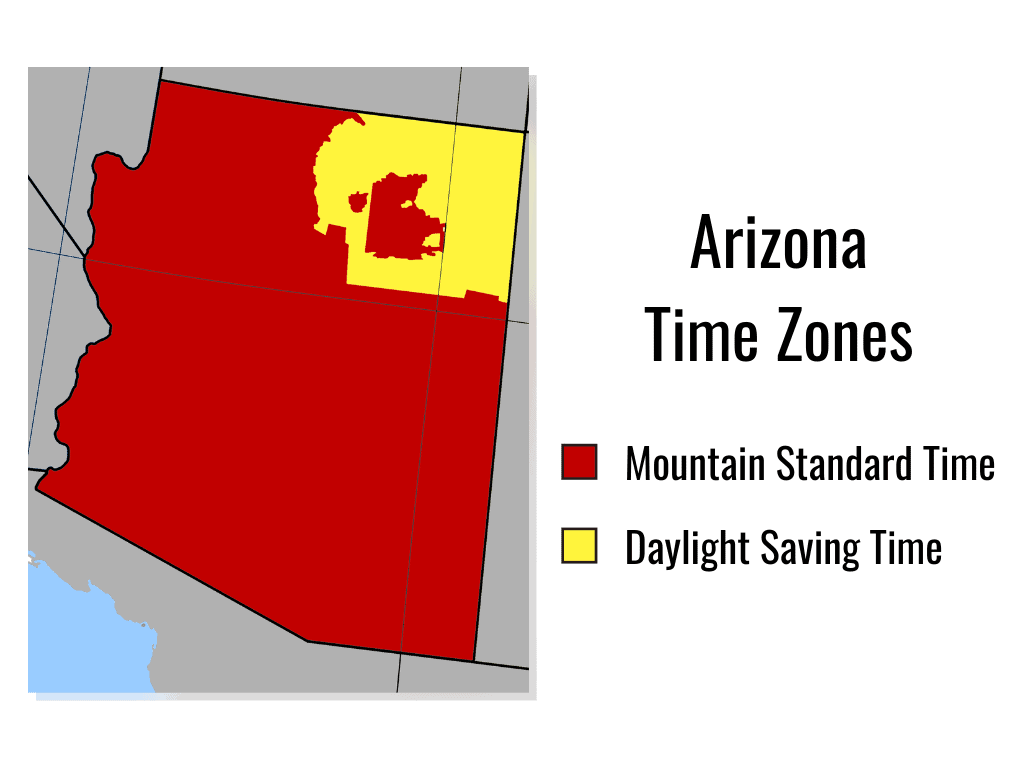
While Arizona generally maintains its year-round Mountain Standard Time (MST), there is one significant exception that adds another layer of complexity to its time zone map: the Navajo Nation. This vast semi-autonomous tribal land, which spans parts of northeastern Arizona, Utah, and New Mexico, does observe Daylight Saving Time (DST).
Why the Navajo Nation Observes DST
The Navajo Nation’s decision to observe Daylight Saving Time (DST) is largely for consistency with its surrounding regions in Utah and New Mexico, which also observe DST. Since the Navajo Nation crosses state lines, maintaining a consistent time zone across its entire territory simplifies administration, commerce, and communication for its residents. Imagine the confusion if different parts of the same nation were on different times!
This means that during the spring and summer months, when DST is in effect, the Navajo Nation within Arizona will be one hour ahead of the rest of Arizona. During the winter months, when DST ends, the Navajo Nation reverts to Mountain Standard Time (MST) and aligns with the rest of the state.
An interesting geographical quirk further complicates this: the Hopi Tribe reservation, which is entirely surrounded by the Navajo Nation in Arizona, does not observe Daylight Saving Time (DST). This creates a fascinating and potentially confusing situation where, if you were to travel through certain parts of northeastern Arizona during DST, you might experience multiple time changes within a relatively short distance. You could be on Arizona time (MST), then enter the Navajo Nation (MDT), then enter the Hopi Tribe land (MST), and then back into the Navajo Nation (MDT) again!
Implications for Travelers and Residents
For anyone traveling through or residing in northeastern Arizona, particularly near the Navajo Nation, being aware of these time zone shifts is crucial.
- Planning Meetings and Appointments: If you have scheduled activities or meetings within the Navajo Nation, always confirm the local time. A call scheduled for 9 AM Arizona time could be 10 AM on the Navajo Nation during DST.
- Travel Itineraries: When visiting attractions like Monument Valley or Canyon de Chelly National Monument, which are within the Navajo Nation, be mindful of tour start times, reservation confirmations, and daylight hours for optimal sightseeing.
- Communication: Coordinate with tour operators, hotels, or local contacts by clarifying whether they are referring to “local time” (which could mean Navajo Nation time) or “Arizona time” (outside the reservation).
Most smartphones and GPS devices will automatically adjust to the local time zone, which can be a lifesaver, but it’s always wise to double-check manually, especially when crossing these internal time zone boundaries.
Navigating Time Zones When Traveling to Arizona
The unique time zone situation in Arizona adds an interesting layer to travel planning. For those coming from outside the state, especially during the spring and summer months, it’s essential to understand how your departure time zone will relate to your arrival time.
Planning Your Itinerary: Practical Advice
Travelers arriving from states that observe Daylight Saving Time (DST) will experience a time shift that depends on the time of year.
- From Pacific Time Zone (during DST): If you’re traveling from California or Nevada between March and November, there will be no time change when you enter Arizona. Both will be operating on the same clock, with Arizona on MST and California/Nevada on PDT.
- From Pacific Time Zone (during Standard Time): During the winter months, when California and Nevada are on PST, Arizona will be one hour ahead. So, if it’s 10 AM in Los Angeles, it’s 11 AM in Phoenix.
- From Mountain Time Zone (during DST): If you’re coming from Utah, Colorado, or New Mexico between March and November, Arizona will be one hour behind these states (which will be on MDT). If it’s 10 AM in Denver, it’s 9 AM in Phoenix.
- From Mountain Time Zone (during Standard Time): In winter, Arizona will be on the same time as these states, all observing MST.
These considerations are important for coordinating flights, hotel check-ins, tour bookings, and any other time-sensitive activities. Many hotels and resorts in Arizona, from luxury properties in Scottsdale to charming boutique hotels in Sedona, will be well-versed in advising guests about the local time. It’s always a good idea to confirm check-in/check-out times and activity schedules, especially if you’re traveling with family or on a tight business schedule.
Key Destinations and Their Time Zone Realities
- Central and Southern Arizona: Cities like Phoenix, Tucson, Scottsdale, and Sedona all observe year-round Mountain Standard Time (MST). This makes planning for urban explorations, dining experiences, or hot air balloon rides in Sedona straightforward.
- Northern Arizona: Flagstaff, the gateway to the Grand Canyon National Park, also adheres to year-round MST. When visiting the Grand Canyon National Park, whether you are staying at a lodge on the South Rim or North Rim, remember it will be on MST. This means that during Daylight Saving Time (DST), the Grand Canyon National Park is on the same time as Las Vegas and Los Angeles.
- Western Arizona: Areas such as Lake Havasu City, home to the famous London Bridge, and communities along the Colorado River bordering California and Nevada, also follow year-round MST. This is particularly convenient for travelers crossing back and forth between states that observe PDT in the summer.
- Northeastern Arizona (Navajo Nation): As discussed, this region within Arizona observes Daylight Saving Time (DST). Key attractions here include Monument Valley, Canyon de Chelly National Monument, and the entrance to the Four Corners Monument (also shared with Utah, Colorado, and New Mexico). Always confirm the time when visiting these magnificent cultural and natural landmarks. The Petrified Forest National Park is outside the Navajo Nation and operates on MST year-round.
More Than Just Time: Exploring Arizona’s Wonders
Beyond its fascinating time zone quirks, Arizona remains a premier destination for travelers seeking diverse experiences. From luxury resorts to rugged outdoor adventures, the state caters to every lifestyle, making it a popular choice for family trips, solo explorations, and romantic getaways.
Iconic Landmarks and Natural Beauty
Arizona is synonymous with breathtaking natural wonders. The majestic Grand Canyon National Park is, of course, a must-see, offering unparalleled vistas and hiking opportunities. For those interested in deeper cultural immersion, a visit to the Navajo Nation reveals the stunning Monument Valley and Canyon de Chelly National Monument, where ancient history meets dramatic landscapes.
Other natural gems include the red rock formations of Sedona, famous for its spiritual vortexes and vibrant arts scene, and the unique petrified wood formations at Petrified Forest National Park. Adventure seekers can explore the slot canyons near Page, hike to the turquoise waters of Havasu Falls within the Havasupai Indian Reservation, or drive a scenic section of historic Route 66 through towns like Seligman and Winslow. For those seeking aquatic adventures, Lake Havasu City offers boating, swimming, and even the unique sight of the relocated London Bridge. Each of these landmarks provides unforgettable experiences and stunning backdrops for travelers.
Experiencing Arizona’s Diverse Culture and Lifestyle
Beyond its natural allure, Arizona offers a rich tapestry of cultural and lifestyle experiences. Phoenix and Scottsdale are hubs for luxury travel, boasting world-class resorts, championship golf courses, and upscale dining. Here, travelers can indulge in lavish amenities, spa treatments, and vibrant nightlife. These cities also host numerous festivals, concerts, and sporting events throughout the year, making them dynamic destinations for any type of traveler, whether on a business stay or a luxury vacation.
For a taste of local culture, explore the arts districts of Tucson and Sedona, discover Native American heritage at museums and cultural centers, or sample authentic Southwestern cuisine. Budget travelers will find charming motels along old highways and a plethora of outdoor activities that require minimal spending. Foodies can embark on culinary tours, exploring the fusion of Mexican, Native American, and American flavors that define Arizona’s unique gastronomic landscape.
Accommodation options in Arizona are as varied as its landscapes. From sprawling resort complexes with multiple pools and golf courses to cozy bed-and-breakfasts, vacation rentals, and even glamping sites, there’s a perfect stay for every preference and budget. Many establishments offer booking services, reviews, and comparisons, making it easy to find suitable hotels, suites, apartments, or villas for short or long-term stays. Whether you’re planning a romantic escape, a family adventure, or a solo exploration, Arizona’s vibrant tourism sector ensures a memorable experience, regardless of the time of year or, indeed, the precise time on the clock!

In conclusion, while the question “Is Arizona in Pacific Time?” seems simple, the answer reveals the state’s fascinating relationship with time. By adhering to year-round Mountain Standard Time (MST) (with the notable exception of the Navajo Nation), Arizona offers a consistent schedule that often aligns with Pacific Daylight Time (PDT) during warmer months. This unique characteristic, driven by both climate and cultural considerations, adds to the charm and intrigue of visiting this magnificent state. Planning your travel with an awareness of these time zone dynamics will ensure a smooth and enjoyable experience as you discover the countless wonders of Arizona.
LifeOutOfTheBox is a participant in the Amazon Services LLC Associates Program, an affiliate advertising program designed to provide a means for sites to earn advertising fees by advertising and linking to Amazon.com. Amazon, the Amazon logo, AmazonSupply, and the AmazonSupply logo are trademarks of Amazon.com, Inc. or its affiliates. As an Amazon Associate we earn affiliate commissions from qualifying purchases.