
Obtaining a New York State ID, often referred to as a non-driver ID, is a straightforward process designed to provide official identification for residents who do not operate a vehicle. This crucial document serves a multitude of purposes, from opening bank accounts and proving age for various transactions to accessing certain services and even boarding domestic flights. For visitors and new residents alike, understanding the requirements and steps involved is key to navigating life in the Empire State with ease. The primary agency responsible for issuing these identification cards is the New York State Department of Motor Vehicles (DMV).

Understanding the Purpose and Importance of a New York ID
A New York State ID is more than just a card; it’s a vital tool for establishing identity and facilitating daily life. Unlike a driver’s license, it does not grant driving privileges but offers the same level of official recognition. Its importance cannot be overstated, especially for those who may not have other forms of government-issued identification readily available or easily accessible.
Why You Might Need a New York ID
The reasons for needing a New York ID are diverse and practical:
- Age Verification: Essential for purchasing age-restricted items such as alcohol and tobacco, entering age-specific venues, or proving eligibility for senior discounts.
- Financial Transactions: Banks and other financial institutions require a valid government-issued ID to open accounts, cash checks, or conduct other financial business.
- Accessing Services: Many government agencies and private services require proof of identity to access their offerings, from applying for social services to enrolling in educational programs.
- Travel: While not a substitute for a passport for international travel, a New York State ID can be used for domestic flights and for identification purposes at hotels and other travel-related services.
- Proof of Residency: In some instances, it can serve as proof of your legal residency within New York State.
- Employment: Many employers require a valid ID as part of their hiring and onboarding process.
Types of Identification Cards
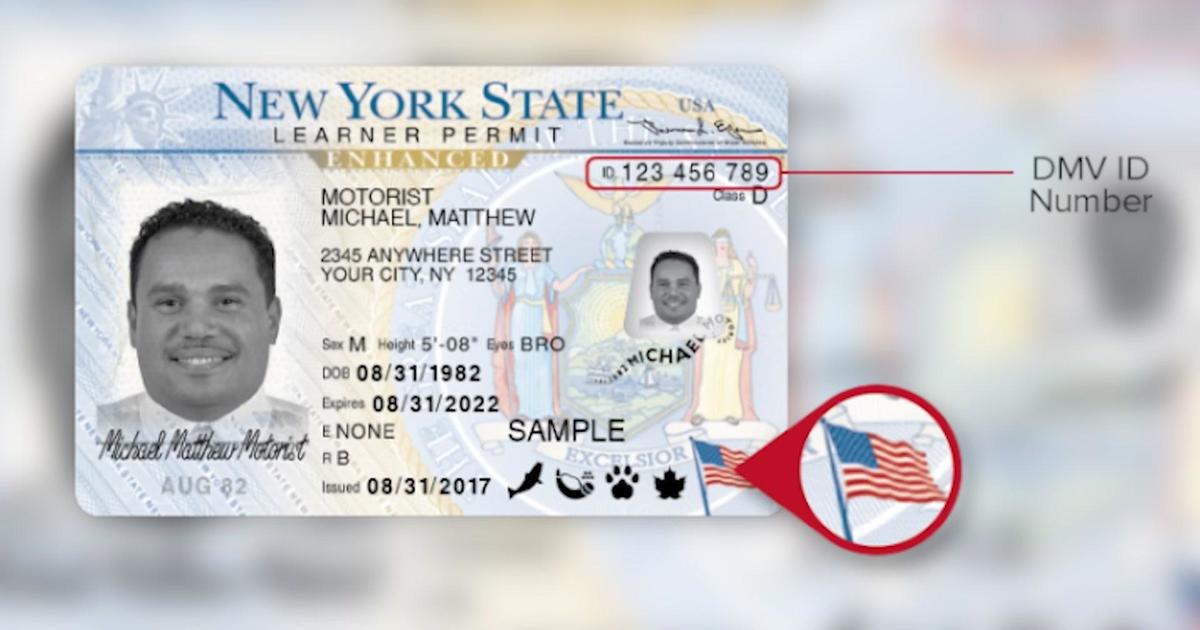
The New York State DMV offers several types of identification cards, with the most common being the standard non-driver ID. For individuals who require enhanced security features or wish to use their ID for specific federal purposes, such as boarding domestic flights without a passport, there is also the Enhanced ID (EID). The process and documentation requirements for an EID are more stringent, reflecting its advanced security features and its ability to serve as a border-crossing document for land and sea travel to Canada, Mexico, and the Caribbean. This guide will primarily focus on the standard non-driver ID, as it meets the needs of the vast majority of applicants.
Eligibility Requirements for a New York ID
To be eligible for a New York State ID, applicants must meet certain criteria set forth by the New York State Department of Motor Vehicles (DMV). These requirements are designed to ensure the integrity of the identification system and to verify the identity and residency of the applicant.
Residency in New York State
The most fundamental requirement is that you must be a resident of New York State. The DMV defines residency as living in New York State for at least six months of the year. They will require proof of your New York residency.
Age Restrictions
While there is no minimum age to obtain a non-driver ID, applicants under the age of 16 will require a parent or legal guardian to be present and provide consent. The adult will also need to present their own identification and proof of relationship to the applicant.
Legal Presence in the United States
Applicants must also demonstrate legal presence in the United States. This typically means being a U.S. citizen, a lawful permanent resident, or holding a valid visa status that permits residency in New York State.
Required Documentation: The Key to a Smooth Application
Gathering the correct documentation is arguably the most critical step in the application process for a New York ID. The New York State DMV employs a strict point system for verifying identity, and applicants must present a combination of documents that total a minimum number of points. It is essential to have original documents or certified copies; photocopies are generally not accepted.
The Six-Point ID Verification System
The DMV uses a six-point system to verify identity. Each document presented is assigned a point value, and applicants must accumulate at least six points. Here’s a breakdown of common document categories and their typical point values:
Proof of Identity (Up to 4 Points)
This category includes documents that strongly establish your identity.
- U.S. Birth Certificate: (4 points) A certified copy of your original birth certificate issued by a U.S. state or territory.
- U.S. Passport: (4 points) A valid U.S. passport book or card.
- Certificate of Citizenship: (4 points) Form N-560 or N-561.
- Certificate of Naturalization: (4 points) Form N-550 or N-570.
- Foreign Passport with valid I-94: (4 points) A foreign passport accompanied by a valid U.S. form I-94 showing your legal immigration status.
- Permanent Resident Card (Green Card): (4 points) U.S. Citizenship and Immigration Services (USCIS) Form I-551.
Proof of Date of Birth (Up to 1 Point)
While many identity documents already prove date of birth, you may need an additional document if your primary identity document doesn’t clearly state it.
- Social Security Card: (1 point) A valid Social Security card. Note that you cannot use a photocopy.
- Marriage Certificate: (1 point) If your name has changed due to marriage.
Proof of Immigration Status (Up to 4 Points)
For non-U.S. citizens, this category is crucial.
- Valid U.S. Visa: (Up to 4 points depending on visa type) With accompanying U.S. entry stamp or form I-94.
- Employment Authorization Document (EAD): (Up to 2 points) USCIS Form I-766.
- Refugee Travel Document: (Up to 4 points) USCIS Form I-571.

Proof of New York State Residency (Up to 2 Points)
These documents confirm that you live in New York State. You need at least one document from this category.
- Utility Bills: (1 point each) Gas, electric, water, or landline telephone bills in your name, issued within the last 60 days.
- Bank Statements: (1 point each) Statements from your checking or savings account, issued within the last 60 days.
- Lease Agreement or Mortgage Statement: (1 point each) For your current residence.
- Mail from Government Agencies: (1 point each) Such as tax documents or unemployment benefits.
- School Records: (1 point each) Transcripts or report cards from a New York State school.
- Credit Card Statements: (1 point each) Issued within the last 60 days.
Proof of Name Change (If Applicable)
If your current name differs from the name on your primary identity document (e.g., due to marriage or divorce), you will need to provide documents to bridge the gap.
- Marriage Certificate: (1 point) If you have changed your name due to marriage.
- Divorce Decree: (1 point) If you have reverted to a previous name.
- Court Order for Name Change: (1 point)
Important Note: The DMV website provides a comprehensive list of acceptable documents and their point values. It is highly recommended to consult this official resource before your appointment to ensure you have the correct documentation.
The Application Process: Step-by-Step
Applying for a New York ID involves visiting a DMV office and completing a few essential steps. Planning ahead can make this process as smooth and efficient as possible.
Step 1: Gather Your Documents
As detailed above, this is the most crucial step. Ensure you have all the original or certified documents required to meet the six-point identification system. Make copies for your personal records.
Step 2: Schedule an Appointment
While walk-ins are sometimes accommodated, scheduling an appointment at a DMV office is highly recommended. Appointments can be made online through the DMV website or by phone. This significantly reduces your waiting time.
Step 3: Visit the DMV Office
On the day of your appointment, arrive a little early to allow for parking and navigating the office. You will typically go through a few stages:
- Document Verification: A DMV representative will review all your submitted documents to ensure they meet the six-point requirement and are valid.
- Application Completion: You will fill out the official Application for Permit, Driver License or Non-Driver ID Card (MV-44). This form collects personal information, including your name, address, date of birth, and answers to questions regarding your physical condition and any previous driving history.
- Photo Capture: Your photograph will be taken for the ID card. Ensure you are dressed appropriately and have a neutral expression.
- Signature: You will sign the application, which will be electronically captured for your ID.
- Payment: There is a fee for the New York State ID card. The fee varies slightly, so it’s advisable to check the current fee schedule on the DMV website. Payment can typically be made by cash, check, money order, or credit/debit card.
Step 4: Receive Your ID Card
After your application is processed and approved, you will be issued a temporary ID card on the spot. Your permanent New York State ID card will be mailed to your listed address within a few weeks. It’s important to keep the temporary ID safe until the permanent card arrives.
Special Considerations and Tips
Navigating the process of obtaining a New York ID can be made even easier with a few insider tips and awareness of specific situations.
For Minors (Under 16)
As mentioned, individuals under 16 require a parent or legal guardian to accompany them. The accompanying adult must present their own valid identification and proof of their relationship to the minor, such as a birth certificate listing both names or a court order.
For Individuals with Name Changes
If your name has changed due to marriage, divorce, or a court order, it is crucial to present the legal documentation that supports this change. The chain of documents must clearly link your current name back to the name on your primary proof of identity. For example, if your birth certificate is under your maiden name and you are now married, you would need your birth certificate (4 points) and your marriage certificate (1 point).
For Non-U.S. Citizens
Applicants who are not U.S. citizens must provide documentation proving their legal status in the United States. This typically includes a valid foreign passport with a U.S. visa and a corresponding I-94 form, a Permanent Resident Card, or an Employment Authorization Document (EAD). The expiration date of your immigration documents will be reflected on your New York ID.
Renewing Your ID
New York State IDs are typically valid for a period of 8 years. The DMV will usually send a renewal notice by mail prior to your ID’s expiration. You can renew your ID online, by mail, or in person at a DMV office.
Lost or Stolen IDs
If your New York ID is lost or stolen, you will need to apply for a replacement. This process is similar to applying for a new ID, but you will need to report the loss to the DMV and present the necessary documentation. There is typically a fee for a replacement ID.
By thoroughly understanding the requirements and following these steps, obtaining a New York State ID should be a manageable and successful endeavor, granting you the essential identification needed to fully engage with life in New York.
LifeOutOfTheBox is a participant in the Amazon Services LLC Associates Program, an affiliate advertising program designed to provide a means for sites to earn advertising fees by advertising and linking to Amazon.com. Amazon, the Amazon logo, AmazonSupply, and the AmazonSupply logo are trademarks of Amazon.com, Inc. or its affiliates. As an Amazon Associate we earn affiliate commissions from qualifying purchases.