
The year 1776 stands as a pivotal moment in the history of the United States and, consequently, in the evolution of its most iconic metropolis, New York City. While today it is a sprawling, vertical landscape of glass and steel, in the summer of 1776, [New York City] was a vastly different entity. It was a bustling colonial port town, caught in the throes of revolution, its physical form a mere shadow of its future grandeur. To truly understand the city during this transformative period, one must cast aside modern conceptions of urban density and look to the more modest, yet strategically vital, settlement that existed on the southern tip of Manhattan Island.
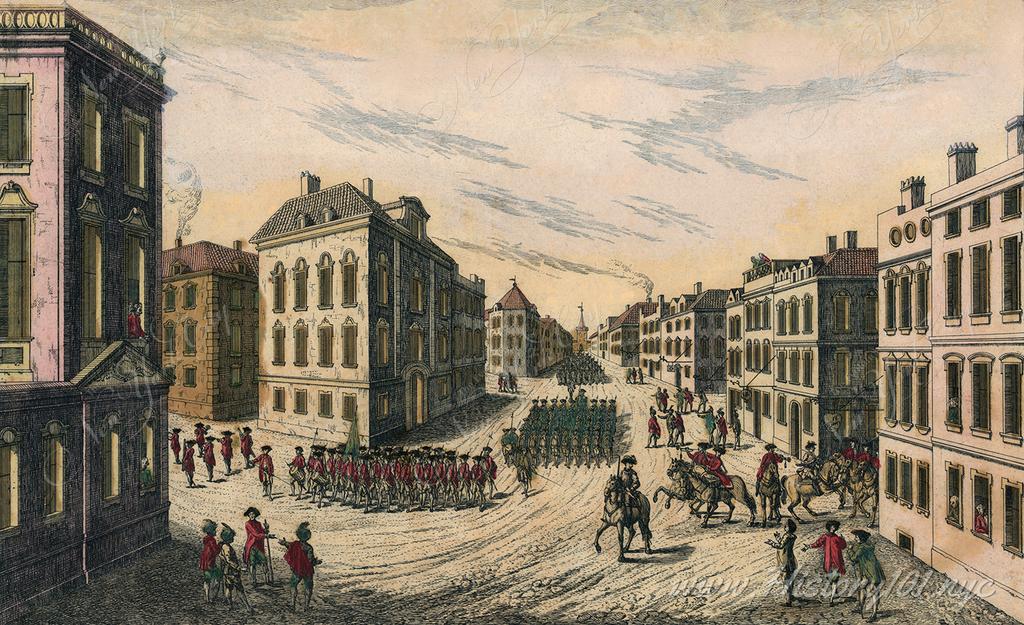
A Colonial Port Under Siege
In 1776, [New York City] was a far cry from the global financial and cultural hub it is today. Its population hovered around 25,000 souls, a modest number compared to the millions who now inhabit its boroughs. The city was geographically confined, tightly packed onto the southern end of Manhattan Island, stretching roughly from the present-day Financial District northward to perhaps City Hall Park. The remaining vast expanse of the island was largely undeveloped, characterized by farms, forests, and marshlands.
The Urban Core
The heart of the city was a grid of narrow, winding streets, many still unpaved and prone to mud during rainy seasons. Buildings were predominantly constructed of wood, with some of brick and stone, reflecting the architectural styles of the era. Three and four-story structures were common, featuring steep roofs, dormer windows, and tightly packed facades. The most prominent buildings included the Trinity Church, its spire a significant landmark, and various government buildings clustered around Wall Street, a name that would later become synonymous with global finance.
The harbor was the lifeblood of [New York City]. Ships of all sizes – merchant vessels, fishing boats, and naval craft – filled the waters of New York Harbor. This maritime activity was crucial for trade, bringing goods from across the Atlantic and exporting colonial products. The docks and wharves, likely concentrated along the East River and Hudson River waterfronts, were the busiest areas, teeming with sailors, merchants, and laborers. The sounds of creaking timbers, shouting stevedores, and the cries of gulls would have been a constant soundtrack to daily life.
Daily Life and Economy
The economy was primarily mercantile, driven by trade and the processing of goods. Craftsmen and artisans, such as blacksmiths, coopers, carpenters, and tailors, plied their trades in small workshops scattered throughout the city. Taverns and inns were vital social and commercial centers, serving as gathering places for news, business dealings, and simple camaraderie. The air would have carried the scents of woodsmoke, horse dung, baking bread, and the salty tang of the sea.
Social stratification was evident, with wealthy merchants and landowners residing in more substantial homes, while the working class and laborers occupied more modest dwellings, often in close proximity to their workplaces or the docks. African slaves, though their numbers were declining due to gradual abolition efforts, formed a significant part of the labor force, performing various domestic and manual tasks.
A City on the Brink of War
In 1776, [New York City]’s strategic importance was magnified by the escalating conflict with Great Britain. The city’s deep harbor made it an ideal base for naval operations, and its position provided control over the vital Hudson River. This very strategic value made it a primary target and, subsequently, a focal point of the American Revolutionary War.
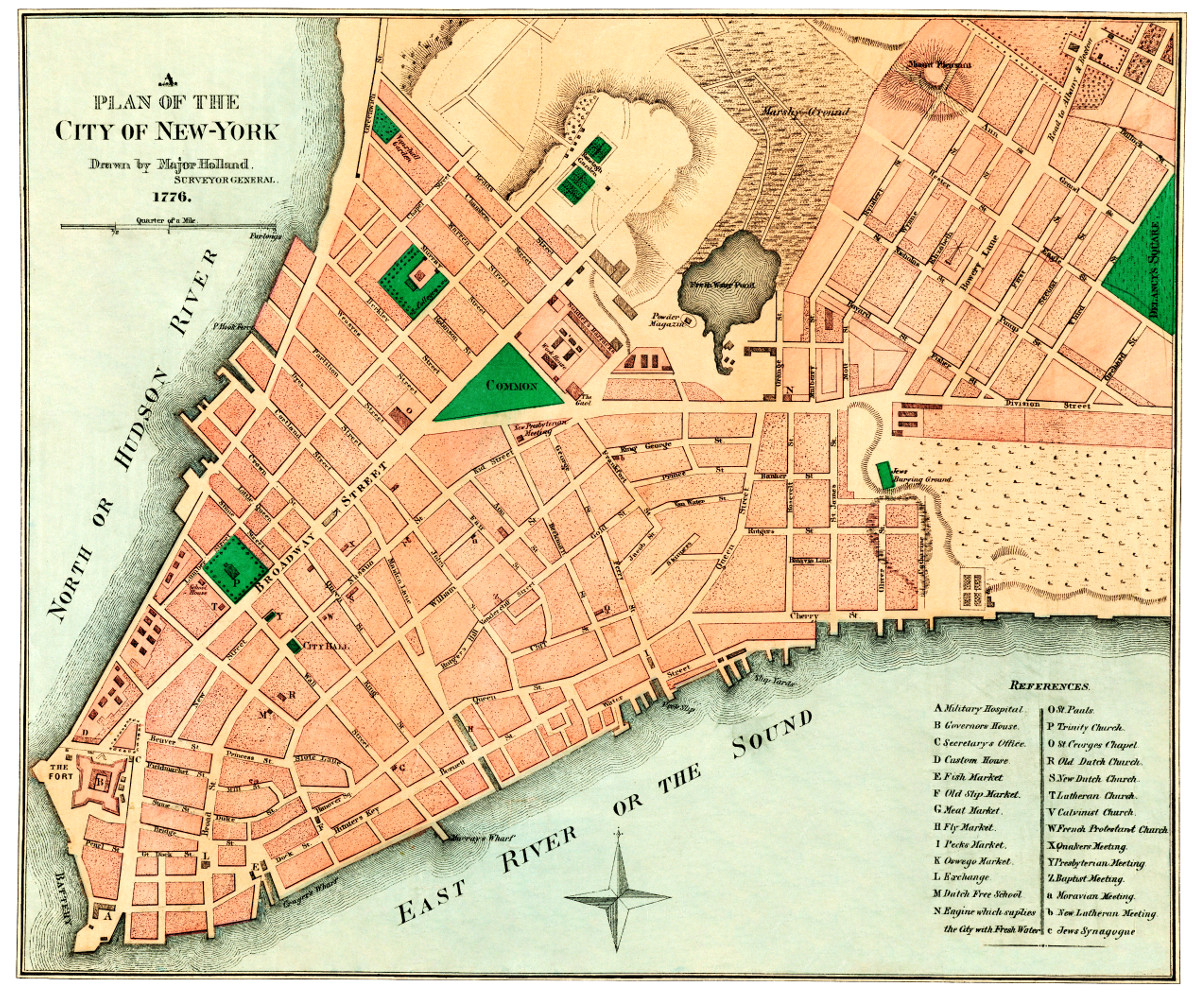
The Shadow of Occupation
As the Continental Army, led by General George Washington, prepared to defend the city, the atmosphere was charged with both patriotic fervor and palpable anxiety. The city was a nexus of political activity, with prominent figures debating the course of the nascent United States. However, the arrival of the formidable British fleet and army in the summer of 1776 marked a turning point. The Battle of Long Island, fought in August of that year, resulted in a decisive British victory, leading to the occupation of [New York City].
The British Occupation
The occupation lasted for seven long years, profoundly altering the city’s social fabric and physical landscape. The British military established a strong presence, fortifying key points and repurposing buildings for their own needs. The Continental Army’s hasty retreat meant that much of the city’s infrastructure and many of its inhabitants experienced firsthand the realities of wartime occupation. The Great Fire of 1776, which devastated a significant portion of the city, remains a point of historical debate, with some attributing it to British actions and others to accidents or sabotage by retreating Patriots. This event dramatically reshaped the urban environment, destroying homes, businesses, and important landmarks.
Navigating the Colonial Streets
For a visitor in 1776, exploring [New York City] would have been an exercise in navigating a more intimate, human-scaled urban environment. The city’s layout, while bearing the early marks of a grid plan in its central areas, still retained a degree of organic growth, with streets often following older pathways and property lines.
Transportation and Infrastructure
Personal transportation would have primarily involved walking or horse-drawn carriages. The streets, though narrow, were bustling with activity. Carts, wagons, and the occasional coach would have jostled for space with pedestrians. Public transportation as we know it was nonexistent; travel between neighborhoods or to outlying areas would have been a deliberate undertaking.
The infrastructure was rudimentary by modern standards. Sanitation was a significant challenge, with waste often disposed of in rudimentary ways, contributing to the odors and the potential for disease. Water was drawn from wells or, in some areas, from rudimentary piped systems. Lighting at night was minimal, provided by lanterns outside homes and businesses, and the streets would have been cloaked in darkness once the sun set, save for the faint glow from windows.
Key Areas of Interest
While lacking the iconic landmarks of today, several areas would have been of interest. The waterfront, with its constant maritime activity, would have been a focal point for anyone interested in trade and commerce. The markets, likely situated in central squares, would have offered a glimpse into the daily lives of ordinary citizens, with vendors selling produce, meats, fish, and other commodities. The areas around Trinity Church and Federal Hall (though its appearance would have differed significantly from its later iterations) would have been centers of civic and religious life. Taverns, such as Fraunces Tavern, would have been important social hubs, offering a place to rest, eat, and imbibe, and perhaps even overhear snippets of revolutionary discourse.
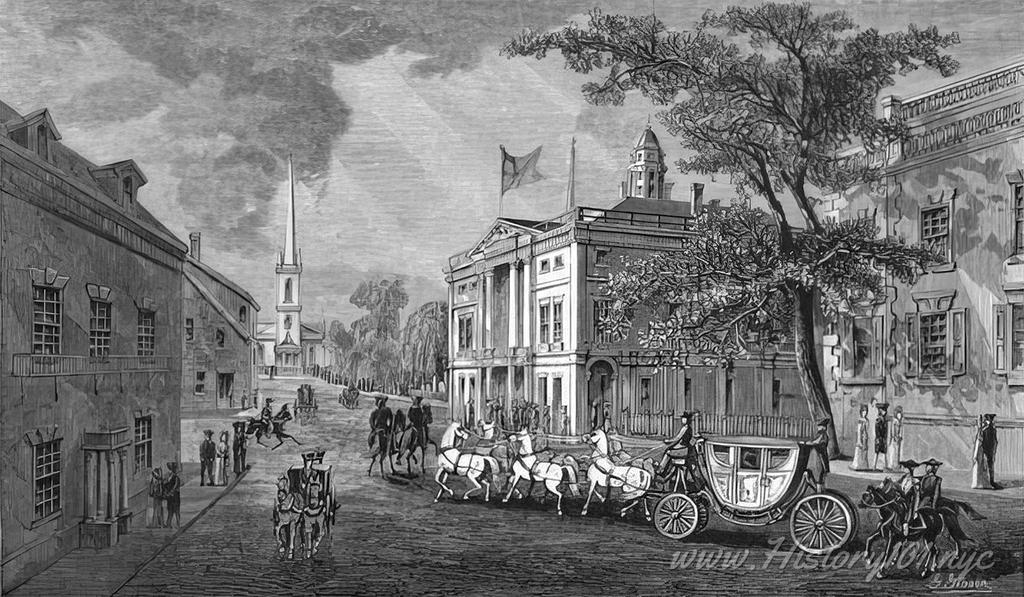
Echoes of 1776
The New York City of 1776, though physically modest, was a city of immense historical consequence. It was a colonial port grappling with the nascent ideals of independence, a strategic prize sought by warring empires, and a crucible where the foundations of a new nation were being forged. While the towering skyscrapers and bustling avenues of today bear little resemblance to its colonial past, the spirit of resilience, innovation, and pivotal change that defined [New York City] in 1776 continues to resonate within its very fabric, a testament to its enduring significance in the narrative of America. To visit historical sites like Fraunces Tavern or walk the cobblestones of the Financial District is to connect with an era when this island metropolis was not yet a global giant, but a determined settlement charting its own destiny.
LifeOutOfTheBox is a participant in the Amazon Services LLC Associates Program, an affiliate advertising program designed to provide a means for sites to earn advertising fees by advertising and linking to Amazon.com. Amazon, the Amazon logo, AmazonSupply, and the AmazonSupply logo are trademarks of Amazon.com, Inc. or its affiliates. As an Amazon Associate we earn affiliate commissions from qualifying purchases.