
Understanding time zones is crucial for navigating a globally connected world, especially when planning a trip to a vibrant metropolis like New York. For many travelers, the concept of GMT (Greenwich Mean Time) and its relationship to local time can be a source of confusion. This article aims to demystify GMT and explain its relevance to the time observed in New York City, empowering you to stay on schedule and make the most of your visit.
The Foundation: Understanding GMT
GMT, or Greenwich Mean Time, is a time standard based on the mean solar time at the Royal Observatory in Greenwich, London. Historically, it served as the world’s prime meridian and thus the reference point for all other time zones. While GMT is still widely understood, the official international time standard is now Coordinated Universal Time (UTC). UTC is based on highly precise atomic clocks and is kept within 0.9 seconds of GMT. For all practical purposes, and for the context of travel and daily life, GMT and UTC are interchangeable.
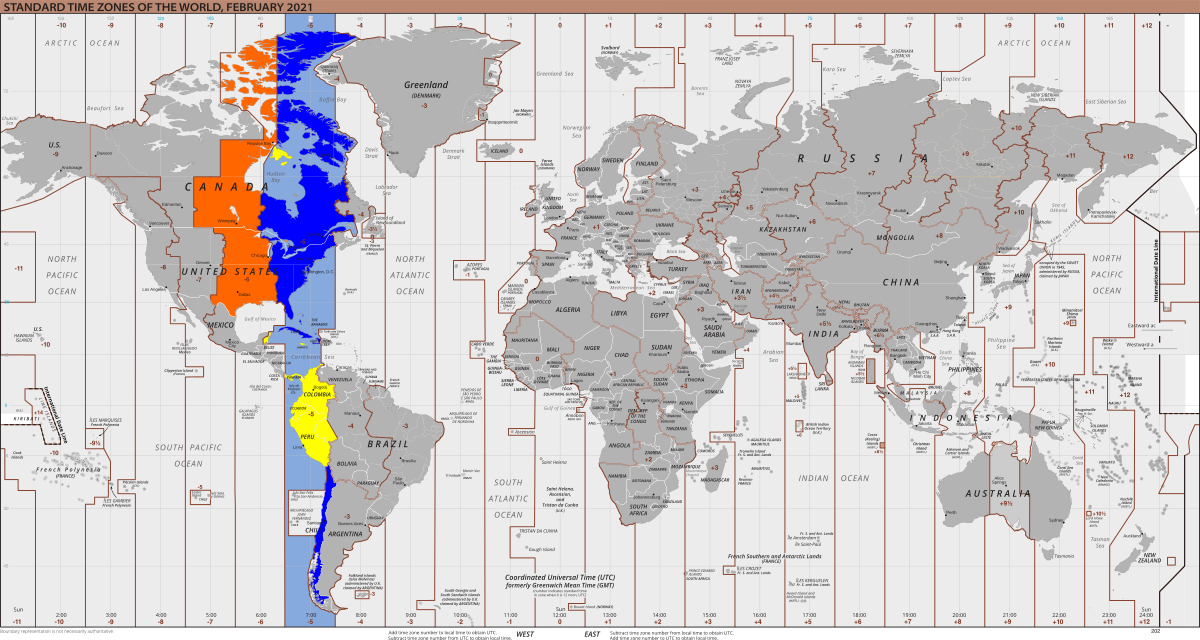
UTC serves as the zero point on the world’s time zone map. All other time zones are expressed as an offset from UTC, either ahead (plus) or behind (minus). This system allows for a standardized way to communicate and synchronize time across different geographical locations, regardless of the local sun’s position. When you see a time zone denoted as UTC+X or UTC-X, it directly indicates how many hours that time zone is ahead of or behind the prime meridian.
Historical Significance of GMT
The establishment of GMT was a monumental achievement in the 19th century, driven by the burgeoning needs of international trade, navigation, and railway travel. Before a standardized time system, every town and city kept its own local time, which was determined by the sun. This created significant logistical challenges, especially as communication and transportation networks expanded globally.
The adoption of GMT provided a unified reference, enabling more accurate scheduling of ship departures, train timetables, and telegraphic communications. Its historical significance lies not just in its function as a timekeeper but as a catalyst for global standardization and interconnectedness. While we now use UTC, the legacy and understanding of GMT persist, particularly in common parlance.
GMT vs. UTC: A Modern Distinction
While the terms GMT and UTC are often used interchangeably, there’s a subtle but important distinction. GMT is a astronomical time standard, meaning it’s based on the Earth’s rotation relative to the sun. UTC, on the other hand, is an atomic time standard, based on the oscillations of atoms, which is far more precise.
Leap seconds are occasionally added to UTC to keep it aligned with the Earth’s slightly irregular rotation. GMT does not incorporate these adjustments. However, for everyday purposes, including travel planning and understanding time differences, the distinction is negligible. When you encounter references to GMT, especially in older contexts or general travel discussions, it’s safe to assume it refers to the same temporal baseline as UTC.
New York’s Time Zone: Eastern Standard Time (EST) and Eastern Daylight Time (EDT)
New York is located in the Eastern Time Zone of North America. This time zone observes two distinct periods throughout the year: Eastern Standard Time (EST) and Eastern Daylight Time (EDT). The transition between these two is governed by Daylight Saving Time (DST).
Eastern Standard Time (EST)
During the period of standard time, New York observes EST. EST is UTC-5. This means that when it is noon UTC, it is 7 AM in New York during EST. This is the “winter” time for the region, typically from the first Sunday in November until the second Sunday in March. Understanding this offset is critical for scheduling calls, booking flights, and coordinating activities with people in different parts of the world.
For instance, if you are in London (which observes GMT/UTC during its winter) and it’s 12 PM, it would be 7 AM in New York. This knowledge helps in planning for early morning meetings or late-night arrivals without confusion.
Eastern Daylight Time (EDT)
When Daylight Saving Time begins, New York switches to Eastern Daylight Time (EDT). EDT is UTC-4. This means that during DST, New York time is one hour ahead of its standard time. EDT typically runs from the second Sunday in March until the first Sunday in November.
The purpose of EDT is to make better use of daylight during the warmer months. By advancing the clock by one hour, evenings are brighter, which can encourage outdoor activities and potentially save energy. So, if it’s 12 PM UTC, it will be 8 AM in New York during EDT.
Calculating GMT Time in New York

To determine the GMT time in New York, you need to know whether New York is observing EST or EDT and apply the corresponding offset from UTC.
The Calculation Process
- Identify the current time in UTC: This is your reference point. You can easily find the current UTC time online through various world clocks or time zone converters.
- Determine if New York is on EST or EDT: Check the current date. If it falls within the DST period (second Sunday in March to first Sunday in November), New York is on EDT. Otherwise, it’s on EST.
- Apply the offset:
- If New York is on EST, subtract 5 hours from the UTC time.
- If New York is on EDT, subtract 4 hours from the UTC time.
Example:
Let’s say it is currently 15:00 UTC on a date in July (during DST).
- New York is on EDT (UTC-4).
- Therefore, New York time is 15:00 UTC – 4 hours = 11:00 AM EDT.
If it were 15:00 UTC on a date in January (during standard time):
- New York is on EST (UTC-5).
- Therefore, New York time is 15:00 UTC – 5 hours = 10:00 AM EST.
Tools and Resources for Time Zone Conversions
Fortunately, you don’t need to perform these calculations manually every time. Numerous online tools and smartphone applications are designed to provide instant time zone conversions.
- World Clock Websites: Websites like TimeAndDate.com offer comprehensive world clocks and converters where you can input a city and see its current time and its relationship to other time zones, including UTC/GMT.
- Smartphone Apps: Most smartphones have built-in world clock features that allow you to add multiple cities and see their current times simultaneously. Many also offer conversion tools.
- Search Engines: A simple search query like “What time is it in New York in GMT?” or “GMT to EST converter” will usually yield immediate results from reputable sources.
These tools are invaluable for travelers, international business professionals, and anyone needing to coordinate across different time zones. They remove the guesswork and ensure accuracy, which is especially important when booking flights or making important appointments.
Why This Matters for Your New York Trip
Understanding the time difference between GMT (or UTC) and New York is not just an academic exercise; it has practical implications for your travel experience.
Scheduling Flights and Travel
When booking flights to New York, you’ll see departure and arrival times listed in local time. However, when comparing prices or coordinating with friends and family in other countries, you’ll need to be aware of the time difference. Knowing that New York is typically 5 hours behind GMT (or 4 hours during DST) helps you avoid booking an overnight flight that lands extremely early in the morning, or missing an important connection due to a miscalculation. For example, a flight departing London at 10 PM GMT would arrive in New York around 5 PM EST, assuming no time zone shifts during the flight itself.
Planning Activities and Tours
New York offers an endless array of activities, from Broadway shows and museum visits to guided tours and culinary experiences. Many tours and performances have fixed start times. If you’re coordinating with someone overseas, or if you’re trying to fit a show into a tight schedule, knowing the local time relative to GMT is essential. For instance, a 7 PM Broadway show in New York would be midnight in London during EST, or 11 PM during EDT. This clarity prevents misunderstandings and ensures you don’t miss out on key experiences.
Business and Communication
For those traveling to New York for business, timely communication is paramount. Conference calls, client meetings, and interoffice coordination all rely on accurate timekeeping. If your business partners are in a GMT or UTC-based region, being able to quickly calculate the time difference ensures you schedule meetings at mutually convenient hours and respond to emails and calls promptly. This professionalism is key to successful international business relations.

Staying Connected with Home
Keeping in touch with loved ones back home is often a priority during travel. Whether it’s a quick video call or a text message, knowing the time difference prevents you from waking someone up in the middle of the night or interrupting an important event. Understanding that New York is hours behind GMT allows you to plan your calls for appropriate times, ensuring a pleasant and respectful interaction.
In conclusion, while the technical definition of GMT might seem arcane, its practical application in understanding time zones, particularly for a destination like New York, is fundamental for seamless travel and effective communication in our interconnected world. By grasping the concepts of GMT, UTC, EST, and EDT, you can navigate your journey with confidence and ensure that every moment in the bustling city of New York is well-timed and perfectly enjoyed.
LifeOutOfTheBox is a participant in the Amazon Services LLC Associates Program, an affiliate advertising program designed to provide a means for sites to earn advertising fees by advertising and linking to Amazon.com. Amazon, the Amazon logo, AmazonSupply, and the AmazonSupply logo are trademarks of Amazon.com, Inc. or its affiliates. As an Amazon Associate we earn affiliate commissions from qualifying purchases.