
The quest for the perfect steak is a culinary journey that has captivated diners for centuries. Among the pantheon of prime beef cuts, two titans consistently rise to the top of the debate: the Ribeye and the New York Strip. Both offer distinct characteristics, born from their specific placement on the cow, and appeal to different palates. Understanding these nuances can elevate your next dining experience, whether you’re ordering at a fine dining establishment in New York City or grilling at home in your backyard. This exploration delves deep into what makes each cut unique, guiding you to make an informed decision about which steak reigns supreme for your personal preference.
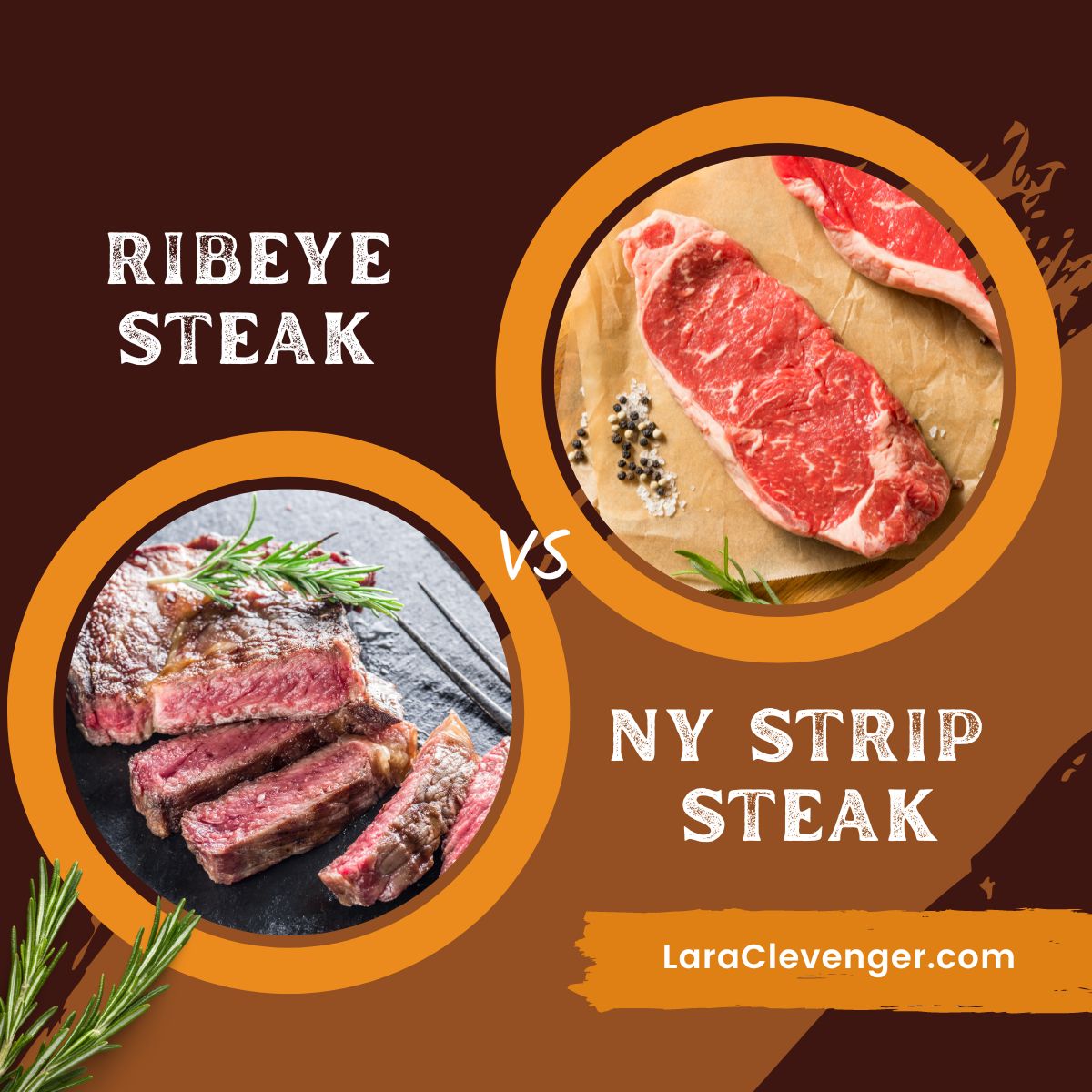
The Ribeye: A Symphony of Fat and Flavor
The Ribeye cut originates from the rib section of the cow, specifically between the sixth and twelfth ribs. This primal cut is renowned for its generous marbling – those intramuscular streaks of fat that are the secret to its unparalleled tenderness and rich, buttery flavor. The presence of more fat within the muscle fibers means that as the steak cooks, the fat renders, basting the meat from the inside out. This internal lubrication is what gives the Ribeye its signature succulent texture and a deeply satisfying, almost decadent taste.
Anatomy of a Ribeye
- Marbling: This is the defining characteristic of a Ribeye. The higher the marbling, the more tender and flavorful the steak. Look for a steak with a consistent, even distribution of fat throughout the muscle.
- Tenderness: Due to the higher fat content and the fact that this muscle isn’t heavily worked by the animal, the Ribeye is inherently very tender.
- Flavor Profile: The rendered fat contributes a rich, beefy, and slightly sweet flavor that many consider to be the ultimate steak experience.
- Cut Variations: The Ribeye can be found bone-in or boneless. The bone-in version, often called a “Cowboy Steak” or “Tomahawk Steak” if the rib bone is left long and frenched, can offer an even more intense flavor as the bone insulates the meat and contributes to a more even cooking process. The boneless version is more common and easier to handle.
Cooking and Serving the Ribeye
The Ribeye is forgiving, making it a popular choice for both novice and experienced cooks. Its high fat content helps prevent it from drying out, even if slightly overcooked.
- Best Cooking Methods: Pan-searing, grilling, and broiling are all excellent methods for cooking a Ribeye. A hot sear is crucial to develop a beautiful crust while keeping the inside juicy.
- Ideal Doneness: Medium-rare to medium is generally considered optimal for a Ribeye. This allows the fat to render sufficiently without becoming greasy, and the interior remains tender and moist.
- Pairing Suggestions: The rich flavor of a Ribeye pairs well with robust sides such as roasted potatoes, creamed spinach, or a hearty mushroom sauce. A full-bodied red wine, like a Cabernet Sauvignon or a Merlot, is a classic accompaniment.
The New York Strip: The Bold and the Beefy
The New York Strip, also known as the Kansas City Strip, Strip Loin, or Sirloin Strip, hails from the short loin primal cut. This area of the cow is less worked than many others, contributing to the Strip’s notable tenderness. However, it typically contains less marbling than a Ribeye, leading to a leaner steak with a more pronounced beefy flavor and a firmer, chewier texture. The Strip is characterized by its uniform shape and a strip of fat running along one edge, which renders during cooking and adds moisture and flavor.
Anatomy of a New York Strip
- Marbling: While present, the marbling in a New York Strip is generally less abundant and more concentrated than in a Ribeye. This results in a leaner, yet still flavorful, steak.
- Tenderness: The New York Strip is considered a tender cut, though typically less so than a Ribeye. Its texture is often described as firm yet yielding.
- Flavor Profile: The flavor of a New York Strip is distinctly beefy and savory. The fat cap along the edge contributes a pleasant richness as it crisps up during cooking.
- Texture: Many appreciate the slight chew and satisfying bite of a New York Strip, which stands in contrast to the extreme tenderness of a Ribeye.
Cooking and Serving the New York Strip
The New York Strip is a versatile steak that can be cooked using various methods. Its leaner profile requires a bit more attention to avoid overcooking.
- Best Cooking Methods: Grilling, pan-searing, and broiling are all excellent choices. The key is to achieve a good sear to develop a flavorful crust.
- Ideal Doneness: Medium-rare is often preferred to preserve its tenderness and moisture. Overcooking can lead to a tougher texture.
- Pairing Suggestions: The balanced flavor of a New York Strip makes it suitable for a wide range of accompaniments. Classic pairings include mashed potatoes, grilled asparagus, or a simple béarnaise sauce. A medium-bodied red wine, such as a Pinot Noir or a Syrah, complements its savory notes.
Direct Comparison: Ribeye vs. New York Strip
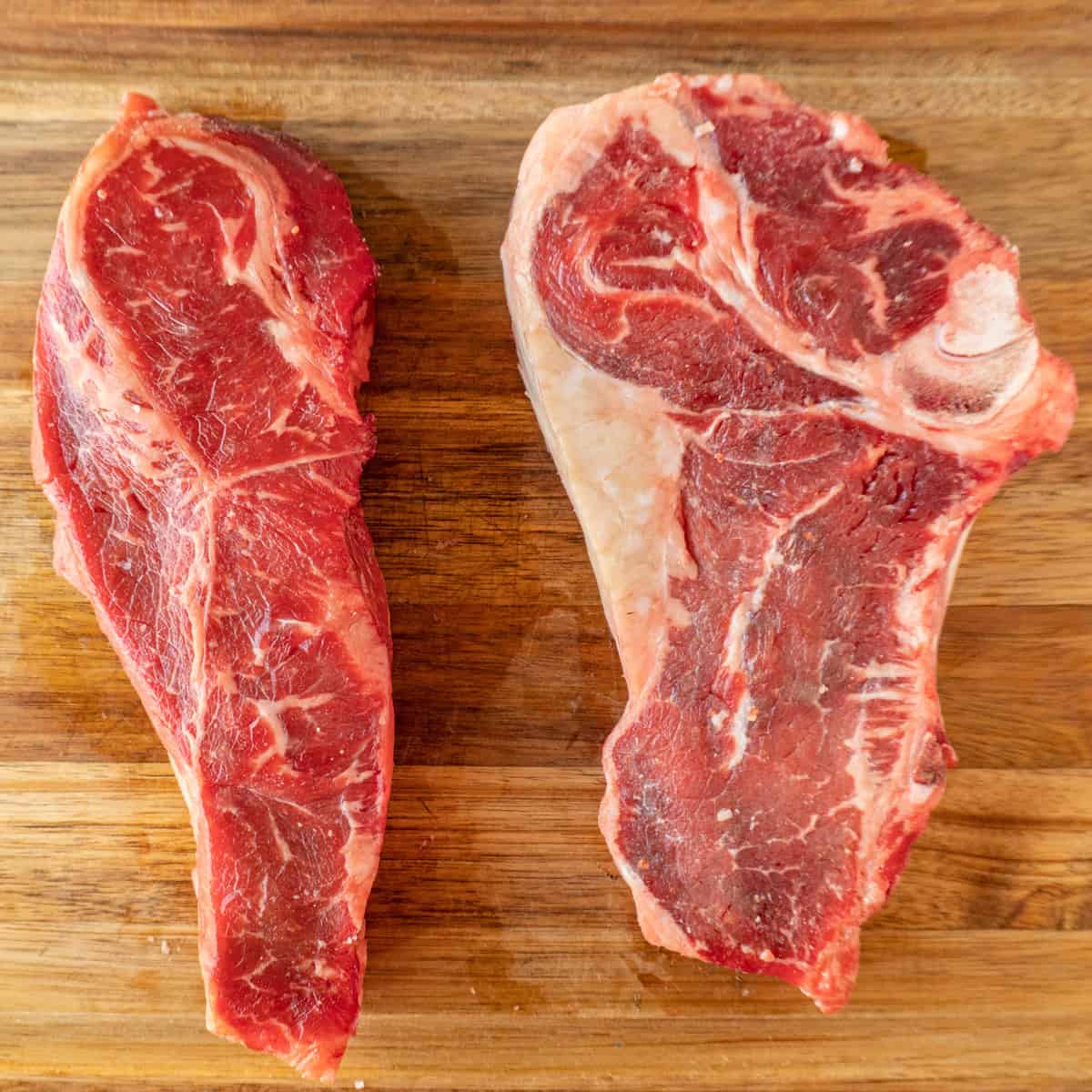
When pitting the Ribeye against the New York Strip, the primary differentiators are fat content, marbling, tenderness, and flavor intensity.
Fat Content and Marbling
- Ribeye: Higher fat content, with abundant intramuscular marbling. This leads to a richer, more buttery taste and extreme tenderness.
- New York Strip: Leaner, with less marbling but a distinct fat cap along one edge. This provides a satisfying, beefy flavor and a firmer texture.
Tenderness
- Ribeye: Generally considered more tender due to its higher fat content and the cut’s origin from a less-worked muscle group.
- New York Strip: Tender, but typically not as meltingly soft as a Ribeye. It offers a more substantial, satisfying chew.
Flavor
- Ribeye: Rich, buttery, and deeply beefy, with the rendered fat contributing a decadent quality.
- New York Strip: Bold, savory, and unmistakably beefy, with the fat cap adding a pleasant, crisp richness.
Price and Availability
Both cuts are premium, and their prices can vary based on quality (e.g., Prime versus Choice grade), sourcing, and the specific establishment. Generally, Ribeye can sometimes command a slightly higher price due to its higher fat content and perceived luxury. Both are widely available at reputable butchers and restaurants across United States and beyond.
The Verdict: Personal Preference is Key
Ultimately, the question of whether Ribeye or New York Strip is “better” is subjective and hinges entirely on individual taste preferences. There is no single definitive answer, as both steaks offer unique and compelling culinary experiences.
For the Fat Lover and Ultimate Indulgence: Choose Ribeye
If your ideal steak experience involves a supremely tender cut that practically melts in your mouth, bursting with rich, buttery flavor, then the Ribeye is your champion. Its generous marbling ensures moisture and a decadent taste that satisfies the most discerning palate. It’s the steak for those who seek pure indulgence and don’t shy away from fat.
For the Bold Beefy Flavor and Satisfying Chew: Choose New York Strip
If you prefer a steak with a more pronounced, pure beefy flavor and a texture that offers a satisfying chew, the New York Strip is likely your preference. Its leaner profile highlights the inherent taste of the beef, and the crisping fat cap adds a delightful counterpoint. It’s a steak for those who appreciate the fundamental essence of beef with a robust character.

Making Your Choice for the Perfect Meal
Consider your personal proclivities when ordering or cooking. Do you crave the unctuousness of a well-marbled steak, or do you prefer a cleaner, more concentrated beef flavor? Are you looking for the ultimate in tenderness, or do you enjoy a bit more resistance with each bite?
For steak aficionados dining in cities like Chicago or enjoying a special occasion meal, sampling both can be a delightful way to solidify your preference. Many restaurants offer steak flights or allow for half-and-half orders, providing a perfect opportunity for a side-by-side comparison. At home, experiment with both cuts to discover which one best suits your grilling or pan-searing style and your favorite side dishes. Whichever you choose, savoring a perfectly cooked Ribeye or New York Strip is a quintessential pleasure that defines the art of steak.
LifeOutOfTheBox is a participant in the Amazon Services LLC Associates Program, an affiliate advertising program designed to provide a means for sites to earn advertising fees by advertising and linking to Amazon.com. Amazon, the Amazon logo, AmazonSupply, and the AmazonSupply logo are trademarks of Amazon.com, Inc. or its affiliates. As an Amazon Associate we earn affiliate commissions from qualifying purchases.