
Defining the Boundaries of a Vast and Varied Region
The question of “Where does Upstate New York start?” is surprisingly complex, sparking passionate debate among residents and confusing to visitors. Unlike a clearly demarcated state line, the boundaries of Upstate New York are more fluid, shaped by geography, culture, economics, and even historical perception. It’s not a simple matter of drawing a line on a map; rather, it’s an exploration of a region defined by its departure from the metropolitan hustle and bustle of New York City. For travelers seeking authentic New York experiences beyond the five boroughs, understanding this informal geography is key to unlocking the diverse attractions and unique character of this expansive area.
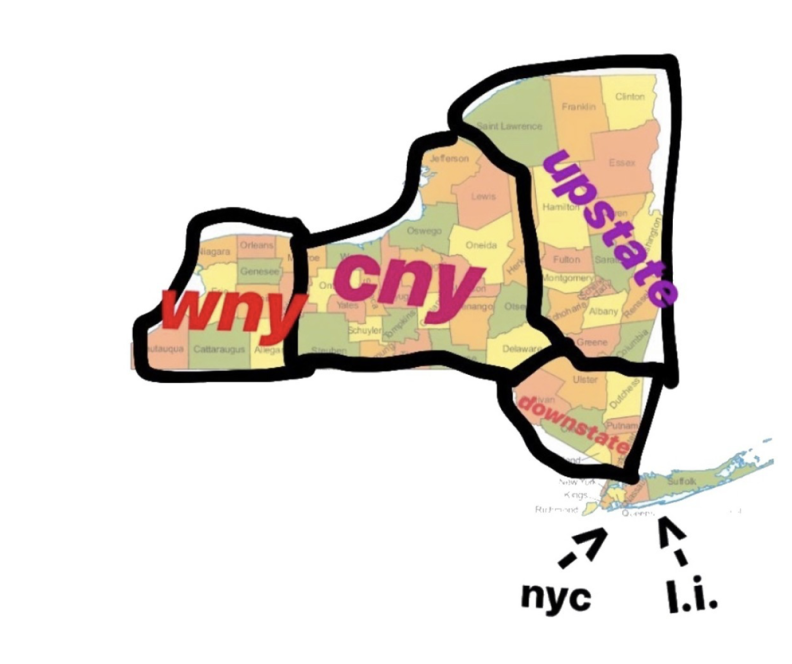
The “Downstate” vs. “Upstate” Divide
At its core, the distinction between “downstate” and “upstate” is a geographical and cultural one, primarily centered around the influence and proximity of New York City. Downstate generally refers to Long Island, New York City itself, and sometimes the counties immediately bordering the city to the north. Upstate New York, conversely, encompasses everything else. This broad definition immediately highlights the vastness of the area, stretching from the rolling hills of the Hudson Valley to the rugged shores of Lake Ontario and the peaks of the Adirondack Mountains.
The Role of Geography
Geographically, the Hudson River often serves as a natural dividing line. The counties directly north of New York City, such as Westchester, often feel like a transitional zone. While technically north of the city, residents may still identify with downstate culture or commutes. The consensus generally begins to shift as one travels further north, past the more suburban stretches and into the more rural and naturally diverse landscapes. The transition is gradual, marked by changing demographics, a slower pace of life, and a greater emphasis on outdoor recreation and agriculture.
The Cultural Shift
Culturally, the shift is perhaps even more pronounced. Upstate New York is characterized by a distinct identity, often seen as more down-to-earth, independent, and deeply connected to its natural surroundings. This includes a rich tapestry of small towns, historic villages, vibrant university communities, and vast expanses of untouched wilderness. The culinary scene evolves from metropolitan dining to farm-to-table experiences, artisanal breweries, and regional specialties. The arts and entertainment scene, while not on the scale of New York City, boasts thriving local theaters, music venues, and art galleries, often drawing inspiration from the surrounding landscape and history.
Common Starting Points and Divisive Lines
While the exact start can be debated, certain geographical and cultural markers are frequently cited as the beginning of Upstate New York.
The Mid-Hudson Region

The Mid-Hudson Region, encompassing counties like Dutchess, Ulster, and Orange, is often considered the true gateway to Upstate. This area blends a rich history with scenic beauty. Towns like Rhinebeck and Woodstock are renowned for their charming main streets, unique boutiques, and vibrant arts scenes. The Hudson Valley itself, with its historic estates like Vanderbilt Mansion and its stunning river views, embodies the appeal of the region. Traveling through this area, one immediately feels a departure from the urban density, replaced by rolling hills, apple orchards, and a palpable sense of history.
The Capital Region
Further north lies the Capital Region, centered around the state capital of Albany. This area is a significant hub, offering a blend of historical landmarks, governmental institutions, and a growing cultural landscape. Albany itself boasts impressive architecture, including the New York State Capitol Building and the Empire State Plaza. Nearby cities like Schenectady and Troy have undergone significant revitalization, showcasing a resurgence of historic downtowns and a burgeoning independent business scene. Many consider the Capital Region to be a definitive marker for the start of true Upstate identity, offering a distinct flavor separate from the downstate influence.
The Adirondack Mountains and the North Country
As one ventures even further north and west, the landscape transforms dramatically. The majestic Adirondack Mountains and the vast North Country region represent the wild heart of Upstate New York. This is a land of pristine lakes, dense forests, and towering peaks, offering unparalleled opportunities for outdoor adventure. Destinations like Lake Placid, home to multiple Winter Olympics, and the expansive Adirondack Park, the largest state park in the United States, are iconic representations of what many envision as Upstate. Here, the sense of remoteness and natural beauty is paramount, solidifying the feeling of being far removed from urban life.
The “Southern Tier” and Western New York Conundrum
The definition becomes even more contentious when considering the Southern Tier and Western New York. These regions, while geographically distant from New York City, often have their own distinct cultural and economic identities tied to cities like Buffalo, Rochester, and Syracuse.
The Southern Tier’s Identity
The Southern Tier, stretching across the southern border of the state, is characterized by its rolling hills, agricultural heritage, and proximity to Pennsylvania. Cities like Binghamton and Elmira have their own unique histories and cultural scenes. While many consider these areas to be part of Upstate New York, some residents might feel more connected to their immediate regional identity than to a broad Upstate designation. The landscape here is different from the mountains of the east or the Great Lakes to the west, presenting a unique facet of the state’s diversity.
Western New York’s Distinct Flavor
Western New York, with its major cities like Buffalo and Rochester, often feels like its own distinct region within the broader Upstate umbrella. Influenced by its proximity to the Great Lakes and its industrial past, it boasts a strong sense of local pride and unique cultural elements. Iconic attractions like Niagara Falls are global draws, and cities like Buffalo are experiencing a renaissance with a vibrant food scene, notable architecture, and a burgeoning arts community. For many, the journey to the edge of Lake Erie or Lake Ontario firmly places one in a different New York experience, one that is undeniably “Upstate” in spirit and geography.

A Journey of Discovery
Ultimately, the exact starting point of Upstate New York is less important than the journey of discovery it represents. It’s a region that unfolds gradually, revealing its diverse landscapes, rich history, and distinct character as you travel north and west. For the traveler, understanding that the boundary is not a rigid line but a gradual transition encourages a more immersive experience. Embrace the scenic drives through the Hudson Valley, explore the historic charm of the Capital Region, marvel at the wilderness of the Adirondacks, or experience the unique urban energy of Buffalo. Each locale offers a piece of the Upstate puzzle, contributing to the vast and captivating tapestry that defines this beloved part of New York. The beauty of Upstate New York lies not in its precise definition, but in its boundless opportunities for exploration and authentic New York experiences.
LifeOutOfTheBox is a participant in the Amazon Services LLC Associates Program, an affiliate advertising program designed to provide a means for sites to earn advertising fees by advertising and linking to Amazon.com. Amazon, the Amazon logo, AmazonSupply, and the AmazonSupply logo are trademarks of Amazon.com, Inc. or its affiliates. As an Amazon Associate we earn affiliate commissions from qualifying purchases.