
The allure of the Boston Marathon is legendary, a beacon for runners worldwide, and a pivotal event in the global running calendar. Unlike many major marathons that operate on a lottery system, the Boston Marathon proudly maintains its status as an elite event, requiring participants to achieve specific qualifying times based on age and gender. This tradition upholds the race’s historic prestige and ensures a field of dedicated, high-performing athletes. For many, earning a spot on the starting line in Hopkinton, Massachusetts, is a monumental achievement, a culmination of years of training, discipline, and unwavering determination.
This article delves into the intricacies of these qualifying standards, offering a comprehensive guide for aspiring Boston Marathoners. We’ll explore not just the numbers, but also the spirit behind them, the journey to achieve them, and how to make the most of your trip to this historic New England city, whether you’re running, spectating, or simply soaking in the vibrant atmosphere.
The Allure and History of the Boston Marathon
The Boston Marathon is not just a race; it’s an institution, the world’s oldest annual marathon, steeped in over a century of tradition and incredible stories. First run in 1897, it was inspired by the success of the first modern Olympic Games marathon in 1896. Organized by the Boston Athletics Association (BAA), this race has grown from a modest gathering of 15 men to an international spectacle drawing over 30,000 participants and half a million spectators annually. Its challenging course, iconic landmarks, and passionate crowds create an electrifying atmosphere that is truly unique.
A Legacy of Excellence
From its inception, the Boston Marathon has been a testament to human endurance and athletic achievement. Over the decades, it has witnessed countless records broken, epic duels, and moments of profound personal triumph. It’s where legends are made and where every runner, from the elite professional to the determined amateur, pushes their limits against the backdrop of one of America’s most historic cities. The legacy of excellence is maintained not only by the incredible performances on race day but also by the rigorous standards required just to enter. This commitment to maintaining a high standard is what sets Boston apart and makes earning that bib number such a coveted prize. For many runners, it represents the pinnacle of their marathon journey, a symbol of their dedication to the sport and themselves.
Why Qualification Matters
The concept of qualifying times serves multiple critical purposes for the Boston Marathon. Firstly, it manages the sheer volume of interest. With hundreds of thousands of runners globally aspiring to participate, a lottery system would diminish the race’s unique character. By requiring a specific performance, the BAA ensures that the field is composed of runners who have demonstrated a significant level of fitness and commitment. This creates a highly competitive yet supportive environment on race day.
Secondly, qualification enhances the prestige of the event. Knowing that every participant has met a demanding standard elevates the entire experience, making it more meaningful for the runners and more inspiring for the spectators. It fosters a sense of camaraderie among qualified athletes, who share a common bond of having worked incredibly hard to earn their spot. For travel enthusiasts who also happen to be runners, qualifying for Boston transforms a typical racecation into an ultimate adventure, blending competitive achievement with exploration of a world-class destination. It’s an immersion into a unique segment of sports tourism, where the journey to the race is as significant as the race itself.

Understanding the Boston Marathon Qualifying Standards
The cornerstone of entering the Boston Marathon lies in meeting its strict qualifying standards. These times are specific to age and gender, and they are not merely targets but prerequisites for even applying to run.
Age Group Categories and Required Times
The BAA establishes qualifying times based on a runner’s age on the day of the Boston Marathon itself, not their age on the day they run their qualifying race. This is an important distinction to note for planning. The times are adjusted upwards for older age groups, recognizing that performance naturally changes with age. Below is a representative table of current (as of recent years) qualifying standards. Please note that these times are subject to change, and aspiring participants should always verify the latest requirements on the official BAA website.
Boston Marathon Qualifying Standards (Representative Times)

| Age Group (on race day) | Men’s Qualifying Time | Women’s Qualifying Time |
|---|---|---|
| 18-34 | 3h 00m 00s | 3h 30m 00s |
| 35-39 | 3h 05m 00s | 3h 35m 00s |
| 40-44 | 3h 10m 00s | 3h 40m 00s |
| 45-49 | 3h 20m 00s | 3h 50m 00s |
| 50-54 | 3h 25m 00s | 3h 55m 00s |
| 55-59 | 3h 35m 00s | 4h 05m 00s |
| 60-64 | 3h 50m 00s | 4h 20m 00s |
| 65-69 | 4h 05m 00s | 4h 35m 00s |
| 70-74 | 4h 20m 00s | 4h 50m 00s |
| 75-79 | 4h 35m 00s | 5h 05m 00s |
| 80+ | 4h 50m 00s | 5h 20m 00s |
These times are not merely guidelines; they are strict benchmarks. A runner must achieve a time equal to or faster than their age group’s standard. The journey to hit these marks often involves meticulous training, strategic race selection, and a deep understanding of one’s own physical capabilities.
The Qualification Window and Race Verification
To submit a qualifying time, it must be achieved within a specific timeframe, typically an 18-month window preceding the Boston Marathon application period. For example, for the 2025 Boston Marathon, qualifying times might need to be run on or after September 1, 2023. The BAA specifies these dates each year, and it is crucial for runners to confirm them.
Furthermore, the qualifying race itself must meet specific criteria. It must be a certified marathon course, sanctioned by the national governing body for track and field (such as USA Track & Field, Athletics Canada, or their equivalents in Europe, Asia, Africa, and Oceania). This ensures the integrity of the course length and timing. Virtual races or races that are not officially certified do not count. The result must be verifiable through the official race results posted by the event organizers. When applying, runners will provide details of their qualifying race, and the BAA will independently verify the submitted time.
What If You Don’t Meet the Standard? (Cut-off Times and Charity Entries)
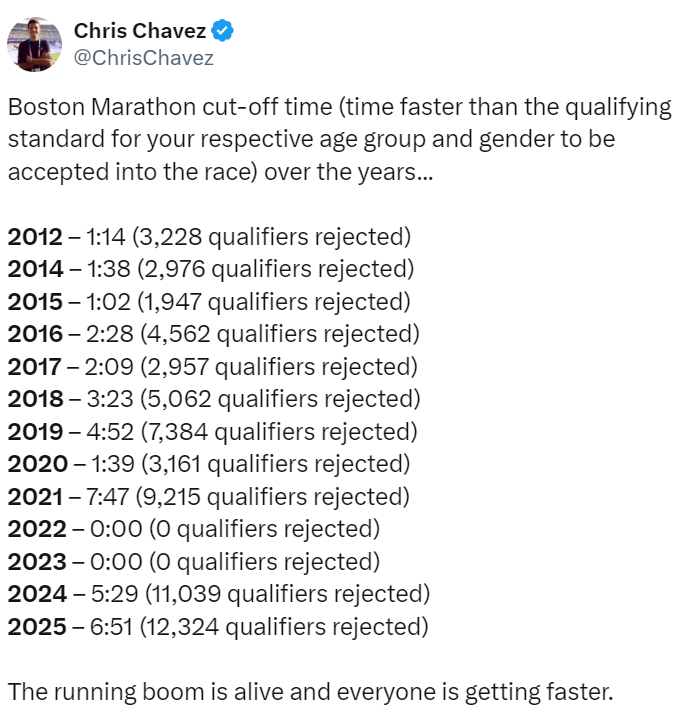
The demand for Boston Marathon entries frequently exceeds the number of qualified applicants. In such years, the BAA implements a “cut-off time.” This means that even if you meet your age group’s standard, you might still not get in unless your time is faster than the announced cut-off. For example, if the standard for your age group is 3:00:00, but the cut-off for that year is 2:58:30, only those with times faster than 2:58:30 would be accepted. This often adds another layer of challenge and motivation for aspiring runners, pushing them to run not just “a” qualifying time, but a “faster-than-qualifying” time.
For those who do not meet the strict qualifying standards, or who prefer another route, there are also opportunities to participate through charity programs. Numerous official charities partner with the Boston Marathon, offering guaranteed entry to runners who commit to raising a significant amount of money for their cause. These charity bibs are highly sought after and provide a meaningful way to experience the marathon while contributing to important philanthropic efforts. While the financial commitment is substantial, it offers a valuable alternative path, aligning a personal goal with a societal benefit, perfect for the lifestyle traveler looking to combine their passion with purpose.
The Journey to Qualification: Training and Strategy
Achieving a Boston Marathon qualifying time is a challenging yet incredibly rewarding endeavor that requires meticulous planning, consistent training, and strategic race execution. It’s a journey that typically spans months, sometimes even years, and demands significant physical and mental investment.
Choosing a Boston Qualifier Race
Selecting the right qualifying race is a crucial first step. Ideal qualifying races are known for their flat and fast courses, favorable weather conditions, and excellent organization. Many runners travel specifically for these “BQ-friendly” marathons, turning the quest for a qualifying time into an exciting travel experience. Popular choices for their fast courses often include:
- The California International Marathon (CIM) in Sacramento, California.
- The Grand Rapids Marathon in Michigan.
- The Philadelphia Marathon in Pennsylvania.
- The Chicago Marathon in Illinois, though its popularity means it often sells out quickly.
- The Marine Corps Marathon in Washington D.C. is also popular, though not always considered “fast.”
When planning your trip to these races, consider the overall travel experience. Can you combine it with some local sightseeing? Are there good accommodation options, from luxury resorts to budget-friendly apartments? For example, racing in Chicago could mean extending your stay to explore its renowned architecture and culinary scene, while a race in a smaller city might offer a more intimate, local culture experience. This integration of travel and running is a core aspect of the lifestyle of a dedicated marathoner.
Crafting Your Training Plan
A successful training plan for a Boston qualifier needs to be rigorous and tailored to the individual. It typically includes a combination of:
- Long Runs: Building endurance, often peaking at 20-22 miles.
- Speed Work: Interval training, tempo runs, and track workouts to improve pace and efficiency.
- Strength Training: To prevent injuries and improve overall running economy.
- Cross-Training: Activities like cycling or swimming to maintain fitness while reducing impact.
- Rest and Recovery: Crucial for muscle repair and preventing burnout.
Many runners seek guidance from experienced coaches or follow structured plans designed by running experts. Nutrition and hydration also play a vital role, especially as the training mileage increases. The mental aspect of training is equally important; developing resilience, focus, and belief in one’s ability to push through discomfort is key to achieving a tough time goal. The commitment to a marathon training plan often becomes a central part of a runner’s lifestyle, influencing diet, sleep, and even social activities for months.
Race Day Execution and Mental Fortitude
On the day of your qualifying race, executing your plan effectively is paramount. This involves:
- Pacing: Starting conservatively and gradually increasing pace, or maintaining a consistent, goal-oriented pace throughout.
- Nutrition and Hydration: Adhering to a carefully practiced fueling strategy.
- Mental Toughness: Pushing through moments of doubt and discomfort, remembering why you put in all the hard work.
The atmosphere of a well-chosen qualifying race can also play a significant role. Energetic crowds, supportive volunteers, and fellow runners with similar goals can provide the extra boost needed to dig deep and achieve that elusive Boston qualifying time. The feeling of crossing the finish line, knowing you’ve hit your target, is an unparalleled sense of accomplishment, marking not just the end of a race but the gateway to the ultimate marathon experience.
Beyond the Finish Line: Experiencing Boston
For those who successfully qualify and are accepted into the Boston Marathon, the experience extends far beyond the 26.2 miles from Hopkinton to Boylston Street. Boston itself is a destination rich in history, culture, and vibrant urban life, offering an incredible backdrop for a once-in-a-lifetime athletic achievement.
Accommodation for Marathoners and Spectators
Finding the right accommodation in Boston during marathon weekend is crucial, as demand is incredibly high. Many runners and their families choose to stay in hotels close to the finish line in the Copley Square area, such as the Fairmont Copley Plaza, Marriott Copley Place, or Hyatt Regency Boston, despite higher prices. These offer luxurious amenities and prime locations for post-race recovery and celebrations. For those on a budget, exploring options slightly further out, perhaps in Cambridge or Brookline, and utilizing Boston’s excellent public transportation, can be a smart move.
Booking well in advance is essential, often a year out, especially for hotels with specific amenities catering to runners, like early breakfast hours or late check-out options. Accommodation isn’t just about a place to sleep; it’s about providing comfort and convenience for athletes before and after their monumental effort. Whether it’s a cozy apartment rental for a family trip or a high-end suite for a luxury travel experience, the right lodging enhances the entire marathon journey.
Exploring the Historic City
Boston offers a wealth of attractions that cater to every interest, making it an ideal destination for combining a sporting event with a rich cultural itinerary. Before or after the race, take time to explore:
- The Freedom Trail: A 2.5-mile red-lined path through downtown Boston that leads to 16 historically significant sites, including the Old State House and Paul Revere House. It’s a perfect way to immerse yourself in American history.
- Faneuil Hall Marketplace: A bustling hub of shops, restaurants, and street performers, great for both a quick bite and souvenir hunting.
- Museums: The Museum of Fine Arts and the Isabella Stewart Gardner Museum offer world-class art collections, providing a serene escape from the marathon buzz.
- Fenway Park: Catch a Boston Red Sox game if your visit aligns with baseball season, or take a historic tour of the iconic stadium.
- Charles River Esplanade: A beautiful parkland along the Charles River, perfect for a leisurely stroll or a gentle post-marathon shakeout walk, with stunning views of the city skyline.
- Observation Decks: Ascend to the top of landmarks like the Prudential Tower or John Hancock Building for panoramic views of the marathon course and the sprawling city.
These landmarks and activities cater to diverse travel styles, from solo adventurers to family trips or even business stays where leisure time can be maximized.
The Post-Race Lifestyle
Finishing the Boston Marathon is not merely the end of a race; it’s the culmination of an extraordinary journey and the beginning of a well-deserved celebration. The atmosphere in Boston on Marathon Monday and the days that follow is electric, filled with stories of triumph, resilience, and camaraderie. Runners proudly wear their medals, sharing experiences with fellow athletes from around the globe. Many celebrate at local pubs and restaurants, indulging in Boston’s famous seafood, particularly clam chowder and lobster rolls.
This post-race period is where the lifestyle aspect truly shines. It’s a moment for reflection, recovery, and savoring the achievement. It’s also an opportunity to connect with the city and its people, who embrace the marathon as a significant part of their identity. Whether you prefer a quiet, luxurious spa treatment for recovery, a celebratory family dinner, or simply enjoying the lively ambiance of Copley Square, the experience of the Boston Marathon extends far beyond the physical act of running. It’s a lifestyle choice, a commitment to personal excellence, and an unforgettable travel adventure.
In conclusion, the qualifying times for the Boston Marathon are more than just numbers; they are a gateway to one of the world’s most prestigious and historic sporting events. Achieving them requires immense dedication and strategic planning, transforming ordinary travel into an extraordinary quest. And once qualified, the journey to Boston offers an unparalleled blend of athletic achievement, historical exploration, and vibrant urban tourism, promising an experience that will resonate for a lifetime.
LifeOutOfTheBox is a participant in the Amazon Services LLC Associates Program, an affiliate advertising program designed to provide a means for sites to earn advertising fees by advertising and linking to Amazon.com. Amazon, the Amazon logo, AmazonSupply, and the AmazonSupply logo are trademarks of Amazon.com, Inc. or its affiliates. As an Amazon Associate we earn affiliate commissions from qualifying purchases.