
The acquisition of the Oregon Territory by the United States was a complex saga, involving exploration, diplomacy, and the westward expansionist fervor that defined much of 19th-century American history. This vast and resource-rich region, encompassing present-day Oregon, Washington, Idaho, and parts of Montana and Wyoming, became a prize sought by multiple nations, but ultimately secured by the young American republic.
Early Explorations and Claims
The initial European presence in the Oregon Territory was driven by the allure of furs and the strategic advantage of controlling the Pacific Northwest.
Spanish and Russian Ventures
While not the ultimate victors, both Spain and Russia laid early claims. Spanish explorers, including Juan Rodríguez Cabrillo and Bartolomé Ferrelo, ventured along the coast in the 16th century, asserting nominal Spanish sovereignty. Later, Russian expeditions, notably those led by Vitus Bering, explored the Alaskan coast and extended their influence southward, establishing trading posts and stirring concern among other European powers. However, neither nation managed to establish a lasting or significant presence in the core of the territory that would become the Oregon Territory.
British and American Expeditions
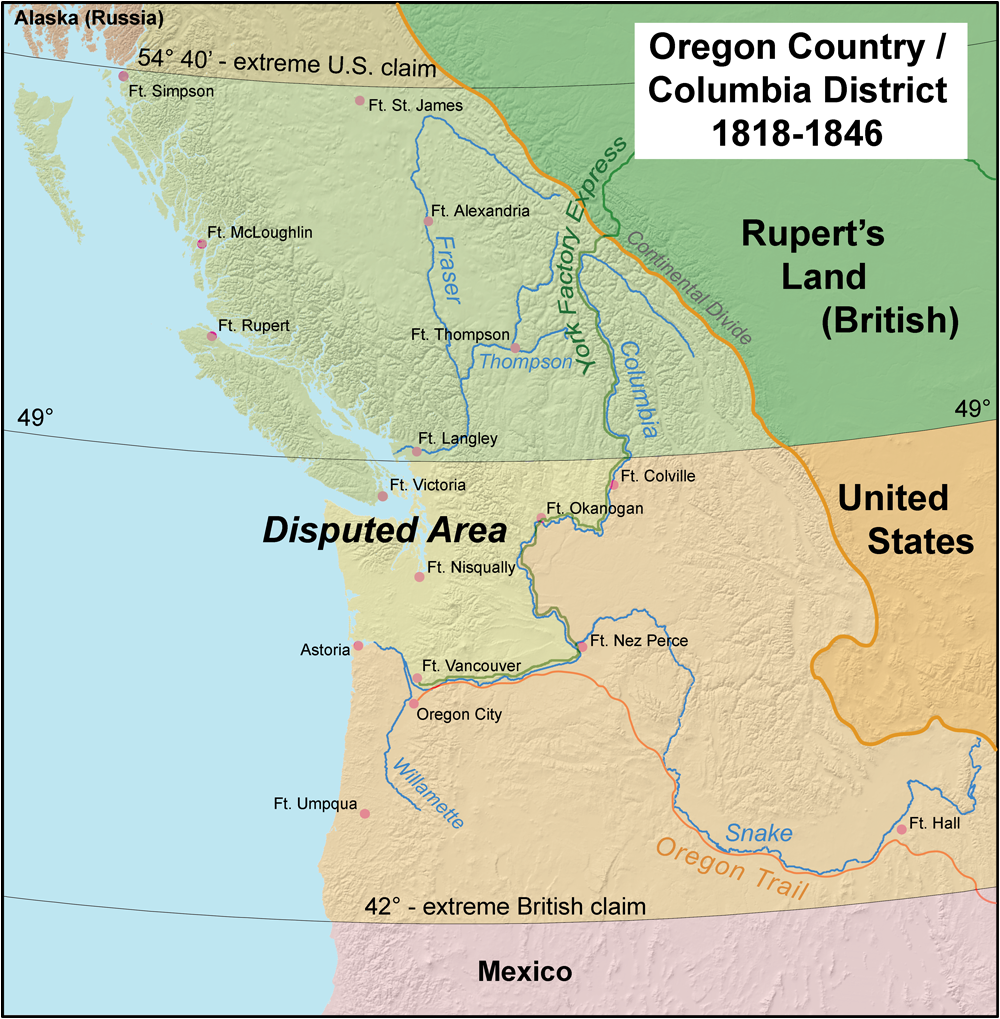
The primary claimants to the region by the early 19th century were the United Kingdom and the United States. The British claim was largely built upon the explorations of Captain James Cook and Captain George Vancouver in the late 18th century, and the powerful Hudson’s Bay Company, which established a vast network of trading posts, most notably Fort Vancouver.
The American claim gained momentum with the Lewis and Clark Expedition (1804-1806). Commissioned by President Thomas Jefferson, Meriwether Lewis and William Clark, along with their Corps of Discovery, were tasked with exploring the newly acquired Louisiana Purchase and finding a viable water route to the Pacific. Their arduous journey across the continent, reaching the mouth of the Columbia River, provided invaluable geographical knowledge and cemented the American presence in the region, laying a crucial foundation for future territorial claims. John Jacob Astor’s American Fur Company also established Astoria, a fur trading post at the mouth of the Columbia River, further solidifying American interests.
Diplomatic Negotiations and Joint Occupation
The competing claims of the United States and the United Kingdom led to a period of joint occupation.
The Convention of 1818
The Convention of 1818, signed in London, was a pivotal treaty that established the boundary along the 49th parallel from the Lake of the Woods to the Rocky Mountains. Crucially, it also stipulated that the territory west of the Rockies, known as the Oregon Country (which included the Oregon Territory), would be open to citizens of both the United States and Great Britain for a period of ten years, effectively creating a framework for joint occupation. This agreement, while intended to be temporary, set the stage for decades of diplomatic wrangling.

The Treaty of 1827
The Convention of 1818 was renewed and extended indefinitely by the Treaty of 1827. This treaty confirmed the joint occupation of the Oregon Country but allowed either party to abrogate the agreement with one year’s notice. This meant that while both nations could freely trade and settle in the region, neither held exclusive sovereignty. This ambiguous arrangement satisfied neither nation completely and fostered ongoing diplomatic tensions.
The Oregon Fever and Manifest Destiny
The mid-19th century witnessed a surge in American migration to the Oregon Territory, fueled by a potent combination of economic opportunity and the burgeoning ideology of Manifest Destiny.
The Lure of the West
Reports from missionaries like Marcus Whitman and explorers painted a picture of fertile lands and abundant resources in the Oregon Territory. The promise of cheap or free land, particularly for farmers seeking fertile soil, became a powerful magnet. The development of overland trails, most famously the Oregon Trail, facilitated the arduous journey for thousands of American settlers. These settlers, often organized into wagon trains, braved harsh conditions, disease, and the vast distances to reach their new homes. Their presence significantly altered the demographic landscape of the region, creating a stronger American foothold.
Manifest Destiny’s Influence
The concept of Manifest Destiny, the belief that the United States was divinely ordained to expand its dominion and spread democracy across the North American continent, provided the ideological justification for American expansion. Politicians and the public alike increasingly viewed the acquisition of the Oregon Territory as a natural and inevitable progression. The slogan “Fifty-four forty or fight!” became a rallying cry during the 1844 presidential election, reflecting the popular sentiment to claim the entire territory up to the 54°40′ North latitude, the southern boundary of Russian America.
Resolution and the Oregon Treaty
The mounting pressure from American settlers and the assertive rhetoric of Manifest Destiny eventually compelled the United States and the United Kingdom to reach a definitive agreement.
The Compromise of 1846
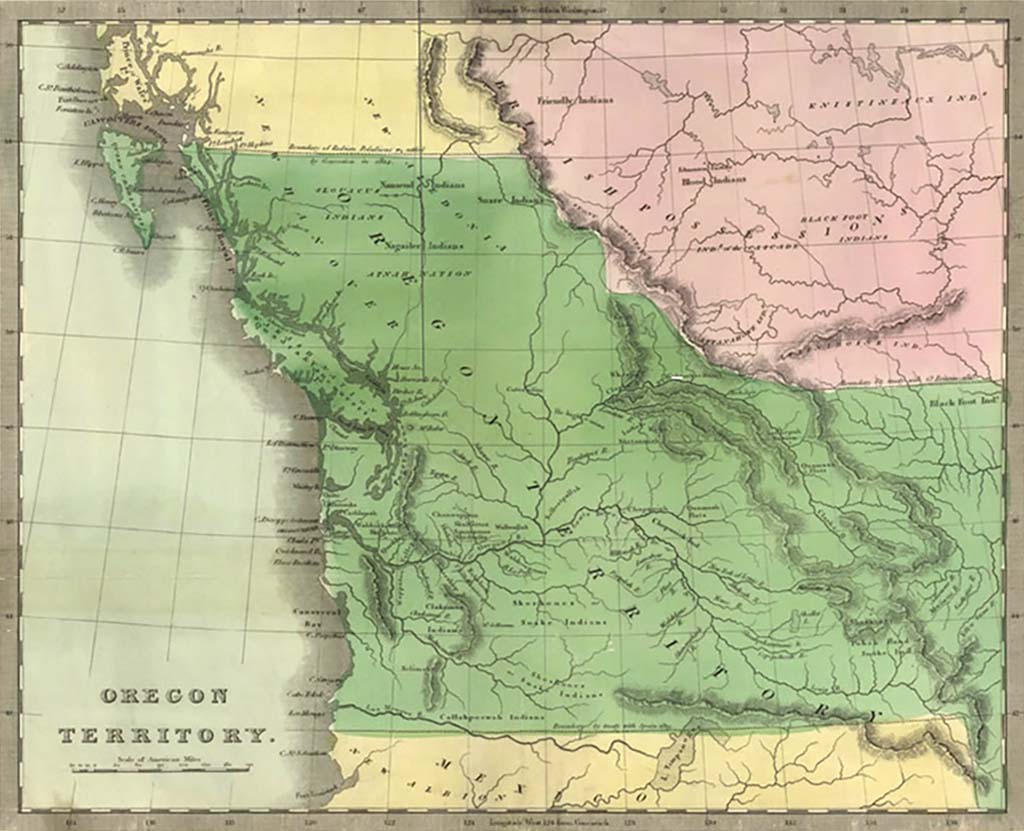
Despite the aggressive “Fifty-four forty or fight!” stance, President James K. Polk, while committed to expansion, recognized the potential for war with a powerful adversary like Great Britain. Polk’s administration entered into negotiations, seeking a peaceful resolution. The resulting Oregon Treaty of 1846, signed on June 15, 1846, divided the Oregon Country along the 49th parallel, extending the boundary previously established in the Rocky Mountains all the way to the Pacific Ocean. This compromise meant that the territory north of the 49th parallel, including Vancouver Island, went to the British, while the land south of the line became American territory.
Establishment of the Oregon Territory
Following the treaty, the United States formally organized the region as the Oregon Territory on August 14, 1848. This marked the official incorporation of the land into the American republic, paving the way for eventual statehood for Oregon in 1859, followed by Washington and Idaho. The acquisition of the Oregon Territory was a landmark achievement for the United States, significantly expanding its continental domain and securing vital access to the Pacific coast, profoundly shaping the nation’s future growth and geopolitical standing.
LifeOutOfTheBox is a participant in the Amazon Services LLC Associates Program, an affiliate advertising program designed to provide a means for sites to earn advertising fees by advertising and linking to Amazon.com. Amazon, the Amazon logo, AmazonSupply, and the AmazonSupply logo are trademarks of Amazon.com, Inc. or its affiliates. As an Amazon Associate we earn affiliate commissions from qualifying purchases.