
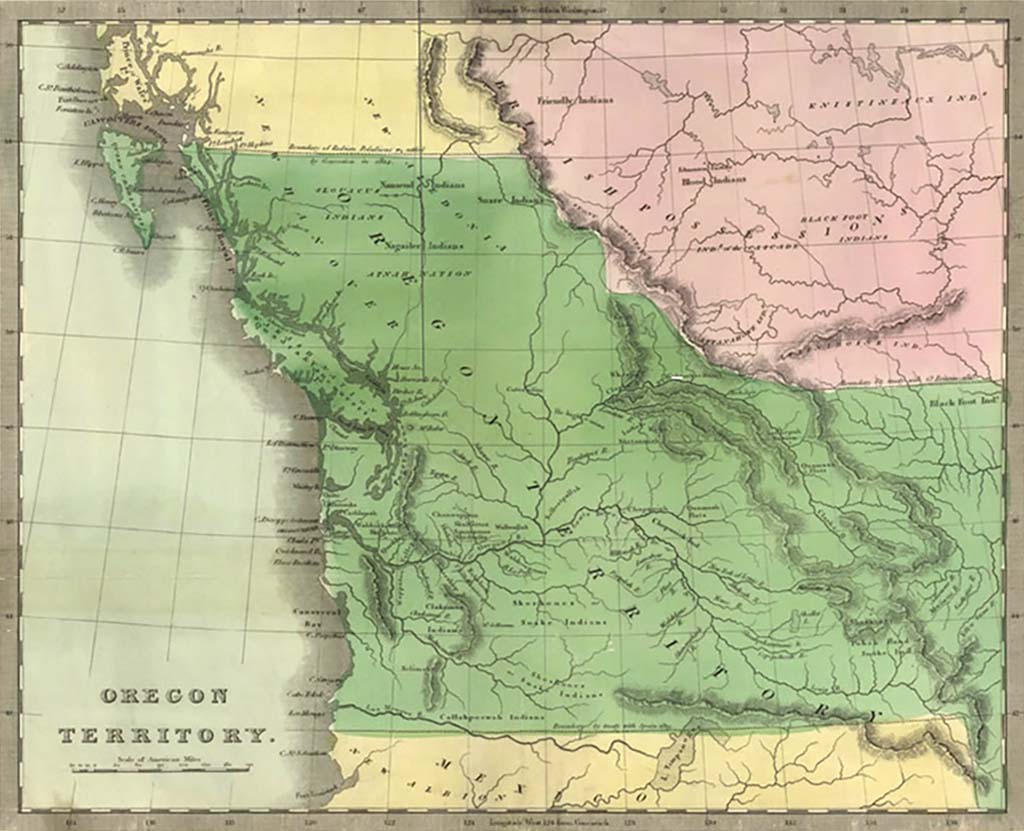
The story of how the vast and resource-rich Oregon Territory came to be a part of the United States is a complex tapestry woven from exploration, diplomacy, conflict, and westward expansion. It’s a narrative that stretches across centuries, involving indigenous peoples, ambitious explorers, determined settlers, and rival empires. Understanding its acquisition is crucial to appreciating the historical and geographical landscape of the modern-day United States.
The Claimants and Early Explorations
Before any European powers laid claim to the region, the land known as the Oregon Country was home to a diverse array of Indigenous peoples. Tribes such as the Nez Perce, Chinook, Yakama, and Salish had inhabited these lands for millennia, developing rich cultures and sophisticated systems of governance and trade. Their presence and deep connection to the land are fundamental to any understanding of the Oregon Territory’s history.
The first European to definitively sight the Pacific Northwest coast was Vasco Núñez de Balboa in 1513, though his claim was for Spain. It wasn’t until centuries later that significant exploration of the Oregon coast and interior began.
Spanish and Russian Interest
Spain, driven by its colonial ambitions, sent expeditions to the Pacific Northwest in the late 18th century, primarily to assert its claim against other European powers. Explorers like Bruno de Heceta and Juan Francisco de la Bodega y Quadra charted parts of the coastline. However, Spain’s focus shifted elsewhere, and their presence in Oregon remained largely symbolic.
Meanwhile, from the north, Russia began to explore and establish trading posts along the Alaskan coast. Their push southward, particularly through the Russian-American Company, raised concerns among other European powers, including Great Britain and the United States, about potential Russian expansion into the Oregon Country.
British and American Ventures
The British played a significant role in the early exploration and fur trade of the Oregon Country. The British North West Company and later the Hudson’s Bay Company established a formidable presence, with figures like David Thompson meticulously mapping the region’s rivers and mountains. The Hudson’s Bay Company, in particular, built forts and trading posts that became centers of economic and social activity, such as Fort Vancouver, which served as the company’s headquarters for its Columbia Department.
On the American side, the Lewis and Clark Expedition (1804-1806), commissioned by President Thomas Jefferson, was a pivotal moment. This journey across the continent to the Pacific Ocean provided invaluable geographical knowledge, confirmed the existence of a viable overland route, and bolstered American claims to the region. Following their expedition, American fur traders, such as John Jacob Astor and his Pacific Fur Company, attempted to establish a foothold, though their efforts were ultimately overshadowed by the British.
The Era of Joint Occupation
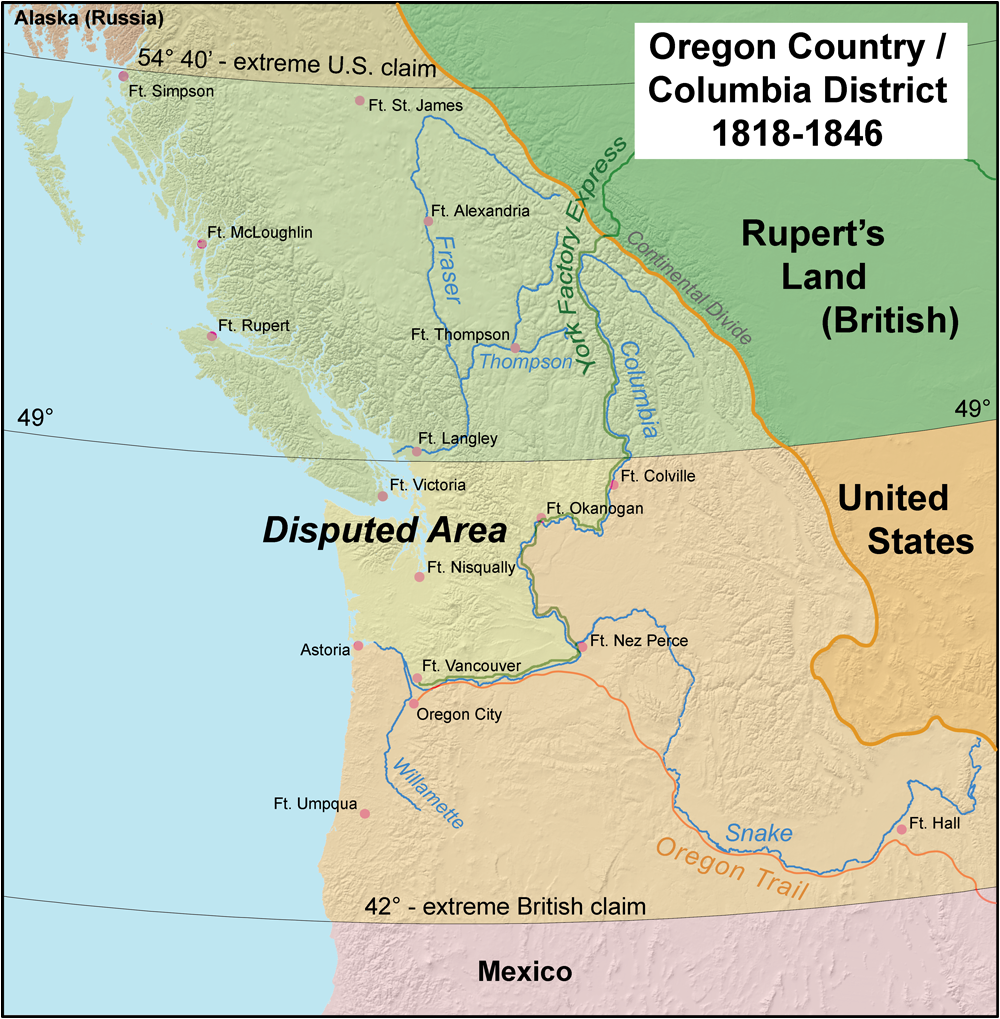
By the early 19th century, both Great Britain and the United States had substantial interests in the Oregon Country. Recognizing the potential for conflict, they entered into a series of agreements that established a period of “joint occupation.” The Convention of 1818 between the United States and Great Britain allowed citizens of both nations to trade and settle in the Oregon Country without prejudice to the ultimate claims of either country.
This arrangement, while intended to maintain peace, created a unique and often tense coexistence. British subjects, largely associated with the Hudson’s Bay Company, dominated the fur trade and established numerous outposts. American settlers, however, began to trickle into the region, drawn by tales of fertile land and opportunity.
The Oregon Trail and American Settlement
The mid-19th century witnessed a dramatic surge in American migration to the Oregon Country, largely facilitated by the Oregon Trail. This arduous overland route, stretching thousands of miles from the Missouri River westward, became the artery through which thousands of pioneers traveled. The stories of these pioneers, their struggles, and their determination to build new lives in the West are central to the American narrative of westward expansion.
Land policies, such as the Donation Land Claim Act of 1850, further incentivized American settlement. This act granted land to white male settlers and their wives, encouraging families to establish permanent homes and farm the fertile valleys of Oregon. The growing American population contrasted sharply with the declining influence of the British fur trade, shifting the balance of power and the demographic landscape of the territory.
Diplomatic Maneuvering and Tensions
As the American population grew, so did the intensity of the desire to secure the Oregon Country as United States territory. The slogan “Fifty-four forty or fight!” became a rallying cry for many Americans who demanded that the United States claim the entire Oregon Country up to the 54°40′ N parallel, the southern border of Russian America. This aggressive stance reflected a strong sense of national destiny and manifest destiny, the belief that American expansion across the continent was divinely ordained.
However, outright war with Great Britain, a powerful global empire, was not a desirable outcome for either nation. Therefore, diplomatic negotiations became the primary means of resolving the territorial dispute.
The Resolution and Formation of the Territory
The escalating tensions and the growing American presence necessitated a definitive agreement. Negotiations between the United States and Great Britain intensified, culminating in the Oregon Treaty of 1846. This treaty established the boundary between British and American claims at the 49th parallel, a compromise that satisfied neither extreme but averted conflict.
The Oregon Treaty ceded to the United States the land south of the 49th parallel, which included what would become Oregon, Washington, and Idaho, as well as parts of Montana and Wyoming. Great Britain retained the lands to the north, which would eventually form the province of British Columbia.
Establishing the Oregon Territory
Following the Oregon Treaty, the United States formally organized the Oregon Territory on August 14, 1848. This act by the U.S. Congress defined the political boundaries of the new territory and established a governmental structure, paving the way for its eventual admission to the Union as a state.
The early years of the Oregon Territory were marked by the development of infrastructure, the establishment of legal and judicial systems, and the continued growth of its population. The process of transforming a vast, largely undeveloped frontier into an organized political entity was challenging but essential for its future prosperity.

Statehood and Legacy
Oregon officially became the 33rd U.S. state on February 14, 1859. Its admission marked the culmination of decades of exploration, settlement, and diplomatic resolution. The Oregon Territory was not merely acquired through a treaty; it was shaped by the dreams, sacrifices, and labor of countless individuals, both Indigenous and immigrant, who contributed to its unique cultural and historical fabric. The legacy of its acquisition continues to influence the identity and development of the Pacific Northwest today, a region born from a complex and compelling historical journey.
LifeOutOfTheBox is a participant in the Amazon Services LLC Associates Program, an affiliate advertising program designed to provide a means for sites to earn advertising fees by advertising and linking to Amazon.com. Amazon, the Amazon logo, AmazonSupply, and the AmazonSupply logo are trademarks of Amazon.com, Inc. or its affiliates. As an Amazon Associate we earn affiliate commissions from qualifying purchases.