
The question of statehood for Puerto Rico has been a perennial topic of discussion, with its trajectory often influenced by the political winds blowing from Washington D.C.. As the political landscape shifts, the prospect of Puerto Rico achieving statehood, particularly under a potential Donald Trump presidency, warrants a thorough examination. This exploration delves into the historical context, the arguments for and against statehood, and the specific implications of a Trump administration’s potential influence on this significant political aspiration.
The Long Road to Statehood: A Historical Perspective
Puerto Rico’s relationship with the United States is complex and deeply rooted in history. Following the Spanish-American War in 1898, Puerto Rico was ceded to the United States as a territory. Over the decades, its political status has evolved, from a military possession to an unincorporated territory under the Foraker Act of 1900, and subsequently to a commonwealth with the Puerto Rican Federal Relations Act of 1950. This act granted Puerto Rico a degree of self-governance, but its residents remain U.S. citizens who cannot vote in presidential elections and have no voting representation in Congress.

The push for statehood has gained momentum over the years, with several referendums held on the island. While results have varied, a consistent theme has emerged: a desire for a definitive political status. Statehood advocates argue that it would grant Puerto Rico full political equality, economic parity, and an end to the colonial-like relationship it currently endures. Conversely, other factions favor independence or enhanced commonwealth status. The complexity of these competing aspirations, coupled with the often-divided political will within Puerto Rico itself, has contributed to the protracted nature of this debate.
Referendums and Shifting Public Opinion
Numerous plebiscites have been conducted to gauge the will of the Puerto Rican people regarding their political status. The most recent non-binding referendum in November 2020 saw a majority vote in favor of statehood, though voter turnout and the precise interpretation of the results have been subject to debate. These votes, while advisory, serve as crucial indicators of public sentiment and provide leverage for pro-statehood advocates in their lobbying efforts in Washington D.C.. Understanding the nuances of these referendums, including the various options presented and the turnout rates, is essential to comprehending the current state of the statehood movement.
The Role of the U.S. Congress
Ultimately, any change in Puerto Rico’s status requires an act of the U.S. Congress. This means that the political party in power, and the specific politicians within it, play a decisive role. The Democratic Party has, in recent years, shown more openness to supporting statehood, while the Republican Party has been more divided, with some members expressing concerns about the potential impact on the balance of power in the Senate. This division within the Republican Party is particularly relevant when considering the potential stance of a Donald Trump administration.
Trump’s Stance and Potential Impact
Donald Trump’s relationship with [Puerto Rico](https://lifeout জলাba.com/puerto-rico) has been marked by a series of public statements and actions, particularly in the aftermath of Hurricane Maria in 2017. While his administration provided significant aid to the island, his rhetoric and handling of the crisis drew considerable criticism from many Puerto Ricans and their allies. His past comments on the status of Puerto Rico have been varied and at times contradictory, making his precise position on statehood difficult to ascertain definitively.
During his presidency, Trump expressed skepticism about statehood, at times suggesting that Puerto Rico might be too “expensive” or that it would not be beneficial to the United States. He has also been known to be pragmatic and transactional in his approach to policy, which could mean that his decision on statehood would be contingent on a variety of factors, including political expediency and perceived national benefit. The potential for Puerto Rico to gain two senators could be a significant consideration for any president, and Trump is known to be keenly aware of political leverage.
Economic Considerations and Political Calculations
A key factor in any decision regarding Puerto Rico statehood would be the economic implications for both the island and the mainland United States. Statehood would likely mean increased federal funding for Puerto Rico, including access to programs like Medicare and Medicaid at parity with states, as well as potential changes to its tax structure. For Trump, the economic benefits and costs would need to be weighed against potential political gains or losses. Would supporting statehood alienate a segment of his base, or could it be presented as a demonstration of American generosity and inclusivity?
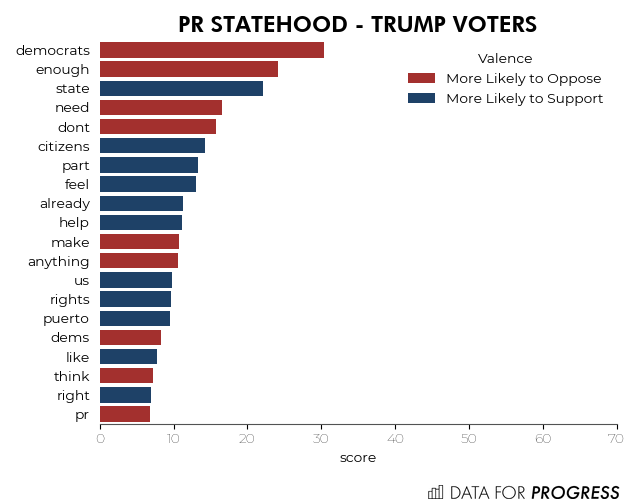
The political calculus for Trump would also involve the potential impact on the Republican Party’s electoral prospects. The demographics of Puerto Rico are complex, and it is not immediately clear how a significant influx of new voters would affect the balance of power between the Democratic and Republican parties. Some analysts suggest that Puerto Ricans might lean more Democratic, which could be a deterrent for a Republican president. However, Trump has a history of appealing to a broad range of voters, and he might see an opportunity to win over a new constituency.
The Influence of Lobbying and Advocacy
The statehood movement in Puerto Rico has a dedicated lobbying apparatus in Washington D.C.. Proponents of statehood actively engage with members of Congress and the executive branch to advance their cause. The success of these lobbying efforts would likely be amplified if a president, such as Trump, were to signal an openness to the idea. Conversely, if Trump were to remain indifferent or opposed, the path to statehood would become significantly more challenging, regardless of the efforts of advocacy groups.
The Case for Statehood: Promises and Perils
The arguments in favor of statehood for Puerto Rico are numerous and compelling for many of its residents. Proponents highlight the promise of full democratic participation, the economic benefits of equal footing with the mainland United States, and an end to what they view as a discriminatory and undemocratic territorial status. As a state, Puerto Rico would have voting representation in Congress and its residents would be able to vote for the President, solidifying their rights as U.S. citizens.
Economically, statehood would mean access to federal programs at the same level as other states, potentially alleviating some of the island’s persistent financial struggles. It could also lead to increased investment and economic development, as businesses might be more inclined to operate in a fully integrated part of the United States. The potential for improved infrastructure, education, and healthcare services is a significant draw for statehood advocates.
However, the transition to statehood would also present challenges. There are concerns about the potential for increased taxes on the island, as well as the economic adjustments required to align with federal tax laws. The cultural identity of Puerto Rico, with its rich Spanish heritage, is another consideration. While statehood does not necessitate assimilation, the question of how the island’s unique culture would be preserved and celebrated within the framework of a state remains a point of discussion.
Economic Parity and Federal Funding
A core argument for statehood revolves around achieving economic parity. Currently, Puerto Rico receives less federal funding per capita than U.S. states for critical programs such as Medicare and Medicaid. Statehood would, in theory, rectify this disparity, leading to a substantial increase in healthcare resources and potentially improving health outcomes for the population. Furthermore, access to federal infrastructure grants and economic development initiatives could significantly boost the island’s economy.
Political Equality and Representation
The lack of full political representation is a fundamental grievance for many Puerto Ricans. As an unincorporated territory, Puerto Rico is subject to the laws of the United States but lacks voting representation in the U.S. Congress and cannot vote for the President. This “no taxation without representation” paradox fuels the desire for statehood, which would grant its residents the same rights and responsibilities as citizens in other U.S. states.

The Path Forward: Uncertainty and Anticipation
The question of whether Donald Trump will make Puerto Rico a state remains one of significant uncertainty. His past statements and policy approaches suggest that a decision would be pragmatic and politically motivated, rather than driven by a pre-existing ideological commitment to statehood. The outcome would likely depend on a complex interplay of economic analyses, political calculations, and the effectiveness of lobbying efforts from various stakeholders.
For the residents of Puerto Rico, the anticipation of any change in their political status is palpable. Whether it is through statehood, independence, or some other arrangement, the desire for a definitive and equitable resolution to their long-standing political dilemma is a driving force. The potential for a Trump administration to play a pivotal role in this historical narrative adds another layer of intrigue and anticipation to an already deeply complex and consequential issue for the Caribbean island and the United States alike. The coming years will undoubtedly reveal whether the aspiration for statehood, championed by many on the island, will finally come to fruition under a Trump presidency, or if the status quo will endure.
LifeOutOfTheBox is a participant in the Amazon Services LLC Associates Program, an affiliate advertising program designed to provide a means for sites to earn advertising fees by advertising and linking to Amazon.com. Amazon, the Amazon logo, AmazonSupply, and the AmazonSupply logo are trademarks of Amazon.com, Inc. or its affiliates. As an Amazon Associate we earn affiliate commissions from qualifying purchases.