
San Francisco, a city renowned for its iconic cable cars, fog-kissed hills, and vibrant cultural tapestry, often sparks a question among visitors and even some residents: does it boast a true subway system? While the immediate image might conjure up the classic, open-air cable cars or the ubiquitous Muni buses, the answer is a resounding yes, albeit with nuances that define the city’s unique public transit landscape. The system, largely operated by the San Francisco Municipal Transportation Agency (SFMTA), is a sophisticated network that includes underground rail lines, integrated with other modes of transport to serve the bustling metropolis and its surrounding Bay Area.
The BART: The Backbone of Bay Area Transit
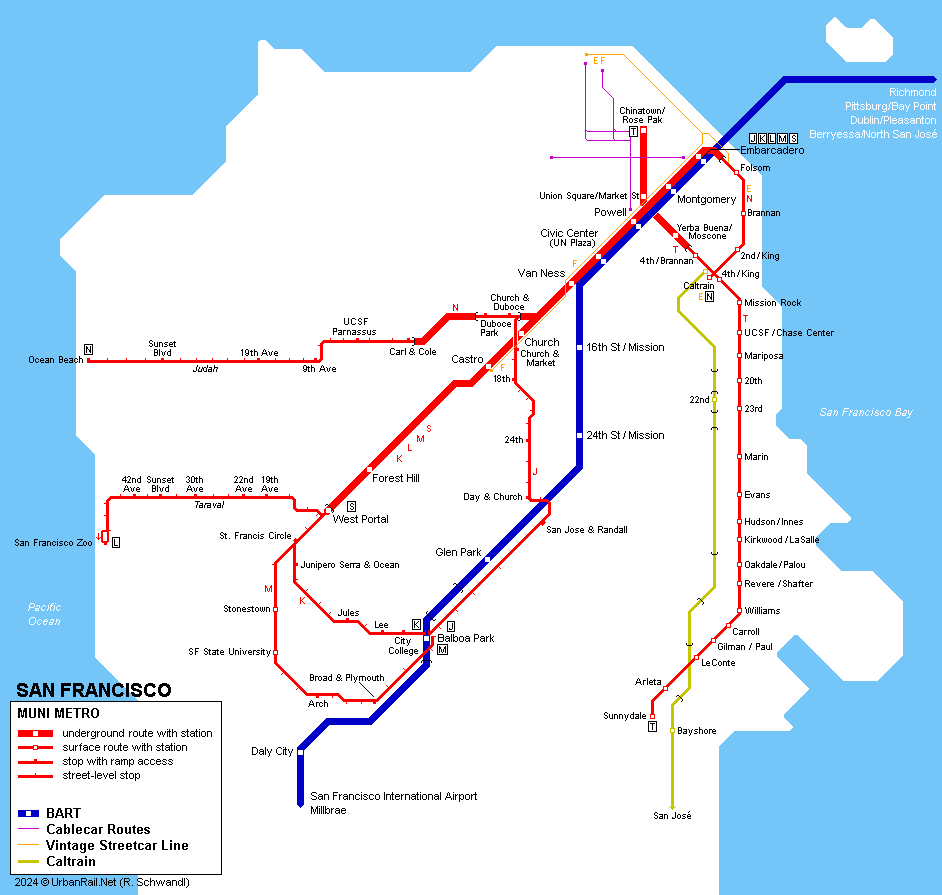
The primary component that fulfills the “subway” designation in the San Francisco area is the Bay Area Rapid Transit (BART) system. While it extends far beyond the city limits, its core operations and several of its most crucial stations are situated directly beneath the streets of San Francisco. BART is not merely a local subway; it is a regional heavy rail system connecting San Francisco with the East Bay, North Bay, and the San Francisco International Airport and Oakland International Airport.
Origins and Expansion
BART’s genesis can be traced back to the mid-20th century, a period when urban planners recognized the growing need for efficient, high-capacity transit to alleviate the increasing traffic congestion on the freeways. The vision was to create a modern, fast, and reliable system that could link the disparate communities of the Bay Area. Construction began in the 1960s, and the first trains began carrying passengers in 1972. Since then, BART has undergone several expansions, most notably its extension to San Francisco International Airport and later into the Santa Clara Valley.
Key Features of the BART System
BART trains are characterized by their distinctive silver cars, designed for high speeds and long-distance travel. The system operates on its own dedicated right-of-way, meaning it is largely separate from road traffic, which contributes to its speed and reliability. Within San Francisco, several BART stations are entirely underground, functioning precisely as a traditional subway system would. These include major hubs like the Powell Street Station, Montgomery Street Station, and Embarcadero Station, all located in the heart of the financial district and downtown areas, facilitating seamless connections for commuters and tourists alike.
Connecting the Bay
The true strength of BART lies in its connectivity. It acts as the arterial network for the entire region, allowing individuals to travel from the suburbs into the city for work, entertainment, or to visit attractions without the hassle of driving and parking. For visitors arriving by air, BART offers a direct and convenient link from San Francisco International Airport and Oakland International Airport directly into the heart of San Francisco.
Muni Metro: San Francisco’s Urban Rail Network
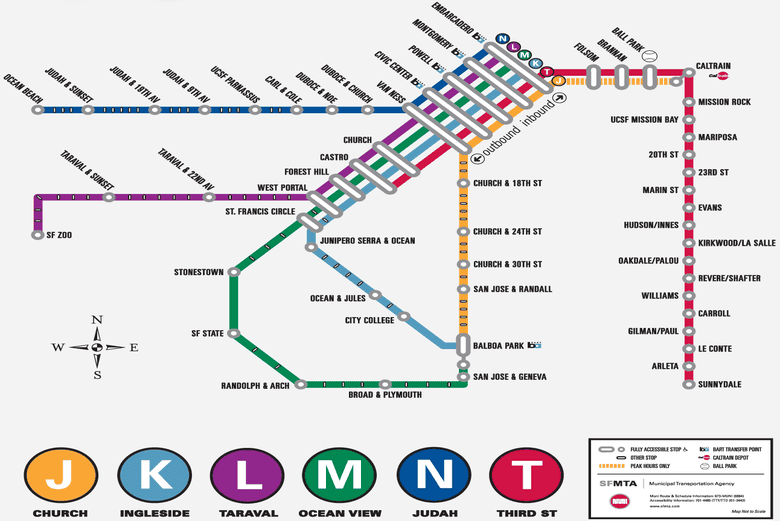
While BART serves the broader regional needs, San Francisco also has its own extensive light rail system, known as Muni Metro. This system is an integral part of the city’s public transportation fabric and shares some underground infrastructure with BART, further blurring the lines between what constitutes a traditional subway. Muni Metro operates a fleet of light rail vehicles that run on surface streets for much of their routes but transition into tunnels in the busiest urban corridors.
The Shared Underground Tunnels

The most “subway-like” experience within the Muni Metro system is found in the Market Street Subway. This shared corridor with BART allows Muni Metro trains to bypass street-level congestion, offering a faster and more predictable journey through the city’s core. Stations like Powell Street, Montgomery Street, and Embarcadero serve both BART and Muni Metro, acting as critical transfer points for travelers. This integration is key to understanding San Francisco’s public transit.
Diversity of Muni Services
Beyond the underground portions, Muni Metro lines emerge to serve various neighborhoods, often running on streetcar tracks alongside regular vehicle traffic. This hybrid model is characteristic of San Francisco’s approach to public transit, blending the efficiency of rail with the reach of surface-level service. Muni also operates a vast network of buses, historic streetcars, and the famous cable cars, all managed by the SFMTA, creating a comprehensive transportation ecosystem.
Navigating San Francisco with Muni
For tourists looking to explore the city, Muni Metro provides an excellent way to access key attractions. Lines can take you from the downtown core towards the Museum of Modern Art, the Ferry Building Marketplace, and further afield. Understanding the Muni system, including its various lines and payment options (like the Clipper card), is essential for a smooth travel experience.
Beyond the Rails: Integrated Transit and the San Francisco Experience
The question of whether San Francisco has a subway system is best answered by understanding its integrated approach to public transportation. It’s not a single, monolithic subway like some older East Coast cities, but rather a multi-layered network where heavy rail, light rail, buses, and iconic streetcars work in concert.
The Role of Cable Cars
No discussion of San Francisco’s transit would be complete without mentioning the historic cable cars. While not a subway, these moving National Historic Landmarks are a vital part of the city’s charm and a practical way to navigate its famously steep hills. They operate on fixed routes, powered by underground cables, and offer a unique, albeit slower, mode of transport and an unforgettable experience for visitors. Their routes often intersect with Muni Metro and BART stations, further enhancing connectivity.
The SFMTA: Orchestrating the Network
The SFMTA is the agency responsible for the operation and planning of most public transit within the city. Their mission is to provide safe, reliable, and affordable transportation services. They continuously work to integrate different modes of transit, improve service, and expand the network to meet the evolving needs of the city. This includes ongoing projects to enhance underground infrastructure and optimize connections between various lines.
Navigating San Francisco as a Traveler
For a visitor, the presence of both BART and Muni Metro, alongside the buses and cable cars, means that getting around San Francisco is remarkably accessible without a car. Whether you’re heading to a business meeting in the Financial District, exploring the shops along Union Square, or venturing to a neighborhood like the Mission for its vibrant food scene, the public transit system is designed to get you there. The “subway” components, namely the BART underground sections and the Market Street Subway for Muni Metro, are the arteries that allow for rapid transit through the most congested parts of the city.
In conclusion, San Francisco does indeed possess a subway system, best exemplified by the extensive underground operations of BART and the Market Street Subway utilized by Muni Metro. This subterranean network, integrated with a diverse range of surface transit options, forms the backbone of the city’s and the wider Bay Area’s public transportation infrastructure, making it an accessible and enjoyable destination to explore.
LifeOutOfTheBox is a participant in the Amazon Services LLC Associates Program, an affiliate advertising program designed to provide a means for sites to earn advertising fees by advertising and linking to Amazon.com. Amazon, the Amazon logo, AmazonSupply, and the AmazonSupply logo are trademarks of Amazon.com, Inc. or its affiliates. As an Amazon Associate we earn affiliate commissions from qualifying purchases.