
The digital landscape of gaming often treads a fine line between interactive entertainment and compelling narrative experiences. For enthusiasts of the horror genre, the visceral thrill of survival and the dread of the unknown are paramount. Titles inspired by iconic horror franchises, such as The Texas Chainsaw Massacre, naturally invite questions about their narrative depth. Does The Texas Chainsaw Massacre game offer a traditional story mode, akin to a single-player campaign that guides players through a pre-determined sequence of events? Understanding this aspect is crucial for potential players seeking a narrative-driven horror journey, as opposed to pure multiplayer mayhem.

Deconstructing the Narrative Experience
When discussing story modes in video games, we typically refer to a dedicated single-player experience where players assume the role of a protagonist or a group of characters with a defined plot. This mode often features cutscenes, character development, scripted events, and a progression that unfolds over several hours, culminating in a narrative resolution. These modes are designed to immerse players in a world, to connect them with the characters, and to deliver a cohesive and impactful story.
In the context of The Texas Chainsaw Massacre, a franchise renowned for its grim atmosphere and relentless pursuit, the interpretation of a “story mode” can be nuanced. The original film, a benchmark of psychological horror, is not built on a complex, unfolding plot with intricate character arcs. Instead, it thrives on its raw terror, its sense of immediacy, and its iconic antagonists. Therefore, a game adapting this lore might prioritize other elements.
Asymmetrical Multiplayer: The Core Design
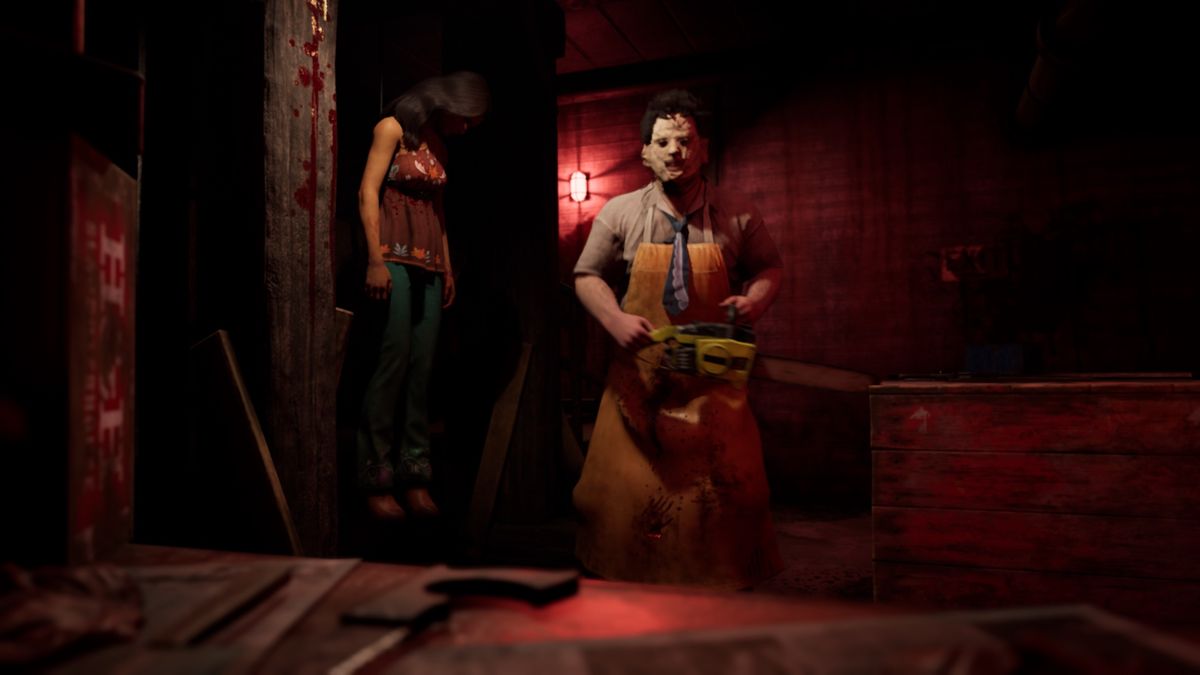
The developers behind The Texas Chainsaw Massacre game have opted for a different approach, focusing heavily on an asymmetrical multiplayer experience. This genre typically pits a small group of survivors against one or more powerful antagonists. In this game, players are cast as either members of the infamous Slaughter Family or as one of their doomed victims. The core gameplay loop revolves around these opposing objectives: the Family aims to hunt down and eliminate the victims, while the victims strive to escape their horrifying predicament.
This asymmetrical design inherently emphasizes emergent gameplay and player-driven narratives. Each match becomes a unique story, shaped by the decisions, strategies, and sheer luck of the individuals involved. There isn’t a single, linear narrative path that every player will follow. Instead, the “story” is generated in the moment, in the tense chases through the dilapidated farmhouse, the desperate attempts to barricade doors, and the chilling moments of near-capture or successful evasion.
The Role of Lore and Environmental Storytelling
While a traditional, scripted story mode might be absent, this does not mean that The Texas Chainsaw Massacre game lacks narrative elements. The developers have clearly invested in weaving the rich lore of the franchise into the fabric of the game. This is primarily achieved through environmental storytelling and character backstories.
Players will encounter details within the game environments that hint at the grim history of the Slaughter Family and their victims. These can include notes, scattered belongings, disturbing decorations, and the very architecture of the locations, all of which contribute to building the oppressive atmosphere and providing context for the horrors that unfold.
Character Backstories and Motivations
Each character, both within the Family and among the potential victims, has been given a distinct backstory and set of motivations. These are often explored through brief audio logs, in-game dialogue snippets, or collectible lore entries. While these elements do not form a contiguous plot, they serve to deepen the player’s understanding of the characters and their place within the brutal world of The Texas Chainsaw Massacre.

For instance, understanding the motivations of Leatherface, his familial obligations, and his role within the macabre household can add a layer of psychological depth to the gameplay. Similarly, learning about the victims’ backgrounds can create a greater sense of empathy and urgency in their desperate fight for survival. This approach transforms each match into a micro-narrative, where players are not just acting out random objectives but are embodying individuals with histories and a desperate will to live.
Is There a “Story Mode” in the Traditional Sense?
To directly answer the title’s question: No, The Texas Chainsaw Massacre game does not feature a traditional, linear single-player story mode. There is no campaign that guides players through a pre-scripted narrative arc with dedicated cutscenes and character progression in the way one might expect from a typical story-driven game.
The game’s design is fundamentally built around its multiplayer foundation. The thrill and narrative, such as it is, emerge from the dynamic interactions between players in tense, asymmetrical survival encounters. The developers have chosen to honor the spirit of the source material by focusing on the raw, unadulterated terror and the cat-and-mouse gameplay that made The Texas Chainsaw Massacre a cultural phenomenon.
The Emergent Narrative of Survival
The absence of a traditional story mode is not a deficit but a design choice that leans into the inherent unpredictability of player-versus-player horror. Each match is an unfolding drama. The terror of being hunted by Leatherface and his sadistic family is amplified by the knowledge that these are real, unpredictable human opponents controlling the antagonists.
The “story” in The Texas Chainsaw Massacre game is therefore an emergent one, born from the chaos of the hunt. It’s the tale of the survivor who outsmarts the Family through cunning evasion, the desperate gambit that leads to a narrow escape, or the chilling defeat that underscores the overwhelming power of the antagonists. These are the narratives that players will create and remember, stories etched in the frantic footsteps, the whispered plans, and the agonizing screams echoing through the darkened farmhouses and surrounding wilderness.
Player Agency and Narrative Creation
In games that prioritize player agency, the narrative often takes a backseat to the freedom of choice and the resulting emergent events. The Texas Chainsaw Massacre game falls squarely into this category. While there isn’t a predefined plot to follow, players are empowered to create their own stories through their actions.
As a victim, the narrative is one of desperate survival. Will you risk a noisy escape through the front door, or attempt a stealthy route through the cornfields? Will you try to hide, or make a run for it? Each decision contributes to the unfolding drama of your personal fight for freedom. The environment itself becomes a character, offering hiding spots, escape routes, and potential traps.
As a member of the Family, the narrative is one of relentless pursuit and territorial control. The goal is to become the ultimate hunter, to instill fear, and to prevent any escape. The dynamic interplay between the Family members, coordinating their efforts to corner the victims, adds another layer to this emergent storytelling. The satisfaction comes from a perfectly executed trap or a successful hunt, a narrative built on the triumph of the predators.
The Legacy of the Franchise in Gameplay
The developers have succeeded in translating the core themes and atmosphere of The Texas Chainsaw Massacre franchise into engaging gameplay mechanics. The sense of dread, the claustrophobic environments, and the sheer terror of being hunted are all palpable. While a traditional story mode might have provided a curated narrative, the chosen asymmetrical multiplayer approach offers something arguably more in line with the raw, untamed spirit of the original films: a visceral, player-driven experience where the story is written by the terror and the struggle for survival. Ultimately, the “story” of The Texas Chainsaw Massacre game is the one you make with every match played.
LifeOutOfTheBox is a participant in the Amazon Services LLC Associates Program, an affiliate advertising program designed to provide a means for sites to earn advertising fees by advertising and linking to Amazon.com. Amazon, the Amazon logo, AmazonSupply, and the AmazonSupply logo are trademarks of Amazon.com, Inc. or its affiliates. As an Amazon Associate we earn affiliate commissions from qualifying purchases.