
Navigating the process of obtaining a driver’s license as an adult in Texas involves several key steps, distinct from those for younger applicants. While the allure of hitting the open road in the Lone Star State is strong, understanding the regulations and requirements is paramount for a smooth experience. This guide will walk you through the essential stages, from initial preparation to the final issuance of your Texas driver’s license.
Understanding the Requirements for 18-Year-Olds
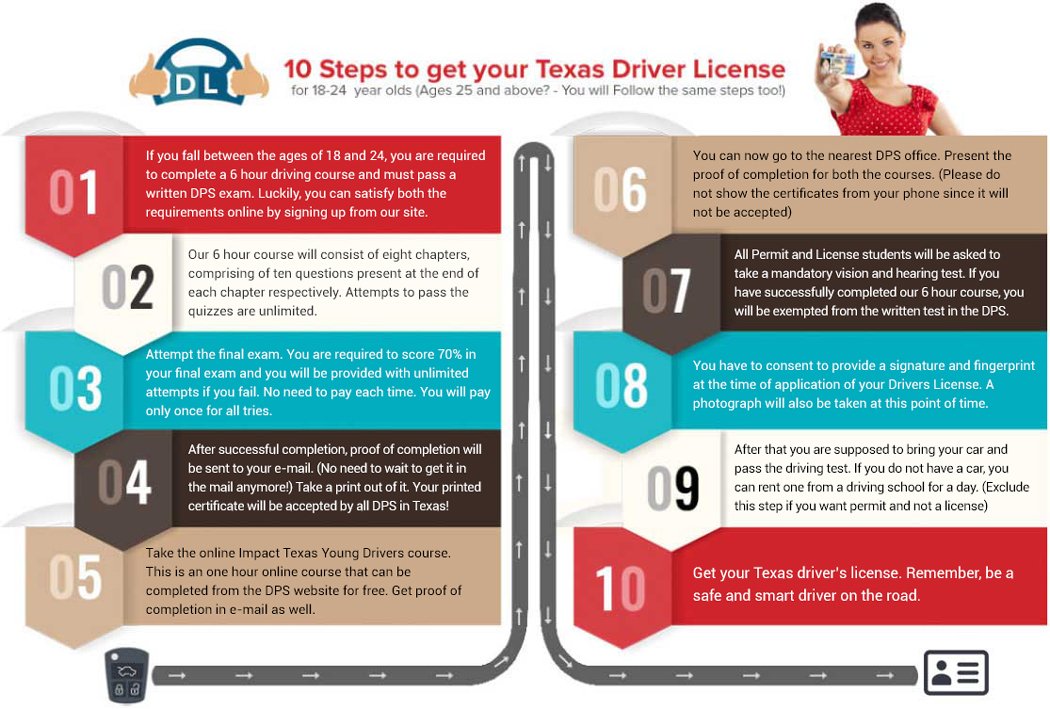
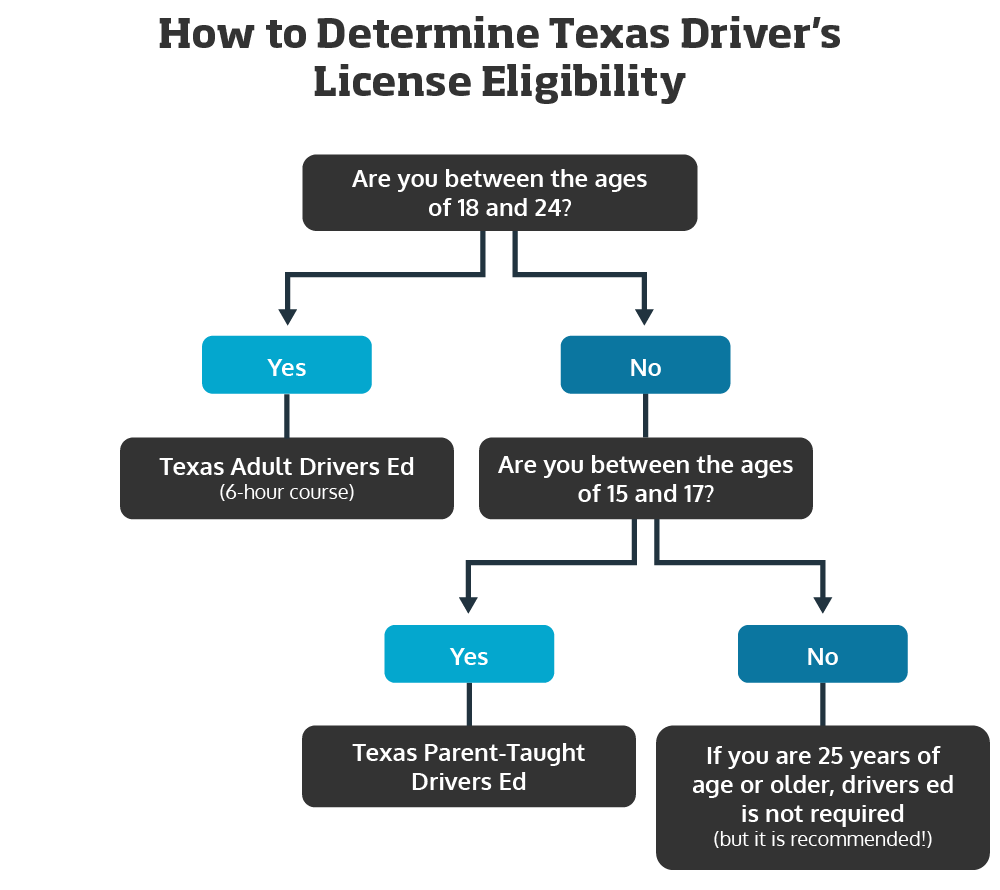
In Texas, individuals aged 18 and older are considered adults and therefore do not need to complete the same structured driver education programs required for minors. However, specific documentation and tests are still mandatory. The primary goal of the Department of Public Safety (DPS) is to ensure that all drivers are competent and knowledgeable about traffic laws and safe driving practices.
Essential Documentation
Before you even step foot into a Texas Department of Public Safety (DPS) office, gathering the correct documentation is crucial. This prevents wasted trips and ensures you’re fully prepared. The state requires proof of identity, lawful presence, and residency.
- Proof of Identity and Lawful Presence: You will need one primary document that proves both your identity and your U.S. citizenship or lawful presence in the United States. Acceptable documents include:
- A U.S. Birth Certificate (original or certified copy).
- A U.S. Passport (valid).
- A Certificate of Citizenship or Naturalization.
- A Permanent Resident Card.
- Proof of Social Security Number: You must present your Social Security card or other proof of your Social Security number, such as a W-2 form or an SSA-1099 form.
- Proof of Texas Residency: You will need two different documents proving that you have lived in Texas for at least 30 days. Examples include:
- Utility bills (electricity, gas, water, internet) in your name, dated within the last 90 days.
- Texas vehicle registration or title.
- Lease agreements or deeds.
- Bank statements.
- Insurance policies.
- Official mail from government agencies.
It’s important to note that all documents must be originals or certified copies. Photocopies are generally not accepted. You can find a comprehensive list of acceptable documents on the Texas Department of Public Safety website.
Application Process
The application process itself is straightforward but requires attention to detail. You will need to complete the Driver License Application form, which can often be started online.
- Complete the Application: You can begin the application process online at the Texas Department of Public Safety website. This pre-application can save time at the DPS office. Be prepared to provide your personal information, including your full name, date of birth, and address.
- Visit a DPS Driver License Office: After completing the online portion, you must visit a physical DPS driver license office. It’s highly recommended to schedule an appointment online to minimize wait times.
- Submit Documentation and Pay Fees: At your appointment, present all your gathered documents to the DPS representative. You will also need to pay the required driver’s license fee. The fee amount can vary, so check the current rates on the Texas DPS website.
- Pass Vision and Knowledge Tests: You will be required to pass a vision test to ensure your eyesight meets the minimum standards for driving. Subsequently, you must pass a written knowledge test that covers traffic laws, road signs, and safe driving practices as outlined in the Texas Driver Handbook. This handbook is an essential resource for anyone preparing for the test.
The Written Knowledge Test
The written knowledge test is a critical component of obtaining your Texas driver’s license. It assesses your understanding of the rules of the road, traffic signals, road signs, and safe driving techniques. The test is typically administered on a computer or tablet at the DPS office.
- Content: The questions are designed to gauge your familiarity with the information presented in the official Texas Driver Handbook. Key areas covered include:
- Traffic laws and regulations.
- Speed limits and safe following distances.
- Right-of-way rules.
- Interpreting traffic signs and signals.
- Safe driving practices, including defensive driving techniques.
- Alcohol and drug-related laws.
- Emergency procedures.
- Preparation: Thoroughly studying the Texas Driver Handbook is the most effective way to prepare. Many online resources and practice tests are available to help you assess your readiness. Familiarize yourself with the different sections and try to answer questions in a timed setting to simulate the actual test environment.
- Passing Score: To pass the written test, you typically need to answer a certain percentage of questions correctly. The exact passing score can be found in the Texas Driver Handbook. If you do not pass on your first attempt, you will usually be allowed to retake it after a waiting period.
The Driving Test (Road Test)
Once you have successfully passed the vision and knowledge tests, the next crucial step is the driving test, often referred to as the road test. This practical examination evaluates your ability to operate a vehicle safely and competently in real-world driving conditions.
Vehicle Requirements for the Road Test
The vehicle you use for your road test must meet specific safety and operational standards. It’s your responsibility to ensure your vehicle is in good working order.
- Safety Features: The vehicle must have working brakes, headlights, taillights, turn signals, and a horn. The tires should be in good condition with adequate tread.
- Registration and Insurance: The vehicle must be properly registered in Texas, and you must provide proof of current liability insurance.
- Cleanliness: While not a strict requirement for passing, a clean interior and exterior can contribute to a positive impression. Ensure your windows are clean for good visibility.
- Manual or Automatic: You can take the test in either a manual or automatic transmission vehicle. Your license will be issued with a restriction if you take the test in an automatic, prohibiting you from driving manual transmission vehicles.
What the Road Test Evaluates
The examiner will assess your driving skills across a range of maneuvers and situations. They are looking for evidence of safe driving habits, adherence to traffic laws, and control of the vehicle.
- Basic Vehicle Control: This includes starting and stopping smoothly, maintaining proper speed, and steering accurately.
- Lane Changes and Turns: You will be tested on your ability to signal properly, check blind spots, and execute turns from the correct lanes.
- Parking Maneuvers: Common maneuvers include parallel parking, backing into a parking space, and parking on a hill.
- Traffic Situations: The examiner will observe how you navigate intersections, respond to traffic signals and signs, yield to pedestrians and other vehicles, and merge into traffic.
- Observation and Awareness: This is a critical aspect. The examiner will look for signs that you are actively scanning your surroundings, checking mirrors, and being aware of potential hazards.
- Adherence to Traffic Laws: This includes obeying speed limits, stopping at stop signs and red lights, and following all other traffic regulations.
Tips for Success on the Road Test
Preparation and practice are key to performing well on the road test.
- Practice Regularly: Drive as much as possible with a licensed adult to gain experience in various driving conditions. Focus on the maneuvers that are typically tested.
- Study the Handbook: Revisit the sections of the Texas Driver Handbook related to road test requirements and safe driving.
- Familiarize Yourself with the Test Area: If possible, practice driving in the vicinity of the DPS office where you will be taking your test. This can help you become familiar with the road layout and common traffic patterns.
- Stay Calm: It’s natural to feel nervous, but try to remain calm and focused. Take deep breaths and concentrate on the task at hand.
- Communicate: If you are unsure about an instruction from the examiner, politely ask for clarification.
Receiving Your Driver’s License
Upon successful completion of all required tests and submission of the necessary documentation, you will receive your Texas driver’s license. The process for receiving your physical license involves a temporary permit and the eventual mailing of your official card.
Temporary Permit
After passing your driving test, the examiner will typically issue you a temporary driver’s license. This document is valid for a limited period and allows you to legally drive while your permanent license is being processed and mailed. It’s essential to keep this temporary permit with you whenever you are driving.
The Permanent License
Your official Texas driver’s license will be mailed to the address you provided during your application process. This typically takes a few weeks. The license will be a plastic card, similar to a credit card, containing your photograph, personal information, and other relevant details.
- Verification: Once you receive your permanent license, carefully check all the information for accuracy. If there are any errors, contact the Texas Department of Public Safety immediately to have it corrected.
- Restrictions: Depending on the vehicle you used for your driving test or other factors, your license may have certain restrictions. Common restrictions include the need for corrective lenses if you failed the vision test without them, or a prohibition on driving manual transmission vehicles if you took the test in an automatic. Ensure you understand any restrictions placed on your license.
- Renewal: Texas driver’s licenses are typically valid for a period of several years. You will receive a renewal notice before your license expires. It’s crucial to renew your license on time to avoid driving with an expired permit.
Important Considerations for New Drivers
As a new driver in Texas, understanding ongoing responsibilities and safety practices is vital for maintaining your driving privileges and ensuring the safety of yourself and others on the road.
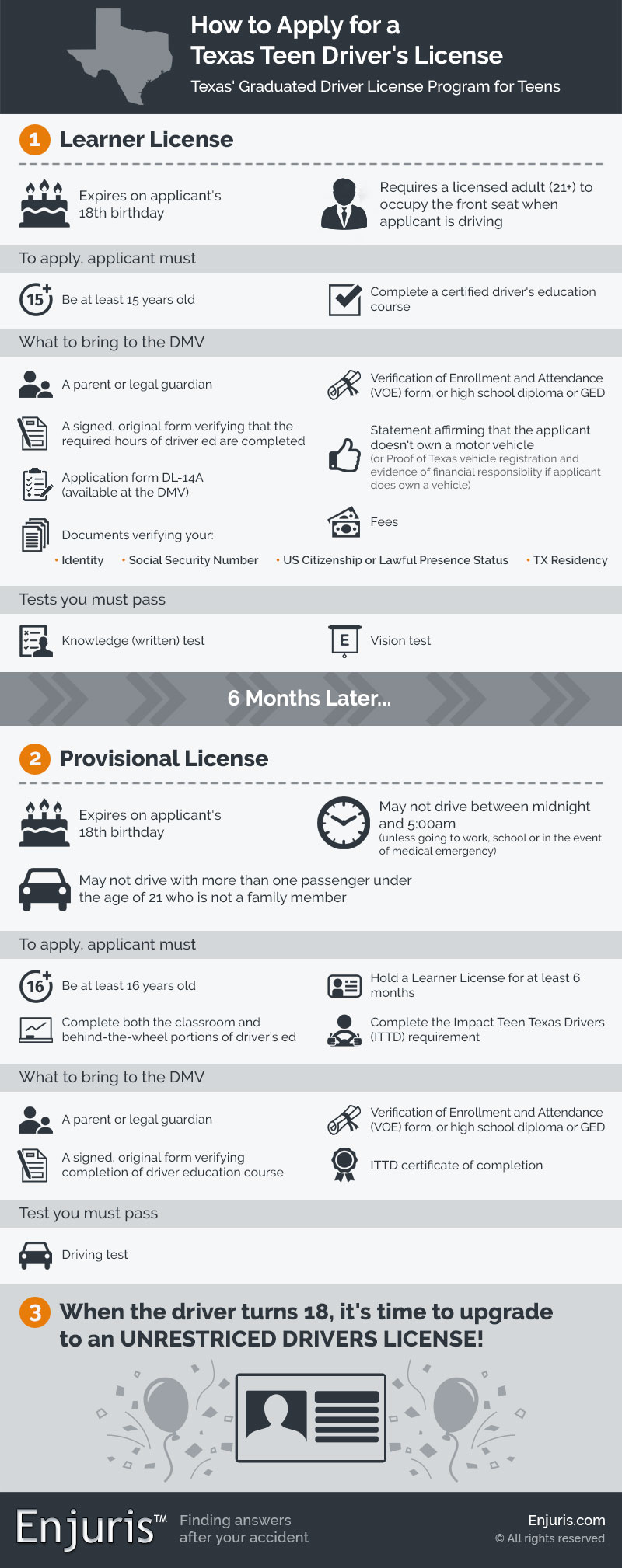
- Graduated Driver Licensing (GDL): While 18-year-olds bypass the initial stages of the GDL program designed for minors, it’s important to be aware of its principles. The GDL system is designed to ease new drivers into full driving privileges gradually, acknowledging that experience is gained over time.
- Safe Driving Habits: Always prioritize safe driving. Avoid distractions like your cell phone, never drive under the influence of alcohol or drugs, and always wear your seatbelt.
- Traffic Laws: Continuously stay informed about Texas traffic laws, as they can be updated. The Texas Driver Handbook is an excellent resource for this.
- Insurance: Maintaining valid car insurance is a legal requirement in Texas and is essential for financial protection in case of an accident.
- Vehicle Maintenance: Regularly inspect and maintain your vehicle to ensure it is in safe operating condition.
By carefully following these steps and dedicating time to preparation, obtaining your driver’s license at 18 in Texas is an achievable goal, opening up a world of mobility and independence.
LifeOutOfTheBox is a participant in the Amazon Services LLC Associates Program, an affiliate advertising program designed to provide a means for sites to earn advertising fees by advertising and linking to Amazon.com. Amazon, the Amazon logo, AmazonSupply, and the AmazonSupply logo are trademarks of Amazon.com, Inc. or its affiliates. As an Amazon Associate we earn affiliate commissions from qualifying purchases.