
While the question of “How Many Jails Are In Texas?” might initially seem outside the purview of typical travel or tourism inquiries, a closer examination reveals its surprising relevance to understanding the fabric of a region, its history, and even its evolving urban and rural landscapes. For the curious traveler or the insightful observer of Texas, understanding the scale and distribution of correctional facilities can offer a unique perspective on demographic shifts, economic development, and the societal structures that shape communities across the Lone Star State. This isn’t about visiting them as tourist attractions, but rather appreciating their presence as significant elements within the broader Texas geography and demography.
The Complex Landscape of Texas Correctional Facilities
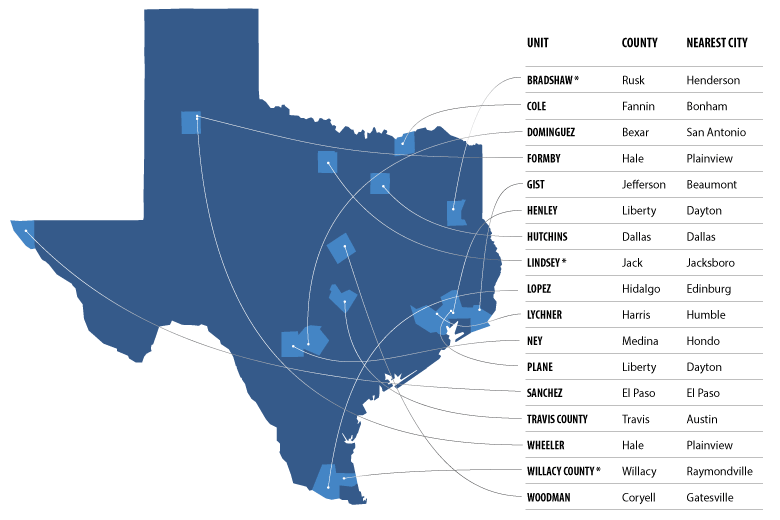
Texas operates a vast and intricate network of correctional facilities, encompassing a range of classifications and management styles. To answer “how many,” we must first delineate the different types of institutions that fall under this broad umbrella. This includes facilities managed by the Texas Department of Criminal Justice (TDCJ), county jails, federal prisons, and private correctional centers. Each plays a distinct role in the state’s justice system and impacts the communities in which they are located.
State-Operated Facilities: The Backbone of the TDCJ
The Texas Department of Criminal Justice (TDCJ) is the primary administrator of state prisons for adult men and women convicted of felonies. As of recent data, the TDCJ operates a substantial number of facilities spread across the state. These institutions range from maximum-security penitentiaries to medium and minimum-security units, and even specialized facilities such as those for death row inmates or those requiring extensive medical care.
The sheer scale of the TDCJ’s operations is a testament to Texas’s approach to corrections. These facilities often represent significant employers in their respective rural or semi-rural areas, influencing local economies. Their presence can also shape the surrounding infrastructure, from transportation links to housing demands for staff. Understanding the number and distribution of these TDCJ units provides a foundational understanding of correctional infrastructure in Texas.
County Jails: Local Holding and Short-Term Sentences
Beyond the state prison system, each of Texas’s 254 counties operates its own jail. These county jails serve multiple purposes: they are used for holding individuals awaiting trial or sentencing, for individuals serving short misdemeanor sentences, and as transfer points for individuals moving between different correctional facilities.
The number of county jails is, therefore, fixed at 254. However, the size, capacity, and operational model of these jails can vary dramatically, from small, rural facilities that hold only a few dozen inmates to large, urban jails in cities like Houston or Dallas that can house thousands. The management and funding of these facilities are typically the responsibility of county sheriffs and commissioners, making them a crucial component of local governance and public safety.
Federal Prisons: A Separate Jurisdictional Layer
In addition to state and county facilities, Texas is also home to several federal correctional institutions operated by the Federal Bureau of Prisons (BOP). These facilities house individuals convicted of federal crimes, which can range from drug offenses to immigration violations. While their number is smaller compared to state or county facilities, they represent a distinct layer of the correctional system within the state. The presence of federal penitentiaries further adds to the complexity of correctional infrastructure and employment in specific Texas communities.
Private Correctional Facilities: A Growing Sector
A notable aspect of the correctional landscape in Texas is the significant role played by private companies that contract with the state or federal government to operate correctional facilities. These private prisons can house both state and federal inmates, and their prevalence reflects a broader trend in correctional management across the United States. The number of these private facilities, while subject to change based on contracts and demand, adds to the total count of correctional institutions in the state. Their operational models and financial structures also present a unique facet of the correctional industry.
Demographics and Distribution: A Snapshot of Texas Correctional Facilities
When considering “how many jails are in Texas,” it’s important to also contemplate their distribution and the demographics they serve. The placement of correctional facilities is rarely arbitrary. Often, they are situated in areas where land is more affordable, or where there is a need for economic stimulus, leading to a concentration of facilities in certain regions.

Rural Impact and Economic Considerations
Many TDCJ facilities and private prisons are located in rural counties. This is often due to the availability of large tracts of land and a local population seeking employment opportunities. These correctional institutions can become the largest employers in a county, significantly influencing the local economy, tax base, and community development. For travelers visiting these regions, the presence of a large correctional facility is often an undeniable, though perhaps somber, landmark.
Urban Centers and County Jail Overcrowding
In contrast, major urban centers like San Antonio, Austin, and Fort Worth have a high concentration of county jails. These facilities often face challenges related to overcrowding due to the larger populations and higher rates of arrests in metropolitan areas. The management of these urban jails is a constant logistical and financial undertaking for county governments.
Shifting Populations and Facility Needs
The number and type of correctional facilities in Texas are not static. They can fluctuate based on crime rates, legislative changes, sentencing policies, and demographic shifts. For instance, a rise in certain types of offenses might lead to the construction of new facilities or the expansion of existing ones, while a decrease in inmate populations could result in the closure or repurposing of others. Understanding these trends offers insight into the evolving correctional landscape of the state.
Beyond the Numbers: The Societal Footprint of Correctional Facilities
While the precise number of correctional facilities in Texas is a factual question, their impact extends far beyond simple statistics. For those interested in Texas as a place, understanding the correctional system is a way to grasp a significant, albeit often overlooked, aspect of its societal structure.
Employment and Economic Influence
As mentioned, correctional facilities are major employers, particularly in rural Texas. This provides stable jobs and contributes to local economies through salaries, procurement of goods and services, and tax revenues. This economic influence is a significant factor in the development and sustainability of many communities, shaping their character and infrastructure.
Infrastructure and Community Integration
The presence of large correctional complexes can necessitate the development of specific infrastructure, including roads, utilities, and sometimes even housing for staff. While these facilities are by nature somewhat isolated, their operational needs can lead to integration with local services and businesses. For travelers, the visible infrastructure associated with these facilities can be a subtle indicator of their presence and scale within the landscape.
Historical Context and Evolving Perceptions
The history of corrections in Texas is intertwined with the state’s broader history. Understanding the evolution of penal systems, from early penitentiaries to modern correctional campuses, provides a historical lens through which to view societal changes and attitudes towards justice and rehabilitation. This historical perspective can add depth to an understanding of Texas as a region with a complex and evolving story.

Concluding Thoughts on the Correctional Landscape
So, to return to the initial question, “How Many Jails Are In Texas?” The answer is not a single, simple figure. It is a complex sum of state-run prisons, federal penitentiaries, 254 county jails, and numerous private correctional facilities. Each category represents a significant number of institutions, contributing to a vast correctional infrastructure that shapes Texas communities, economies, and landscapes.
For the traveler seeking to understand Texas beyond its tourist brochures, acknowledging the presence and scale of its correctional system offers a more comprehensive, albeit less glamorous, view of the Lone Star State. It highlights the multifaceted nature of governance, economics, and social structures that define this vast and diverse region. The correctional system is a substantial part of the Texas story, influencing its development and the lives of its citizens in profound ways.
LifeOutOfTheBox is a participant in the Amazon Services LLC Associates Program, an affiliate advertising program designed to provide a means for sites to earn advertising fees by advertising and linking to Amazon.com. Amazon, the Amazon logo, AmazonSupply, and the AmazonSupply logo are trademarks of Amazon.com, Inc. or its affiliates. As an Amazon Associate we earn affiliate commissions from qualifying purchases.