
The allure of the Golden State is undeniable, a vibrant tapestry woven from diverse landscapes, pioneering spirit, and an iconic cultural footprint. From the sun-drenched beaches of Southern California to the majestic forests of the north, California embodies a unique blend of natural beauty and human ingenuity. But beyond the cinematic landscapes and innovation hubs, lies a fundamental question that shapes every facet of life and travel within its borders: how many people call California home? The sheer scale of its population not only defines its character but profoundly influences its travel destinations, accommodation landscape, tourism trends, and overall lifestyle experiences. Understanding the demographic heartbeat of California is key to appreciating its dynamic tourism industry and navigating its myriad offerings, whether you’re seeking a serene escape or the pulsating energy of a major metropolis.
California’s Dynamic Demographic Landscape
As the most populous state in the United States, California’s demographic profile is a complex and ever-evolving mosaic. Its vastness accommodates a multitude of communities, each contributing to the state’s vibrant character and robust economic engine. The sheer number of residents, coupled with their incredible diversity, creates a unique environment that impacts everything from local culture to the global perception of the Golden State.
A Snapshot of the Golden State’s Population
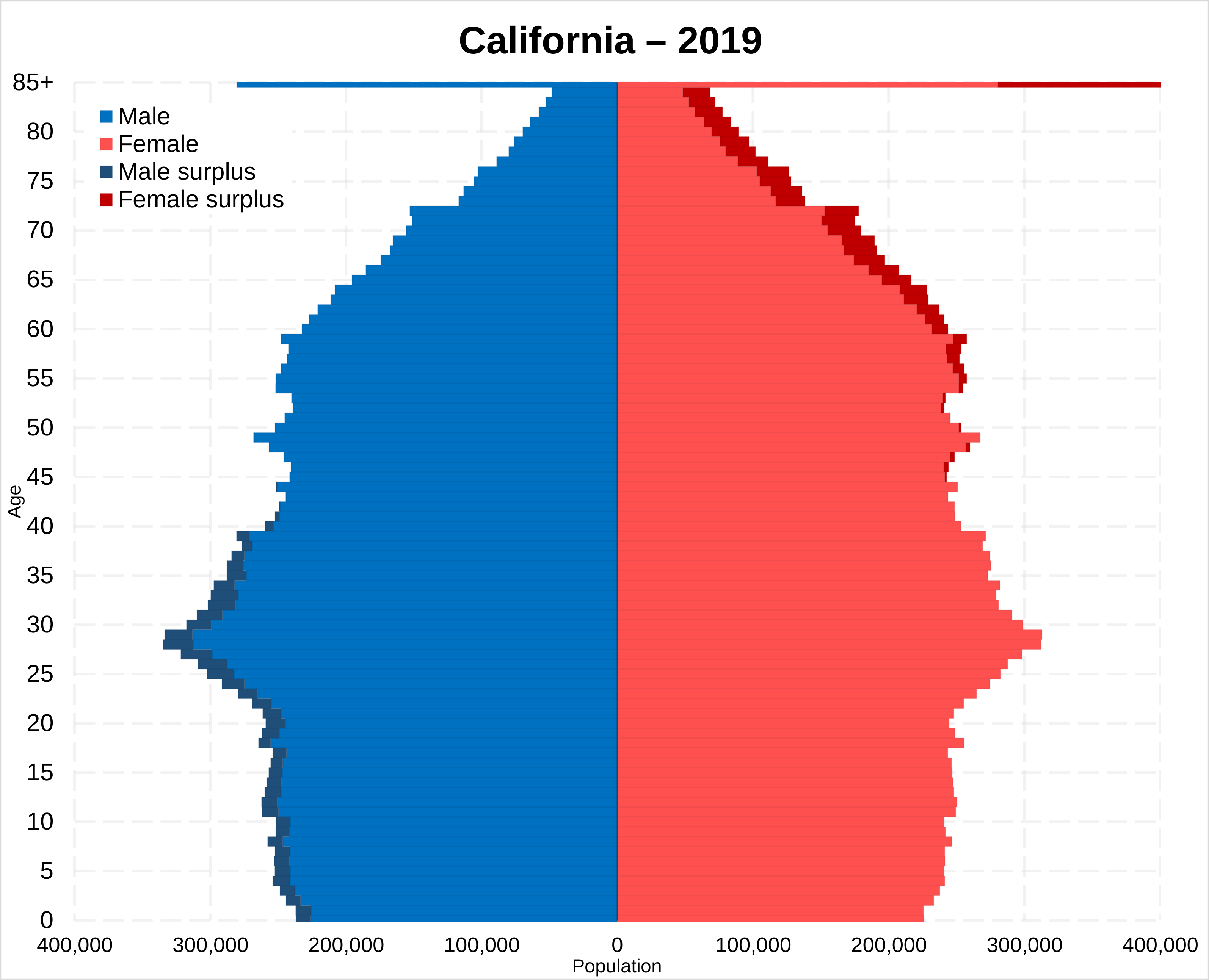
With a population hovering around 39 million people, California is a demographic powerhouse. To put this into perspective, its population is larger than that of many countries. This immense human presence is concentrated in bustling urban centers, with Los Angeles County alone being home to over 10 million residents, making it the most populous county in the United States. Other major cities like San Francisco, San Diego, San Jose, and Sacramento also contribute significantly to the state’s dense population centers, forming expansive metropolitan areas that are economic and cultural epicenters.
While California has historically been a state of rapid growth, recent years have seen shifts in population trends, with some outward migration counterbalanced by births and international immigration. Factors such as housing affordability, job markets, and quality of life often play a role in these dynamics. Despite these fluctuations, the fundamental reality remains: California is a highly populated state, and this density directly translates into a constant demand for infrastructure, services, and, crucially for travelers, a diverse array of tourism and accommodation options. The concentration of people fuels innovation, creates a rich cultural tapestry, and ensures a vibrant, if sometimes crowded, experience for residents and visitors alike.
Diversity as a Defining Characteristic
Perhaps even more significant than its sheer numbers is the incredible diversity of California’s population. It is a true melting pot, with a rich tapestry of ethnicities, languages, and cultural backgrounds converging to create a unique social fabric. This diversity is not merely a statistical fact; it is a lived experience that permeates every aspect of the state, from its cuisine to its festivals, and from its art scenes to its business practices. The demographic makeup includes significant populations of Hispanic/Latino, Asian, African American, and Native American communities, alongside a large white population, resulting in a multicultural environment unlike almost anywhere else in the world.

For travelers, this diversity translates into an unparalleled range of experiences. Food scenes in cities like Los Angeles or San Francisco are renowned for their authenticity and variety, offering everything from street tacos to Michelin-starred Vietnamese cuisine. Festivals celebrating different cultures are commonplace throughout the year, providing visitors with unique opportunities to engage with local traditions. This multiculturalism enriches the travel experience, allowing visitors to explore a multitude of perspectives and traditions without ever leaving the state. It influences the types of attractions available, the language spoken in various neighborhoods, and the overall atmosphere, making every corner of California a potential gateway to a global experience.

The Population’s Footprint on Travel and Tourism
The immense population of California, both residents and the millions who visit annually, profoundly shapes the state’s travel and tourism sector. This human presence drives demand, influences the development of attractions, and dictates the scale and variety of experiences available, creating a tourism landscape that is as dynamic and diverse as its people.
Destinations and Attractions: Catering to the Masses
With nearly 40 million residents and a steady stream of domestic and international tourists, California boasts an extraordinary concentration of world-class destinations and attractions designed to cater to a broad audience. Theme parks like Disneyland Resort in Anaheim and Universal Studios Hollywood in Los Angeles are prime examples, drawing millions annually and constantly innovating to accommodate their vast visitor numbers. Iconic landmarks such as the Golden Gate Bridge in San Francisco, the Hollywood Sign, and the historic piers of Santa Monica are testaments to the state’s enduring appeal, made famous partly by their widespread recognition among a huge populace.
Beyond urban entertainment, California’s natural wonders also experience significant visitor traffic. Yosemite National Park, Joshua Tree National Park, and Redwood National and State Parks are breathtaking, but their popularity means that managing visitor flow and preserving natural resources are crucial challenges. The scale of the population demands that these sites not only offer incredible experiences but also implement strategies to handle large crowds, such as reservation systems and shuttle services, ensuring that even amidst the throngs, visitors can still connect with the state’s beauty. This constant interplay between popular demand and preservation shapes how these invaluable destinations are presented and experienced.
Food and Local Culture: A Culinary Melting Pot
The incredible diversity of California’s population translates directly into one of its most celebrated tourism assets: its food scene and rich local culture. From the bustling streets of Koreatown in Los Angeles to the vibrant markets of San Francisco’s Mission District, the culinary landscape is a dynamic reflection of the state’s global demographic makeup. Travelers can embark on a gastronomic journey around the world without ever leaving California, sampling authentic dishes from virtually every continent. This includes innovative farm-to-table restaurants that capitalize on California’s abundant agricultural produce, high-end dining experiences in Napa Valley and Sonoma wine country, and an endless array of casual eateries and food trucks specializing in everything from tacos to sushi.
Beyond food, the population’s cultural influence is evident in the myriad festivals, art galleries, and community events that dot the state’s calendar. California is home to world-renowned museums like the Getty Center in Los Angeles and the California Academy of Sciences in San Francisco, which benefit from both local patronage and tourist interest. Neighborhoods like Chinatown in San Francisco or Little Italy in San Diego offer immersive cultural experiences, allowing visitors to delve into traditions that have been preserved and adapted by generations of immigrants. This rich cultural tapestry ensures that tourism in California is not just about sightseeing, but about experiencing a truly globalized, yet distinctly Californian, way of life.
Activities and Experiences: Something for Everyone
The extensive population of California, combined with its vast geographical expanse, ensures an unparalleled range of activities and experiences suitable for every taste and budget. Whether a traveler seeks adrenaline-pumping adventures, serene natural escapes, or deep cultural immersion, California delivers. The sheer number of people creates a constant demand for diverse recreational opportunities, leading to the development and maintenance of a wide array of options. For outdoor enthusiasts, the choices are limitless: surfing at iconic beaches in Malibu or Huntington Beach, skiing and snowboarding in the Sierra Nevada mountains around Lake Tahoe, hiking through the redwoods, or exploring the dramatic desert landscapes of Death Valley National Park. The famous Pacific Coast Highway offers one of the world’s most scenic road trips, appealing to millions who seek breathtaking vistas and charming coastal towns like those in Big Sur.
Urban centers, fueled by their dense populations, offer a different kind of vibrancy. Los Angeles is a hub for entertainment, fashion, and art, while San Francisco captivates with its historic cable cars, dynamic tech scene, and landmarks like Alcatraz Island. San Diego is known for its beautiful beaches, the San Diego Zoo, and a relaxed atmosphere. This concentration of human activity has fostered specialized niche markets as well, from wellness retreats in Palm Springs to burgeoning craft beer trails. The underlying factor for this abundance is the existence of a large population both to demand these activities and to provide the infrastructure and services required to support them. It is this synergy that allows California to offer an “experience for everyone,” ensuring its enduring appeal as a top global travel destination.
Accommodation and Infrastructure: Meeting Demand
The significant population of California, combined with its status as a premier tourist destination, places immense pressure on its accommodation and infrastructure sectors. Meeting the diverse needs of millions of residents and visitors requires a vast and varied network of hotels, resorts, and transport systems, all of which are continuously adapting to market demands and population shifts.
Hotels, Resorts, and Alternative Stays
To accommodate its vast population and millions of annual visitors, California boasts an expansive and incredibly diverse range of accommodation options. From ultra-luxury resorts in Beverly Hills, such as the iconic Beverly Wilshire, A Four Seasons Hotel, to charming boutique hotels in coastal towns, and budget-friendly motels along major highways, there’s a lodging solution for every traveler’s preference and pocketbook. Major cities are replete with international hotel chains offering everything from business-oriented suites to family-friendly resorts. Beyond traditional hotels, the rise of alternative accommodations has been particularly strong in California, driven by both local demand and tourist interest. Vacation rentals, apartments, and villas available through platforms like Airbnb are widespread, offering travelers more authentic local experiences or extended stay options. Unique glamping sites in natural settings and eco-lodges cater to those seeking immersion in nature without sacrificing comfort.
The sheer volume of people means that accommodation pricing and availability can fluctuate dramatically, especially during peak seasons or major events. Cities like San Francisco and Los Angeles are known for their competitive hotel markets, reflecting the constant demand from business travelers, tourists, and convention attendees. This environment necessitates a robust and adaptive hospitality industry, constantly building, renovating, and innovating to keep pace with the needs of a huge and discerning populace. The result is a highly competitive, yet incredibly comprehensive, accommodation market that truly has something for everyone, albeit often at a premium in popular areas.
Booking and Comparison: Navigating a Crowded Market
Given the immense demand for accommodation across California, effectively navigating the booking and comparison process is crucial for travelers. The presence of a large population ensures a high volume of bookings year-round, making advance planning often essential, especially for popular destinations, specific dates, or unique properties. Online booking platforms and comparison websites have become indispensable tools, allowing travelers to filter options by price, amenities (such as pools, spas, or pet-friendliness), location, and guest reviews. The detailed reviews left by a vast user base provide invaluable insights into the quality and experience of different accommodations, helping travelers make informed decisions.
The competitive nature of the market means that while prices can be high, there are also opportunities for deals and promotions, particularly during off-peak seasons or by booking well in advance. Tools that compare prices across multiple booking sites are particularly useful in California, where pricing can vary significantly. Long-term stay options, from extended-stay hotels to serviced apartments, also cater to a significant segment of the population, including those on business assignments, relocating, or taking extended vacations. The complexity and size of California’s accommodation market necessitate a strategic approach to booking, empowering travelers with information to secure the best stay for their needs.
Transport and Connectivity
Supporting nearly 40 million residents and a continuous flow of tourists requires a colossal and highly developed transport infrastructure. California’s dense population centers are interconnected by an extensive network of highways, most notably the iconic US-101 and Interstate 5, which span the length of the state, though traffic congestion is a common challenge in metropolitan areas. Major international airports, such as Los Angeles International Airport (LAX), San Francisco International Airport (SFO), and San Diego International Airport, serve as critical gateways for millions of travelers each year, facilitating both domestic and international connections. These airports are some of the busiest in the world, a direct reflection of the state’s population and global connectivity.
Within cities, public transportation systems vary in scope and efficiency. San Francisco boasts its historic cable cars and a comprehensive BART (Bay Area Rapid Transit) system, while Los Angeles continues to expand its Metro rail and bus networks. The car, however, remains king for much of California, with rental car services being a popular option for tourists wishing to explore the state’s vast distances independently. The sheer number of people also fuels a robust ride-sharing industry, providing convenient on-demand transport. Future developments, including high-speed rail projects, aim to further enhance connectivity, striving to make travel across this populous state more efficient and sustainable for residents and visitors alike.
Lifestyle and the Golden State Dream
The lifestyle in California is as diverse as its population, embodying everything from the epitome of luxury to accessible budget travel, catering to family adventures, and facilitating critical business stays. This multifaceted approach to life and travel is a direct consequence of accommodating a vast and varied populace, each segment contributing to the unique tapestry of the “Golden State Dream.”
Luxury vs. Budget Travel: Diverse Economic Realities
California’s immense population encompasses a wide spectrum of economic realities, leading to a travel and lifestyle landscape that caters to both the most opulent tastes and the most budget-conscious travelers. The state is synonymous with luxury travel, from the high-end shopping on Rodeo Drive in Beverly Hills to exclusive resorts in Laguna Beach and private wine tours in Napa Valley. Wealthy residents and visitors contribute to a thriving luxury market, supporting five-star hotels, private jet services, and gourmet dining experiences. This segment reflects the economic success and aspirational lifestyle often associated with California.
However, a significant portion of the population, alongside a substantial number of tourists, also embraces budget travel. California’s extensive network of state parks, free public beaches, and numerous affordable dining options allow for incredible experiences without breaking the bank. Hostels, campgrounds, and value-oriented hotels provide accessible accommodation. The diverse demographics mean that businesses thrive by catering to different economic tiers, ensuring that the “Golden State Dream” is not exclusively for the affluent. From exploring vibrant ethnic neighborhoods for authentic, inexpensive meals to enjoying free cultural events in city parks, California offers a balanced ecosystem where both luxury and budget travel flourish side-by-side, driven by the diverse needs and capabilities of its large population.
Family Trips and Business Stays: Multifaceted Needs
The sheer size and diversity of California’s population inherently drive multifaceted travel needs, notably catering to both extensive family trips and crucial business stays. For families, California is a dream destination, offering a plethora of attractions designed for all ages. Theme parks like Disneyland Resort and Universal Studios Hollywood are magnets for families, providing entertainment and memorable experiences. Beyond the big parks, the state’s vast national and state parks offer incredible opportunities for outdoor family adventures, from camping in Yosemite to exploring tide pools along the coast. Resorts often feature family-friendly amenities, kids’ clubs, and spacious suites to accommodate larger groups, reflecting a deep understanding of the family travel market fueled by a large residential and visiting family segment.
Concurrently, California is a global hub for business, technology, and innovation, particularly in areas like Silicon Valley, Los Angeles, and San Diego. This translates into a constant demand for business-oriented accommodation and services. Hotels in major cities are equipped with conference facilities, high-speed internet, and business centers, catering to a steady stream of corporate travelers, convention attendees, and professionals. The large resident business population ensures a robust infrastructure for meetings, trade shows, and industry events, attracting further business travel. From short business trips to extended assignments, California’s urban centers are meticulously designed to support a thriving professional ecosystem. This dual capacity to cater to both family leisure and demanding business requirements underscores how the state’s large and diverse population shapes its entire travel infrastructure.
Sustainable Tourism: Balancing Growth with Preservation
With a population nearing 40 million, and receiving countless tourists annually, California faces the critical challenge of balancing robust tourism growth with the imperative of environmental preservation and social sustainability. The immense human footprint has placed significant pressure on the state’s cherished natural landscapes, from the redwood forests to the delicate desert ecosystems and its extensive coastline. Popular landmarks and parks, while drawing visitors, also contend with issues like overcrowding, waste management, and habitat degradation. This awareness has spurred a strong movement towards sustainable tourism practices across the state. Initiatives include promoting eco-friendly accommodations, encouraging public transportation or carpooling to reduce carbon emissions, and educating visitors on responsible travel. Many hotels and resorts now implement water conservation programs, utilize renewable energy, and source local, sustainable produce, recognizing their role in minimizing environmental impact.
Furthermore, efforts are underway to distribute tourism more evenly across the state, encouraging exploration of lesser-known areas to reduce pressure on iconic hotspots. Community-based tourism initiatives seek to benefit local residents directly, ensuring that tourism dollars contribute to the well-being of the communities that host visitors. Agencies managing national and state parks actively implement strategies like timed entry systems and stricter regulations to protect fragile environments and enhance visitor experiences. This proactive approach to sustainability reflects California’s progressive values and the understanding that for the Golden State to remain an attractive destination for future generations, its natural and cultural resources must be protected. The sheer number of people involved, both residents and tourists, makes this a complex but essential endeavor for the long-term health and appeal of California.
In conclusion, the question of “How Many People In The California?” transcends a mere numerical answer. It is a profound inquiry into the very soul of the state, revealing how its colossal and richly diverse population intricately weaves through every aspect of life and travel. This demographic powerhouse shapes the landscape of its iconic destinations and attractions, fuels its world-renowned culinary and cultural scenes, and dictates the scale and variety of its accommodation and transport infrastructure. From the vibrant energy of its cities to the serene beauty of its natural parks, every experience is touched by the presence of its nearly 40 million residents and the millions more who visit. Understanding this dynamic relationship between people and place is essential for anyone seeking to truly grasp the essence of California, a state that continues to captivate, innovate, and inspire on a global scale.
LifeOutOfTheBox is a participant in the Amazon Services LLC Associates Program, an affiliate advertising program designed to provide a means for sites to earn advertising fees by advertising and linking to Amazon.com. Amazon, the Amazon logo, AmazonSupply, and the AmazonSupply logo are trademarks of Amazon.com, Inc. or its affiliates. As an Amazon Associate we earn affiliate commissions from qualifying purchases.