
Navigating the intricacies of vehicle ownership transfer in Texas can seem daunting, especially when it comes to understanding the associated costs. Whether you’re purchasing a new or used car, inheriting a vehicle, or gifting one, a title transfer is a mandatory step in the process. This article aims to demystify the expenses involved, breaking down the fees and taxes you can expect to pay when transferring a vehicle title in the Lone Star State. Understanding these costs upfront can help you budget effectively and avoid unexpected financial surprises.
Understanding the Core Costs of a Texas Title Transfer
The cost of a title transfer in Texas is not a single, fixed amount. Instead, it is comprised of several components, primarily dictated by state and county fees, as well as applicable sales tax. These fees are designed to cover administrative processes, record-keeping, and to contribute to state revenue. While the base transfer fee might seem straightforward, the final amount hinges on the vehicle’s value and specific circumstances of the transfer.

Vehicle Title Transfer Fee
The fundamental fee associated with transferring a vehicle title in Texas is set by the Texas Department of Motor Vehicles (TxDMV). This fee is relatively modest but is a non-negotiable part of the process. It covers the administrative costs of issuing a new title document with the new owner’s name on it.
- Base Fee: The standard fee for a title transfer in Texas is currently $28. This fee is subject to change by the TxDMV, so it’s always wise to check the most up-to-date figures on their official website or through your local county tax assessor-collector’s office.
- Purpose of the Fee: This fee directly supports the operations of the TxDMV, ensuring the accurate and secure maintenance of vehicle ownership records across the state. It’s a small price to pay for the legal validation of your ownership.
Sales Tax on Vehicle Purchases
Perhaps the most significant cost associated with a title transfer, especially for purchased vehicles, is the state sales tax. Texas levies a sales tax on the purchase price or market value of a vehicle, whichever is greater. This tax is collected at the time of title transfer.
- State Sales Tax Rate: The statewide sales tax rate on motor vehicles in Texas is 6.25%.
- Local Sales Tax Additions: In addition to the state sales tax, local governments (cities and counties) can impose additional sales tax, up to a combined maximum of 2% (state + local). This means the total sales tax rate can range from 6.25% to 8.25%, depending on the location where the vehicle is being registered. For example, if you are registering a vehicle in Dallas with a 2% local option, you will pay 8.25% in total sales tax.
- Calculating Sales Tax: The sales tax is calculated on the “taxable value” of the vehicle. For private sales, this is typically the greater of the purchase price or the average retail value as determined by the TxDMV’s established pricing guides. For new vehicles purchased from dealerships, it’s usually the purchase price. For trade-ins, the sales tax is calculated on the difference between the purchase price of the new vehicle and the trade-in value of the old vehicle.
- Exemptions: Certain situations are exempt from sales tax, such as transfers between immediate family members (parents, children, spouses) or when a vehicle is inherited. These exemptions are crucial to understand as they can significantly reduce the overall cost.
Registration Fees and Other County Charges
Beyond the title transfer fee and sales tax, you will also incur costs related to vehicle registration and various county-specific charges. These are typically collected by the county tax assessor-collector’s office, which acts as the local agent for the TxDMV.
- Vehicle Registration Fees: Every vehicle registered in Texas requires an annual registration fee. The amount varies based on the type of vehicle, its weight, and its age. For standard passenger vehicles, this fee is generally in the range of $50-$100 annually, but it’s best to confirm the exact amount for your specific vehicle.
- County Administration Fees: The county tax assessor-collector’s office may also charge small administrative fees for processing the title transfer and registration. These are usually nominal, often a few dollars, and help the county cover their operational costs for these services.
- License Plates: The initial purchase of license plates comes with a fee, which is separate from the annual registration renewal.
- Inspection Fees: While not directly part of the title transfer cost itself, a vehicle must pass a state vehicle inspection to be registered and to renew its registration. The cost of this inspection is paid to the inspection station, not the county.
Factors Influencing the Total Cost
Several variables can influence the final price you pay for a title transfer in Texas. Understanding these factors can help you prepare a more accurate budget.
Vehicle Value
As highlighted, the most substantial cost component is sales tax, which is directly tied to the vehicle’s value. A more expensive vehicle will naturally incur a higher sales tax bill. The TxDMV uses a “Texas Vehicle Value Guide” to establish a fair market value, and they may use this guide if they believe the declared purchase price is significantly lower than the actual market value.
Age and Type of Vehicle
While the base title transfer fee remains constant, registration fees can vary based on the vehicle’s age and type. Older vehicles, or certain types of vehicles like RVs or heavy-duty trucks, might have different registration fee structures.
Location within Texas
The local sales tax rate is a significant differentiator. Cities and counties with higher local option taxes will result in a higher overall sales tax burden on the vehicle purchase. It’s essential to know the specific tax rate for the county and city where you will be registering the vehicle. For instance, registering a vehicle in a major metropolitan area like Houston might have a different total tax rate than in a smaller rural county.
Circumstances of the Transfer
The reason for the title transfer plays a crucial role in determining costs:
- Purchase from a Dealership: When buying from a licensed dealer, they often handle the title transfer and registration process for you, including collecting the sales tax and fees. They may add a small dealer fee for this service.
- Private Sale: In a private sale, the buyer is responsible for taking the necessary paperwork to the county tax assessor-collector’s office to complete the title transfer and pay all associated fees and taxes. This is where you’ll directly interact with the fee structure.
- Inheritance: If you inherit a vehicle, you are generally exempt from paying sales tax on the transfer, though you will still be responsible for the title transfer fee, registration, and any applicable county charges. You will need to provide documentation, such as a death certificate and a will or affidavit of inheritance.
- Gifting a Vehicle: Similar to inheritance, a gifted vehicle between immediate family members is typically exempt from sales tax. However, documentation proving the gift and the familial relationship will be required. The title transfer fee and registration costs will still apply.
- Moving to Texas: If you are moving to Texas with a vehicle you already own, you will need to transfer the title and register the vehicle within a specific timeframe (usually 30 days). You will pay a title transfer fee and registration fees. Importantly, Texas does not levy sales tax on vehicles that have already been titled and registered in another state and are being brought into Texas. You will, however, likely need to obtain a Texas Vehicle Inspection.
Step-by-Step Guide to Title Transfer Costs and Process
To ensure a smooth and cost-effective title transfer, follow these steps, keeping the associated expenses in mind:
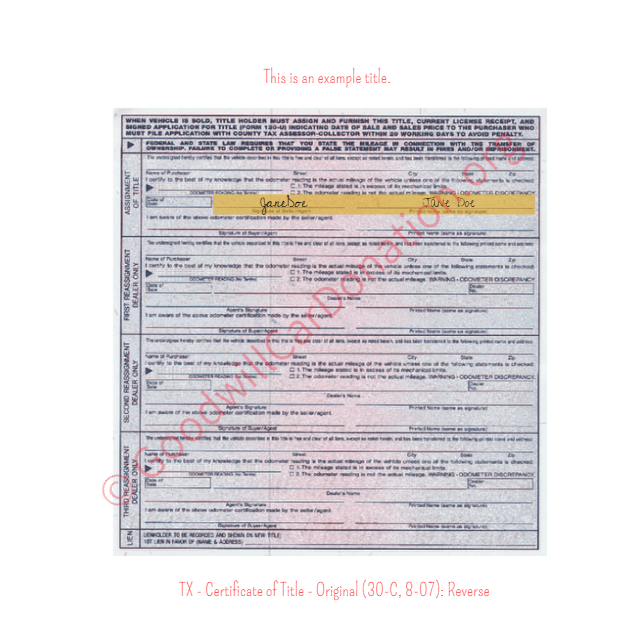
- Obtain a Completed Title: The seller must provide you with the vehicle’s title, properly signed over to you. Ensure the odometer reading is accurately recorded. For newer vehicles, the title will be electronic, and you will receive a transfer notification.
- Bill of Sale (for Private Sales): It is highly recommended to have a detailed Bill of Sale for private transactions. This document should include the date, names and addresses of both buyer and seller, vehicle details (VIN, make, model, year), and the purchase price. This serves as proof of the transaction and can be crucial for tax purposes.
- Texas Vehicle Inspection: Before you can register the vehicle, it must pass a Texas state vehicle inspection. Obtain the inspection certificate from an authorized inspection station. This cost is separate from the title transfer.
- Visit Your County Tax Assessor-Collector’s Office: Gather all necessary documents:
- The properly assigned vehicle title.
- A valid Texas Vehicle Inspection Report (VIR).
- Proof of financial responsibility (auto insurance) valid in Texas.
- Your driver’s license or other acceptable form of identification.
- Bill of Sale (if applicable).
- Any documentation supporting exemptions (e.g., affidavit of inheritance, gift affidavit).
- Pay the Fees and Taxes: At the county office, you will pay:
- The title transfer fee ($28).
- The state and local sales tax on the vehicle’s value (if applicable).
- The vehicle registration fee.
- Any applicable county administrative fees.
- Receive New Title and Registration: Once all fees are paid and documentation is verified, you will receive your new vehicle registration and temporary plates (if applicable). The new title will be mailed to you by the TxDMV in a few weeks.
Minimizing Title Transfer Costs
While many costs are fixed, there are ways to potentially minimize the financial impact of a title transfer.
Understanding Sales Tax Exemptions
The most significant cost-saving measure is taking advantage of sales tax exemptions. If the vehicle is a gift from an immediate family member or an inheritance, ensure you have the correct documentation to claim this exemption. This can save you hundreds or even thousands of dollars.
Negotiating Purchase Price
In private sales, negotiate the purchase price effectively. Remember that the sales tax will be calculated on the higher of the purchase price or the TxDMV’s determined value. While you can’t avoid the TxDMV’s valuation, a lower purchase price, if accepted by the state, directly reduces your tax liability.
Checking Local Tax Rates
If you have flexibility in where you register your vehicle within Texas (though this is usually tied to your residence), be aware that the combined state and local sales tax rate can vary. Some areas might have lower local option taxes, leading to a slightly lower overall sales tax.
Proper Documentation
Having all your paperwork in order and understanding the requirements beforehand can prevent delays and potential re-visits to the county office, which can indirectly save you time and minor inconveniences. Ensure your insurance is up-to-date and meets Texas’s minimum liability requirements.
By thoroughly understanding these costs and following the outlined steps, you can approach your Texas vehicle title transfer with confidence and clarity. The process, while involving several fees, is designed to ensure clear ownership and proper registration for all vehicles operating within the state.
LifeOutOfTheBox is a participant in the Amazon Services LLC Associates Program, an affiliate advertising program designed to provide a means for sites to earn advertising fees by advertising and linking to Amazon.com. Amazon, the Amazon logo, AmazonSupply, and the AmazonSupply logo are trademarks of Amazon.com, Inc. or its affiliates. As an Amazon Associate we earn affiliate commissions from qualifying purchases.