
Establishing a Limited Liability Company (LLC) in Texas is a strategic move for entrepreneurs seeking to protect their personal assets while operating a business. This business structure offers a blend of pass-through taxation, similar to a sole proprietorship or partnership, and the liability protection of a corporation. For those venturing into the vibrant Texas economy, understanding the process is crucial. This guide will walk you through the essential steps to form your LLC in the Lone Star State.
Understanding the LLC Structure in Texas
A Limited Liability Company (LLC) is a hybrid business entity that combines the operational flexibility and tax advantages of a partnership or sole proprietorship with the limited liability of a corporation. This means that the personal assets of the LLC’s owners (known as members) are generally protected from business debts and lawsuits.
Key Advantages of an LLC
- Limited Liability Protection: This is the cornerstone of an LLC. If your business incurs debt or faces a lawsuit, your personal assets—such as your home, car, and savings—are typically shielded.
- Pass-Through Taxation: Unlike traditional corporations, LLCs generally do not pay corporate income taxes. Instead, profits and losses are passed through to the members’ personal income tax returns, avoiding the “double taxation” that can affect C-corporations.
- Flexibility in Management: LLCs can be managed by their members or by designated managers, offering a customizable operational structure.
- Simplicity and Lower Compliance: Compared to corporations, LLCs often have fewer administrative and compliance requirements.
Essential Considerations Before Formation
Before diving into the formation process, it’s important to consider a few key aspects:
- Business Name: Your chosen business name must be unique and distinguishable from other registered businesses in Texas. It must also include a designator such as “LLC,” “L.L.C.,” or “Limited Liability Company.”
- Registered Agent: You will need to designate a registered agent, a person or entity located in Texas who will officially receive legal documents and government correspondence on behalf of your LLC. This agent must have a physical street address in Texas.
- Operating Agreement: While not legally required by the state of Texas for single-member LLCs, an operating agreement is highly recommended for all LLCs. This internal document outlines the ownership structure, member responsibilities, profit and loss distribution, and operational procedures, serving as a crucial roadmap for your business.
Step-by-Step Guide to Forming Your Texas LLC
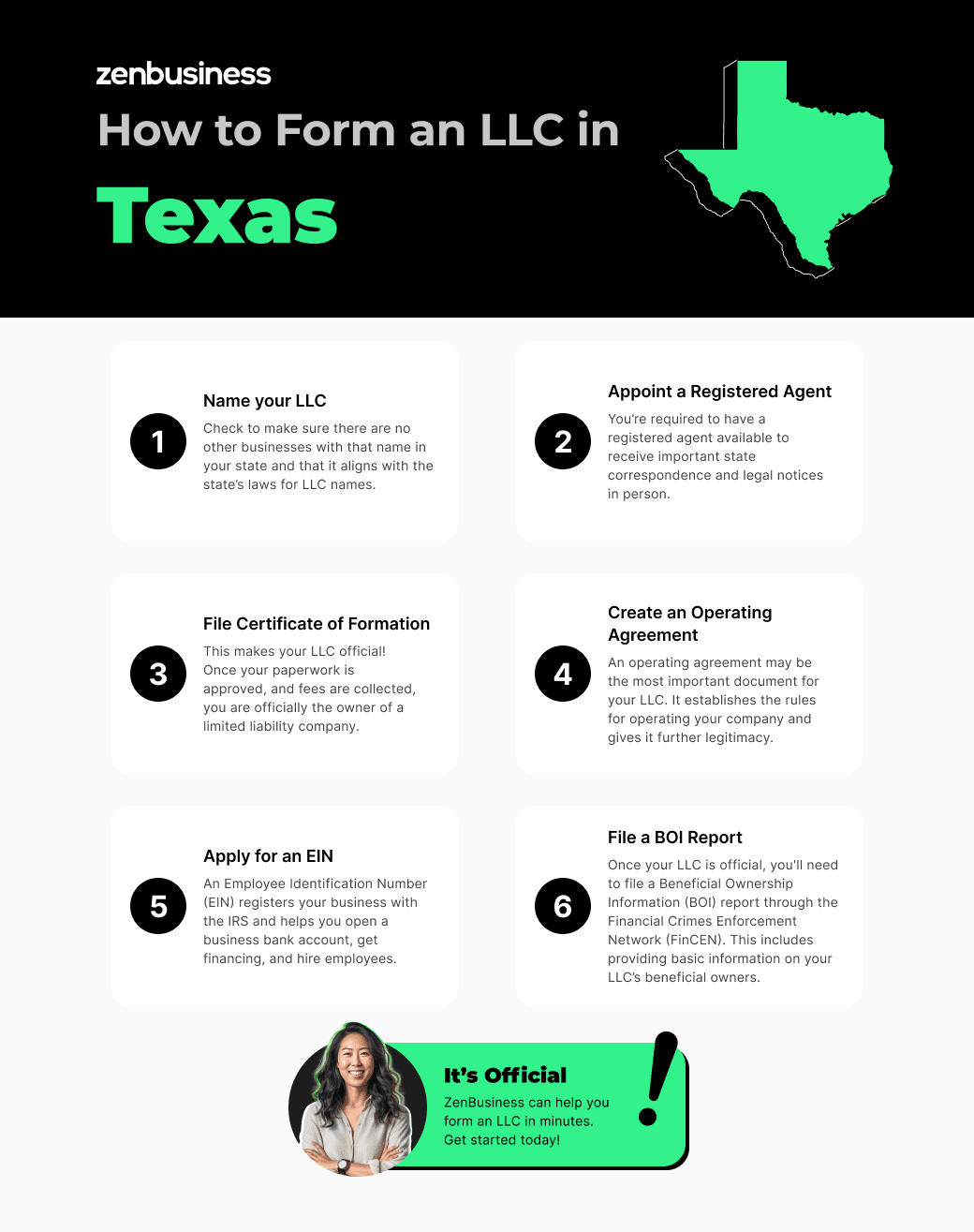
The process of setting up an LLC in Texas involves several distinct steps. Adhering to these will ensure your business is legally compliant and well-established.
1. Choose a Business Name
As mentioned, your business name must be unique. You can check the availability of your desired name on the Texas Secretary of State website. It’s also a good practice to check for domain name availability if you plan to establish an online presence. The name must also contain an approved designator like “LLC,” “L.L.C.,” or “Limited Liability Company.”
2. Appoint a Registered Agent
Your registered agent is a vital point of contact for your LLC. This individual or entity must have a physical street address in Texas (a P.O. Box is not acceptable) and be available during normal business hours to accept service of process, such as lawsuits, or other official government notices. You can act as your own registered agent if you meet these requirements, or you can hire a registered agent service.
3. File the Certificate of Formation
This is the official document that creates your LLC. The Certificate of Formation must be filed with the Texas Secretary of State. The filing fee is currently $300. You can file this document online through the Secretary of State’s website or by mail. The Certificate of Formation requires the following information:
- The name of the LLC.
- The name and physical address of the registered agent.
- The name and address of the organizer (the person filing the certificate).
4. Create an Operating Agreement
While not mandatory for single-member LLCs in Texas, a well-drafted operating agreement is a critical internal document. It details how the LLC will be managed, how profits and losses will be distributed, and the rights and responsibilities of each member. For multi-member LLCs, it is essential for outlining ownership percentages and decision-making processes. An operating agreement helps prevent disputes among members and provides clarity on operational procedures.

5. Obtain an Employer Identification Number (EIN)
An Employer Identification Number (EIN), also known as a Federal Tax Identification Number, is like a Social Security number for your business. You’ll need an EIN if your LLC plans to hire employees, operate as a corporation or partnership for tax purposes, or file certain tax returns. You can apply for an EIN for free on the Internal Revenue Service (IRS) website.
6. Open a Business Bank Account
Keeping your business finances separate from your personal finances is crucial for maintaining your limited liability protection and for accurate bookkeeping. Once your LLC is formed and you have your EIN, open a dedicated business bank account. This will help you track income and expenses more effectively and present a more professional image.
7. Understand Texas Business Taxes
Texas has a unique tax structure. It does not have a state income tax for individuals or corporations. However, businesses in Texas are subject to the Texas franchise tax, a tax on the privilege of doing business in the state. The franchise tax is levied on entities that have a “taxable margin” in Texas. There are exceptions and thresholds that may exempt your LLC from paying this tax, especially for smaller businesses. You will also need to consider federal taxes and any local taxes applicable to your industry and location.
Ongoing Compliance and Best Practices
Forming your LLC is just the beginning. To maintain your business’s legal standing and ensure continued liability protection, ongoing compliance is essential.
Annual Filings and Fees
In Texas, LLCs are required to file an annual franchise tax report with the Texas Comptroller of Public Accounts. Even if your LLC owes no franchise tax, an annual report must be filed to maintain good standing. Failure to file can result in penalties and even administrative dissolution of your LLC.
Maintaining Business Records
Keep meticulous records of all your business transactions, including income, expenses, invoices, and receipts. This is vital for tax purposes and for demonstrating that your LLC is a distinct legal entity from its owners.
Adhering to Your Operating Agreement
Regularly review and adhere to the terms of your operating agreement. This document serves as the governance framework for your LLC, and operating outside of its provisions can potentially weaken your liability protection.
Staying Informed About Legal Changes
Business laws and regulations can change. It’s important to stay informed about any updates that may affect your LLC in Texas. Consulting with a business attorney or an accountant can help you navigate these changes effectively.

When to Seek Professional Assistance
While the steps to form an LLC in Texas are relatively straightforward, seeking professional guidance can ensure accuracy and prevent potential pitfalls.
- Business Attorneys: A business attorney can help you draft a comprehensive operating agreement, advise on legal compliance, and assist with any complex legal matters that may arise.
- Accountants/CPAs: An accountant or Certified Public Accountant (CPA) can provide invaluable advice on tax planning, ensure you are meeting all your tax obligations, and help with bookkeeping and financial reporting.
- Registered Agent Services: If you cannot fulfill the role of registered agent yourself or prefer not to, professional registered agent services can handle this essential function.
By carefully following these steps and maintaining diligent compliance, you can successfully establish and operate a Limited Liability Company in Texas, enjoying the benefits of protected personal assets and a flexible business structure.
LifeOutOfTheBox is a participant in the Amazon Services LLC Associates Program, an affiliate advertising program designed to provide a means for sites to earn advertising fees by advertising and linking to Amazon.com. Amazon, the Amazon logo, AmazonSupply, and the AmazonSupply logo are trademarks of Amazon.com, Inc. or its affiliates. As an Amazon Associate we earn affiliate commissions from qualifying purchases.