
Navigating the complexities of divorce can be an emotionally charged and legally intricate process. For those considering or undergoing a separation in the vast state of Texas, understanding the legal framework surrounding divorce is paramount. A common question that arises is whether Texas operates as a “no-fault” state. This designation significantly impacts how a divorce is filed and adjudicated, often simplifying the process by removing the need to assign blame to either party.
Understanding No-Fault Divorce
The concept of “no-fault” divorce signifies a legal system where neither spouse is required to prove that the other committed a wrongdoing, such as adultery, abandonment, or cruelty, to obtain a divorce. Instead, a party can simply assert that the marriage has irretrievably broken down. This approach was designed to reduce acrimony, protect privacy, and streamline the divorce proceedings.

The Evolution of Divorce Laws
Historically, divorce laws in many jurisdictions, including Texas, were based on fault. This meant that a spouse seeking a divorce had to present evidence and prove specific grounds for the dissolution of the marriage. These grounds were often highly adversarial and could lead to lengthy and expensive court battles. The introduction of no-fault divorce provisions marked a significant shift towards a more conciliatory approach to marital dissolution. This evolution reflects a broader societal change in how marital breakdowns are viewed, moving away from punishment and towards facilitating a resolution with less emotional distress.
Grounds for No-Fault Divorce in Texas
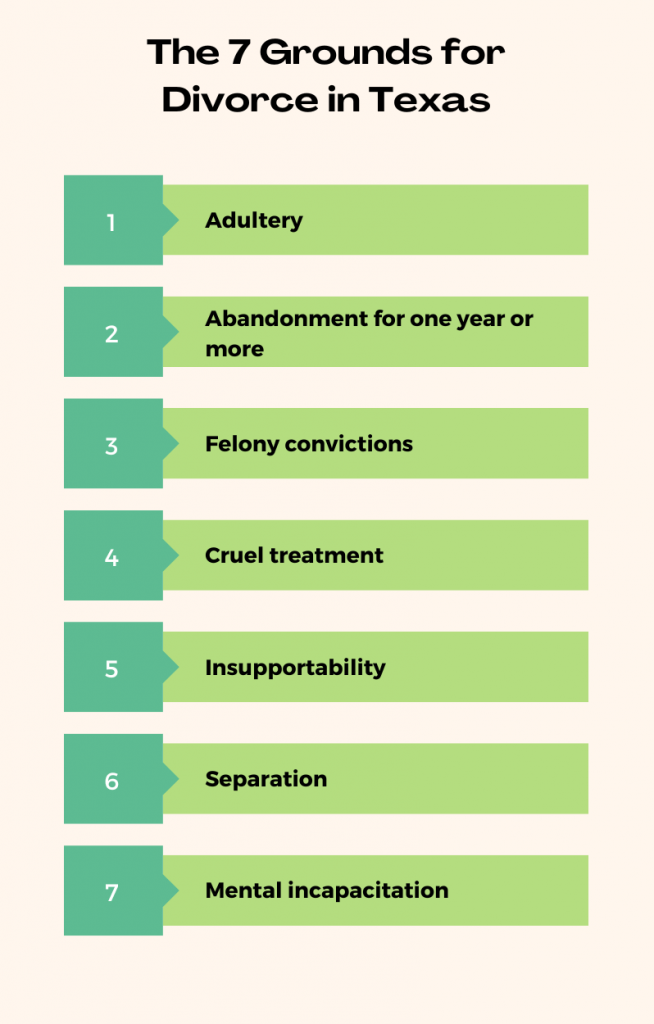
In Texas, the primary ground for a no-fault divorce is “insupportability.” This legal term, as defined by the Texas Family Code, essentially means that the marriage has become so dysfunctional and irreconcilable that it cannot be salvaged. It implies that there is no reasonable expectation of reconciliation between the parties.
To file for divorce on the grounds of insupportability, one spouse simply needs to state in the petition for divorce that the marriage has become insupportable due to discord or conflict of personalities between them that destroys the legitimate ends of the marital relationship and prevents any reasonable expectation of reconciliation. Crucially, the court does not require proof of specific acts of wrongdoing by either spouse. This simplifies the initial filing and can reduce the contentious nature of the proceedings from the outset.
The Impact of “Insensitivity”
While “insupportability” is the cornerstone of no-fault divorce in Texas, it’s important to understand that the legal system still acknowledges that sometimes one party might be more responsible for the marital breakdown than the other. However, in a no-fault context, this acknowledgment doesn’t typically alter the ability to obtain the divorce itself.
The “insensitivity” aspect comes into play more when considering matters of property division, child custody, and spousal support. While fault is not a prerequisite for divorce, evidence of a spouse’s conduct that negatively impacted the marriage can be presented in court and may influence these ancillary issues, particularly if that conduct involved financial misconduct, abuse, or neglect that directly harmed the marital estate or the well-being of children. For instance, if one spouse squandered marital assets on gambling or an affair, this behavior could be considered by the judge when dividing property, even within a no-fault divorce framework.
Filing for Divorce in Texas: The No-Fault Pathway
The process of filing for divorce in Texas, when pursuing a no-fault approach, generally involves several key steps. While legal advice from a qualified attorney is always recommended for specific guidance, understanding the general procedure can be beneficial.
Initial Petition and Service
The divorce process officially begins when one spouse, the petitioner, files an “Original Petition for Divorce” with the appropriate court. This document formally requests the court to grant a divorce and outlines the basic information about the marriage and the parties involved. In a no-fault divorce, the petition will state that the marriage is insupportable due to discord or conflict of personalities.
Following the filing, the other spouse, the respondent, must be officially notified of the lawsuit. This is typically done through a legal process called “service,” where a copy of the petition and a citation are formally delivered to the respondent by a sheriff, constable, or private process server. The respondent then has a specific period to respond to the petition.
The Waiting Period
Texas has a mandatory waiting period for all divorces, regardless of whether they are filed on fault or no-fault grounds. This period is 60 days from the date the Original Petition for Divorce is filed. During this time, the court cannot grant a final divorce decree. This waiting period is intended to provide couples with an opportunity to reconsider their decision and, if they choose, to reconcile.
Reaching an Agreement or Going to Trial
Once the waiting period has passed, the divorce can proceed. Couples have two primary paths:
Uncontested Divorce
If both spouses agree on all the terms of the divorce, including the division of property, child custody arrangements, child support, and spousal support, they can enter into a “Marital Settlement Agreement.” This document is then submitted to the court for approval. An uncontested divorce is generally faster, less expensive, and less emotionally taxing than a contested divorce.
Contested Divorce
If the spouses cannot agree on one or more issues, the divorce becomes contested. In such cases, the court will intervene to make decisions on behalf of the couple. This may involve mediation, where a neutral third party helps facilitate discussions and guide the spouses toward an agreement. If mediation is unsuccessful, the case may proceed to trial, where a judge or jury will hear evidence and make binding rulings on all outstanding issues.
Considerations Beyond “No-Fault”
While Texas being a no-fault state simplifies the grounds for divorce, it’s crucial to recognize that other factors can influence the outcome of the proceedings, especially concerning financial and familial matters.
Property Division
Texas is a community property state. This means that most assets and debts acquired by either spouse during the marriage are considered jointly owned and will be divided “fairly and equitably” in a divorce. While fault is not a direct basis for the divorce itself, a spouse’s conduct that has a significant financial impact, such as wasting community assets or hiding property, can influence how the community estate is divided. A judge may order a disproportionate division of property to account for such actions.
Child Custody and Support
When children are involved, the court’s primary focus is always the best interest of the child. While fault in the marital breakdown is generally not a direct factor in determining custody, evidence of parental unsuitability, such as neglect, abuse, or substance abuse, will be thoroughly considered. The court will establish orders for conservatorship (custody), possession (visitation), and child support based on statutory guidelines and the specific circumstances of the family.
Spousal Maintenance (Alimony)
Spousal maintenance, often referred to as alimony, may be awarded in Texas. The court considers various factors when determining eligibility for spousal maintenance, including the length of the marriage, the financial resources of each spouse, their earning capacity, the standard of living during the marriage, and the ability of the requesting spouse to support themselves. While fault isn’t the primary driver, a spouse’s fault in causing the dissolution of the marriage can be a factor, particularly if it led to financial hardship.
Benefits of a No-Fault Divorce System
The adoption of no-fault divorce provisions in Texas has brought about several significant advantages for divorcing couples.
Reduced Acrimony and Conflict
By removing the need to assign blame, the no-fault system can significantly reduce the level of animosity and conflict between spouses. This is particularly beneficial when children are involved, as it can help foster a more cooperative co-parenting relationship post-divorce. Focusing on the breakdown of the marriage rather than personal grievances can create a less combative atmosphere.
Increased Privacy
In fault-based divorce states, parties often have to air their “dirty laundry” in court, presenting intimate details of their marriage to prove fault. A no-fault system allows couples to maintain greater privacy by not requiring such detailed, often embarrassing, revelations about marital misconduct. This can be a significant relief during an already stressful period.
Efficiency and Cost Savings
Litigating fault-based grounds can be time-consuming and expensive, requiring extensive evidence gathering and witness testimony. A no-fault divorce, especially when uncontested, can expedite the process and reduce legal fees. This financial benefit can be crucial for individuals trying to rebuild their lives after a divorce.

Conclusion: Texas’s No-Fault Divorce Status
In conclusion, yes, Texas is indeed a no-fault divorce state. The primary ground for divorce is “insupportability,” meaning the marriage has irretrievably broken down. This framework allows individuals to seek a divorce without having to prove marital misconduct by their spouse. While this simplifies the initial grounds for divorce, it’s important to remember that issues like property division, child custody, and spousal support will still be addressed by the court, and a spouse’s conduct can influence these determinations. Navigating any divorce requires careful consideration and, ideally, the guidance of an experienced legal professional to ensure all rights and obligations are properly understood and addressed within the legal framework of Texas.
LifeOutOfTheBox is a participant in the Amazon Services LLC Associates Program, an affiliate advertising program designed to provide a means for sites to earn advertising fees by advertising and linking to Amazon.com. Amazon, the Amazon logo, AmazonSupply, and the AmazonSupply logo are trademarks of Amazon.com, Inc. or its affiliates. As an Amazon Associate we earn affiliate commissions from qualifying purchases.