
While LifeOutofTheBox.com typically guides you through exquisite travel destinations, luxurious hotels, and unforgettable tourism experiences, we understand that responsible property management is a crucial aspect of the ‘long-term stay’ facet of accommodation, especially for those venturing into real estate in popular locales. For landlords or property managers in the Golden State, understanding “How To Evict A Tenant In California?” is not just about legal compliance, but also about protecting your investment and ensuring fair practice. This complex process is fraught with specific legal requirements that can significantly impact both landlords and tenants. Whether you own a charming bungalow near the beaches of Santa Monica, a sleek apartment in downtown Los Angeles, or a historic flat overlooking San Francisco Bay, navigating eviction in California demands precision and adherence to the law. This comprehensive guide will navigate the intricate landscape of eviction laws in California, offering clarity on the steps, legal nuances, and essential considerations to undertake this sensitive procedure correctly.
Understanding California Eviction Laws
California’s tenancy laws are among the most tenant-friendly in the United States, designed to protect renters from arbitrary displacement. For landlords, this means the process of evicting a tenant is highly regulated and requires strict adherence to legal protocols. A foundational understanding of these laws is paramount before initiating any eviction proceedings. Failing to follow the correct legal steps can lead to significant delays, financial penalties, and even the dismissal of your case. The state’s primary legislation, the Tenant Protection Act of 2019 (AB 1482), introduced statewide rent caps and “just cause” eviction requirements for many residential properties. This means that a landlord cannot simply decide to evict a tenant; there must be a legally recognized reason, or “just cause,” for the eviction. This law applies to most multi-family properties and single-family homes, with some exceptions for newer constructions, owner-occupied dwellings, and certain types of housing.
Just Cause Evictions
The concept of “just cause” is central to California eviction law, particularly under the Tenant Protection Act of 2019. This means that a landlord must have a legitimate, legally specified reason to terminate a tenancy. Just causes are generally categorized into two types: “at-fault” and “no-fault” evictions.
“At-fault” causes arise from the tenant’s actions or inactions. These typically include:
- Non-payment of rent: This is the most common reason for eviction. Tenants are required to pay rent on time, and failure to do so, after proper notice, constitutes an at-fault violation.
- Breach of a material term of the lease: This covers violations of specific clauses in the rental agreement, such as unauthorized pets, excessive noise complaints, subletting without permission, or damaging the property.
- Nuisance: This refers to behavior that disturbs other tenants or neighbors, significantly interferes with their comfortable enjoyment of their premises, or causes substantial damage to the property.
- Criminal activity on the premises: Engaging in illegal activities on the property is a serious at-fault cause.
- Refusal to allow lawful entry: Tenants must permit landlords lawful entry for repairs, inspections, or showings with proper notice.
- Failure to sign a new lease: If a landlord offers a new lease with substantially the same terms, and the tenant refuses to sign, it can be a cause for eviction.
“No-fault” causes are reasons for eviction that are not due to the tenant’s wrongdoing. In these cases, the landlord is typically required to provide relocation assistance to the tenant. Common no-fault causes include:
- Owner move-in: The landlord (or their immediate family member) intends to move into the unit as their primary residence. Strict rules apply, including timelines for occupancy.
- Withdrawal from the rental market (Ellis Act): The landlord intends to permanently remove the property from the rental market. This is a complex process and often subject to local regulations and substantial relocation payments.
- Extensive remodeling or demolition: The property requires substantial renovation that cannot be reasonably accomplished with the tenant in place, or the landlord plans to demolish the unit.
- Government order to vacate: If a government agency orders the unit vacated due to health and safety concerns.
For all no-fault evictions, landlords are generally required to provide financial relocation assistance to the tenants, typically equivalent to one month’s rent. The amount and specific requirements can vary based on local ordinances.
Local Rent Control Ordinances
While the Tenant Protection Act of 2019 provides statewide guidelines, many cities and counties in California have their own stricter rent control and eviction protection ordinances. These local laws often predate the state law and can impose additional requirements on landlords. Major cities with significant rent control laws include San Francisco, Los Angeles, Oakland, Berkeley, Santa Monica, and San Jose.
These local ordinances can dictate:
- Stricter “just cause” requirements: Some cities may have fewer permissible reasons for eviction or additional conditions for each cause.
- Higher relocation assistance: Local laws may mandate higher relocation payments for no-fault evictions than the state minimum.
- Specific notice periods: While the state typically requires 30- or 60-day notices, some local ordinances might extend these.
- Rent board approval: In some jurisdictions, landlords must seek approval from a local rent board before proceeding with certain evictions.
- Exemptions: Local laws often have their own specific exemptions that may differ from state law, so it’s crucial to check both.
For example, in San Francisco, the San Francisco Rent Ordinance is incredibly comprehensive, covering a wide range of topics from rent increases to eviction reasons and tenant buyouts. In Los Angeles, the Rent Stabilization Ordinance (RSO) governs a significant portion of the city’s rental units, imposing its own set of just cause requirements and relocation assistance mandates.
It is absolutely critical for landlords to research and understand both state and local laws applicable to their specific property location. Consulting with an attorney specializing in landlord-tenant law in your area is highly recommended to ensure compliance and avoid costly mistakes. Ignorance of the law is not a defense, and missteps can lead to significant financial and legal repercussions.
The Eviction Process: A Step-by-Step Guide
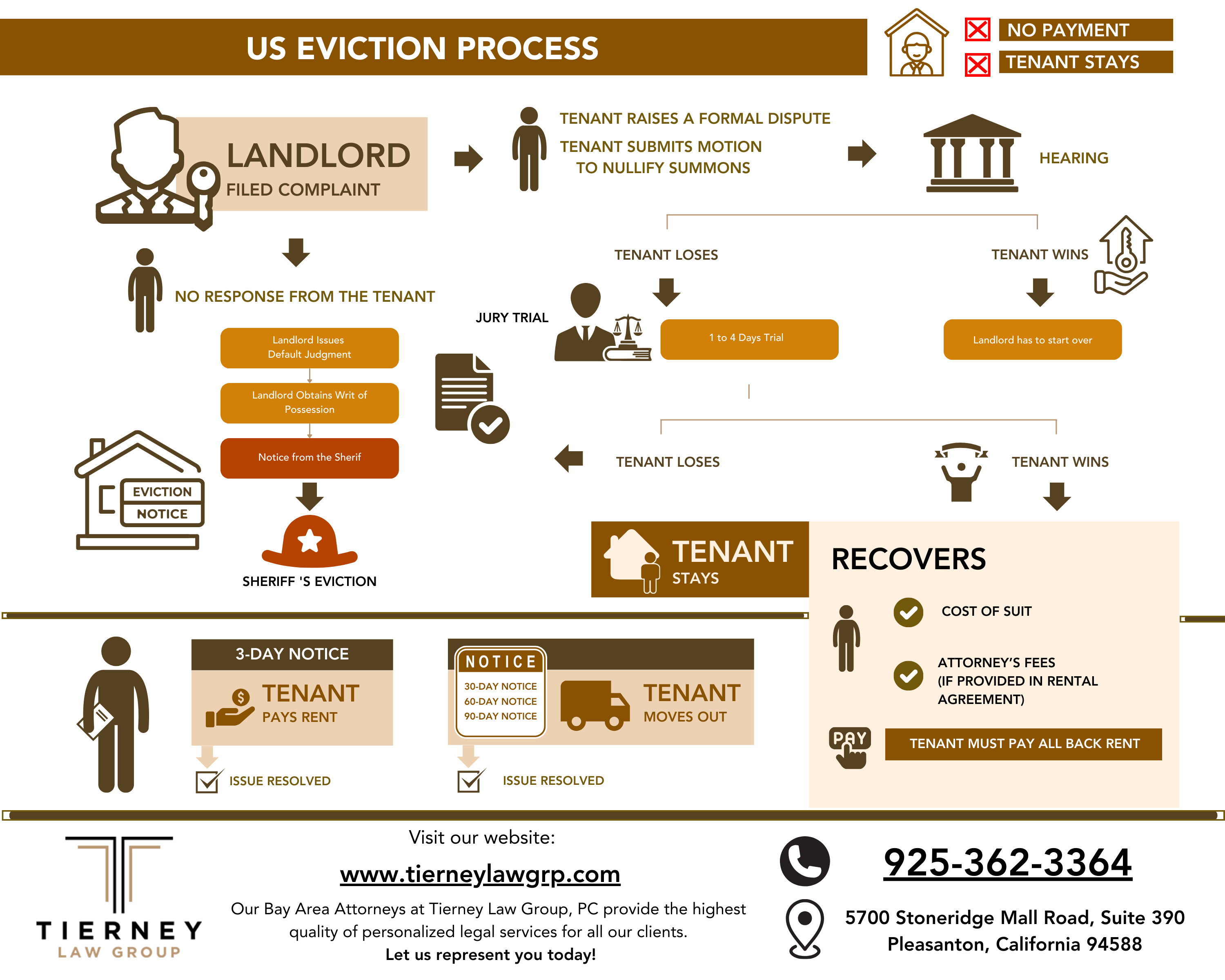
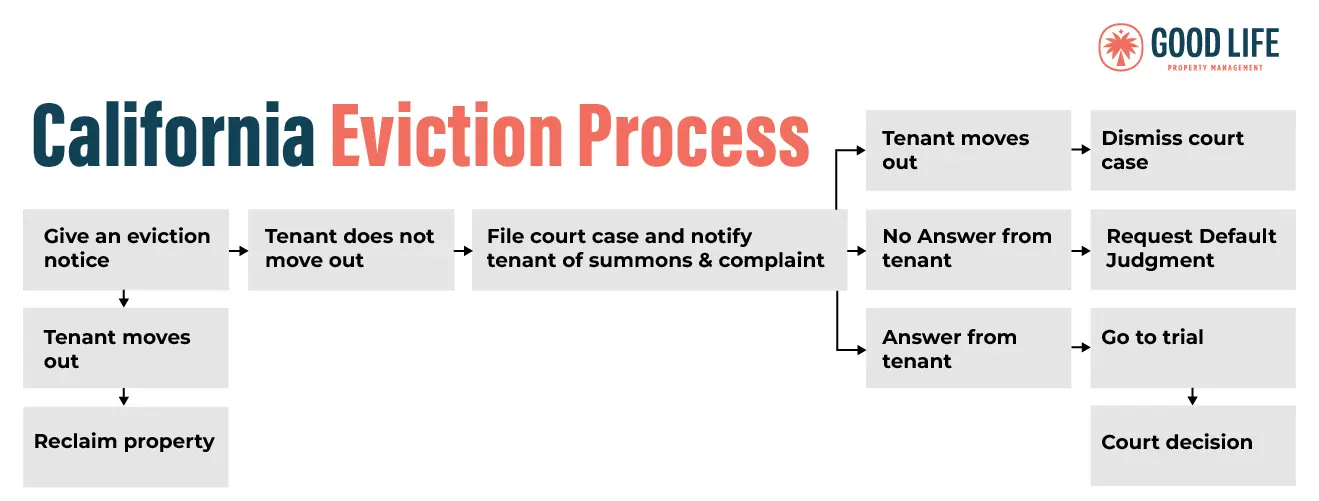
The eviction process in California, legally known as an “Unlawful Detainer” lawsuit, is a structured and highly regulated procedure. It involves several distinct stages, each with specific requirements for timing, documentation, and service of legal papers. Any deviation from these steps can jeopardize the landlord’s case.
Step 1: Serve a Proper Notice to Quit
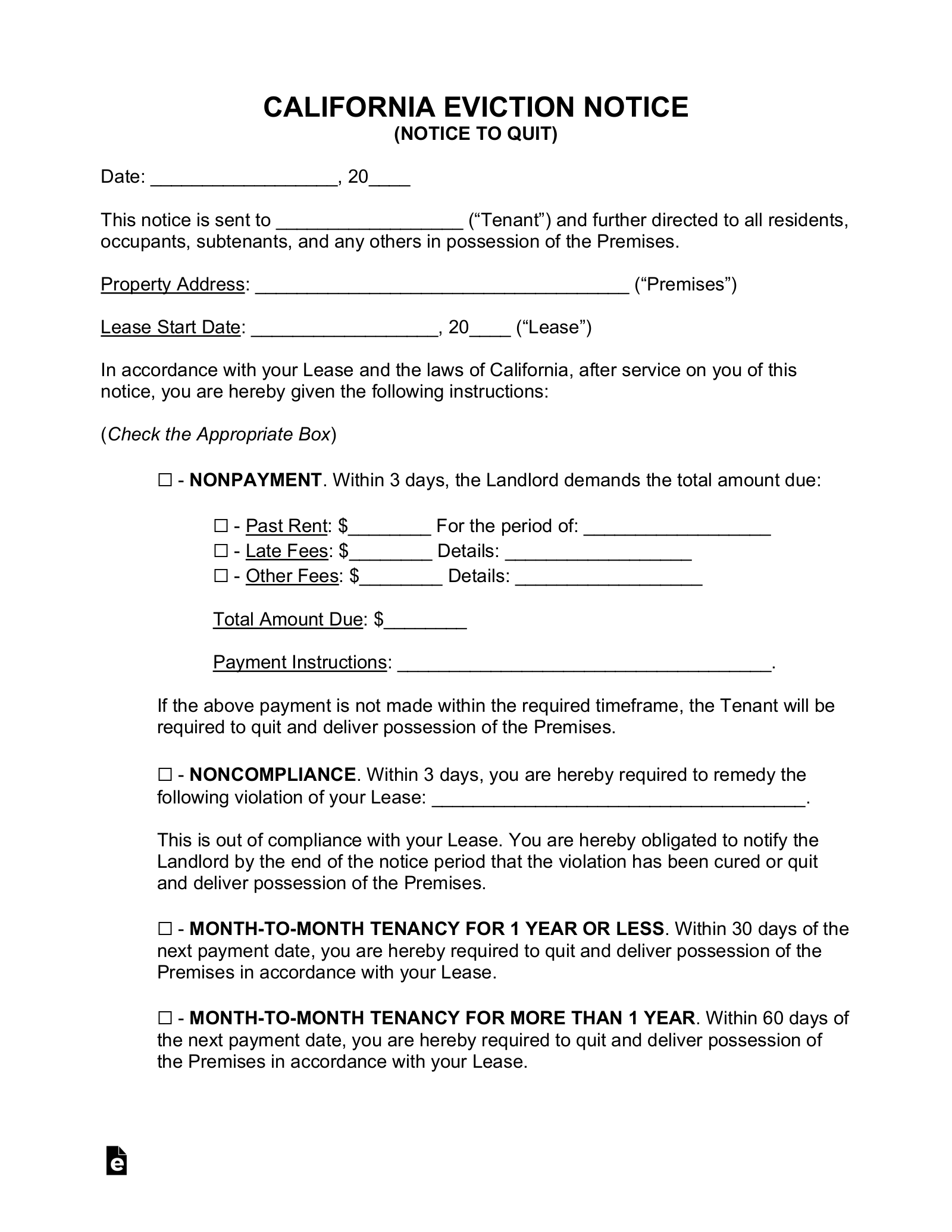
The first and most crucial step in any eviction is to provide the tenant with a formal “Notice to Quit.” This written notice informs the tenant of the reason for the eviction and provides them with a specific timeframe to remedy the violation or vacate the property. The type of notice depends on the reason for the eviction:
- 3-Day Notice to Pay Rent or Quit: This is used when a tenant has failed to pay rent. It demands that the tenant pay the overdue rent within three calendar days or move out. If the tenant pays the full amount within this period, the landlord cannot proceed with the eviction for that specific breach.
- 3-Day Notice to Perform Covenants or Quit: This notice is for lease violations other than non-payment of rent, such as having an unauthorized pet, causing excessive noise, or damaging the property. It demands that the tenant remedies the violation within three calendar days or moves out. If the violation is cured, the eviction cannot proceed. Some lease violations, like illegal activity, may not be curable.
- 30-Day Notice to Quit: This notice is typically used for month-to-month tenancies where the tenant has resided in the property for less than one year, and there is no “just cause” requirement (e.g., for properties exempt from AB 1482). It informs the tenant they must vacate the premises within 30 days.
- 60-Day Notice to Quit: This is required for month-to-month tenancies where the tenant has resided in the property for one year or more, or if a tenant in a fixed-term lease is being evicted at the end of their term without “just cause” (again, only for properties exempt from AB 1482). It provides the tenant with 60 days to vacate.
- 90-Day Notice to Quit: This longer notice is typically required for tenants in subsidized housing or specific circumstances involving foreclosures.
The notice must be properly drafted, clearly stating the reason for eviction, the amount of rent due (if applicable), and the deadline for compliance or vacating. Crucially, the notice must be legally “served” on the tenant. This means it must be delivered in a specific manner, such as personal delivery, substituted service (to another responsible person at the property, followed by mailing), or “post and mail” (affixing it to the property and mailing a copy). Proof of service is essential. The notice period must fully expire before any further legal action can be taken.
Step 2: File an Unlawful Detainer Lawsuit
If the tenant fails to comply with the Notice to Quit within the specified timeframe (e.g., doesn’t pay rent, doesn’t cure the violation, or doesn’t move out), the landlord can then file an Unlawful Detainer lawsuit with the appropriate California Superior Court in the county where the property is located. This is the formal legal process to regain possession of the property.
This step involves:
- Preparing the Summons and Complaint: The “Complaint” is a formal document detailing the reasons for the eviction, the facts of the tenancy, and the landlord’s request for possession of the property and any unpaid rent or damages. The “Summons” officially notifies the tenant that they are being sued and must respond to the court.
- Filing with the Court: These documents are filed with the clerk of the California Superior Court. Filing fees are required.
- Serving the Summons and Complaint: Just like the initial notice, the Summons and Complaint must be formally “served” on the tenant by a neutral third party (e.g., a professional process server or the county Sheriff’s Department), not the landlord. This ensures the tenant has proper legal notification of the lawsuit. The tenant then has a limited time (typically five calendar days after personal service, but longer for other service methods) to file a response with the court.
Step 3: Court Proceedings
Once the Summons and Complaint are served, the case moves into the court phase. The tenant has the right to respond to the lawsuit.
- Tenant’s Response: The tenant can file an “Answer” or another legal response to the Complaint, outlining their defenses against the eviction. Common defenses include improper notice, issues with the premises (e.g., uninhabitable conditions, landlord retaliation), or disputing the landlord’s claims. If the tenant does not file a response within the legal timeframe, the landlord can request a “default judgment.”
- Trial: If the tenant files an Answer, the case will likely proceed to trial. Unlawful Detainer cases are often expedited by the courts. Both landlord and tenant will present their evidence, including lease agreements, notices, payment records, communication logs, photos, and witness testimony. A judge (or occasionally a jury, though rare in these cases) will hear the arguments and decide whether the landlord is entitled to possession of the property.
- Settlement: Many Unlawful Detainer cases are resolved through settlement negotiations before a full trial. Landlords and tenants may agree to terms, such as the tenant vacating by a certain date in exchange for a waiver of unpaid rent or a partial refund of the security deposit.
Step 4: Obtaining a Judgment and Writ of Possession
If the landlord prevails in court (either through a default judgment or after a trial), the judge will issue a “Judgment of Possession.” This document formally declares the landlord’s right to regain possession of the property.
However, the landlord cannot physically remove the tenant themselves. The next step is to obtain a “Writ of Possession” from the court.
- Writ of Possession: This document is an order directed to the county Sheriff’s Department, authorizing them to physically remove the tenant from the property.
- Sheriff’s Enforcement: The landlord delivers the Writ of Possession to the Sheriff’s Department for enforcement. The Sheriff will then serve the tenant with a “Notice to Vacate” (usually a 5-day notice). If the tenant does not move out within that timeframe, the Sheriff will return to the property and physically evict the tenant and their belongings, changing the locks to restore possession to the landlord.
It’s crucial to emphasize that landlords must never resort to “self-help” eviction tactics, such as changing locks, shutting off utilities, or removing a tenant’s belongings. These actions are illegal in California and can result in severe penalties for the landlord. The entire process must be conducted through the courts and enforced by the Sheriff.
Key Considerations for Landlords
Navigating the eviction process in California is not merely a procedural checklist; it involves strategic considerations that can significantly impact the outcome, cost, and timeline. Landlords must approach this process with diligence, foresight, and a clear understanding of the potential complexities.
Legal Assistance and Documentation
Given the intricate and often unforgiving nature of California’s landlord-tenant laws, retaining competent legal counsel is perhaps the most critical consideration. An attorney specializing in Unlawful Detainer actions can:
- Ensure compliance: Verify that all notices are correctly drafted and served, and that the eviction has proper “just cause” under state and local laws.
- Navigate court procedures: Guide the landlord through the complex filing processes, court appearances, and adherence to judicial timelines.
- Represent in court: Advocate on the landlord’s behalf during settlement discussions or trial, presenting evidence and responding to tenant defenses effectively.
- Minimize risks: Help avoid common pitfalls that could lead to delays, case dismissal, or even counter-lawsuits from tenants.
Beyond legal representation, meticulous documentation is your strongest ally. Landlords should maintain thorough records from the inception of the tenancy. This includes:
- Lease agreements: The fully executed lease, including any amendments or addendums.
- Move-in/move-out checklists: Documenting the property’s condition.
- Rent payment records: Clear ledgers showing all payments received and any outstanding balances.
- Communication logs: Detailed records of all interactions with the tenant, including dates, times, methods (email, text, phone calls, letters), and summaries of discussions. This is especially vital for documenting lease violations or responses to maintenance requests.
- Notices served: Copies of all Notices to Quit, along with proof of service.
- Maintenance requests and repairs: Records of all requests, dates of repair, and invoices from contractors.
- Photographs/videos: Documenting property condition before and after tenancy, and any damage.
This comprehensive documentation serves as critical evidence in court, supporting the landlord’s claims and refuting potential tenant defenses.
Avoiding Self-Help Evictions
As highlighted previously, self-help evictions are strictly illegal in California. This refers to any action taken by a landlord to forcibly remove a tenant or make the property uninhabitable without going through the legal eviction process. Examples include:
- Changing locks: Replacing locks or otherwise preventing the tenant from accessing the property.
- Shutting off utilities: Disconnecting electricity, water, gas, or other essential services.
- Removing tenant’s belongings: Taking a tenant’s possessions from the unit.
- Threats or harassment: Intimidating or pressuring a tenant to leave.
The consequences for landlords engaging in self-help evictions can be severe. Tenants can sue landlords for actual damages, statutory penalties (which can be substantial), attorney’s fees, and even punitive damages. Such actions can also result in criminal charges in some instances. The only legal path to remove a tenant is through an Unlawful Detainer lawsuit, culminating in a Sheriff’s Department-enforced Writ of Possession.
Financial Implications and Timelines
Eviction is a costly and time-consuming process. Landlords should be prepared for significant financial outlays and understand that it can take several weeks or even months.
- Legal Fees: Attorney fees are often the largest expense, especially if the case goes to trial. These can range from a few thousand dollars for a simple default case to tens of thousands for contested matters.
- Court Filing Fees: Initial filing fees for an Unlawful Detainer complaint are typically a few hundred dollars. There may be additional fees for motions or other court actions.
- Process Server Fees: Hiring a professional to serve notices and legal documents is an added cost, usually ranging from $75 to $200 per service.
- Lost Rent: This is often the most substantial financial impact. During the eviction process, the tenant may continue to reside in the property without paying rent. This period can extend for weeks or months, resulting in significant income loss. While the landlord can sue for back rent as part of the Unlawful Detainer, collecting it can be challenging, especially if the tenant has limited assets.
- Relocation Assistance: For no-fault evictions under AB 1482 or local ordinances, landlords are legally required to provide relocation assistance, typically one month’s rent or more.
- Property Damages and Turnover Costs: After an eviction, there may be costs associated with cleaning, repairs, and preparing the unit for a new tenant.
The timeline for an eviction in California can vary significantly depending on the circumstances, court backlog, and whether the tenant contests the eviction. A straightforward, uncontested eviction might take 30-45 days from the notice period’s expiration to Sheriff lock-out. However, a contested eviction with tenant defenses, settlement negotiations, or court delays can easily extend to 2-4 months, or even longer in some jurisdictions. This extended timeline underscores the importance of prompt action and proper legal guidance from the very beginning.
Navigating Tenant Rights and Protections
While landlords have the right to protect their property and enforce lease agreements, tenants in California are afforded extensive legal protections. Understanding these rights and the common defenses tenants may raise is crucial for landlords to proceed legally and effectively.
Tenant Defenses
Tenants facing eviction can raise various legal defenses in court, which, if successful, can lead to the dismissal of the eviction case, significant delays, or even the landlord being ordered to pay the tenant’s legal fees. Common tenant defenses include:
- Improper Notice: If the landlord failed to properly draft or serve the Notice to Quit (e.g., incorrect dates, wrong rent amount, improper service method), the entire eviction case can be dismissed.
- Retaliation: Tenants may argue that the eviction is in retaliation for them exercising a legal right, such as reporting unsafe living conditions, complaining about a lease violation, or joining a tenant’s union. California law prohibits retaliatory evictions, typically for 180 days after a tenant’s protected action.
- Uninhabitable Conditions (“Breach of Implied Warranty of Habitability”): Tenants can argue that the landlord failed to maintain the property in a safe and habitable condition, and thus they were justified in withholding rent (after proper notice to the landlord) or breaking the lease. This includes issues like lack of heat, running water, pest infestations, or structural problems.
- Discrimination: If the tenant believes the eviction is based on their race, religion, national origin, gender, sexual orientation, familial status, disability, or other protected characteristics, they can raise a discrimination defense under fair housing laws.
- Waiver: If a landlord consistently accepted late rent payments without protest, a tenant might argue the landlord “waived” their right to enforce strict payment deadlines.
- Payment or Cure: The tenant may claim they paid the outstanding rent or cured the lease violation within the notice period, thus invalidating the eviction.
- Lack of Just Cause: For properties subject to “just cause” eviction laws, a tenant can argue that the landlord does not have a legally valid reason for the eviction.
- Failure to Provide Relocation Assistance: In no-fault evictions, if the landlord fails to offer the legally required relocation assistance, the eviction can be stopped.
Landlords must be prepared to counter these defenses with robust documentation and legal arguments.
Fair Housing Laws
Beyond state and local eviction statutes, landlords must always comply with federal and state fair housing laws. The federal Fair Housing Act, enforced by the U.S. Department of Housing and Urban Development (HUD), prohibits discrimination based on race, color, national origin, religion, sex (including gender identity and sexual orientation), familial status, and disability. California’s Fair Employment and Housing Act (FEHA) expands these protections to include additional categories such as marital status, ancestry, genetic information, medical condition, and veteran or military status.
Any eviction that is found to be discriminatory is illegal and can lead to severe penalties, including fines, damages, and legal fees. Landlords must ensure that all their actions, from tenant screening to lease enforcement and eviction, are applied consistently and without prejudice against any protected class. This underscores the need for clear, objective criteria and professional legal guidance throughout the tenancy lifecycle.
Evicting a tenant in California is a challenging, expensive, and legally complex process that demands meticulous attention to detail and strict adherence to the law. For property owners, whether managing a long-term rental in a bustling city like San Diego or a serene home in the Napa Valley, understanding the “just cause” requirements, precise notice procedures, and the step-by-step Unlawful Detainer lawsuit is paramount. Given the significant tenant protections and the potential for severe penalties for missteps, consulting with an experienced California landlord-tenant attorney is not just advisable, but often essential. By prioritizing legal compliance, maintaining thorough documentation, and avoiding illegal self-help tactics, landlords can navigate this difficult process as smoothly and lawfully as possible, ultimately protecting their investment and maintaining the integrity of their long-term accommodation ventures.
LifeOutOfTheBox is a participant in the Amazon Services LLC Associates Program, an affiliate advertising program designed to provide a means for sites to earn advertising fees by advertising and linking to Amazon.com. Amazon, the Amazon logo, AmazonSupply, and the AmazonSupply logo are trademarks of Amazon.com, Inc. or its affiliates. As an Amazon Associate we earn affiliate commissions from qualifying purchases.