
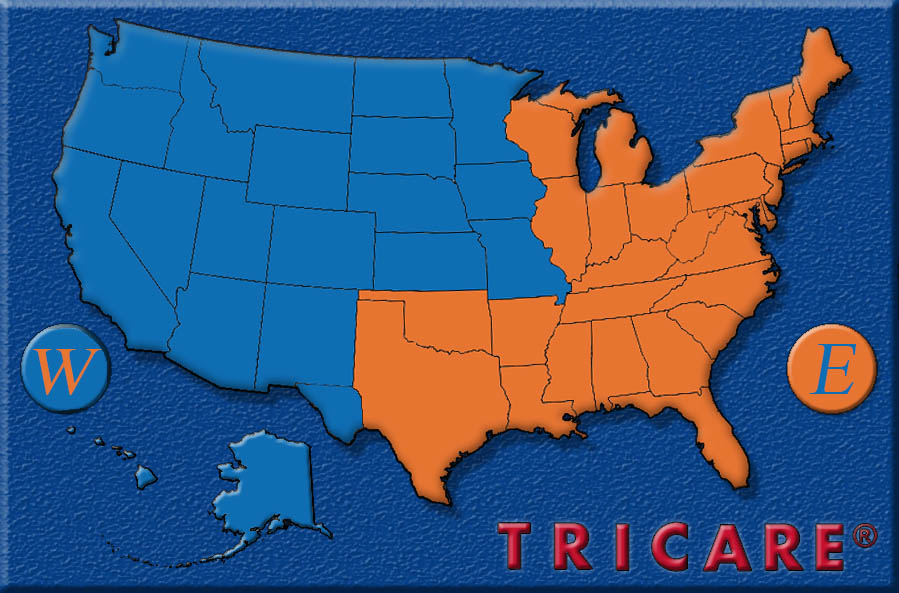
Navigating the intricacies of military healthcare can be a complex undertaking, particularly for service members and their families stationed in vast and diverse states like Texas. One common point of inquiry revolves around the regional coverage of Tricare, the health program for uniformed service members, retirees, and their families. Specifically, the question arises: Is Texas under Tricare East or Tricare West? The answer, while seemingly straightforward, is nuanced and depends on specific geographical boundaries and the evolution of the Tricare program.
Understanding Tricare Regional Contracts
Historically, Tricare operated under a regional management structure designed to bring more civilian healthcare expertise and efficiency to military families. These regions, Tricare East and Tricare West, were managed by separate contractors responsible for overseeing a defined geographic area. This regionalization aimed to simplify access to care, improve network availability, and enhance customer service for beneficiaries.

The Evolution of Tricare Management
The landscape of Tricare management has undergone significant transformations. In recent years, the Department of Defense initiated a consolidation of these regional contracts. The goal was to streamline operations, reduce administrative overhead, and create a more unified Tricare experience across the nation. This consolidation has led to a unified contract for the entire United States, effectively merging the previous East and West regions into a single, nationwide service area.
The Impact on Texas Beneficiaries
For residents of Texas, this consolidation means that the distinction between Tricare East and Tricare West is no longer relevant in terms of which regional contractor manages their care. Instead, all Tricare beneficiaries, regardless of their location within Texas, are now served under a single, comprehensive national contract.
This shift simplifies the process of understanding who to contact for enrollment, claims, and other healthcare-related inquiries. Previously, beneficiaries in different parts of Texas might have dealt with different customer service centers or administrative entities. Now, there is a unified point of contact for all Tricare operations within the state.
Geographic Considerations and Tricare Operations
While the regional contracts have been unified, geographic considerations still play a role in how Tricare operates within Texas. The sheer size of the state means that access to military treatment facilities (MTFs) and civilian provider networks can vary significantly depending on where a beneficiary resides.
Major Military Installations in Texas
Texas is home to a substantial number of military installations, including:
- Fort Hood (now Fort Cavazos): A major Army installation, providing extensive medical services to its personnel and their families.
- Lackland Air Force Base, JBSA Randolph, and JBSA-Fort Sam Houston (part of Joint Base San Antonio): These bases offer comprehensive healthcare facilities for Air Force and Army personnel.
- Naval Air Station Corpus Christi and Naval Air Station Kingsville: Serving Navy personnel and their families in the South Texas region.
- Ellington Field Joint Reserve Base in Houston: Supporting various Reserve components and offering medical services.
Beneficiaries living in close proximity to these installations often have direct access to MTFs, which are usually a primary source of care for active-duty service members and their families.
Civilian Provider Networks
For those residing further from MTFs or requiring specialized care not available at a military facility, Tricare beneficiaries rely on the civilian provider network. The national contract ensures that a network of civilian doctors, hospitals, and other healthcare providers is available to Tricare eligible individuals. The quality and availability of this network can still be influenced by local demographics and the concentration of healthcare resources in different parts of Texas.
For instance, beneficiaries in major metropolitan areas like Houston, Dallas-Fort Worth, San Antonio, and El Paso generally have a wider selection of civilian providers and specialists compared to those in more rural or remote areas. Tricare aims to ensure adequate network coverage across all geographic areas, but it’s always advisable for beneficiaries to verify provider network status and referral requirements.
Navigating Tricare Benefits in Texas
Understanding the specific Tricare plan and its associated benefits is crucial for all beneficiaries in Texas. The plan you are enrolled in dictates your cost-sharing, network access, and referral requirements.
Tricare Prime vs. Tricare Select
The two most common Tricare plans are Tricare Prime and Tricare Select.
-
Tricare Prime: This is a managed care option, similar to an HMO. Beneficiaries are assigned a Primary Care Manager (PCM) who is responsible for coordinating their care. Referrals are generally required for specialist visits. Tricare Prime offers lower out-of-pocket costs but requires beneficiaries to seek care primarily from network providers and MTFs. Enrollment in Tricare Prime in Texas is typically tied to geographic areas with adequate MTF availability or a robust civilian network managed by the contractor.
-
Tricare Select: This is a preferred provider organization (PPO)-like option. Beneficiaries can see any civilian provider, but using network providers generally results in lower costs. Referrals are not required for specialist visits, but you may need pre-authorization for certain services. Tricare Select offers more flexibility in provider choice but typically involves higher cost-sharing than Tricare Prime.
Key Resources for Texas Beneficiaries
Given the unified national contract, the primary resource for all Tricare beneficiaries in Texas is the official Tricare website. Here, individuals can:
- Find a Provider: Search for network providers and MTFs in their specific area.
- Enroll or Change Plans: Manage their Tricare enrollment and make necessary adjustments.
- Access Forms and Publications: Download important documents, such as enrollment forms, benefit summaries, and handbooks.
- Contact Customer Service: Reach out to Tricare representatives for assistance with claims, eligibility, or any other inquiries.
It is also advisable for beneficiaries to stay informed about any updates or changes to the Tricare program, as these can impact coverage and access to care. Local military installations often provide Tricare benefits counselors who can offer personalized guidance and support to service members and their families in Texas.

Conclusion: A Unified Tricare Experience in Texas
In conclusion, the question of whether Texas falls under Tricare East or West is now a matter of historical context rather than current operational reality. Due to the consolidation of Tricare regional contracts, all Texas beneficiaries are covered under a single, nationwide contract. This unification simplifies administrative processes and ensures a consistent approach to healthcare delivery across the state.
While the regional designation has dissolved, geographic factors, the presence of military treatment facilities, and the availability of civilian provider networks continue to influence the healthcare experience for Tricare beneficiaries in Texas. By understanding their specific Tricare plan and utilizing the official Tricare resources, individuals can effectively navigate their healthcare benefits and receive the quality care they deserve. The focus for Texas residents is now on engaging with the unified Tricare system to ensure seamless access to medical services, whether through military facilities or the extensive civilian network available throughout the Lone Star State.
LifeOutOfTheBox is a participant in the Amazon Services LLC Associates Program, an affiliate advertising program designed to provide a means for sites to earn advertising fees by advertising and linking to Amazon.com. Amazon, the Amazon logo, AmazonSupply, and the AmazonSupply logo are trademarks of Amazon.com, Inc. or its affiliates. As an Amazon Associate we earn affiliate commissions from qualifying purchases.