
The ownership of a prominent newspaper like The Chicago Tribune is a complex and evolving narrative, deeply intertwined with the business of media, investment, and the changing landscape of journalism. Understanding who holds the reins of such an influential voice provides insight into its editorial direction, financial stability, and its role within the broader context of public discourse. While the question of ownership might seem straightforward, the reality often involves layers of corporate structures, private equity, and strategic acquisitions that shape the future of the publication. This exploration delves into the historical and contemporary ownership of The Chicago Tribune, examining the forces that have influenced its journey and continue to define its present and future.

A Legacy of Ownership: From Knight-Ridder to Tribune Publishing
The story of The Chicago Tribune‘s ownership is a testament to the dynamic nature of the newspaper industry. For decades, the paper was a cornerstone of Knight Newspapers, later Knight-Ridder, a media conglomerate known for its commitment to journalistic excellence. This era was characterized by strong local reporting and a significant national presence. However, the media industry began to undergo seismic shifts with the rise of digital technologies and changing advertising models, leading to consolidation and restructuring.
The Rise and Fall of Tribune Publishing
In 2014, The Chicago Tribune, along with several other major newspapers, was spun off from the broader Tribune Company to form Tribune Publishing. This move was intended to create a more focused entity dedicated to the newspaper business. Tribune Publishing became a publicly traded company, meaning its ownership was dispersed among shareholders. During this period, the company faced ongoing financial pressures, typical of the industry, leading to various strategic reviews and attempts to streamline operations and boost profitability. The focus on efficiency and cost-cutting measures, while necessary for survival in a challenging market, inevitably sparked discussions about the paper’s journalistic mission and its ability to serve its community with the same depth and breadth as in previous decades. The period under Tribune Publishing was marked by a search for a sustainable business model that could support high-quality journalism in the digital age.
Alden Global Capital’s Ascendance and the “Hedge Fund” Era

A significant turning point in the ownership of The Chicago Tribune came with the increasing involvement of Alden Global Capital. This hedge fund began acquiring significant stakes in Tribune Publishing, gradually becoming its largest shareholder. Alden Global Capital gained a reputation in the media industry for its aggressive approach to cost management and its focus on profitability, often through significant layoffs and the consolidation of operations across its portfolio of newspapers, which came to be known collectively as the “Digital First Media” group at one point.
The Impact of Hedge Fund Ownership
The acquisition of a controlling stake by Alden Global Capital led to widespread concern among journalists, media observers, and the public. Critics argued that hedge fund ownership, driven by short-term financial gains, could undermine the long-term viability of local journalism. The emphasis on cutting costs was often seen as directly conflicting with the need to invest in reporters, editors, and investigative resources that are crucial for producing quality news. Numerous articles and reports highlighted the substantial layoffs that occurred at newspapers under Alden’s control, leading to fears of a hollowed-out newsroom and a diminished capacity for in-depth reporting. For The Chicago Tribune, this era brought a period of intense scrutiny regarding its editorial independence and its ability to fulfill its civic role as a trusted source of information for its readership. The financial strategy of Alden Global Capital, while aimed at profitability, raised fundamental questions about the future of the traditional newspaper business model and its capacity to support robust journalistic endeavors.
Nexstar Media Group’s Acquisition and the Path Forward
The ownership saga took another dramatic turn with the acquisition of Tribune Publishing by Nexstar Media Group in 2021. Nexstar, a major owner of local television stations across the United States, expanded its media empire by acquiring the newspaper company. This move represented a significant diversification for Nexstar, bringing it into the print and digital news realm in a substantial way.
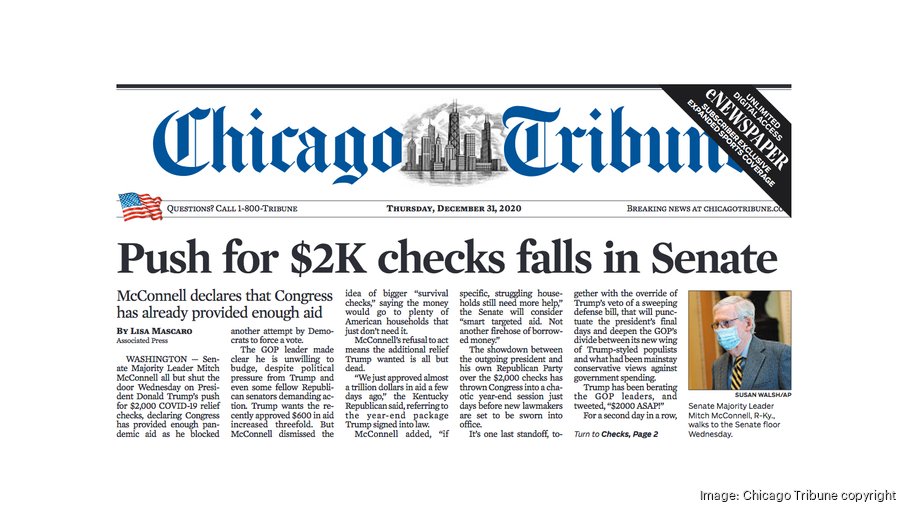
Strategic Synergies and Future Implications
The acquisition by Nexstar introduced a new set of strategic considerations for The Chicago Tribune. While Nexstar’s primary focus has historically been local television broadcasting, the integration of a major newspaper like The Chicago Tribune into its portfolio suggested potential synergies between print and broadcast media. Questions immediately arose about how these two different forms of media would be managed under a single corporate umbrella. Would there be an effort to combine resources, share content, or leverage existing distribution channels?
The implications for the newspaper itself are multifaceted. On one hand, Nexstar’s financial resources could potentially provide a more stable foundation for The Chicago Tribune than it experienced under the intense cost-cutting pressures of hedge fund ownership. The company has stated its commitment to investing in local news, which could bode well for the newspaper’s newsroom. However, the ultimate success of this integration hinges on Nexstar’s ability to develop a viable long-term strategy that supports journalistic integrity and innovation. The transition marks a new chapter, with the hope that the legacy of The Chicago Tribune can be preserved and strengthened within this new corporate structure, ensuring its continued relevance as a vital source of news and information for the Chicago metropolitan area and beyond. The ongoing evolution of its ownership underscores the persistent challenges and the enduring importance of newspapers in the modern media ecosystem.
LifeOutOfTheBox is a participant in the Amazon Services LLC Associates Program, an affiliate advertising program designed to provide a means for sites to earn advertising fees by advertising and linking to Amazon.com. Amazon, the Amazon logo, AmazonSupply, and the AmazonSupply logo are trademarks of Amazon.com, Inc. or its affiliates. As an Amazon Associate we earn affiliate commissions from qualifying purchases.