
The allure of California is undeniable. From the sun-kissed beaches of San Diego to the majestic redwoods of the north, the vibrant cultural tapestry of Los Angeles to the iconic landmarks of San Francisco, the Golden State beckons with unparalleled experiences. While public transportation exists in major metropolitan areas, truly immersing yourself in the diverse landscapes and hidden gems of this vast state requires a sense of freedom that only driving can provide. Whether you dream of a leisurely cruise down the Pacific Coast Highway, an adventurous road trip to Yosemite National Park, or simply the convenience of exploring local culture and attractions, obtaining a driver’s permit is your essential first step. This guide will walk you through the process, setting you on the path to unlocking California’s full potential for travel, tourism, and an unforgettable lifestyle.
Navigating the Golden State’s Roads: Why a Permit Matters
For many, the dream of living, working, or simply experiencing California hinges on mobility. While ride-sharing services and limited public transit can get you around urban centers, the true essence of Californian exploration lies beyond these confines. A driver’s permit isn’t just a piece of paper; it’s a gateway to discovery, offering the initial legal framework to learn to drive and eventually command your own vehicle through the state’s breathtaking scenery. This foundational step is critical for anyone planning extended stays, aspiring to a Californian lifestyle, or simply looking to make the most of their visit by having the flexibility to travel on their own terms.
The Call of California’s Open Road
Imagine the freedom: spontaneous detours to charming coastal towns, venturing into the vast wilderness of a national park, or effortlessly reaching world-renowned attractions like Disneyland in Anaheim or the glittering boulevards of Hollywood. California’s extensive network of scenic routes and well-maintained highways makes driving an integral part of the travel experience. From the dramatic cliffs of Big Sur to the serene vineyards of Napa Valley, countless destinations await those with the means to reach them. Without a driver’s permit and eventually a full license, many of these enriching travel experiences remain out of reach, limiting your ability to delve deep into the local culture, visit historic landmarks, or simply find that perfect, secluded spot that defines an authentic Californian adventure. Embracing the open road is not merely about transportation; it’s about embracing a lifestyle of exploration and independence, central to making the most of your time in this diverse state.
Understanding the California DMV
The cornerstone of the driving permit process in California is the California Department of Motor Vehicles (DMV). This state agency is responsible for issuing driver’s licenses, vehicle registrations, and enforcing various motor vehicle laws. Navigating the DMV system can sometimes feel daunting, but understanding its role and requirements simplifies the process considerably. The DMV sets the standards for driver competency, administers tests, and ensures that all drivers on California roads meet specific safety and legal qualifications. From your initial application for a learner’s permit to your final driving test, every step will involve interaction with the DMV, either online, by mail, or in person at one of their many DMV office locations scattered across the state. Familiarizing yourself with their website and guidelines is paramount to a smooth and successful journey towards obtaining your permit and ultimately, your California driver’s license. They are the gatekeepers to your driving freedom, and their rules are designed to ensure road safety for everyone.
The Essential Steps to Your California Driver’s Permit
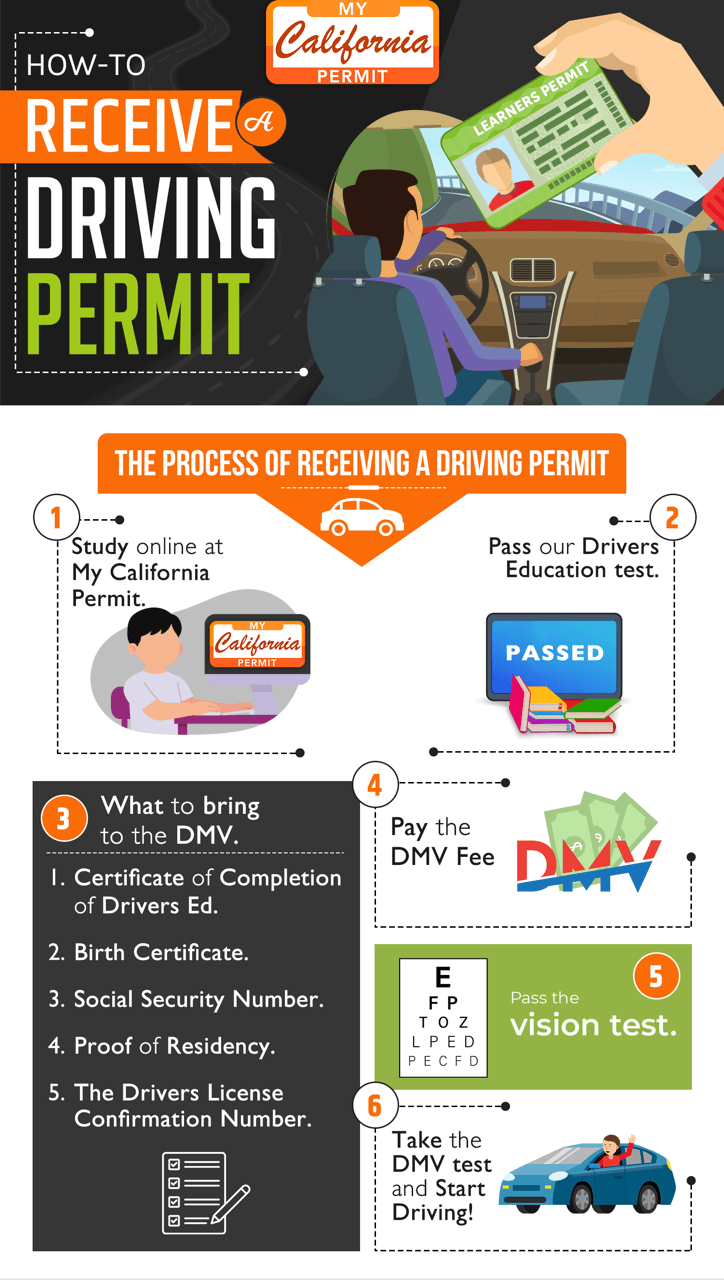
Embarking on the journey to obtain a California driver’s permit involves a series of clear, sequential steps designed to ensure that all applicants are prepared and capable. This process, while seemingly bureaucratic, is structured to educate future drivers on the state’s unique traffic laws, road signs, and safe driving practices. Each stage is crucial, from gathering your personal documents to mastering the written knowledge test, and understanding these requirements beforehand will significantly streamline your application. Being organized and informed is key to a hassle-free experience at the DMV and will accelerate your progress towards getting behind the wheel.
Eligibility Requirements: Who Can Apply?
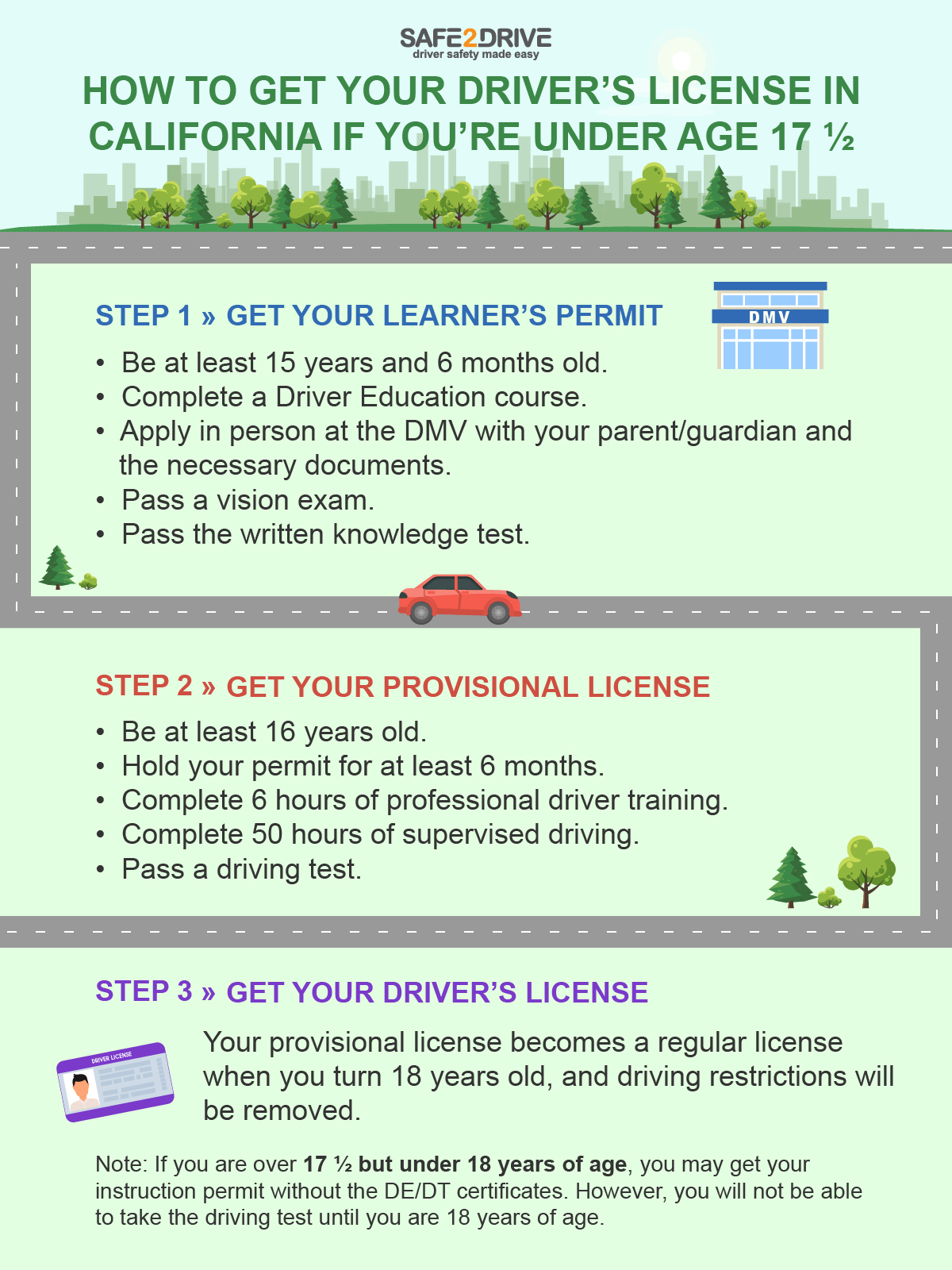
Before you even step foot into a DMV office, it’s vital to confirm your eligibility. In California, the minimum age to apply for a learner’s permit (officially known as an Instruction Permit) is 15 ½ years old. Applicants must also be residents of California, meaning they live in the state and intend to stay. Proving your residency and identity is a critical part of the application. You’ll need to present several documents, typically including proof of identity (like a birth certificate, U.S. passport, or permanent resident card), proof of residency (such as a utility bill, rental agreement, or school document), and your Social Security number. For applicants under 18, additional requirements include providing proof of completion of a driver’s education course or enrollment in an approved program. Ensuring all these documents are current, valid, and readily available before your DMV appointment will prevent delays and ensure a smooth start to your permit application process.
The Application Process: From Forms to Fees
Once you’ve confirmed your eligibility and gathered your documents, the next step is the actual application. You’ll typically begin by completing the Driver License & ID Card Application form, also known as Form DL 44, which can often be started online to save time at the DMV office. After submitting your application, you will need to pay the required application fee. This fee covers the cost of processing your application and administering the necessary tests. During your visit to the DMV, you’ll undergo a vision test to ensure your eyesight meets the minimum standards for safe driving. Following this, your fingerprints will be taken, and a photograph will be captured for your official permit. The final hurdle in this initial phase is the written knowledge test, which assesses your understanding of traffic laws and road signs. Preparing for this test is crucial, and the official California Driver Handbook is your primary study resource. Diligent study of this handbook, which is available online and in print, will equip you with the knowledge needed to pass the test and move closer to obtaining your permit.
Conquering the Written Knowledge Test
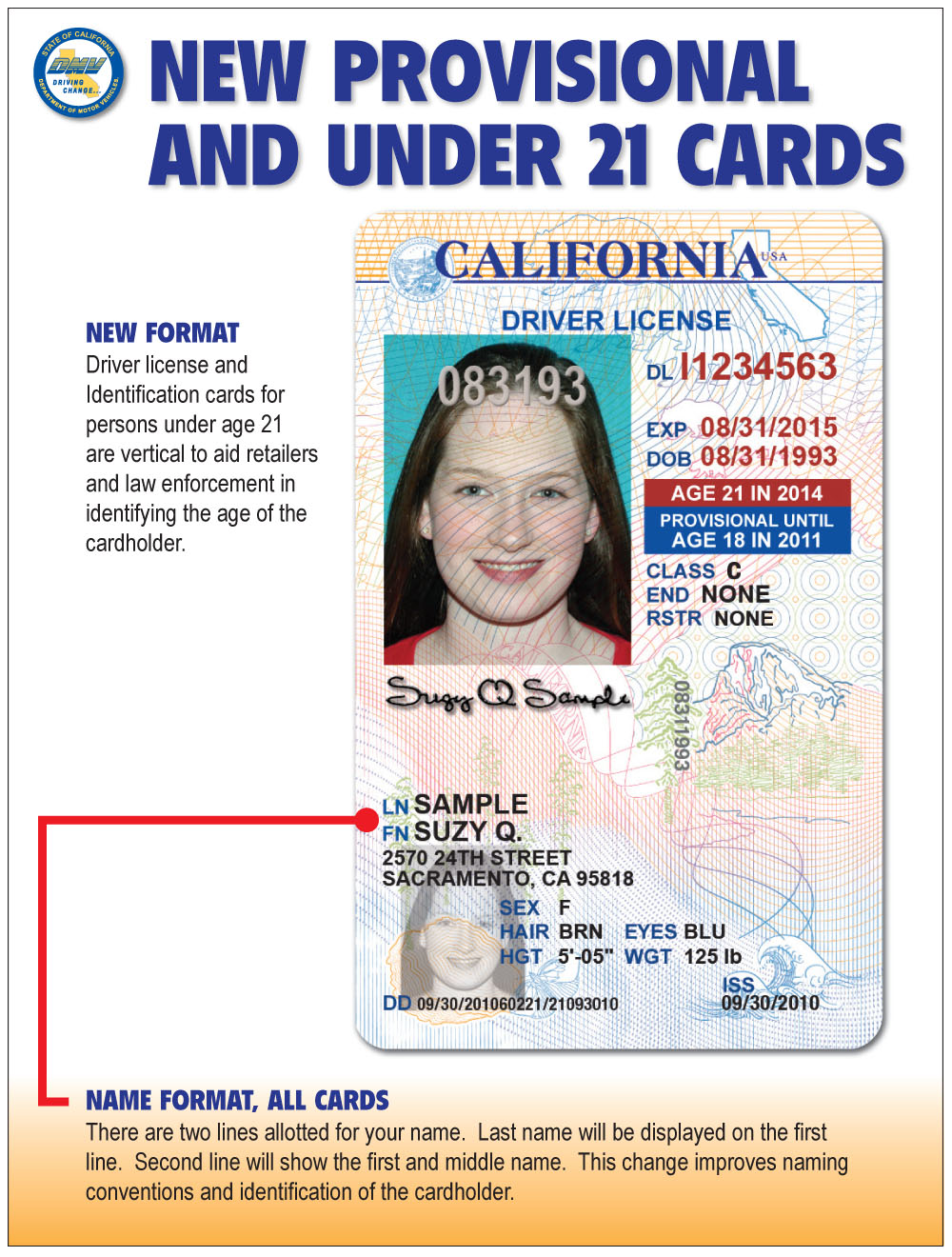
The written knowledge test is arguably the most significant immediate obstacle to obtaining your California driver’s permit. This multiple-choice exam evaluates your grasp of traffic laws, road signs, and safe driving practices as outlined in the California Driver Handbook. For applicants under 18, the test consists of 46 questions, and you must answer at least 38 correctly (an 82% pass rate). Adults (18 and older) face 36 questions and need to answer 30 correctly. The key to success here is comprehensive preparation. Don’t just skim the handbook; read it thoroughly, pay attention to specific rules regarding speed limits, right-of-way, parking, and distinct California regulations. Many online practice tests are also available and can be incredibly helpful for familiarizing yourself with the format and types of questions asked. Understanding why certain rules exist and how they contribute to road safety will aid in retention. Failing the test means you’ll have to wait a specified period (typically 7 days) before attempting it again, incurring additional trips to the DMV. Therefore, taking the time to study effectively is not just about passing; it’s about building a solid foundation of knowledge that will serve you well as a safe and responsible driver, ready to explore all the travel and lifestyle opportunities California has to offer.
Life with a Learner’s Permit: Rules and Responsibilities
Obtaining your learner’s permit is an exciting milestone, but it comes with specific rules and responsibilities designed to ensure your safety and the safety of others on the road. The permit signifies that you are legally allowed to begin supervised driving practice, which is an essential phase for developing the skills and confidence required for independent driving. This period is not just about logging hours; it’s about actively learning from experienced drivers, understanding real-world driving scenarios, and gradually becoming proficient in various traffic conditions. Adhering strictly to these regulations is crucial, not only to comply with the law but also to maximize the learning experience and prepare adequately for the next stages of licensing.
Restrictions and Supervised Driving
With a California learner’s permit, you are legally permitted to drive, but always under strict supervision. The most critical restriction is that you must always be accompanied by a licensed driver who is at least 18 years old and holds a valid California licensed driver license. This supervising driver must be seated in the front passenger seat, in a position to take control of the vehicle if necessary. Under no circumstances are you allowed to drive alone. This rule underscores the permit’s purpose: to provide a controlled environment for learning. It’s during this phase that you’ll practice fundamental driving skills, from basic maneuvers like turning and parking to navigating complex intersections and varying road conditions. The supervision provides immediate feedback, guidance, and intervention, making this a critical period for developing safe habits. Embracing this supervised practice allows you to gradually gain confidence and experience, preparing you for the day you can fully appreciate the independence of driving through California’s diverse landscapes, from urban centers to scenic routes, ultimately enhancing your travel and lifestyle choices.
Driver’s Education and Training
For applicants under 18, driver’s education and training are mandatory components of the permit and licensing process in California. This typically involves two main parts: 30 hours of classroom instruction (or an equivalent online course) and 6 hours of professional behind-the-wheel training with a certified driving instructor. The classroom portion covers critical topics such as traffic laws, defensive driving techniques, the dangers of impaired driving, and emergency procedures. This theoretical knowledge is foundational for understanding the “why” behind road rules and developing a responsible driving mindset. The behind-the-wheel training, conducted by a professional, provides invaluable hands-on experience in a dual-controlled vehicle, offering expert guidance that parents or guardians may not be equipped to provide. This structured training focuses on practical skills, hazard perception, and safe decision-making. Investing in quality driver’s education not only fulfills a legal requirement but also significantly enhances a new driver’s safety and competence. This commitment to thorough training contributes to a safer lifestyle for the driver and everyone else on the road, allowing for more confident and enjoyable travel experiences throughout the Golden State.
Beyond the Permit: Towards Your California Driver’s License
The learner’s permit is merely the beginning of your driving journey in California. It lays the groundwork, but the ultimate goal for most is to obtain a full driver’s license, granting true independence and unrestricted mobility. This transition involves more supervised practice, passing a rigorous driving test, and proving your readiness to navigate California’s roads safely and confidently. The path from permit to license is designed to progressively build your skills, judgment, and experience, ensuring that by the time you’re fully licensed, you’re prepared for any adventure the Golden State might throw your way.
The Provisional License Phase
For drivers under 18, obtaining a full license involves an intermediate step known as the provisional license. To qualify for this, permit holders must meet several requirements. First, you must have held your instruction permit for at least six months. This minimum holding period ensures ample time for supervised practice and skill development. Second, you must complete a specified number of supervised driving hours: at least 50 hours of practice, with a minimum of 10 hours conducted at night. These hours must be certified by a parent or guardian. This extensive practice period is crucial, as it exposes you to various driving conditions, traffic scenarios, and environments, from bustling city streets to quieter rural roads. Practicing across California’s diverse terrain, from navigating the hills of San Francisco to the sprawling freeways of Los Angeles, helps build adaptability and confidence. The provisional phase emphasizes responsibility and continued learning, ensuring that young drivers are well-prepared for the complexities of independent driving and the vast travel opportunities that await them in California.
Taking the Driving Test
After fulfilling all the provisional license requirements, the final hurdle is passing the behind-the-wheel driving test. This practical exam, administered by a DMV examiner, assesses your ability to safely operate a vehicle and demonstrate mastery of basic driving maneuvers and traffic laws in real-world conditions. You’ll need to schedule an appointment for this test and bring a properly registered and insured vehicle that meets all legal requirements. During the test, the examiner will evaluate various aspects of your driving, including your ability to follow directions, observe traffic signs and signals, make safe turns, change lanes, parallel park, and perform other common driving tasks. They will also assess your situational awareness, decision-making skills, and adherence to safety protocols. Preparing for the driving test involves not just knowing how to drive, but also performing consistently and confidently under scrutiny. Many driving schools offer practice sessions specifically designed to mimic the actual DMV test, which can be immensely helpful. Passing this test is the ultimate validation of your driving skills and signifies your readiness to earn your full California driver’s license, opening up countless possibilities for independent travel and lifestyle choices.
Unlocking California’s Full Potential
With your full California driver’s license in hand, a world of possibilities opens up before you. The freedom to drive independently transforms your ability to travel, explore, and truly immerse yourself in the Californian lifestyle. No longer reliant on others or limited by public transport schedules, you can embark on spontaneous road trips, visit remote landmarks, or explore off-the-beaten-path attractions that define the state’s unique charm. Imagine driving yourself to a stunning coastal resort for a weekend getaway, booking hotels in different cities as you explore historical missions, or simply having the convenience of reaching any restaurant or hiking trail at your leisure. A driver’s license is more than just a permit; it’s a passport to adventure, enabling you to fully experience the rich tapestry of California’s destinations, from its diverse local cultures and culinary scenes to its breathtaking natural wonders and bustling urban centers. It allows you to tailor your travel experiences precisely to your desires, making every journey an authentic and memorable part of your Californian lifestyle.
Conclusion
The journey to obtaining a driver’s permit and eventually a full driver’s license in California is a significant step towards unlocking unparalleled freedom and exploration within the Golden State. From meticulously studying the California Driver Handbook and passing the written knowledge test to undergoing supervised driving practice and successfully completing the behind-the-wheel exam, each stage builds essential skills and confidence. This process, administered by the diligent California DMV, ensures that every driver on its roads is prepared, responsible, and safe.
With your permit and eventual license, you gain the autonomy to navigate California’s iconic landscapes, discover hidden gems, and fully engage with the diverse travel, tourism, and lifestyle opportunities that abound. Whether it’s a scenic drive down the Pacific Coast Highway, a family adventure to Disneyland, or a spontaneous escape to the serene Napa Valley, independent driving transforms mere visits into immersive experiences. Embrace the process, commit to safe driving practices, and soon you’ll be charting your own course through the breathtaking beauty and vibrant culture of California, truly making the most of all this remarkable state has to offer.
LifeOutOfTheBox is a participant in the Amazon Services LLC Associates Program, an affiliate advertising program designed to provide a means for sites to earn advertising fees by advertising and linking to Amazon.com. Amazon, the Amazon logo, AmazonSupply, and the AmazonSupply logo are trademarks of Amazon.com, Inc. or its affiliates. As an Amazon Associate we earn affiliate commissions from qualifying purchases.