
Nestled along the southeastern edge of Texas, where the vast expanse of the Gulf of Mexico meets the fertile delta of the Sabine River, lies the city of Port Arthur, Texas. Its strategic location has historically shaped its identity, drawing influence from its coastal position and its proximity to the border of Louisiana. For travelers and those planning a visit, understanding the administrative geography of this dynamic city is a fundamental piece of its larger travel narrative. Port Arthur is situated within Jefferson County, Texas. This designation places it within a larger regional framework, influencing everything from local governance and emergency services to its place on state maps and in the collective imagination of the Lone Star State.
The Heart of Jefferson County
Jefferson County, established in 1835, is one of the oldest counties in Texas. Its history is deeply intertwined with the development of the Southeast Texas region, particularly its role in the petroleum industry and its significant port facilities. Port Arthur serves as a key city within this county, contributing significantly to its economic output and cultural tapestry. The county seat, also named Jefferson, is a historic city with its own unique charm, though Port Arthur is arguably the most recognizable urban center within the county’s borders for many visitors arriving from outside the immediate area.
Geographical Significance and Boundaries
Jefferson County is bordered by the Sabine River to the east, forming a natural boundary with Louisiana. To the south, it opens up to the Sabine Lake and the Gulf of Mexico, a crucial factor in the development of Port Arthur as a vital port city. The county’s landscape is characterized by wetlands, marshes, and coastal prairies, creating a rich ecological environment that supports diverse wildlife and offers unique natural attractions for visitors. Understanding these geographical markers is essential for anyone exploring the region, from navigating the waterways to identifying prime locations for birdwatching or fishing.
Administrative and Economic Ties
As a resident of Jefferson County, Port Arthur benefits from the county’s administrative infrastructure and economic initiatives. The Jefferson County Airport (not to be confused with Jack Brooks Regional Airport, also serving the area) provides regional air access, while county roads and state highways connect Port Arthur to other parts of the county and beyond. Economically, the county is a hub for the petrochemical industry, with numerous refineries and chemical plants dotting the landscape around Port Arthur and its neighboring cities. This industrial backbone has shaped the local economy for generations and continues to be a defining characteristic of the region.
Exploring Port Arthur: More Than Just a County Seat
While knowing the county is a starting point, it’s the attractions and experiences within Port Arthur itself that draw visitors. Its rich history, particularly its connection to the oil boom, and its vibrant cultural influences from both Texas and Louisiana offer a compelling destination for travelers seeking an authentic slice of the American South.
Historical Roots and Oil Heritage
Port Arthur owes much of its existence and development to the discovery of the Spindletop oil field in 1901. This event is widely credited with launching the modern petroleum industry and transforming Texas into an energy powerhouse. Visitors can delve into this fascinating history at the Spindletop-Gladys City Boomtown Museum, a living history museum that recreates the boomtown atmosphere of the early 20th century. Walking through the reconstructed buildings, visitors can imagine the hustle and bustle of a time when fortunes were made and lost overnight. The museum offers a tangible connection to the pioneering spirit that defined this era.
The Port Arthur Historical Museum further complements this narrative, showcasing artifacts and exhibits that tell the broader story of the city’s growth, from its early days as a small settlement to its rise as an industrial and shipping center. These institutions are vital for understanding the city’s identity and its impact on the global energy landscape.
Cultural Crossroads: Cajun and Texan Flavors

The unique cultural blend of Port Arthur is a significant draw for tourists. Its proximity to Louisiana means that Cajun and Creole influences are deeply embedded in the local cuisine and traditions. Travelers can savor authentic gumbo, jambalaya, and crawfish boils, experiencing a taste of Southern hospitality with a distinct Louisiana twist. This culinary adventure is an integral part of any visit, offering a delicious exploration of the region’s heritage.
Beyond the plate, this cultural fusion is evident in the local music scene, which often features Zydeco and blues, and in the warm, welcoming nature of the residents. The city’s demographic makeup reflects a history of migration and settlement, creating a rich tapestry of traditions and perspectives that make Port Arthur a uniquely vibrant place to explore.
Natural Beauty and Outdoor Pursuits
While Port Arthur is known for its industrial might and historical significance, it also boasts considerable natural beauty. The Sabine Lake and the surrounding wetlands are a paradise for anglers and birdwatchers. The lake is renowned for its diverse fish population, including red drum and speckled trout, making it a prime destination for sport fishing. Numerous fishing guides and charters operate in the area, offering tailored experiences for both seasoned anglers and beginners.
For bird enthusiasts, the Sabine Pass Battleground State Historic Site and the nearby Sabine National Wildlife Refuge provide excellent opportunities to observe a variety of migratory and resident bird species. The coastal marshes and estuaries are vital habitats for waterfowl, shorebirds, and wading birds, especially during the spring and fall migration seasons. The Sea Rim State Park, though impacted by hurricanes, offers a glimpse into the coastal marsh ecosystem, with its boardwalks providing access to unique flora and fauna.
The Port of Port Arthur and Maritime Heritage
The Port of Port Arthur is one of the busiest ports in the United States, a testament to its strategic location at the confluence of major waterways. While direct visitor access to the operational port areas might be limited, understanding its significance is key to appreciating Port Arthur. The shipping channels, industrial facilities, and constant flow of maritime traffic are an integral part of the city’s identity and economy.
For those interested in maritime history, the Texas Energy Museum offers insights into the development of the region’s energy sector, including its connection to maritime trade and transportation. Exploring the waterfront areas, where possible, can offer a sense of the scale and importance of these operations to the local community and the broader economy. The historical significance of the Sabine Pass Battleground State Historic Site also speaks to the strategic importance of this coastal area throughout history.
Planning Your Visit to Jefferson County
When planning a trip to Port Arthur, Texas, understanding its location within Jefferson County helps in orienting oneself and identifying a range of activities and attractions. The county offers a cohesive experience, blending industrial history with natural beauty and a distinct cultural flavor.
Accommodation and Amenities
Port Arthur and the surrounding Jefferson County offer a variety of accommodation options to suit different travel styles and budgets. From well-known hotel chains like Holiday Inn Express and Hampton Inn providing comfortable and convenient stays, to more independent lodging, visitors will find places to rest after a day of exploration. Many hotels are conveniently located near major highways and attractions, making it easy to navigate the area. For those seeking a more immersive experience, exploring vacation rentals in the vicinity can offer a taste of local living.

Navigating Jefferson County
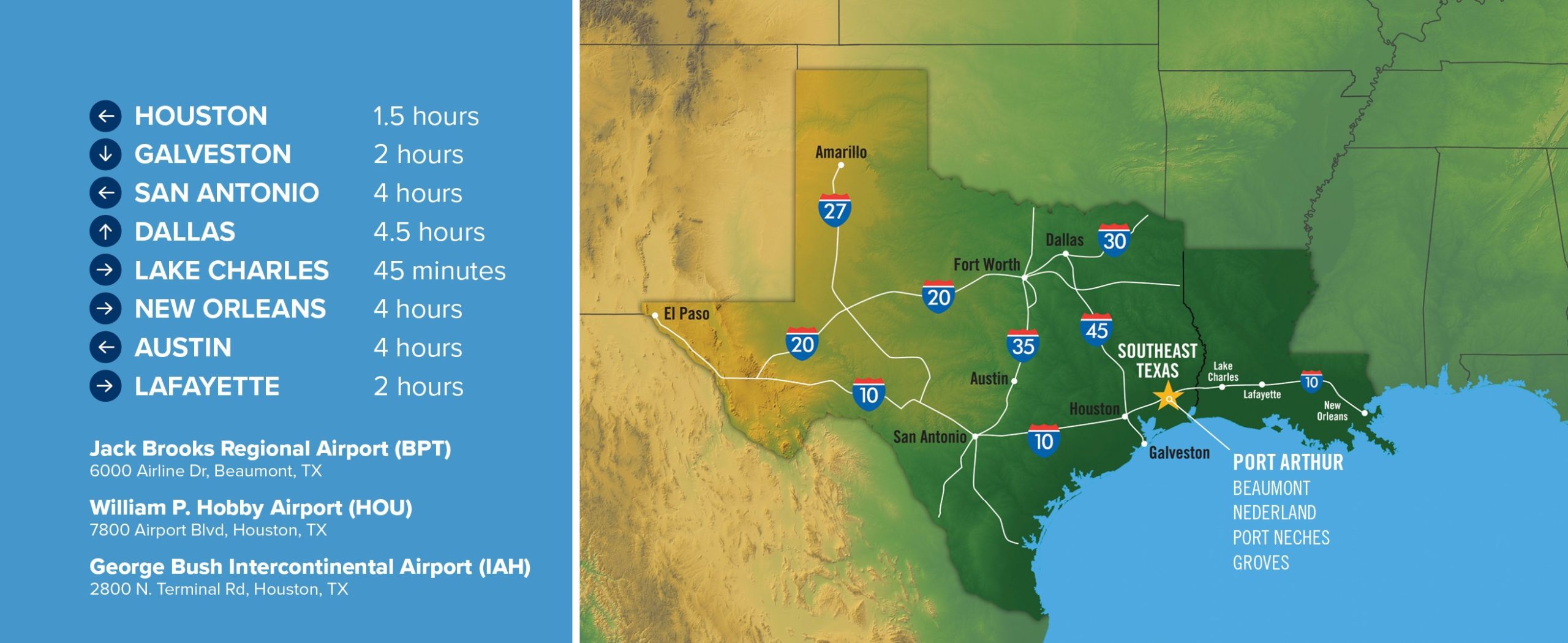
Getting to and around Jefferson County is relatively straightforward. The region is served by Jack Brooks Regional Airport, offering domestic flights and making air travel accessible. Major roadways, including Interstate 10 and U.S. Highway 69, provide excellent connectivity to other parts of Texas and beyond. For exploring within Port Arthur and its neighboring cities like Beaumont and Nederland, having a personal vehicle is highly recommended to fully access the diverse range of attractions. Public transportation options are available but may be limited for reaching more remote natural areas or specific historical sites.
In conclusion, Port Arthur, Texas is firmly situated within Jefferson County, Texas. This geographical anchor is fundamental to understanding the city’s heritage, its economic drivers, and its place within the rich tapestry of Southeast Texas. Whether one is drawn by the allure of its oil boom history, the flavors of its unique culture, or the natural beauty of its coastal landscape, Jefferson County provides the foundational context for an enriching travel experience.
LifeOutOfTheBox is a participant in the Amazon Services LLC Associates Program, an affiliate advertising program designed to provide a means for sites to earn advertising fees by advertising and linking to Amazon.com. Amazon, the Amazon logo, AmazonSupply, and the AmazonSupply logo are trademarks of Amazon.com, Inc. or its affiliates. As an Amazon Associate we earn affiliate commissions from qualifying purchases.