
Alaska, often referred to as “The Last Frontier,” is a land of unparalleled natural beauty, immense scale, and unique geographical considerations. Its sheer size – larger than Texas, California, and Montana combined – presents interesting challenges and planning considerations for travelers, not least of which involves understanding its time zones. While most states in the United States adhere to a single time zone or perhaps two, Alaska’s vast east-to-west expanse necessitates a different approach. For those planning an unforgettable journey through its glaciers, mountains, and pristine wilderness, knowing how many time zones crisscross this magnificent state and how they impact travel is essential.

Understanding Alaska’s Vast Geography and Its Time Zone Implications
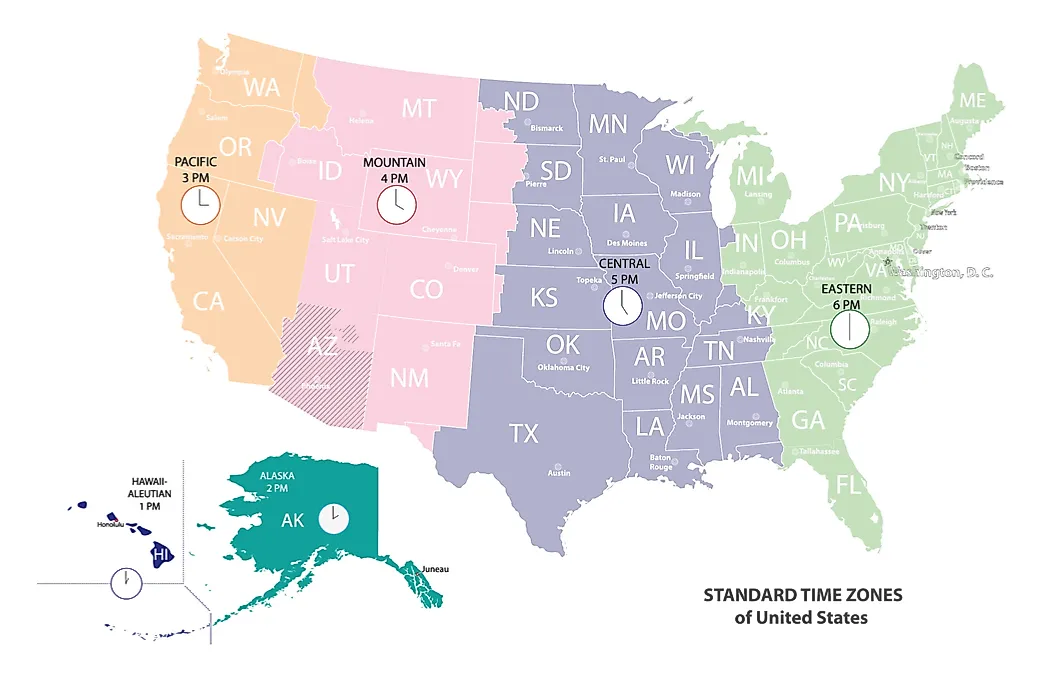
Despite its immense size, Alaska actually spans two distinct time zones, which are crucial for any traveler to comprehend. The majority of the state operates on one, while its farthest reaches to the west adhere to another, more westerly zone. This division is a direct consequence of Alaska’s impressive longitudinal stretch.
The Standard Time Zones
The bulk of Alaska, including major cities like Anchorage, Juneau, and Fairbanks, observes the Alaska Standard Time (AKST). This time zone is four hours behind Eastern Standard Time (EST) and one hour behind Pacific Standard Time (PST). AKST is defined as UTC-9 during standard time and UTC-8 during Daylight Saving Time, which Alaska generally observes.
However, the southwestern extreme of Alaska, specifically the Aleutian Islands west of 169°30′ West longitude, including the city of Adak, falls into the Hawaii-Aleutian Standard Time (HAST). This zone is one hour behind AKST, making it five hours behind EST and two hours behind PST. HAST is UTC-10 during standard time and UTC-9 during Daylight Saving Time. This means that if it’s 3:00 PM in Anchorage, it’s 2:00 PM in Adak.
Why Alaska Needs Multiple Zones
The decision to split Alaska into two time zones, rather than more, was a practical one designed to balance the natural progression of daylight with the administrative and logistical needs of the state. Its longitudinal span is so great that a single time zone would result in either extremely late sunrises in the east or exceedingly early sunsets in the west. For example, if the entire state were on AKST, communities in the westernmost Aleutian Islands would experience sunrise well past noon during parts of the year, which is not conducive to normal daily life. The current two-zone system, while requiring careful attention from travelers, provides a reasonable compromise for its diverse geographical regions.
Navigating Travel Across Alaskan Time Zones
For travelers, understanding Alaska’s time zones is more than just a trivial fact; it’s a critical component of trip planning that can impact everything from flight connections to tour schedules and even your internal clock.
Planning Your Itinerary
When crafting your Alaskan adventure, particularly if you plan to venture to the remote western regions, always confirm the local time. For instance, a flight from Anchorage to Adak will technically land an hour earlier than its departure time in terms of local clocks, although the actual flight duration remains the same. This can create confusion if not accounted for. Similarly, coordinating calls with tour operators or local guides in a different time zone requires careful planning to avoid missed connections or mistaken timings.
Air Travel and Connecting Flights
Most travelers arrive in Alaska via Ted Stevens Anchorage International Airport (ANC) or Juneau International Airport (JNU), both of which are in the AKST zone. If your journey extends to the Aleutian Islands, such as flying into Adak Airport (ADK), you’ll cross into HAST. It’s imperative to confirm flight times on your tickets, as airlines typically list times in local departure and arrival zones. Missing a connecting flight due to a time zone miscalculation is an easily avoidable travel mishap. Double-check all schedules and perhaps even set a reminder on your phone for the new time zone upon arrival.
Cruise Ship Considerations
Many visitors experience Alaska via a cruise, especially along the scenic Inside Passage. Cruise itineraries generally stick to the time zone of their primary ports of call, which are typically within AKST. However, for cruises that venture further north or west into more remote areas or those that have extended pre/post-cruise land packages, understanding the time zones becomes relevant. Always confirm the ship’s clock settings and any shore excursion timings with the cruise line, as they might adjust clocks periodically throughout the voyage to align with local port times.
Road Trips and Remote Destinations
While most road trips in Alaska stay within the AKST zone, venturing to communities like Nome or other far-western areas accessible by plane or seasonal ice roads can still mean interactions with businesses or individuals operating on slightly different schedules due to their proximity to the time zone boundary. Even within AKST, the sheer vastness means daylight hours can vary significantly. For instance, during summer, Fairbanks (AKST) experiences far more extended daylight than Juneau (also AKST) due to its higher latitude. This isn’t a time zone issue, but a natural consequence of geography that travelers should be aware of for activity planning.
Practical Tips for Travelers

Equipping yourself with a few practical strategies can smooth your transition between time zones and ensure a seamless Alaskan travel experience.
Account for Jet Lag (or “Zone Lag”)
Even though Alaska has only two internal time zones, travelers arriving from the lower 48 states, especially the East Coast, will contend with a significant time difference. Arriving from EST, for instance, means a four-hour shift (or five, if heading to the Aleutian Islands). This can certainly induce jet lag, often manifesting as fatigue, disorientation, and disrupted sleep patterns. To mitigate this:
- Adjust your sleep schedule gradually before departure.
- Stay hydrated and avoid excessive alcohol or caffeine on your travel day.
- Embrace the daylight hours upon arrival, even if you’re tired, to help reset your internal clock.
- Plan a relaxed first day to allow your body to adapt.
Confirm Tour and Activity Times
Whether you’re booking a glacier cruise, a wildlife viewing tour, or a fishing excursion, always reconfirm the exact start times, noting whether they are local time for the departure point. Many remote operators might have specific instructions or meeting points, and a time zone mix-up could lead to missing a once-in-a-lifetime experience. Digital itineraries and confirmation emails often specify the time zone, so pay close attention.
Communication with Loved Ones
When communicating with family and friends outside Alaska, remember the time difference. A call at 7 PM AKST from Anchorage is already 11 PM EST, which might be too late for some. Adjust your communication schedule accordingly, or use tools that automatically show different time zones.
Daylight Saving Time in Alaska
Like most of the United States, Alaska observes Daylight Saving Time (DST), where clocks are moved forward one hour in spring and back one hour in fall. This means that AKST becomes Alaska Daylight Time (AKDT) and HAST becomes Hawaii-Aleutian Daylight Time (HADT). Travelers should be mindful of these changes if their trip spans the “spring forward” or “fall back” dates, as it will affect the time difference relative to other regions.
Unique Regional Time Zone Nuances
While the general rule is two time zones, certain unique aspects of Alaska’s geography further highlight the need for travelers to be mindful.
The Aleutian Islands Experience
The Aleutian Islands are a chain of 14 large volcanic islands and 55 smaller ones, stretching over 1,200 miles westward from the Alaska Peninsula toward Russia. This region, particularly the island of Adak, is the only part of Alaska that uses Hawaii-Aleutian Standard Time. Travelers to this incredibly remote and wild part of the state are often there for specific purposes, such as birdwatching, fishing, or historical exploration, and adherence to local time is paramount for logistical coordination. The sheer distance from the rest of the United States makes this time zone shift feel even more pronounced.
Fairbanks vs. Adak: A Day Apart
Consider a traveler moving from Fairbanks to Adak. While both are within the same state, they are separated by an hour in time zones and thousands of miles geographically. During summer, Fairbanks, located just south of the Arctic Circle, experiences nearly 24 hours of daylight. Adak, though further south, still experiences significant variations but operates on a clock that is an hour behind Fairbanks. This contrast underscores the dynamic nature of time and daylight across Alaska’s immense landscape.
Maximizing Your Alaskan Adventure
Understanding the subtleties of Alaska’s two time zones is a small but significant detail that contributes to a well-planned and stress-free trip. It’s not just about setting your watch; it’s about optimizing your experience in a state where geographical scale dictates so much.
Embracing the Extended Daylight
While time zones define the clock, Alaska’s high latitude dictates its unique daylight patterns. During the summer months, daylight extends dramatically, especially in northern regions. Even in Anchorage, you might have daylight well past 10 PM. This extended light, irrespective of time zones, allows for longer days of exploration and activity. Many tour operators and attractions adjust their hours to capitalize on this natural phenomenon, offering late-night excursions.
Essential Planning Tools
Modern smartphones and digital travel apps are invaluable for managing time zones. Most devices automatically adjust to local time upon arrival, but it’s wise to double-check manually. Consider using a world clock app to easily track the time in your current location, your next destination within Alaska, and your home time zone. This simple preparation ensures you remain punctual and well-connected throughout your journey across the vast and breathtaking landscapes of Alaska.
LifeOutOfTheBox is a participant in the Amazon Services LLC Associates Program, an affiliate advertising program designed to provide a means for sites to earn advertising fees by advertising and linking to Amazon.com. Amazon, the Amazon logo, AmazonSupply, and the AmazonSupply logo are trademarks of Amazon.com, Inc. or its affiliates. As an Amazon Associate we earn affiliate commissions from qualifying purchases.