
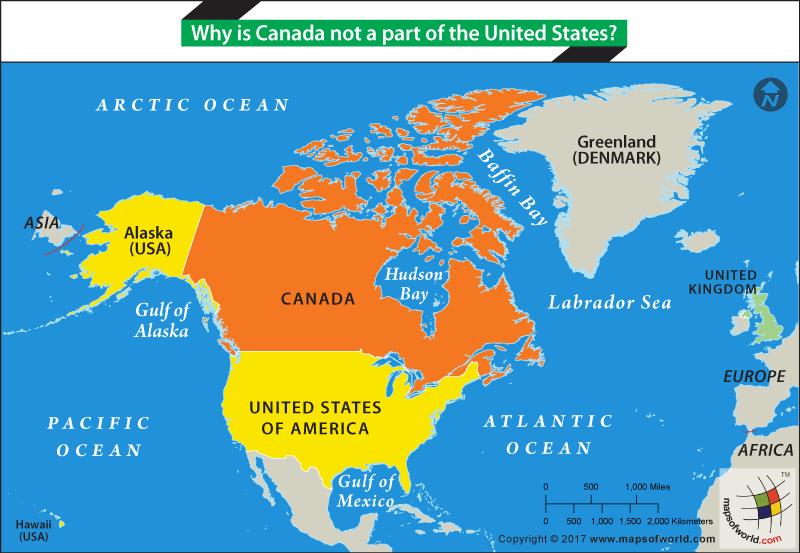
The vast, wild expanse of Alaska, often perceived as geographically contiguous with Canada, presents a curious paradox to many travelers and geography enthusiasts alike. Its dramatic landscapes, shared northern latitude, and proximity to Canadian territories might naturally lead one to assume a historical or political connection that ties it to its eastern neighbor. However, Alaska stands distinctly as a state of the United States, a status forged not by geographical inevitability but by a fascinating interplay of imperial ambition, economic necessity, and diplomatic maneuvering. Understanding this historical divergence is not merely an academic exercise; it profoundly shapes the travel experience in Alaska, revealing a unique cultural tapestry, distinct historical sites, and a geopolitical identity that sets it apart from the Canadian wilderness next door. This history offers a richer context for exploring everything from its Russian Orthodox churches to its frontier towns and majestic national parks.

The Russian Legacy: From Siberia to Sitka
The story of Alaska’s current political alignment begins not in North America but far across the Bering Strait in Russia. For over a century, the territory now known as Alaska was known as Russian America, a testament to the adventurous spirit of explorers and traders from the Russian Empire.
Russian Exploration and Settlement
In the early 18th century, Peter the Great initiated ambitious expeditions to map the eastern reaches of his empire and ascertain if Asia and North America were connected. This quest led to the legendary voyages of Vitus Bering, a Danish navigator in Russian service. In 1741, Bering’s expedition sighted the coast of Alaska, marking the formal discovery of the territory by Europeans. This discovery quickly ignited a lucrative fur trade, primarily focusing on sea otter pelts, which were highly prized in Europe and China.
Over the subsequent decades, Russian fur traders, known as promyshlenniki, established small settlements and trading posts along the Alaskan coast, extending down into what is now the Pacific Northwest. The most significant of these was New Archangel, established in 1799 and later renamed Sitka, which became the capital of Russian America. The Russian Orthodox Church also established a strong presence, converting many Indigenous peoples, whose descendants continue to practice the faith today, particularly in the Aleutian Islands and along the coast. This early Russian influence is still visible in the architecture and cultural heritage of towns like Sitka and Kodiak, offering unique historical layers for travelers to uncover.
Economic Pressures and Imperial Ambitions
Despite its vastness and wealth of natural resources, Russian America proved difficult and expensive for the Russian Empire to maintain. The immense distance from St. Petersburg, the capital, made administration and defense challenging. Furthermore, the once-plentiful sea otter populations were severely depleted due to unsustainable hunting practices. By the mid-19th century, the colony was generating little profit and was increasingly seen as a liability rather than an asset.
The Crimean War (1853-1856), in which Russia fought against an alliance including Britain and France, further exacerbated Russia’s financial woes and heightened fears that Russian America would be easily seized by British forces from neighboring British North America (which would later form Canada). The strategic vulnerability of the territory became a pressing concern. These factors pushed Russia towards a decision to divest itself of its distant North American possession.
Seward’s Folly: The Alaska Purchase of 1867
The stage was set for one of the most significant land transactions in history, one that would definitively place Alaska under the American flag, bypassing Canada entirely.
The Negotiators and The Price Tag
The idea of selling Alaska to the United States gained traction in St. Petersburg. On the American side, the primary advocate for the purchase was Secretary of State William H. Seward. Seward was a staunch expansionist who envisioned an American empire spanning North America and beyond. The Russian Minister to the United States, Eduard de Stoeckl, was tasked with negotiating the sale.
After intense negotiations, a treaty was signed in the early hours of March 30, 1867. The United States agreed to purchase Alaska for a sum of $7.2 million – roughly 2 cents per acre. At the time, many Americans scoffed at the deal, deriding it as “Seward’s Folly” or “Seward’s Icebox,” believing the land to be barren and worthless. Little did they know the immense natural resources, including gold, oil, and timber, that lay beneath its frozen surface. The formal transfer ceremony took place in Sitka on October 18, 1867, marking the end of Russian rule and the beginning of American sovereignty.
Geopolitical Implications
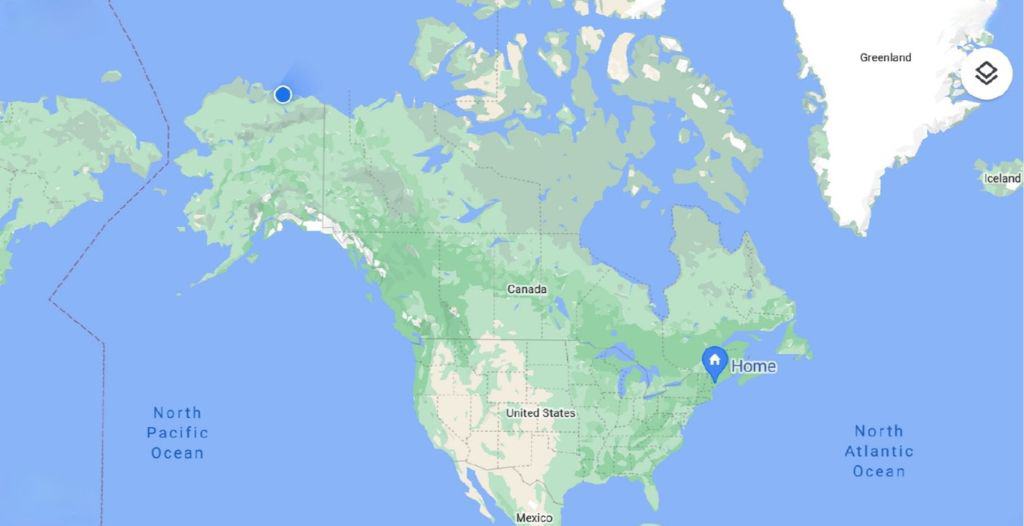
The Alaska Purchase had profound geopolitical implications. For Russia, it removed a distant, unprofitable, and indefensible colony, allowing them to focus on expansion in Central Asia and Siberia. For the United States, it solidified its position as a major Pacific power, provided access to vast new resources, and strategically flanked British North America.
Crucially, the purchase prevented British expansion into the region. If Russia had sold Alaska to Britain, it would have encircled Canada’s nascent western territories and potentially created an even larger contiguous British presence in North America. However, Britain (and by extension, the emerging Canadian confederation, formed just months later in July 1867) was not in a strong position to buy. Britain had its own colonial priorities and likely did not want to further antagonize the United States so soon after the American Civil War and the Trent Affair. Thus, Alaska became an American territory by default, rather than a natural extension of Canada.
A Distinct Identity: Alaska’s Unique Appeal for Travelers
This unique history has cultivated a destination distinct from its Canadian neighbors, offering travelers a specific set of experiences rooted in its Russian and American frontier past, juxtaposed with unparalleled natural grandeur.
Beyond the Border: How History Shapes Alaskan Travel
The political boundary between Alaska and Canada’s Yukon and British Columbia territories is more than just a line on a map; it represents a divergence in cultural development, economic priorities, and historical narratives. While both regions share a rugged northern spirit, Alaska’s character is deeply influenced by its unique trajectory: an initial Russian imprint, followed by the American frontier spirit of the Gold Rush era, and its later strategic importance during the Cold War. This mix creates a destination where visitors can explore Russian Orthodox cathedrals in Sitka, walk the boardwalks of Skagway—a gateway to the Klondike Gold Rush—and delve into the modern oil industry that fuels its economy, all under the umbrella of American governance and culture.
Alaskan Attractions Shaped by History
Travelers to Alaska will find a wealth of attractions directly tied to its singular past:
- Sitka: This former capital of Russian America is a treasure trove of history, boasting the iconic St. Michael’s Cathedral (a Russian Orthodox church) and the Sitka National Historical Park, which preserves sites of Tlingit culture and the 1804 battle between Russian colonists and native warriors.
- Skagway: As a starting point for prospectors heading to the Klondike Gold Rush in the Yukon, Skagway offers a meticulously preserved historic district, part of the Klondike Gold Rush National Historical Park. Here, visitors can step back in time to the late 19th century, witnessing the fervor and hardship of the gold rush era.
- Anchorage and Juneau: While more modern, these cities serve as hubs for exploring Alaska’s vast wilderness and connecting with its contemporary culture, including its diverse Indigenous populations whose heritage long predates Russian or American arrival.
Wildlife and Wilderness
While both Alaska and Canada are renowned for their incredible wilderness, Alaska’s unique geography and governmental management under the United States have resulted in specific conservation efforts and access points. Iconic destinations like Denali National Park and the wildlife-rich waters of the Inside Passage offer experiences that, while sharing a broader ecosystem with Canada, are distinctly Alaskan in their presentation and infrastructure. From brown bear viewing in Katmai National Park to glaciers calving into the sea in Prince William Sound, Alaska provides a frontier adventure underpinned by its specific political and environmental history.
The Modern Border: Cooperation and Cross-Cultural Exchange
Despite its distinct identity, the close proximity of Alaska to Canada naturally fosters a relationship of cooperation and cross-border exchange, particularly beneficial for travelers.
Shared Interests and Travel Routes
The border between Alaska and Canada is largely peaceful and porous for travelers. The iconic Alaska Highway, built during World War II to connect the contiguous United States to Alaska, winds through British Columbia and the Yukon before reaching Fairbanks. This crucial artery symbolizes the intertwined nature of travel in the region. Many visitors choose to combine their Alaskan adventure with explorations of the Canadian Yukon, visiting places like Whitehorse or Dawson City, which shared in the Klondike Gold Rush boom. This cross-border connectivity allows travelers to experience the broader Northern Pacific region, appreciating both the similarities in landscape and the unique cultural nuances of each nation.
Experiencing Both
For the adventurous traveler, the question of why Alaska isn’t part of Canada isn’t just a historical query but an invitation to explore a region shaped by diverse influences. One can take an Inside Passage cruise from Vancouver or Seattle, traversing both Canadian and Alaskan waters, observing how the wilderness transitions and the towns reflect their respective national identities. Driving the Alaska Highway offers a similar journey through contrasting, yet complementary, northern cultures. By understanding the geopolitical forces that drew Alaska into the American fold, travelers gain a deeper appreciation for its distinct charm, its Russian echoes, its frontier ruggedness, and its singular position as a magnificent US state, proudly separate from its vast Canadian neighbor.
LifeOutOfTheBox is a participant in the Amazon Services LLC Associates Program, an affiliate advertising program designed to provide a means for sites to earn advertising fees by advertising and linking to Amazon.com. Amazon, the Amazon logo, AmazonSupply, and the AmazonSupply logo are trademarks of Amazon.com, Inc. or its affiliates. As an Amazon Associate we earn affiliate commissions from qualifying purchases.