
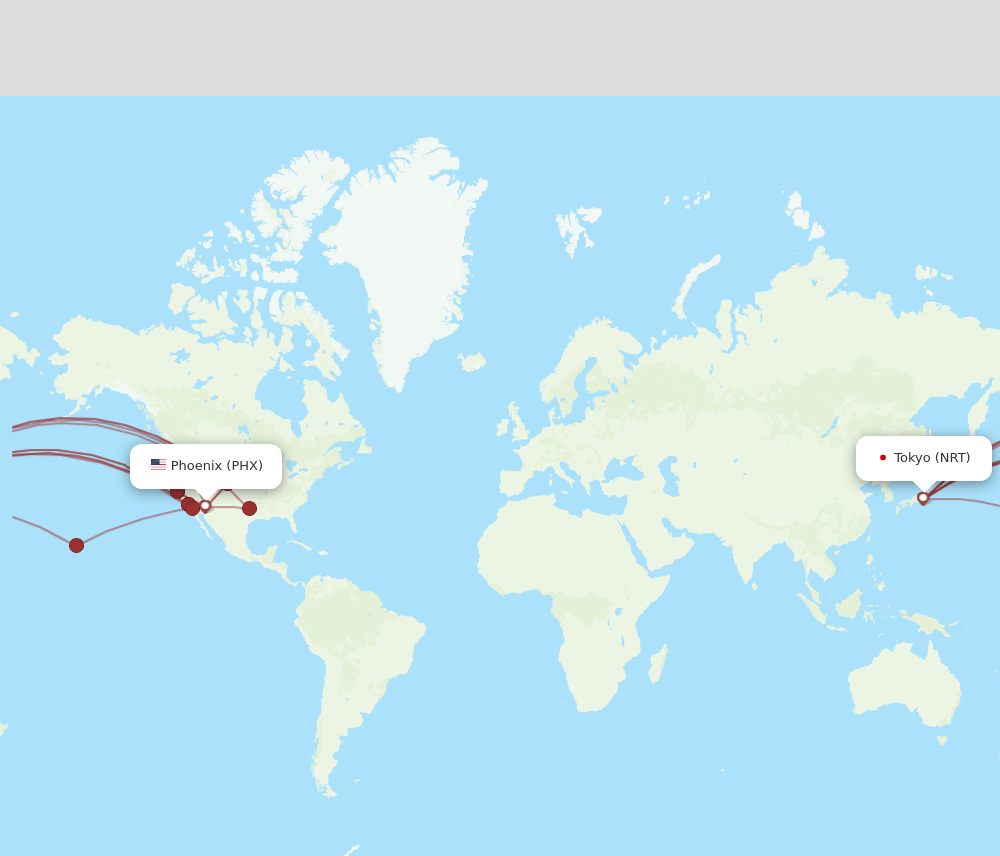
Absolutely, embarking on a journey from the vibrant archipelago of Japan to the stunning desert landscapes of Arizona is a well-established and accessible travel route. While no non-stop commercial flights currently bridge these two distant points directly, a robust network of international airlines and major aviation hubs makes this trans-Pacific voyage entirely feasible, albeit with one or more connections. Travelers can anticipate a seamless, albeit long-haul, experience, connecting through major North American gateways before descending into the Grand Canyon State. This guide delves into the logistics, common routes, airlines, and what to expect when planning your aerial adventure from Japan to Arizona.
Navigating the Skies: Routes and Airlines
The journey from Japan to Arizona inherently involves connecting flights, typically through major international airports in the United States or sometimes Canada. Understanding the common routing options and the airlines that service them is crucial for planning an efficient and comfortable trip.
Major International Airports in Japan
Your journey will most likely commence from one of Japan’s primary international gateways, renowned for their efficiency and extensive global connections. The two most prominent are:
- Narita International Airport (NRT), serving the greater Tokyo area, is a major hub for flights to North America. It hosts numerous Star Alliance, Oneworld, and SkyTeam carriers, offering a wide array of options for trans-Pacific routes.
- Haneda Airport (HND), also in Tokyo, has increasingly expanded its international routes, becoming a popular choice due to its closer proximity to the city center. Many major U.S. airlines operate direct flights from Haneda to various North American cities.
- Kansai International Airport (KIX), serving the Osaka–Kyoto region, also offers significant international connectivity, particularly to U.S. West Coast cities.
Primary Arrival Hubs in Arizona
The vast majority of international travelers heading to Arizona will arrive at:
- Phoenix Sky Harbor International Airport (PHX), located in Phoenix, is the largest and busiest airport in Arizona. It serves as a major hub for American Airlines and a focus city for Southwest Airlines, offering extensive domestic connections throughout the state and the United States.
- Tucson International Airport (TUS) is another option, particularly for those whose final destination is in southern Arizona. However, it generally requires more connections than Phoenix for international arrivals.
Common Layover Cities
Given the absence of direct flights, your itinerary will invariably include a layover city. The most common and efficient hubs for connecting flights from Japan to Arizona are often major cities on the U.S. West Coast, though Central and even East Coast hubs are sometimes used depending on airline partnerships and scheduling.
- Los Angeles International Airport (LAX): Arguably the most common and convenient layover point due to its numerous direct flights from Japan and extensive connections to Phoenix and Tucson.
- San Francisco International Airport (SFO): Another popular West Coast hub offering excellent connectivity between Japan and Arizona.
- Seattle-Tacoma International Airport (SEA): A strong contender, especially for those flying Delta Air Lines or its partners, with good connections to Arizona.
- Dallas/Fort Worth International Airport (DFW): As a major hub for American Airlines, it frequently serves as a connection point, particularly for those flying Japan Airlines (a Oneworld partner) to Phoenix.
- Denver International Airport (DEN): Increasingly a popular hub for United Airlines, offering connections to Arizona.
- Chicago O’Hare International Airport (ORD): While further east, Chicago is a major hub for United Airlines and American Airlines, often serving as a connection for flights from Japan to destinations across the U.S., including Arizona.
Key Airlines Operating These Routes
A plethora of reputable airlines facilitate travel between Japan and the U.S., and subsequently to Arizona.
- Japanese Carriers: Japan Airlines (JAL) and All Nippon Airways (ANA) are excellent choices, offering high-quality service and direct flights from Tokyo and Osaka to major U.S. West Coast cities. They often code-share with American Airlines (JAL) and United Airlines (ANA) for onward connections.
- U.S. Carriers: American Airlines, United Airlines, and Delta Air Lines all operate extensive networks from Japan to their respective hubs in the U.S., which then connect to Arizona.
- Other International Carriers: Airlines like Korean Air (via Seoul), Cathay Pacific (via Hong Kong), or EVA Air (via Taipei) can also be options, adding another layover but sometimes offering competitive pricing or preferred loyalty program benefits.
The Journey Experience: What to Expect
A flight from Japan to Arizona is a significant undertaking, primarily due to the vast geographical distance and the international border crossing. Preparing for the long travel time and understanding the procedural aspects will ensure a smoother experience.
Flight Duration and Time Zones

The total travel time from Japan to Arizona can range significantly, typically spanning 15 to 20 hours or more, including layovers. The trans-Pacific leg itself is usually around 9-11 hours to the U.S. West Coast. Add to that the connection time and the domestic flight to Arizona (typically 1.5-3 hours).
Travelers will also cross the International Date Line and numerous time zones. When traveling eastward from Japan to the U.S., you effectively “gain a day,” often arriving on the same calendar day you departed or just a few hours later, despite the long flight duration. This can be disorienting and contribute to jet lag. Arizona observes Mountain Standard Time (MST) year-round and does not observe Daylight Saving Time, which is important to remember when calculating time differences.
In-flight Experience and Amenities
Long-haul flights from Japan to the United States generally offer a high standard of service, particularly on flagship carriers like JAL and ANA. Passengers can expect:
- Comfortable Seating: Modern aircraft like the Boeing 787 Dreamliner or Airbus A350 are frequently used, offering more legroom and advanced cabin pressurization to reduce fatigue.
- In-flight Entertainment: Personal seat-back screens with a wide selection of movies, TV shows, music, and games are standard. Wi-Fi is often available, though sometimes at an additional cost.
- Meal Services: Multiple meals and snack services are provided, catering to dietary restrictions if requested in advance.
- Amenities: Blankets, pillows, and amenity kits (especially in premium cabins) are common to enhance comfort during the long journey.
The domestic leg to Arizona will typically be on a smaller aircraft with more basic amenities, akin to standard U.S. domestic flights.
Customs and Immigration Considerations
Upon arrival at your first point of entry into the United States (e.g., LAX, SFO, DFW), all travelers, including U.S. citizens, must clear U.S. Customs and Border Protection (CBP).
- Required Documents: Ensure your passport is valid for at least six months beyond your intended stay. Depending on your nationality, you will also need a valid visa or an approved Electronic System for Travel Authorization (ESTA). Most Japanese citizens are eligible for the ESTA program for tourist or business stays of up to 90 days.
- Immigration Process: Be prepared for potential queues at immigration. Global Entry membership can significantly expedite this process for eligible travelers. After clearing immigration, you will collect any checked baggage, proceed through customs, and then re-check your bags for your connecting flight to Arizona. This re-check process is standard for all international arrivals in the U.S. and should be factored into your layover time.
- Agricultural Declarations: The U.S. has strict rules regarding bringing certain food items, plants, and agricultural products into the country. It is essential to declare all such items to CBP to avoid penalties.
Planning Your Arizona Adventure
Beyond the flight itself, effective planning for your Arizona trip involves considering the best time to visit and how you’ll get around once you arrive.
Best Time to Visit Arizona
Arizona experiences distinct seasons, and the “best” time to visit largely depends on your desired activities.
- Fall (October-November) and Spring (March-April) are widely considered the ideal times to visit, especially for exploring the desert regions around Phoenix and Tucson. Temperatures are pleasant, perfect for hiking, golf, and outdoor adventures.
- Winter (December-February) offers mild, sunny weather in the lower deserts, making it a popular escape from colder climates. The northern parts of the state, such as the Grand Canyon and Flagstaff, experience cold temperatures and snowfall, offering winter sports opportunities.
- Summer (May-September) can be extremely hot in the lower deserts, with temperatures often exceeding 100°F (38°C). This is the off-season for desert activities, but it’s an excellent time to visit the higher elevations like the Grand Canyon, Sedona, and Flagstaff, where temperatures are significantly cooler.

Ground Transportation Upon Arrival
Once you land at Phoenix Sky Harbor International Airport (PHX) or Tucson International Airport (TUS), you have several options for onward travel:
- Rental Cars: For exploring Arizona’s vast and diverse landscapes, renting a car is highly recommended. Major rental car agencies are readily available at both airports.
- Ride-Sharing Services: Uber and Lyft operate throughout Phoenix and Tucson, offering convenient transportation to your accommodation.
- Taxis: Traditional taxi services are also available outside the terminals.
- Public Transportation: Phoenix has a light rail system, Valley Metro Rail, that connects the airport to downtown Phoenix, Tempe, and Mesa. However, for exploring beyond these urban centers, a car is essential.
In conclusion, flying from Japan to Arizona is a straightforward process involving a layover at a major U.S. gateway. With careful planning, choosing the right airlines and connections, and understanding the immigration procedures, travelers can look forward to a rewarding journey to the Grand Canyon State.
LifeOutOfTheBox is a participant in the Amazon Services LLC Associates Program, an affiliate advertising program designed to provide a means for sites to earn advertising fees by advertising and linking to Amazon.com. Amazon, the Amazon logo, AmazonSupply, and the AmazonSupply logo are trademarks of Amazon.com, Inc. or its affiliates. As an Amazon Associate we earn affiliate commissions from qualifying purchases.