
The Enduring Riddle: Arizona’s Unique Time Standard
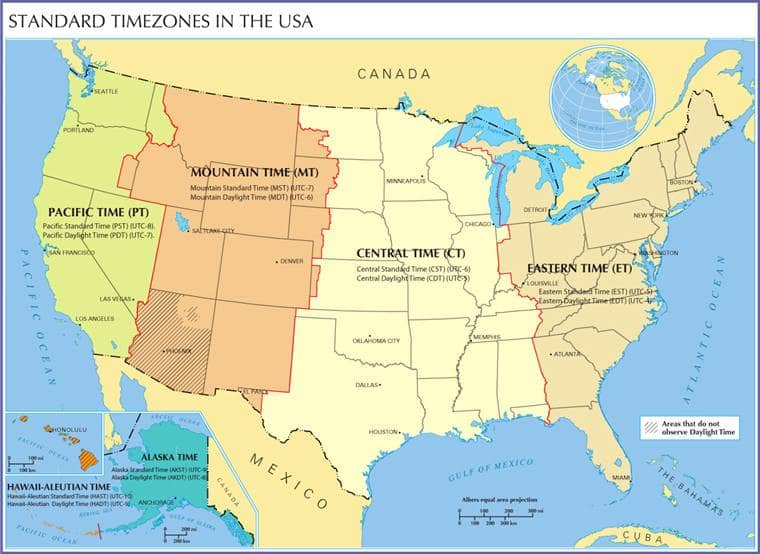
For many travelers planning a trip to the Grand Canyon State, one of the most intriguing and often confusing aspects revolves around its timekeeping. The simple answer to “Does time change in Arizona?” is generally “no.” Unlike most states across the United States, Arizona has a unique relationship with Daylight Saving Time (DST). Since 1968, the state has largely opted out of observing DST, choosing instead to remain on Mountain Standard Time (MST) year-round.
This decision was rooted in practical considerations, primarily the intense summer heat. The primary purpose of Daylight Saving Time is to extend daylight into the evening, theoretically saving energy and encouraging outdoor activities. However, in a state like Arizona, where summer temperatures routinely soar above 100 degrees Fahrenheit, extending daylight into the evening would simply mean more hours of oppressive heat. Families would have to wait longer to enjoy cooler temperatures, and the demand for air conditioning would increase, negating any potential energy savings. Farmers, too, faced challenges with livestock routines and crop irrigation under a shifting clock. Therefore, the consistent Mountain Standard Time (MST) year-round offers a predictable rhythm that aligns better with the natural climate and lifestyle of the region. This steadfast commitment to a single time zone is a distinctive feature of Arizona, influencing everything from daily routines in Phoenix and Tucson to the timing of outdoor adventures and business operations across the state.
Navigating the Seasons: What This Means for Travelers
Understanding Arizona’s year-round Mountain Standard Time (MST) is crucial for travelers, as it affects how the state’s clock aligns with the rest of the country during different seasons.
Summer Travel (March to November)
During the period when most of the United States “springs forward” for Daylight Saving Time (typically from the second Sunday in March to the first Sunday in November), Arizona’s adherence to Mountain Standard Time (MST) means it effectively aligns with Pacific Daylight Time (PDT). This makes planning relatively straightforward for visitors from California or Nevada, as there is no time difference between their summer clocks and Arizona’s. For those traveling from the East Coast, Arizona will be three hours behind Eastern Daylight Time (EDT). Travelers from the Central Time Zone will find Arizona two hours behind, while states observing Mountain Daylight Time (MDT) will be one hour ahead of Arizona. This alignment simplifies cross-country calls and logistical planning, particularly when dealing with destinations like Las Vegas or Los Angeles.
Winter Travel (November to March)
When the rest of the country “falls back” from Daylight Saving Time to standard time (from the first Sunday in November to the second Sunday in March), Arizona remains consistently on Mountain Standard Time (MST). This is where the time difference shifts relative to other regions. During these months, Arizona will be one hour ahead of Pacific Standard Time (PST) (e.g., California, Nevada) and align with states observing Mountain Standard Time (MST) that also do not observe DST (like parts of New Mexico or Utah‘s clock). It will be one hour behind states that observed Mountain Daylight Time but reverted to Mountain Standard Time, two hours behind Central Standard Time (CST), and three hours behind Eastern Standard Time (EST). This winter period can sometimes cause a momentary head-scratch for travelers, especially when scheduling meetings, calls, or connecting flights across time zones. Always double-check local times, particularly when booking activities or tours during this transitional period.
The Navajo Nation Exception: A Time Anomaly Within an Anomaly
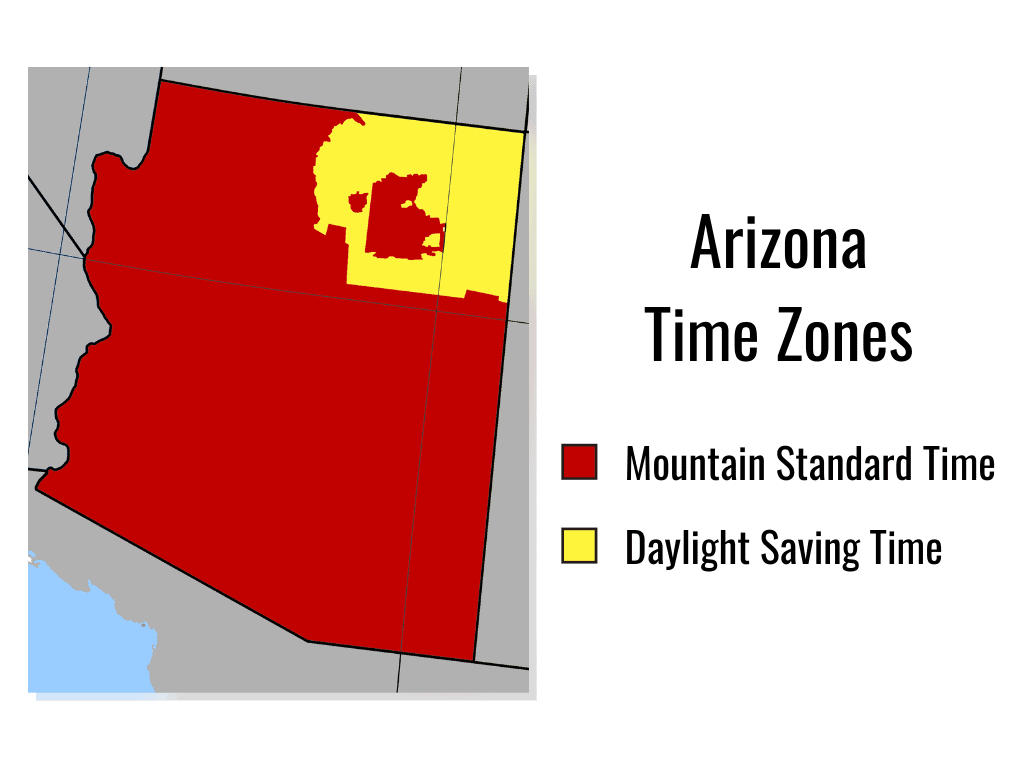
Adding another layer of complexity to Arizona’s unique time situation is the Navajo Nation. This vast tribal land, spanning parts of Arizona, New Mexico, and Utah, does observe Daylight Saving Time. This means that for roughly half the year, when the rest of Arizona is on Mountain Standard Time (MST), the Navajo Nation operates on Mountain Daylight Time (MDT), making it one hour ahead of cities like Flagstaff or Tucson.
This exception is particularly relevant for travelers visiting popular destinations within or near the Navajo Nation, such as Monument Valley, Canyon de Chelly, or the Four Corners Monument. When you cross into the Navajo Nation from other parts of Arizona during Daylight Saving Time, you will need to adjust your clock forward by one hour. This can be especially confusing if your itinerary involves driving through the region or participating in guided tours that start or end within its borders.
Further complicating this is the Hopi Reservation, an entirely separate sovereign nation located completely within the borders of the Navajo Nation. The Hopi Reservation does not observe Daylight Saving Time. This creates a unique “doughnut hole” effect where you might drive into the Navajo Nation (and set your clock forward), then into the Hopi Reservation (and set it back), and then back into the Navajo Nation again (setting it forward once more) – all within a relatively short distance. While most travelers won’t experience this specific triple-time-zone hop, it underscores the need for vigilance when dealing with time in Arizona’s diverse landscapes. Always confirm the local time with guides, tour operators, or your accommodation when venturing into these areas.
Practical Planning for Your Arizona Adventure
Navigating Arizona’s time zones doesn’t have to be a source of stress. With a few thoughtful considerations, you can ensure your travel plans run smoothly.
Booking Flights and Accommodation
When booking flights to Phoenix Sky Harbor International Airport or Tucson International Airport, or reserving hotels, always ensure you are confirming times based on local Arizona time. Most reputable booking sites and airlines will automatically display times in the local time zone of your destination, but a quick double-check can prevent missed connections or late check-ins. If you’re coming from a state that observes Daylight Saving Time during your travel dates, be mindful of the one-hour difference compared to Mountain states (during DST) or the same time as Pacific states (during DST).
Scheduling Tours and Activities
This is where the Arizona time zone, especially the Navajo Nation exception, is most critical. Whether you’re planning a sunrise hike in Sedona, a rafting trip on the Colorado River near Page, or a tour of Antelope Canyon, confirm the start times with your tour operator. If your activity takes you into the Navajo Nation between March and November, remember that it will be one hour ahead of the rest of Arizona. A 9:00 AM tour listed on a Navajo Nation website means it starts at 8:00 AM Arizona time outside the reservation. Many tour companies operating in these areas are well-versed in the time nuances and will explicitly state the time zone they are using for their schedules, but it always pays to ask for clarification.
Inter-State Travel
Driving from neighboring states like California, Nevada, Utah, or New Mexico requires a quick mental adjustment. During DST, entering Arizona from California or Nevada will mean no time change (they both observe PDT/MST equivalence). However, entering from Utah or New Mexico (which observe MDT) will mean setting your clock back one hour. In winter, this flips: entering from California or Nevada (PST) means setting your clock forward one hour into Arizona’s MST. Keep an eye out for roadside signs, especially near borders like Lake Havasu or Yuma, which often provide time zone reminders.
Using Technology
Most modern smartphones, GPS devices, and smartwatches are quite adept at automatically adjusting to local time zones. When crossing state lines or entering the Navajo Nation, your device should typically update. However, it’s a good practice to periodically check your device’s displayed time against a reliable local source, especially if you’re in a border area or have recently experienced spotty cellular service.

Embracing the Perpetual Arizona Time
While Arizona’s approach to time might seem like a minor logistical hurdle, it’s also a part of the state’s unique charm and identity. The consistency of year-round Mountain Standard Time (MST) means predictable sunlight hours, allowing for better planning of outdoor activities without the biannual shift. Visitors quickly adapt to the steady rhythm, often appreciating the stable late sunsets in summer and the consistent sunrise times in winter.
Embracing this perpetual time allows travelers to fully immerse themselves in the relaxed, sun-drenched pace of Arizona. From exploring the desert landscapes around Sedona to stargazing in Flagstaff, or enjoying vibrant city life in Scottsdale and Mesa, the steadfast time zone becomes a subtle yet significant part of the Arizona experience, ensuring that time, in its own way, remains a constant friend during your travels.
LifeOutOfTheBox is a participant in the Amazon Services LLC Associates Program, an affiliate advertising program designed to provide a means for sites to earn advertising fees by advertising and linking to Amazon.com. Amazon, the Amazon logo, AmazonSupply, and the AmazonSupply logo are trademarks of Amazon.com, Inc. or its affiliates. As an Amazon Associate we earn affiliate commissions from qualifying purchases.