
The vast, arid landscapes of Arizona are famously associated with canyons, deserts, and saguaro cacti, not typically volcanoes. Yet, beneath the serene surface of the Grand Canyon State lies a vibrant, fiery past that has sculpted some of its most remarkable natural landmarks. Far from being a land devoid of volcanic activity, Arizona boasts an impressive collection of volcanic features, a testament to intense geological processes that have shaped its iconic terrain over millions of years. While no active volcanoes pose an immediate threat, the state is home to hundreds, if not thousands, of extinct or dormant volcanic vents, cinder cones, and lava flows, predominantly concentrated in specific regions. Understanding their number and distribution reveals a fascinating chapter in the geological story of the American Southwest.

The San Francisco Volcanic Field: Arizona’s Volcanic Heartbeat
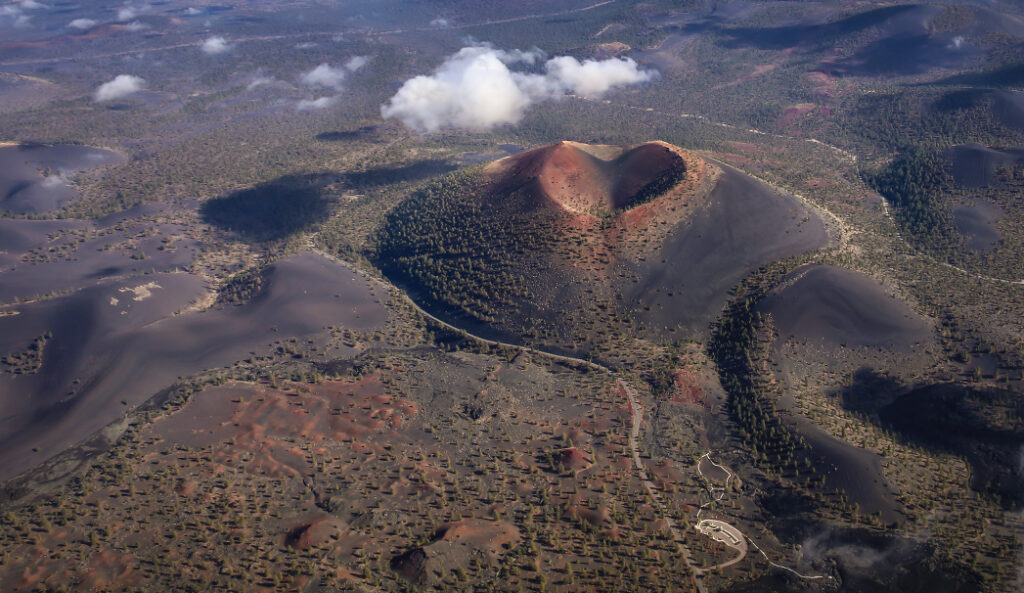
The undisputed epicenter of volcanic activity in Arizona is the San Francisco Volcanic Field, located predominantly north of Flagstaff. This expansive field covers an area of approximately 1,800 square miles and is home to over 600 individual volcanoes, ranging from small cinder cones to impressive stratovolcanoes. Formed over the last six million years, this field provides a geological timeline written in basalt and ash, with some of the most recent eruptions occurring within the last millennium.
Sunset Crater Volcano National Monument
Perhaps the most famous and visually striking landmark within the San Francisco Volcanic Field is Sunset Crater Volcano, the youngest volcano in Arizona. Its eruption, estimated to have taken place around 1085 CE, created a dramatic cinder cone reaching 1,000 feet high and blanketed the surrounding landscape with dark ash and lava flows. The cone gets its name from the reddish and yellowish cinders at its rim, stained by oxidized iron, which give the appearance of a perpetual sunset. Today, it is protected as Sunset Crater Volcano National Monument, allowing visitors to explore its unique geological formations, including the Bonito Lava Flow and the impressive fissure vents. The profound impact of this eruption on the ancient Sinagua people, whose pithouses and pueblos are preserved nearby at Wupatki National Monument, underscores its significance as both a natural and historical landmark.
Prominent Peaks and Cinder Cones
Beyond Sunset Crater Volcano, the San Francisco Volcanic Field is dotted with numerous other volcanic landmarks. The highest point in Arizona, Humphreys Peak, is actually part of the eroded remnants of an ancient stratovolcano, the San Francisco Peaks, which once stood much taller. Other notable features include Kendrick Peak, O’Leary Peak, and the remarkably well-preserved SP Crater, a perfectly conical cinder cone with an associated basaltic lava flow stretching for miles. These features offer a diverse array of geological formations, from towering peaks that invite challenging hikes to accessible cinder cones that allow for close examination of volcanic geology.
Other Significant Volcanic Fields and Features
While the San Francisco Volcanic Field dominates the narrative of Arizona’s volcanic landmarks, it is not the state’s only region sculpted by internal heat. Several other distinct volcanic fields and isolated features contribute to the state’s rich geological tapestry.
The Uinkaret Volcanic Field
Located north of the Grand Canyon, primarily on the Shivwits Plateau and extending towards the Utah border, lies the Uinkaret Volcanic Field. This field is notable for its proximity to the Grand Canyon and for lava flows that famously cascaded into the canyon itself, creating temporary lava dams on the Colorado River. While most of its 160 or so volcanoes are cinder cones and lava flows, they represent activity spanning millions of years, with some flows as recent as tens of thousands of years ago. These dramatic interactions between volcanic activity and the erosive power of the Grand Canyon highlight a dynamic natural history that continues to shape one of the world’s most famous landmarks. The black basalt contrasting with the red layers of the canyon walls provides a stark visual reminder of these ancient events.
Pinacate Volcanic Field (Shared with Mexico)

Partially extending into southwestern Arizona, the Pinacate Volcanic Field is an internationally recognized landmark, with its largest portion residing in Sonora, Mexico. This field is characterized by vast lava flows, numerous cinder cones, and rare maar craters (formed by explosive interactions between magma and groundwater). Though much of it lies south of the border, the portions within Arizona showcase similar volcanic features, reminding visitors of the broader geological forces at play in the entire Sonoran Desert region. Its rugged beauty and unique ecology make it a significant natural landmark for those exploring the far reaches of Arizona’s desert landscapes.
Other Minor Fields and Isolated Vents
Beyond these major fields, smaller, more isolated volcanic features are scattered across Arizona. The Springerville Volcanic Field in eastern Arizona, for example, contains numerous small cinder cones and lava flows that are less prominent but still contribute to the state’s volcanic inventory. Similarly, ancient volcanic remnants can be found near Prescott and Sedona, though heavily eroded and often integrated into the surrounding mountain ranges. These scattered features, while not as dramatic as the younger, more pristine cones, are significant landmarks that speak to millions of years of crustal stretching and magma upwelling across the state.
Geological History and Formation of Arizona’s Volcanic Landmarks
The presence of so many volcanoes in Arizona is a direct consequence of complex tectonic forces that have shaped western North America. Most of Arizona’s volcanic activity is attributed to extensional tectonics, where the Earth’s crust is being stretched and thinned. This process, particularly associated with the Basin and Range Province and the ongoing rifting of the Rio Grande Rift to the east, creates pathways for magma from the mantle to rise to the surface.
The Colorado Plateau, on which much of the San Francisco Volcanic Field rests, is an anomaly—a relatively stable block of crust surrounded by areas of intense deformation. Geologists believe the volcanism on the plateau is due to a combination of upwelling mantle plumes and the release of pressure caused by the stretching of the crust at its margins. The relatively young age of many of these volcanoes suggests that geological forces are still at play, even if the Arizona volcanoes are considered dormant rather than active. The youngest volcanoes, like Sunset Crater, are evidence that the potential for future eruptions, though infrequent, exists.
These volcanic events have profoundly impacted the landscape, creating fertile soils in some areas, forming unique hydrological systems (such as the presence of Mormon Lake within a volcanic depression), and leaving behind a treasure trove of geological formations. The dark, often rugged lava flows contrast sharply with the lighter sedimentary rocks of the Colorado Plateau, offering dramatic visual interest and clear markers of the state’s volcanic legacy.
Experiencing Arizona’s Volcanic Landmarks
For those interested in natural history and geological wonders, Arizona’s volcanic landmarks offer unparalleled opportunities for exploration. These sites are not merely geological curiosities but accessible natural attractions that provide unique insights into planetary processes.
Visiting the San Francisco Volcanic Field around Flagstaff is highly recommended. Sunset Crater Volcano National Monument offers paved trails and interpretive signs that explain the eruption and its aftermath. While hiking to the summit of Sunset Crater is prohibited to preserve its delicate surface, visitors can walk along the Lava Flow Trail and explore numerous other cinder cones. Hiking trails up Kendrick Peak and O’Leary Peak provide panoramic views of the entire volcanic field and the distant Grand Canyon.
In the Uinkaret Volcanic Field, while more remote, the juxtaposition of black lava flows against the red walls of the Grand Canyon is a spectacular sight. Access to some areas might require four-wheel drive vehicles, but the rewards include witnessing lava cascade into the canyon and exploring untouched volcanic terrain. River trips through the Grand Canyon also offer unique perspectives on these ancient lava flows from below.
Beyond direct volcanic forms, the region’s volcanic past also contributes to other remarkable landmarks. Meteor Crater, though an impact crater, is often visited in conjunction with the San Francisco Volcanic Field due to its proximity and dramatic geological appeal. The diverse ecosystems thriving on volcanic soils, from pine forests near Flagstaff to desert flora in the Pinacate region, also showcase the profound ecological impact of these geological landmarks.
In summary, Arizona is a land of surprising volcanic richness. With hundreds of distinct volcanoes concentrated in several major fields, particularly the San Francisco Volcanic Field, the state offers a compelling landscape of natural landmarks born from fire. These geological formations not only provide stunning vistas and unique recreational opportunities but also serve as enduring monuments to the powerful, shaping forces of our planet.
LifeOutOfTheBox is a participant in the Amazon Services LLC Associates Program, an affiliate advertising program designed to provide a means for sites to earn advertising fees by advertising and linking to Amazon.com. Amazon, the Amazon logo, AmazonSupply, and the AmazonSupply logo are trademarks of Amazon.com, Inc. or its affiliates. As an Amazon Associate we earn affiliate commissions from qualifying purchases.