
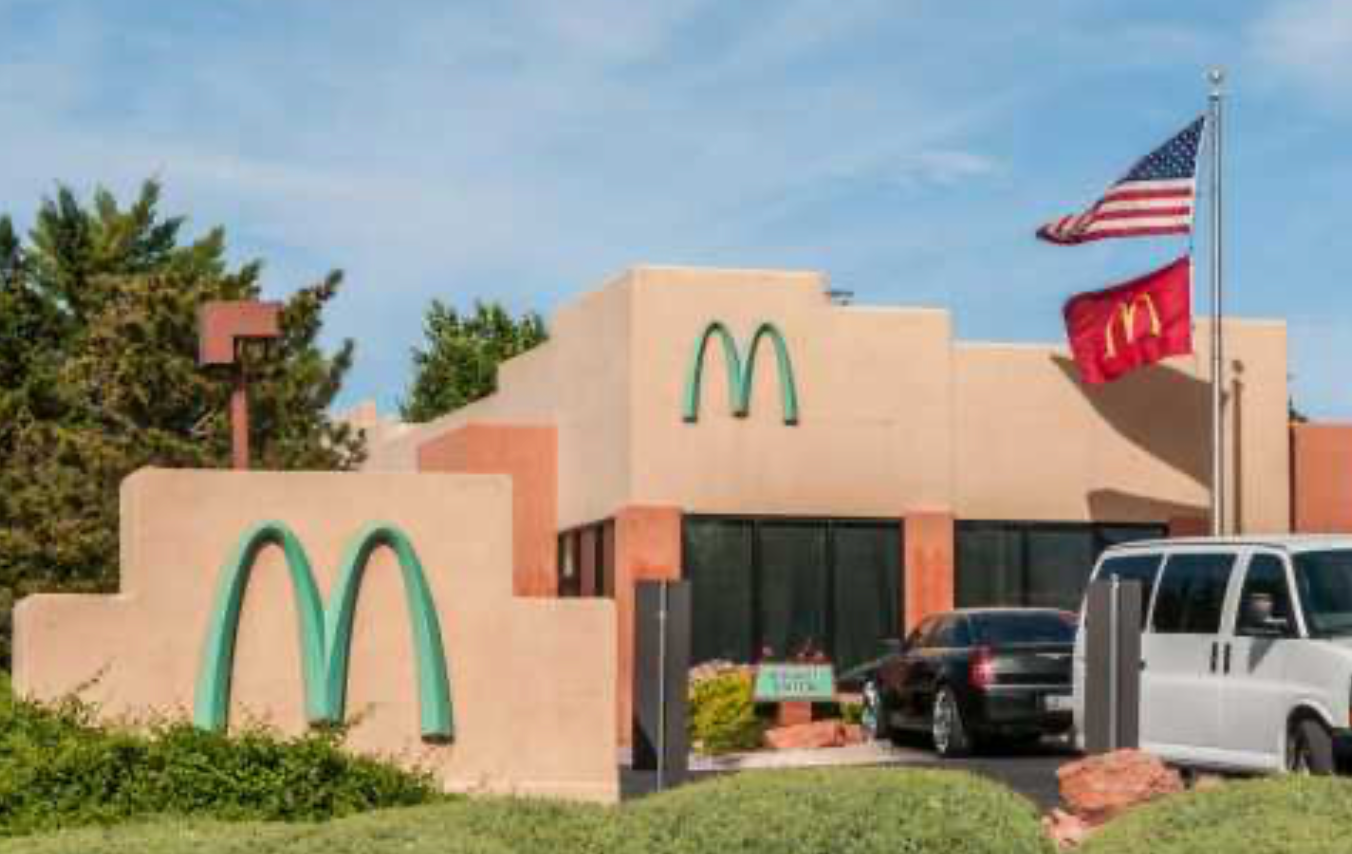
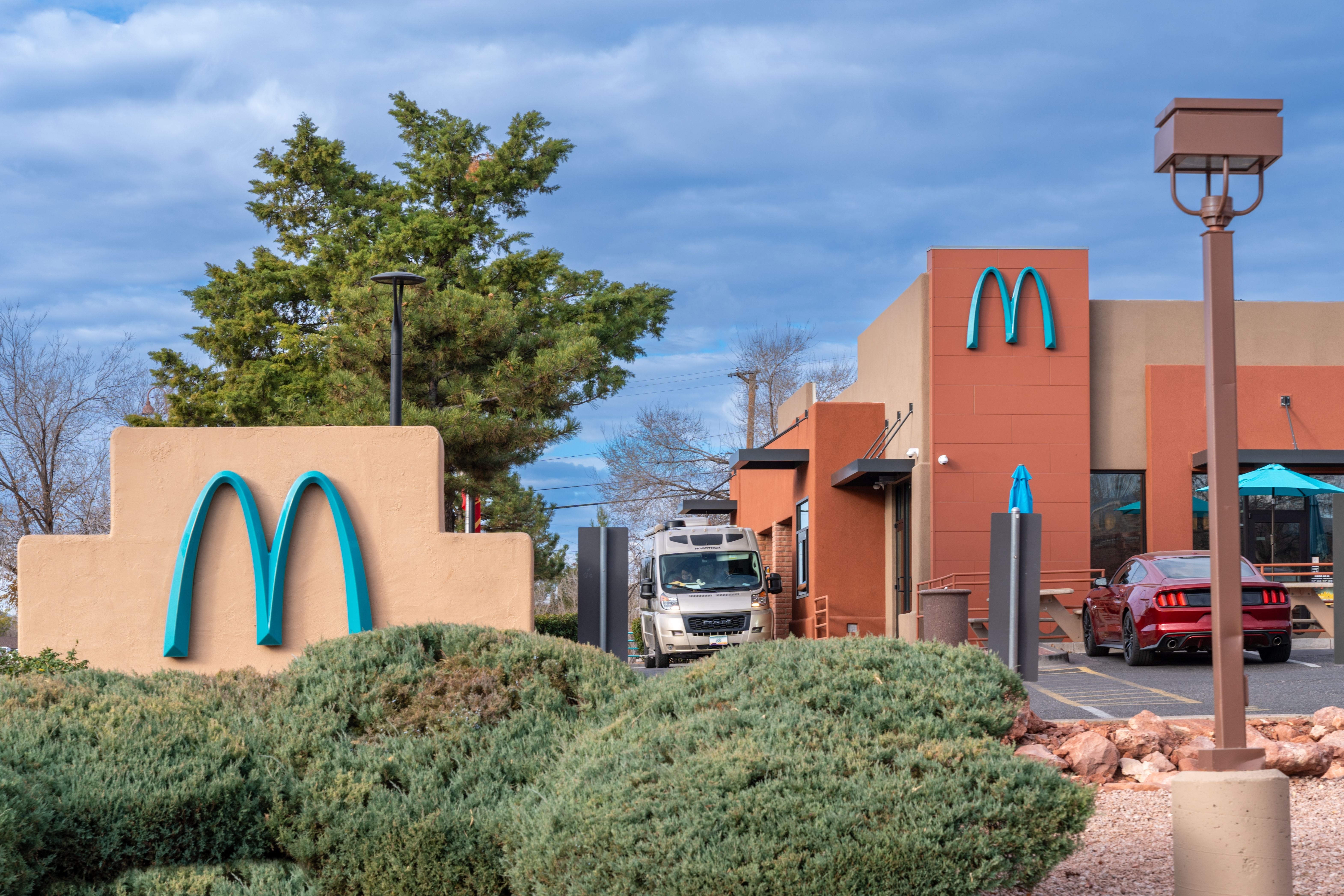
In a world saturated with the universally recognizable golden arches, there exists a unique architectural anomaly in the heart of Arizona that challenges this iconic branding. While nearly every McDonald’s restaurant globally proudly displays its signature yellow “M,” the outpost in Sedona presents a strikingly different hue. Here, amidst the breathtaking backdrop of crimson cliffs and vibrant desert flora, the arches are not golden but a distinct turquoise green. This architectural choice is not a random deviation but a deliberate response to Sedona’s stringent building codes and profound commitment to preserving its natural beauty. As such, this particular McDonald’s has transcended its commercial function to become a landmark in its own right, a testament to how architecture can harmoniously integrate with its environment.

The Sedona Anomaly: A Departure from Tradition
The vibrant red rocks that define Sedona’s landscape are more than just a scenic vista; they are the very essence of the city’s identity. This commitment to maintaining the natural aesthetic extends to every facet of urban development, including commercial architecture. The decision to alter the color of the McDonald’s arches in Sedona, therefore, stems from a deep-rooted philosophy that prioritizes environmental preservation and visual harmony over corporate uniformity.
Why Red Rock Country Demanded a Change
Sedona is celebrated worldwide for its unparalleled natural beauty, characterized by towering sandstone formations that glow fiery red and orange under the sun. To safeguard this visual integrity, the city enacted strict building ordinances, particularly concerning color palettes and lighting. The aim was to ensure that new constructions and commercial signage blend seamlessly with the natural landscape, rather than detracting from it. Bright, contrasting colors, especially those that might be perceived as garish or out of place against the Red Rock Country backdrop, are strictly regulated.
When McDonald’s sought to establish a presence in Sedona in 1993, they faced these unique requirements. The city’s planning commission deemed the traditional bright yellow arches to be too jarring against the surrounding environment. After negotiations, a compromise was reached: the arches would be colored a muted turquoise-green, a shade believed to complement the local flora and the sky, allowing the structure to recede visually into the stunning natural scenery of the Coconino National Forest rather than stand out. This decision set a precedent, transforming a standard fast-food outlet into a unique architectural statement.
A Landmark in Its Own Right
This distinctive McDonald’s has become an iconic, albeit unconventional, landmark in Sedona. Unlike the famous natural formations like Bell Rock or Cathedral Rock, or the architectural marvel of the Chapel of the Holy Cross, the green-arched McDonald’s is celebrated for its conscious effort to adapt. Visitors often seek it out specifically to marvel at its unique design and capture photographs, turning a quick meal stop into a sightseeing opportunity. It’s a testament to how even global brands can, and sometimes must, adapt to local culture and environmental ethos, thereby creating something entirely new and noteworthy. Its fame lies precisely in its difference, making it a compelling point of interest for anyone exploring Sedona’s unique character.
Blending In: Architecture and the Environment
The Sedona McDonald’s exemplifies an architectural philosophy that prioritizes environmental integration over corporate standardization. Beyond just the color of its arches, the entire building was designed to minimize its visual impact and harmonize with the majestic surroundings. This thoughtful approach serves as a model for sustainable development in areas of outstanding natural beauty.
The Aesthetics of Subtlety
The architectural adaptation of the Sedona McDonald’s goes far beyond a simple color change. The entire structure features a low-profile design, using natural stone and stucco materials that echo the textures and hues of the Red Rock Country. The lighting is also intentionally subdued to prevent light pollution, a critical concern in a region renowned for its stargazing opportunities. The landscaping around the restaurant incorporates native plants, further blurring the lines between the developed property and the natural desert. These subtle design choices collectively contribute to a structure that feels less like a corporate intrusion and more like an organic extension of its setting. The result is a building that embodies architectural humility, demonstrating that even a global giant can embrace local distinctiveness.
Preserving Sedona’s Unique Visual Identity
Sedona’s commitment to its visual identity is a core aspect of its charm and appeal. The city’s strict building codes are not merely arbitrary rules; they are a direct reflection of a community that values its unique landscape above all else. Every development, whether commercial or residential, is evaluated on its ability to contribute positively to this aesthetic. The green-arched McDonald’s stands as a powerful symbol of this commitment. It demonstrates that economic development can coexist with environmental and aesthetic preservation. By requiring businesses to adapt their branding to local conditions, Sedona ensures that its commercial zones maintain the same serene, natural beauty that draws millions of visitors each year. This careful planning helps to protect the city’s reputation as a destination where nature’s grandeur remains the undisputed star.
Beyond the Arches: The Impact of Architectural Compliance
The story of Sedona’s McDonald’s is more than a quirky anecdote; it offers valuable insights into the interplay between global brands, local regulations, and community identity. It showcases how a small change in design can have a profound impact, not just on a single building, but on the perception of an entire place.
Inspiring Other Landmarks and Developments
The success of the Sedona McDonald’s in blending into its environment has served as an inspiration for other communities and businesses. It highlights the importance of context-sensitive design, especially in areas with significant natural beauty or historical importance. This case study demonstrates that adherence to local aesthetic standards can lead to unique and celebrated architectural landmarks rather than a loss of brand identity. It encourages a dialogue about responsible development and the potential for commercial entities to enhance, rather than detract from, the distinct character of a place. Such adaptations are increasingly seen in other famous locales where natural or historical integrity is paramount, from specific architectural controls in historic districts to limits on commercial signage in national parks.
The Visitor Experience: Curiosity and Admiration
For visitors to Sedona, encountering the green-arched McDonald’s is often a delightful surprise. It becomes a conversation piece, a visual representation of Sedona’s values. Tourists often express admiration for the city’s resolve and for McDonald’s’ willingness to adapt. It transforms a mundane errand—grabbing a meal—into an engaging experience that deepens appreciation for Sedona’s unique identity. This particular structure has become an integral part of the narrative of visiting Sedona, a quirky landmark that encapsulates the spirit of the city.
Visiting the Green Arches: What to Expect
If you find yourself in Sedona, a visit to this distinctive McDonald’s is highly recommended, not just for a meal, but as part of experiencing the city’s unique architectural landscape. It’s an opportunity to see firsthand how thoughtful design can respect and enhance a place’s natural grandeur.
Location and Accessibility
The famed green-arched McDonald’s is conveniently located at 2380 West State Route 89A in Uptown Sedona. It’s easily accessible by car and often features ample parking, making it a simple stop during your exploration of the city. While it serves the standard McDonald’s menu, the real draw is its exterior, providing a memorable moment and a distinctive photo opportunity that you won’t find anywhere else. The location is central enough that it can be easily incorporated into any Sedona itinerary, whether you’re heading to hiking trails or exploring art galleries.
A Photo Opportunity with a Story
Beyond grabbing a quick bite, the Sedona McDonald’s stands as a fantastic photo opportunity. It’s a chance to capture an image that tells a story: a global brand, humbly adapting to the powerful aesthetic of a local landscape. These pictures often become conversation starters, highlighting the innovative ways in which communities protect their cherished environments. It’s a subtle yet striking reminder of Sedona’s unwavering commitment to its natural heritage, making this particular restaurant a memorable and illustrative landmark for anyone traversing this beautiful corner of Arizona.
LifeOutOfTheBox is a participant in the Amazon Services LLC Associates Program, an affiliate advertising program designed to provide a means for sites to earn advertising fees by advertising and linking to Amazon.com. Amazon, the Amazon logo, AmazonSupply, and the AmazonSupply logo are trademarks of Amazon.com, Inc. or its affiliates. As an Amazon Associate we earn affiliate commissions from qualifying purchases.