
Embarking on a transatlantic journey from the vibrant canals of Amsterdam to the historic streets of Boston is an exciting prospect for any traveler. While the allure of exploring new destinations is undeniable, a common and critical question often arises early in the planning stages: “How long will I actually be in the air?” Understanding the duration of this particular flight is essential for scheduling, managing expectations, and preparing for a comfortable journey across the Atlantic Ocean. The flight from Amsterdam (Schiphol Airport, AMS) to Boston (Logan International Airport, BOS) typically spans a significant number of hours, influenced by a variety of factors that extend beyond mere distance.
The Direct Answer: Flight Duration and Influencing Factors
For a direct, non-stop flight, the average flight time from Amsterdam to Boston is approximately 7 hours and 30 minutes to 8 hours and 15 minutes. This figure represents the actual time the aircraft is airborne, from takeoff to landing. However, this is merely an average, and several variables can cause the actual duration to fluctuate.
Non-stop vs. Connecting Flights
The most significant factor determining flight duration is whether you opt for a non-stop service or a connecting flight. A direct flight, as mentioned, keeps the airtime within a relatively narrow window. However, many travelers, either due to cost, availability, or specific airline preference, may choose a connecting flight. These journeys can add anywhere from 3 to 10+ hours to the total travel time, depending on the layover city (e.g., London, Paris, Dublin, Reykjavik) and the duration of the stopover. While the actual flight segments might be shorter, the overall trip quickly becomes much longer.
Wind Conditions and Air Traffic Control
Transatlantic flights are particularly susceptible to wind patterns. The prevailing westerly winds (jet stream) generally aid eastbound flights, making them faster, while westbound flights, like Amsterdam to Boston, often face headwinds. These headwinds can add 30 minutes to an hour, or even more, to the flight time. Conversely, favorable tailwinds, though less common on this route, could shave off some minutes. Air traffic control (ATC) regulations and routing also play a role. While airlines plan optimal routes, ATC may mandate deviations due to congestion, weather phenomena, or military airspace restrictions, potentially altering the flight path and, consequently, its duration. Aircraft type, with modern planes like the Boeing 787 Dreamliner or Airbus A350 offering greater fuel efficiency and speed, can also marginally impact flight times.
Navigating the Amsterdam-Boston Air Corridor
The air corridor between Amsterdam and Boston is a bustling pathway, serviced by numerous reputable airlines and featuring specific routes designed for efficiency and safety. Understanding these elements provides a clearer picture of the journey.
Major Airlines and Aircraft Types
Several major international carriers operate direct or connecting flights on this popular transatlantic route. KLM Royal Dutch Airlines, as the flag carrier of the Netherlands, is a primary operator offering daily non-stop services. Delta Air Lines, a major United States carrier, also frequently flies this route, often in codeshare partnerships with KLM. Other airlines such as United Airlines, Air France, Lufthansa, British Airways, and Aer Lingus provide connecting options via their respective hubs in Europe or Ireland.
The aircraft types deployed on this long-haul route are typically wide-body jets designed for comfort and range. Common models include the Boeing 787 Dreamliner, Airbus A330, and occasionally the Boeing 767. These aircraft are equipped with features like advanced cabin pressurization, improved humidity levels, and in-flight entertainment systems to enhance the passenger experience over several hours.
Typical Flight Path

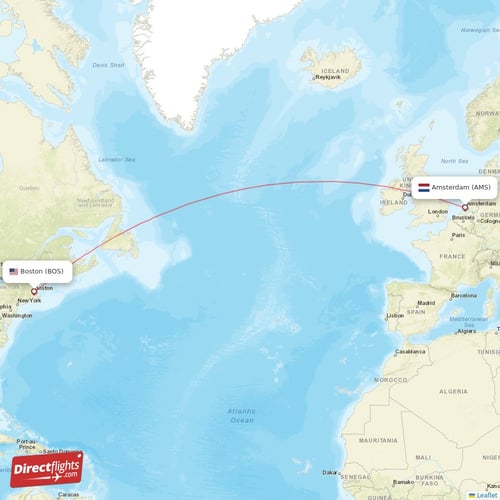
The flight path from Amsterdam to Boston generally follows a great-circle route, which is the shortest distance between two points on a sphere. This path often takes aircraft north-westward over the North Sea, across parts of the United Kingdom or Ireland, and then directly over the vast expanse of the North Atlantic Ocean. Depending on winds and air traffic control instructions, the route might skirt the southern coast of Greenland or Canada before descending towards the eastern seaboard of the United States and making its approach into Boston. Pilots will often adjust altitude and speed to take advantage of favorable winds or avoid turbulent areas, all while staying within designated air traffic corridors.
Beyond the Air: Total Journey Time Considerations
While the “flight time” refers specifically to the duration in the air, the “total journey time” encompasses much more, from arriving at the departure airport to finally exiting the arrival airport. This broader perspective is crucial for realistic travel planning.
Pre-Flight Essentials: Check-in, Security, Boarding
The journey effectively begins long before the plane takes off. Travelers are typically advised to arrive at Schiphol Airport at least 2-3 hours before an international flight. This buffer allows ample time for check-in, especially if checking luggage. Security screening at a major international hub like Schiphol can be thorough and, at peak times, time-consuming. Navigating the airport to reach the correct gate and then the boarding process itself – which often starts 30-60 minutes before departure – all add to the pre-flight commitment. When factoring in travel to the airport in Amsterdam, this easily adds 4-5 hours before the scheduled departure time.
Post-Flight Procedures: Immigration, Customs, Ground Transport
Upon landing at Logan International Airport in Boston, the journey is far from over. As an international arrival into the United States, passengers must clear U.S. Customs and Border Protection (CBP). This involves queues for immigration, where officers review passports and visas, and then potentially collecting checked baggage before proceeding to customs. Wait times at immigration can vary significantly, ranging from 30 minutes to over 2 hours, depending on the number of arriving flights and available CBP staff.
After clearing customs, travelers then need to arrange ground transportation from Logan Airport to their final destination in Boston or beyond. This could involve taxis, ride-shares, public transport, or rental cars, all of which add further time to the total journey. Realistically, expect another 1.5 to 3 hours after landing before you are truly out of the airport and on your way. Therefore, while the flight itself might be 8 hours, the entire door-to-door experience could easily stretch to 14-16 hours or more.
Battling the Clock: Time Zones and Jet Lag
A significant aspect of flying from Amsterdam to Boston is crossing multiple time zones, leading to the inevitable challenge of jet lag. Amsterdam operates on Central European Time (CET), which is UTC+1 during standard time or UTC+2 during daylight saving. Boston operates on Eastern Standard Time (EST), which is UTC-5 during standard time or UTC-4 during daylight saving.
This difference typically amounts to a 6-hour time difference. When you depart Amsterdam in the morning or early afternoon, you will arrive in Boston at a corresponding earlier local time on the same calendar day. For example, an 11:00 AM departure from Amsterdam might land around 1:00 PM in Boston the same day, despite 7-8 hours of flying. This “gain” of hours can be disorienting, as your body’s internal clock (circadian rhythm) is still aligned with the Amsterdam time zone. Adjusting to the new schedule means combating the effects of jet lag, such as fatigue, disrupted sleep, and even mild digestive issues. Planning your arrival to allow for rest and gradual acclimatization is crucial for an enjoyable start to your Boston adventure.

Maximizing Comfort on a Transatlantic Flight
A flight of 7 to 8 hours is considered a long-haul journey, necessitating some strategic planning to ensure comfort and well-being. Proactive measures can significantly enhance the experience.
Firstly, stay hydrated. The cabin environment is notoriously dry, making dehydration a common issue. Drink plenty of water before, during, and after the flight, and limit alcohol and caffeine intake. Secondly, move regularly. Long periods of immobility can lead to stiffness and increase the risk of deep vein thrombosis (DVT). Stand up, stretch, and walk the aisle periodically. Perform simple leg and foot exercises while seated to promote circulation.
Thirdly, prioritize sleep if possible. A comfortable neck pillow, eye mask, and noise-canceling headphones can create a personal sanctuary conducive to rest, helping mitigate jet lag. Consider your clothing choices; loose, comfortable layers are ideal for adapting to fluctuating cabin temperatures. Lastly, engage with the in-flight entertainment, read a book, or listen to music to help pass the time. Packing essential items like chargers, snacks, and personal hygiene products in your carry-on ensures you have everything you need within easy reach. By preparing thoughtfully, the journey from Amsterdam to [Boston](https://lifeoutofthebox.com/boston], though lengthy, can be a smooth and comfortable prelude to your exciting destination.
LifeOutOfTheBox is a participant in the Amazon Services LLC Associates Program, an affiliate advertising program designed to provide a means for sites to earn advertising fees by advertising and linking to Amazon.com. Amazon, the Amazon logo, AmazonSupply, and the AmazonSupply logo are trademarks of Amazon.com, Inc. or its affiliates. As an Amazon Associate we earn affiliate commissions from qualifying purchases.