
California, known for its sprawling coastlines, tech innovation, and diverse cultural tapestry, often conjures images far removed from the horse-and-buggy communities typically associated with the Amish. While the Golden State is a magnet for various lifestyles and belief systems, the presence of traditional Old Order Amish communities, as seen in states like Pennsylvania or Ohio, is remarkably scarce. For tourists interested in experiencing or learning about this unique “plain culture,” understanding its minimal footprint in California is key to setting appropriate expectations and discovering related, albeit distinct, cultural experiences.
The Elusive Nature of Traditional Amish Communities in California
The direct answer to whether there are Amish in California is nuanced: while a handful of very small, often newer, settlements have emerged over the decades, they do not resemble the large, established enclaves that have become iconic tourist destinations in the Midwest and East Coast. Unlike Lancaster County, Pennsylvania, or Holmes County, Ohio, where Amish communities number in the tens of thousands and their cultural imprint is woven into the local economy and landscape, California’s Amish population is virtually negligible by comparison.
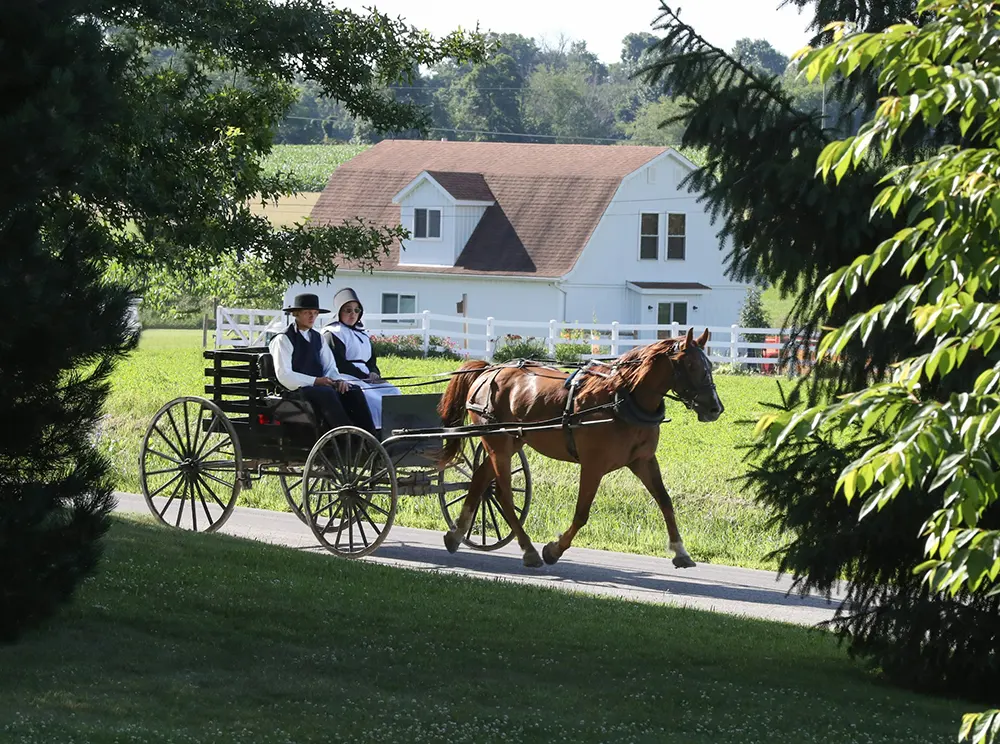
Historians and demographers tracking Amish settlements note that these communities thrive on a delicate balance of factors: affordable agricultural land, close-knit social networks, and a general environment conducive to their distinct way of life, which intentionally limits exposure to modern technological and societal influences. California’s high cost of living, particularly for land suitable for farming, coupled with its highly secular and technologically advanced culture, presents significant hurdles for the growth of traditional Amish communities. There have been reports of very small, often short-lived groups attempting to settle, perhaps in more remote areas like parts of Tuolumne County near Sonora, but these rarely flourish into the self-sustaining, visible communities tourists might expect. Their presence is more anecdotal than an established cultural tourism draw.
Why the Golden State Isn’t a Traditional Amish Stronghold
The reasons behind the minimal Amish presence in California are multifaceted, deeply rooted in their cultural tenets and the state’s unique characteristics. For tourists seeking insight into local cultures, understanding these dynamics provides a richer appreciation for what makes a place home for different groups.
Agricultural Foundation and Land Costs
At the core of Amish society is an agrarian lifestyle. Their communities are predominantly farming-based, relying on readily available, affordable land to support large families and sustainable practices. California, despite its vast agricultural output, boasts some of the most expensive farmland in the United States. The cost per acre, particularly in productive valleys, makes it prohibitive for Amish families, who typically expand by purchasing adjacent plots for their children. This economic barrier is perhaps the single largest deterrent.
Cultural Preservation in a Modern Landscape
The Amish commitment to separation from mainstream society and preservation of their distinct culture is paramount. California’s pervasive car culture, rapid technological advancement, and diverse, often liberal, social environment contrast sharply with the Amish preference for insularity, horse-drawn buggies, and a slower pace of life. Maintaining the “gelassenheit” (yielding to God’s will) and “rumspringa” (a period of adolescence where youth experience the outside world before choosing baptism) in a state where modern influences are omnipresent would be incredibly challenging. The sheer volume of non-Amish population and the lack of established support networks make it difficult for new settlements to thrive.
Distance from Established Communities
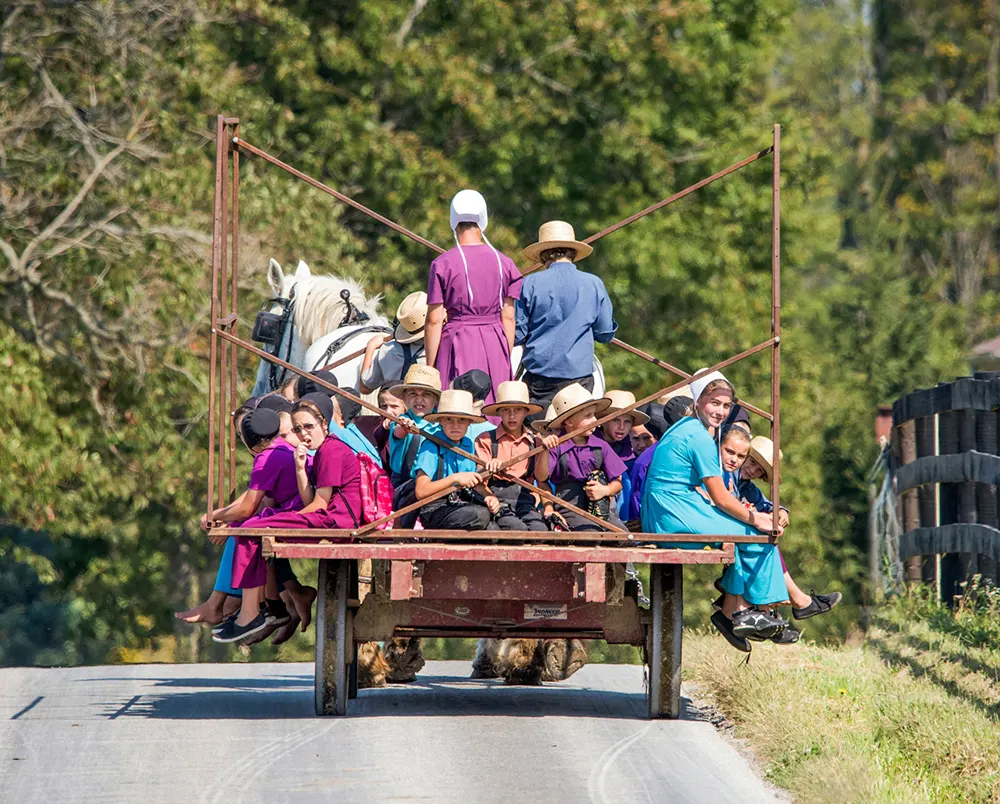
Geographic proximity to existing settlements is crucial for Amish expansion. New communities are often formed by overflow from larger, more established ones. Moving thousands of miles from the strongholds in Pennsylvania, Ohio, Indiana, and other Midwestern states significantly complicates maintaining familial and religious ties, which are the bedrock of their communal life. The logistical challenges and cultural isolation would be immense.
Discovering ‘Plain People’ Communities: Mennonites and More in California
While traditional Old Order Amish communities are rare, tourists interested in similar “plain people” cultures might find some presence of various Mennonites and other Anabaptist groups in California. It is important for cultural tourists to understand the distinctions between these groups.
Distinguishing Between Anabaptist Groups
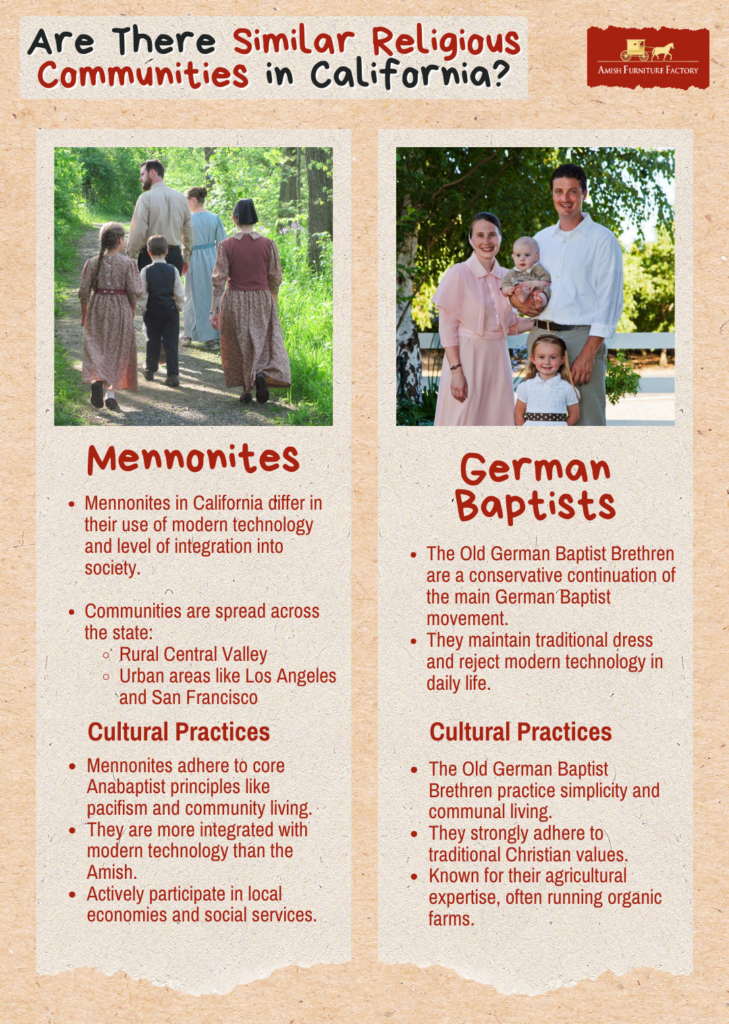
The Amish are a subset of Mennonites, both originating from the Anabaptist movement of the 16th century. While sharing core beliefs like adult baptism, pacifism, and simple living, the Amish adhere more strictly to traditions, typically eschewing modern technology, electricity, and automobiles, and maintaining distinctive dress codes. Mennonite congregations, by contrast, vary widely, from conservative groups that resemble the Amish in dress and lifestyle (e.g., Old Order Mennonites) to more progressive, fully integrated congregations that are virtually indistinguishable from other Protestant denominations.
Where to Find Similar Plain Communities in California
California does host various Mennonite communities, though many are “modern” Mennonites who embrace contemporary life. However, there are smaller, more conservative Mennonite or related Anabaptist groups that might practice some aspects of “plain living” and maintain a more communal, agricultural focus. These communities are often found in agricultural regions, such as parts of the San Joaquin Valley or more rural areas in Northern California. They might operate farms, bakeries, or craft shops that offer a glimpse into a simpler way of life. Examples could include small settlements near cities like Reedley, Dinuba, or Shasta County, though their visibility to tourists is often limited compared to established Amish tourist centers. Researching specific local Chambers of Commerce or visitor centers in these rural areas might provide information on any such operations open to the public.
Engaging Respectfully with Plain Cultures: A Tourist’s Guide
For tourists genuinely interested in “plain cultures,” whether Amish or conservative Mennonites, respectful engagement is paramount. These are not tourist attractions in the conventional sense but living, breathing communities whose privacy and cultural integrity should be honored.
Dos and Don’ts for Cultural Engagement
- Do Your Research: Before visiting any area known for plain communities, understand their customs and expectations.
- Be Respectful of Privacy: Do not enter private property without an invitation. Remember, people are living their daily lives, not performing for tourists.
- Ask Before Photographing: Many plain people prefer not to be photographed due to religious beliefs. Always ask for permission before taking pictures, especially of individuals. If permission is denied, respect their wishes. Photographing children without permission is particularly intrusive and inappropriate.
- Support Local Businesses: If you find shops or markets run by plain communities, patronizing them is a good way to support their self-sufficiency. Look for handmade crafts, baked goods, or farm produce.
- Drive Cautiously: In areas where horse-and-buggy travel occurs, always be mindful of slower-moving vehicles on the road.
- Dress Modestly: When visiting communities or events, dressing conservatively shows respect for their values.
Supporting Local Crafts and Products
In regions with any form of plain community, keep an eye out for local markets, roadside stands, or small businesses selling handcrafted items, baked goods, jams, jellies, or produce. These can be opportunities to engage with community members and acquire authentic, often high-quality, products. Such purchases not only provide souvenirs but also directly support the local economy and traditional livelihoods. However, without established, large Amish communities in California, these opportunities may be less prevalent and require more dedicated searching than in typical Amish country.
Ultimately, while the search for traditional Amish in California may yield minimal results, the state offers other rich cultural experiences. For those specifically drawn to the quiet resilience and distinct lifestyle of plain people, a journey to California may instead offer a lesson in cultural geography: why some cultures flourish in certain environments and remain elusive in others, prompting a deeper understanding of diverse ways of life.
LifeOutOfTheBox is a participant in the Amazon Services LLC Associates Program, an affiliate advertising program designed to provide a means for sites to earn advertising fees by advertising and linking to Amazon.com. Amazon, the Amazon logo, AmazonSupply, and the AmazonSupply logo are trademarks of Amazon.com, Inc. or its affiliates. As an Amazon Associate we earn affiliate commissions from qualifying purchases.