
The Arrival and Establishment of Harmonia axyridis in California
The question of whether California hosts Asian lady beetles, scientifically known as Harmonia axyridis, is not only answered with a resounding yes, but their presence also tells a compelling story of ecological introduction and adaptation within the state’s diverse natural landscapes. Originally native to Asia, specifically regions like China, Japan, and Korea, these beetles were intentionally introduced into the United States and parts of Europe starting in the early 20th century. Their primary purpose was to serve as a biological control agent, a natural predator for agricultural pests, particularly aphids and scale insects, which devastate crops.

Origins and Intentional Introduction
The initial strategy involved releasing Harmonia axyridis in controlled agricultural environments to combat specific pest outbreaks. Their voracious appetite for soft-bodied insects made them an appealing solution for organic farming practices, reducing reliance on chemical pesticides. Various government agencies and private enterprises engaged in these controlled releases across the nation. California, with its vast agricultural industry spanning the Central Valley and coastal regions, was a natural target for these introductions. Initial efforts were often limited in scope, with populations expected to remain localized.
Unintended Ecological Spread
Despite these intentions, the Asian lady beetle proved to be incredibly adept at dispersal and reproduction. Whether through accidental escape from controlled release sites, intentional but unauthorized introductions, or simply by natural migratory tendencies, Harmonia axyridis began to establish wild populations across the United States. In California, their spread was facilitated by the state’s mild climate, abundant food sources (both native pests and agricultural crops), and diverse habitats ranging from coastal plains to mountain foothills. By the late 20th century, their presence was undeniable, and they had become a permanent, if often controversial, fixture in California’s insect fauna. This unintended colonization highlighted the complex and sometimes unforeseen consequences of introducing non-native species, even with the best intentions for pest management.
Where to Encounter Asian Lady Beetles in California’s Natural Settings
The pervasive nature of the Asian lady beetle means that they can be found in a wide array of environments across California, from meticulously cultivated farmlands to wild, untouched natural landmarks. Understanding their preferred habitats can help visitors and residents alike better observe and understand their ecological niche.
Agricultural Landscapes and Vineyards
Perhaps the most prominent areas for encountering Harmonia axyridis are California’s rich agricultural regions. The Napa Valley and Sonoma County vineyards, the vast orchards of the San Joaquin Valley, and the berry fields along the coast provide ideal conditions. These areas are often teeming with aphids and other soft-bodied pests that constitute the primary diet of the Asian lady beetle. While their presence initially brought benefits by reducing pest loads, their tendency to aggregate in large numbers during harvest season can become problematic, particularly in vineyards where they can taint wine with a bitter flavor if crushed alongside grapes. Exploring the agricultural landscape in late summer and early autumn will often reveal significant populations of these beetles.
Suburban and Urban Green Spaces
Beyond agriculture, Harmonia axyridis has readily adapted to human-modified environments. Public parks, botanical gardens, and even backyard gardens in cities like Los Angeles, San Francisco, and San Diego serve as prime habitats. These green spaces, often filled with ornamental plants, fruit trees, and various shrubs, attract aphids and other small insects, creating a consistent food supply. Visitors exploring urban natural landmarks or simply enjoying a picnic in a city park might notice these distinctive beetles on leaves, flowers, or even congregating on structures during cooler months. Their adaptability to urban settings underscores their resilience and ability to thrive outside their native range.
State and National Parks
Even within California’s more pristine natural landmarks, the Asian lady beetle has made inroads. While less dominant than in agricultural zones, populations can be found in various state parks and even within the periphery of national parks like Yosemite National Park or Redwood National Park, particularly in areas with deciduous trees or riparian zones that support aphid colonies. In the Sierra Nevada foothills, for instance, they might be found on native oaks or other broadleaf vegetation. Their presence in these protected areas raises concerns about their interaction with native insect communities and the broader ecological balance of these treasured natural environments. Observing them in such settings provides a unique perspective on the intricate web of life, highlighting the challenges of maintaining ecological integrity in an increasingly interconnected world.
Ecological Impact and Interactions with California’s Native Species
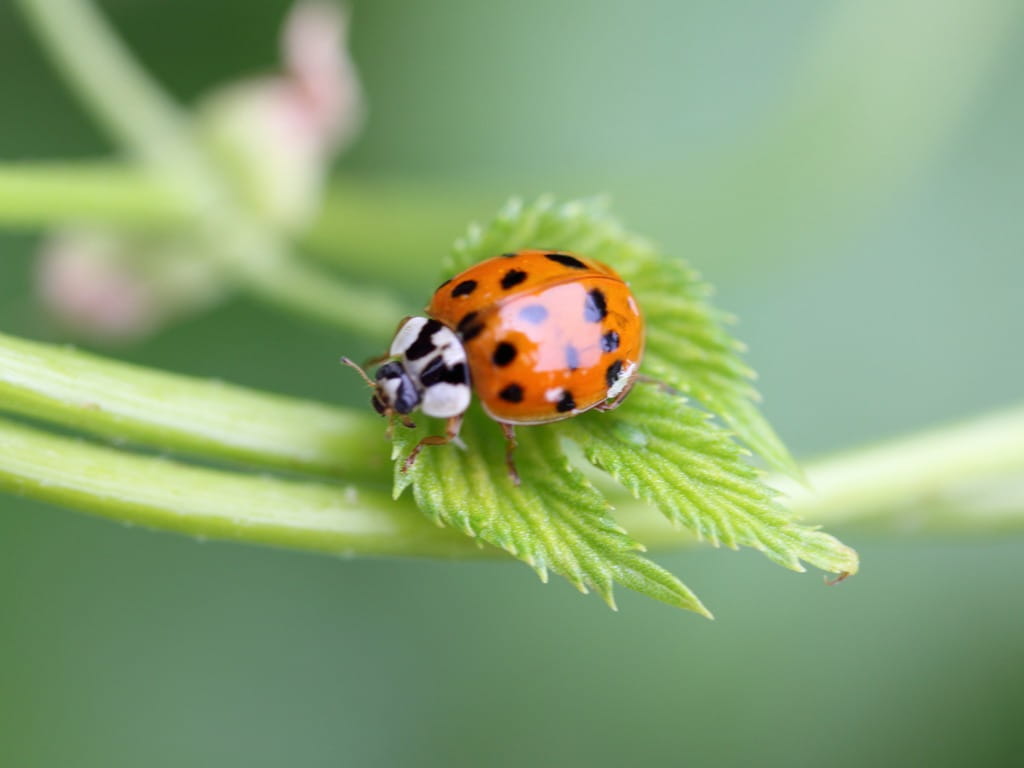
The establishment of Harmonia axyridis in California has not been without significant ecological consequences, particularly for the state’s native insect populations and the delicate balance of its natural ecosystems. While initially lauded for its pest control capabilities, its invasive nature has presented challenges to local biodiversity, impacting the very natural landmarks it now inhabits.
Competition with Native Ladybugs
One of the most concerning impacts of the Asian lady beetle is its direct competition with native ladybug species, such as the Convergent Lady Beetle (Hippodamia convergens). Harmonia axyridis is often larger, more aggressive, and has a higher reproductive rate. These traits give it a competitive edge in foraging for food (aphids) and occupying habitat. Studies have shown a decline in native ladybug populations in areas where the Asian lady beetle has become established, leading to concerns about local extinctions and a reduction in the natural predator diversity that is crucial for healthy ecosystems. This competition is most visible in areas rich with insect prey, such as meadows, forest edges, and riparian zones within California’s diverse parks and wilderness areas.
Predation on Other Beneficial Insects
Beyond competition, Harmonia axyridis also exhibits intraguild predation, meaning it preys on other beneficial insects, including the eggs and larvae of native ladybugs, lacewings, and hoverflies. This predatory behavior extends beyond its intended targets (aphids), disrupting the food web and potentially reducing the populations of other natural pest controllers. This broad-spectrum predation can destabilize ecological communities, especially in sensitive natural landmarks where specific insect interactions are critical for ecosystem function, such as pollination and decomposition. The presence of Harmonia axyridis can thus alter the very composition and dynamics of insect communities that visitors might observe when exploring California’s natural beauty.
Implications for California’s Biodiversity
The cumulative effect of competition and predation by the Asian lady beetle contributes to a broader concern about California’s biodiversity. The state is renowned for its unique and diverse ecosystems, housing numerous endemic species. The introduction of aggressive non-native species like Harmonia axyridis can lead to a homogenization of insect fauna, where a few dominant invaders outcompete and displace native species, reducing overall biodiversity. This ecological shift impacts not just insect life but also potentially cascades up the food chain, affecting birds and other animals that rely on native insects for food. For those interested in the natural heritage of California’s landmarks, the Asian lady beetle serves as a potent example of how human actions, even well-intentioned ones, can reshape the natural world.
Observing Asian Lady Beetles: A Visitor’s Perspective
For visitors exploring California’s natural landmarks, encountering Harmonia axyridis can be a common experience, especially during certain times of the year. Understanding how to identify them, their seasonal behaviors, and how to respectfully interact with the environment they inhabit can enhance one’s appreciation of California’s complex ecosystems.
Identifying Harmonia axyridis
Distinguishing the Asian lady beetle from native ladybug species is key to understanding their presence. While both are small, dome-shaped beetles, Harmonia axyridis often exhibits a wider range of color variations, from pale yellow to orange to deep red, with varying numbers of black spots or no spots at all. A crucial identifying characteristic is the distinct “M” or “W” shaped marking (depending on the angle of view) on the white pronotum, the shield-like segment behind their head. Native ladybugs typically have a more consistent appearance and lack this specific pronotal marking. These features can be observed relatively easily with a keen eye while exploring vineyards, park trails, or even urban gardens throughout California.
Seasonal Presence and Behavior
Asian lady beetles are most active during the warmer months, from spring through early autumn, when their primary food sources (aphids) are abundant. During this period, they can be seen actively foraging on plants in agricultural fields, along hiking trails in the Santa Cruz Mountains, or within city parks. However, their behavior dramatically changes in late autumn. As temperatures drop, they begin to seek overwintering sites, often aggregating in large numbers. While they are known to invade human structures (houses, barns) during this time, they also gather in natural sheltered locations such as rock crevices, under tree bark, or within dense leaf litter in natural landmark areas. Observing these large aggregations in natural settings can be a fascinating, albeit sometimes overwhelming, display of insect behavior.

Minimizing Encounters During Outdoor Activities
For outdoor enthusiasts enjoying California’s natural beauty, encounters with Asian lady beetles are generally harmless. Unlike some other insects, they do not bite or sting in a way that poses a medical threat to humans. However, if disturbed or when seeking shelter, they can sometimes emit a foul-smelling, yellowish fluid as a defense mechanism, which can stain surfaces. To minimize unwanted close encounters, especially during their overwintering aggregations in late fall:
- Be aware of your surroundings, particularly in areas with abundant trees, rocks, or sheltered structures.
- Avoid disturbing large groups of beetles if you encounter them in natural crevices or under bark.
- Wear long sleeves and pants if you plan to explore dense vegetation where they might be numerous.
- Shake out picnic blankets or clothing before packing up.
Understanding the presence and behavior of Harmonia axyridis within California’s diverse natural landmarks offers a unique lens through which to view the ongoing ecological dynamics of the state. It highlights the intricate balance of ecosystems and the enduring impact of species introductions, serving as a subtle yet significant component of the natural experience for anyone exploring California’s vast and varied landscapes.
LifeOutOfTheBox is a participant in the Amazon Services LLC Associates Program, an affiliate advertising program designed to provide a means for sites to earn advertising fees by advertising and linking to Amazon.com. Amazon, the Amazon logo, AmazonSupply, and the AmazonSupply logo are trademarks of Amazon.com, Inc. or its affiliates. As an Amazon Associate we earn affiliate commissions from qualifying purchases.